Snap Specs Launching This Fall: Ridiculously Expensive, But Much More Comfortable
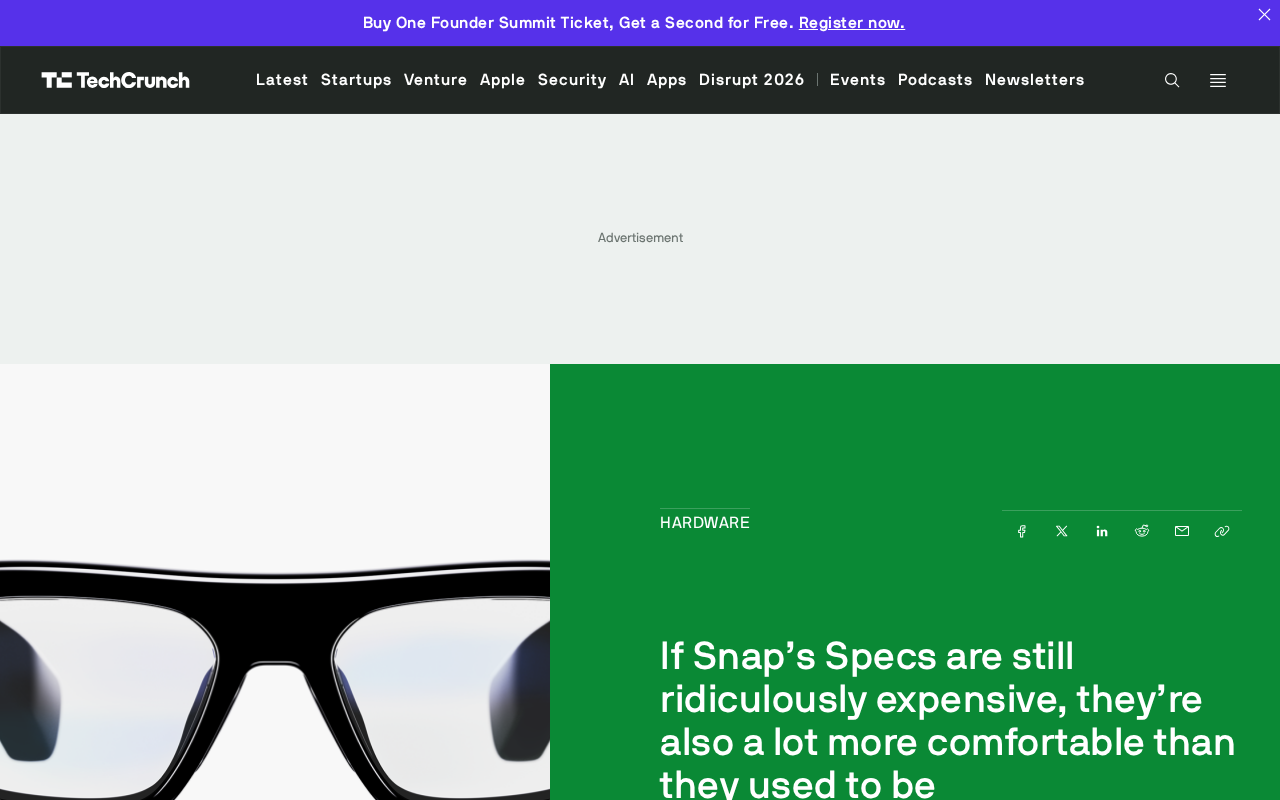
Snap Specs launch this fall: more comfortable but pricey; success hinges on ecosystem and acceptance.
After years of prototyping, Snap's AR glasses Specs will officially launch this fall. The original article notes the price remains "ridiculously expensive," but comfort is substantially improved versus early versions. It analyzes the core contradiction: the product has moved from validation to mass production and ergonomic gains make daily wear more plausible, yet high pricing and an immature AR app ecosystem limit mass adoption. Snap's strengths include the Snapchat ecosystem and content creators; obstacles include price, ecosystem gaps, and privacy concerns. Specs will likely first gain traction among niche geeks and creators rather than become a mainstream hit overnight, and real user feedback after launch is worth watching.
Snap's AR glasses Specs are finally heading to market. According to the RSS source, this product, which has been in development for years, will officially go on sale this fall. A core contradiction presents itself: it's still shockingly expensive, but its wearing comfort has improved visibly compared to early versions. Is this a celebration for a niche group of geeks, or a key step toward AR hardware becoming an everyday product?
From Prototype to Product: The Long Evolution of Specs
Specs is not a spur-of-the-moment product from Snap. It has been refined internally for years, going through multiple rounds of prototype iterations, and only now does it truly meet the conditions for mass production and market launch. The RSS source explicitly states that the device is "going to market this fall," meaning Snap has completed the leap from technical validation to commercial delivery.
This long-cycle development rhythm is not uncommon in the AR glasses space. Hardware miniaturization, optical displays, and the balance between heat dissipation and battery life—each of these is a tough nut to crack. Snap chose to trade time for space: first get the product to a usable state, then bring it to market. The question is whether the market still has enough patience.
The technical challenges of AR glasses center on the balance between optical display and form factor. Mainstream approaches include Birdbath optics (which use a beam splitter to reflect the image from a microdisplay into the human eye, offering a larger field of view but a thicker module) and optical waveguides (which let light propagate through total internal reflection within a glass substrate, making the lens thinner but with low optical efficiency and high cost). Snap's Specs prototypes across generations have mostly adopted a split design, placing the battery and computing unit externally to reduce the weight of the temples—this is precisely a concrete manifestation of "trading time for space": first ensuring display quality and usability, then gradually compressing volume. In addition, heat dissipation in AR glasses is limited by the surface area of the frame; continuously running the camera and display modules can easily trigger throttling, and battery life is far below that of a phone. These engineering constraints explain why this category has long iteration cycles and high barriers to mass production.
Improved Comfort: An Underrated Selling Point
The most intriguing piece of information in the original title is "a lot more comfortable than they used to be." For devices like AR glasses that need to be worn for extended periods, comfort directly determines usage frequency and scenario boundaries. Early prototypes were often bulky, pressed on the bridge of the nose, and pinched the head with their temples—users wanted to take them off after ten minutes.
Snap clearly put effort into ergonomics. Although the source material does not provide specific weight data or material details, the phrase "a lot more comfortable" suggests that Specs has made substantive optimizations in weight distribution, frame fit, and long-wear experience. This improvement is not as eye-catching as specs on paper, but it may be the key to whether users are willing to wear it out in daily life.
Ergonomic evaluation of AR glasses involves several industry-standard metrics: total device weight (early prototypes often exceeded 100 grams, while ordinary glasses weigh about 20–30 grams), front-to-back weight ratio (excessive weight at the front of the frame causes nasal pressure and slipping), and temple clamping force. Every 10-gram reduction in weight makes a noticeable difference in fatigue during extended wear. Another often-overlooked factor is heat perception: the display module and battery sit near the temples, and prolonged operation produces noticeable temperature rise. Therefore, "a lot more comfortable" usually means the manufacturer made comprehensive adjustments to rearward weight distribution, nose pad materials, and elastic temple structures—not just simple weight reduction. Such improvements are hard to quantify in marketing, yet they directly determine whether a device can be worn for more than an hour in daily use.
Pricing Controversy: Ridiculously Expensive—Is It Worth It?
"Ridiculously expensive" is the original text's direct characterization of the price. Snap has not taken a low-price, mass-adoption approach; instead, it positions Specs in the premium segment. This pricing strategy has its logic: the material costs, R&D amortization, and low production volumes of AR glasses all drive up the unit price, making early adopters and developers a more realistic target.
But ridiculously expensive also means it will be hard for it to become a mass consumer product in the short term. Ordinary consumers will compare it with regular glasses or even phones, and whether the functionality Specs offers is enough to justify this premium remains unanswered. What Snap needs to prove is that these glasses are not a toy, but a productivity or entertainment tool with real utility.
The high pricing of AR glasses has structural reasons. First, material costs: micro OLED or LCoS displays, diffractive optical waveguide lenses, multi-camera modules, and custom chips all lack economies of scale, with per-unit costs far higher than phone components. Second, R&D amortization: AR hardware companies often invest years of R&D before releasing a generation of products, and when sales are limited, the R&D cost allocated per unit is extremely high. Third, low production volumes weaken bargaining power in the supply chain. For reference, the early Microsoft HoloLens developer edition was priced at $3,000, and Magic Leap One at about $2,295—both positioned for developers and enterprise scenarios. If Snap prices Specs in a similar range, its target users will naturally not be mass consumers, but content creators and developers.
Fall Launch: Can It Become a Hit?
The original article raises an open question: "Will they be a hit with users?" There is no standard answer. On the favorable side, Snap has a deep user base in social and camera filters; if Specs can integrate deeply with the Snapchat ecosystem, it has a chance to attract a group of content creators.
The unfavorable factors are equally obvious. A high price threshold, an immature AR application ecosystem, and public privacy concerns about wearable camera devices are all real obstacles. Specs is more likely to first gain a foothold in niche circles before seeking further expansion. Treating it as a pioneering product for geeks and creators is far more rational than expecting it to change the mass market overnight.
Editorial View
Snap Specs' situation is typical: technical progress, improved experience, but commercially it still faces the dual test of price and ecosystem. The comfort improvement shows that Snap is serious about building a product rather than staying at the concept stage. After the fall launch, real user feedback will be more convincing than any review. For those watching where AR hardware is heading, Specs is a sample worth observing—it may not win, but it represents one company's real bet in this race.
One-line Summary
Snap Specs launches this fall with improved comfort but a high price; success depends on ecosystem and acceptance.
Paragraph Summary
After years of prototype iterations, Snap's AR glasses Specs will officially go on sale this fall. The original article notes that the price remains "ridiculously expensive," but wearing comfort has improved substantially compared to early versions. The article analyzes the product's core contradiction: technically it has moved from validation to mass production, and ergonomic optimization makes it more likely to be worn daily, but high pricing and an immature AR application ecosystem limit mass adoption. Snap's advantages lie in the Snapchat ecosystem and its base of content creators, while obstacles include the price threshold, ecosystem gaps, and privacy concerns. The conclusion is that Specs is more likely to first gain a foothold among niche geeks and creators rather than become a mass hit overnight, and its real user feedback after the fall launch is worth watching.
Related articles
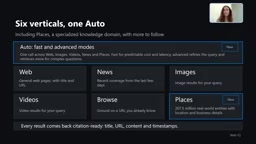
Microsoft WebIQ: Verifiable Real-Time Web Grounding for AI Agents
Microsoft WebIQ gives AI Agents real-time, citable web grounding across web, news, images, videos, and Places—164ms P95 latency, 50% fewer tokens, Scopes source control, and MCP integration.
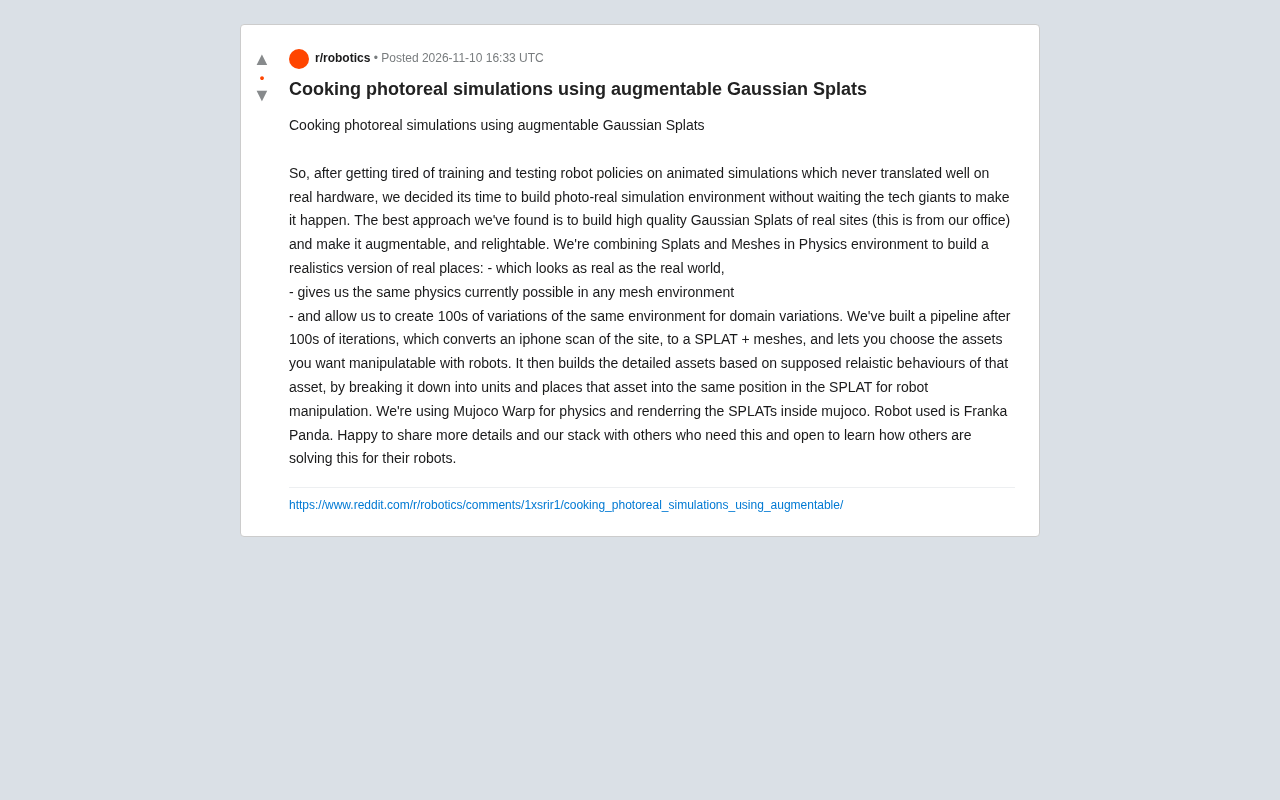
Augmentable Gaussian Splatting: Building Photorealistic Simulation Environments for Robot Training
Team combines Gaussian Splatting with meshes to build photorealistic robot simulation environments, integrating MuJoCo Warp physics and Franka Panda for augmentable, relightable real-site simulation.

Gemini 4 Carbon Released: The Leap from Gemini 3 to Gemini 4 in Under a Year
Google releases Gemini 4 Carbon, less than a year after Gemini 3. In the official demo, Carbon reverse-engineered the Theme Park binary, added a new DeepMind-themed ride, and ported it to the web in one shot.