SOP-Bench: A New Benchmark for Evaluating AI Agents on Real Business Procedures
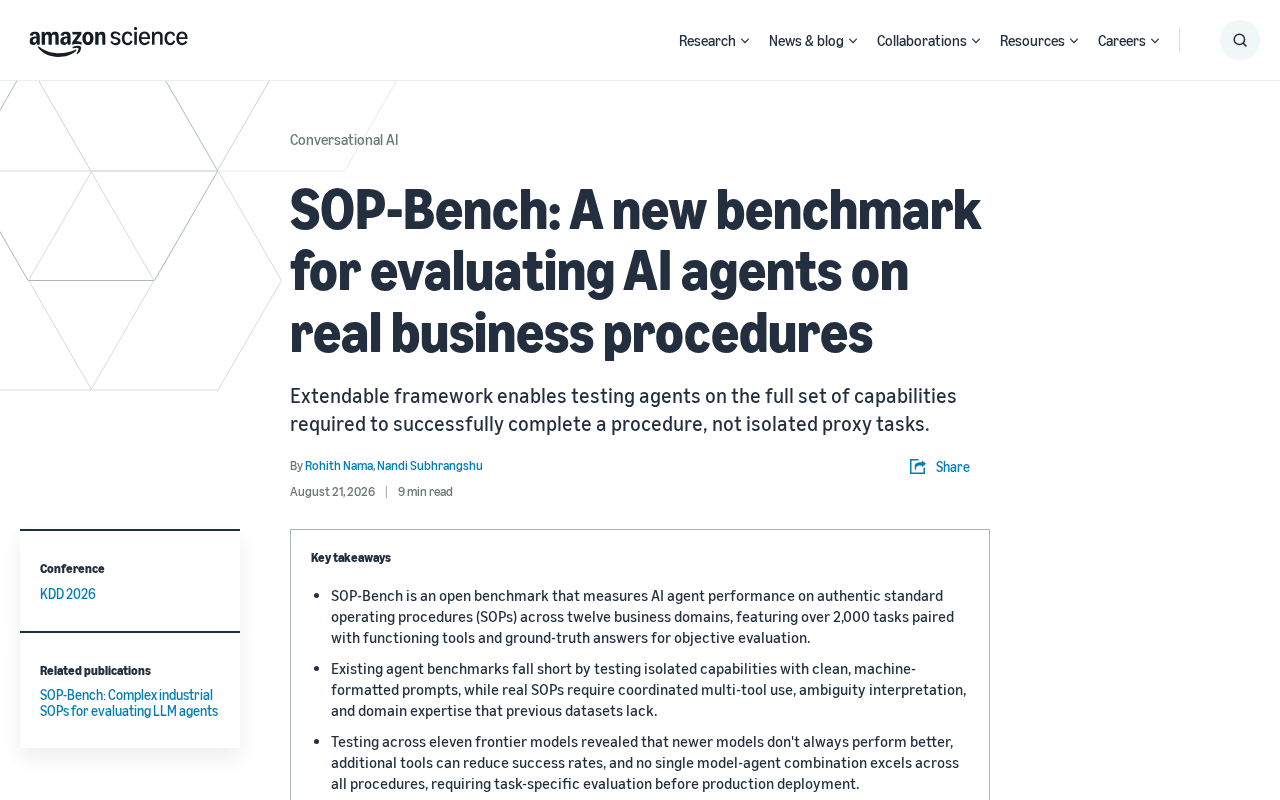
SOP-Bench evaluates AI agents on complete business workflows, not just isolated tasks.
SOP-Bench is an AI agent benchmark built around real enterprise business workflows, designed to address the shortcoming of existing evaluations that rely too heavily on isolated proxy tasks and fail to measure end-to-end execution. Unlike WebArena, ToolBench, and similar benchmarks, SOP-Bench tests agents against complete Standard Operating Procedures, requiring multi-step state tracking, cross-system context consistency, and exception handling. Its extendable framework also supports custom enterprise scenarios. This represents a key shift in AI agent evaluation: from asking whether a model "knows" a skill to whether an agent can reliably complete a real task from start to finish.
What Problem Does SOP-Bench Solve?
Most current methods for evaluating AI agents rely on isolated proxy tasks — single-step Q&A, simple tool calls, or operations within closed sandboxes. While these tests reveal certain model capabilities, they fail to answer a more critical question: when an agent is deployed in a real enterprise business process, can it complete an entire Standard Operating Procedure (SOP) from start to finish?
SOP-Bench was proposed specifically to address this gap. Its core idea is to stop using fragmented tasks as approximations of real work, and instead evaluate agents against complete business workflows — measuring the full set of capabilities required across an entire process chain, rather than performance on any single isolated step.
A Standard Operating Procedure (SOP) is a formalized description of a specific business process in enterprise operations, typically including explicit execution steps, decision conditions, exception-handling paths, and acceptance criteria. In domains like customer service, financial approval, IT operations, and supply chain management, SOPs are the core tools for ensuring business consistency and compliance. Deploying AI agents in SOP execution scenarios means the agent must understand process rules described in natural language, maintain execution state across multiple interaction turns, and make judgments aligned with business logic when exceptions arise — all of which is far more complex than answering a Q&A question or making a single API call.
The Shift from "Isolated Tasks" to "Complete Workflows"
Real enterprise procedures typically consist of multiple interdependent steps: reading information, calling different systems, making decisions, handling exceptions, validating results, and moving to the next step. A failure at any single point can cause the entire process to break down. Traditional benchmarks evaluate these steps in isolation, which tends to overestimate an agent's practical usability — a model may perform well on each isolated subtask while being unable to chain them together into a reliable end-to-end execution pipeline.
SOP-Bench emphasizes the "full set of capabilities" needed to complete a workflow: continuously tracking process state, maintaining context across steps, and sustaining consistency throughout long execution chains. This evaluation perspective is much closer to what enterprises actually care about when deploying agents: can this Agent get the job done?
Leading AI agent benchmarks — such as WebArena (web navigation), ToolBench (tool calling), and AgentBench (multi-environment tasks) — typically use single-task success rate as their primary metric, with tasks that are mutually independent. This design makes it easy to control experimental variables, but introduces a fundamental limitation: errors in real business processes tend to propagate. An error at step three may stem from a data extraction mistake at step one, not from step three itself. Isolated task evaluation inherently cannot capture these cross-step error cascades, which means that even high scores on individual subtasks offer no guarantee of end-to-end process reliability.
The Value of an Extendable Framework
SOP-Bench is designed as an extendable framework — meaning it is not a fixed test bank, but an evaluation system that can continuously incorporate new processes and scenarios. For the rapidly evolving AI agent field, this extensibility is particularly important: as model capabilities improve and application domains expand, the benchmark itself needs to evolve to stay relevant.
The extendable framework also creates another layer of value: enterprises and researchers can build customized evaluation sets based on their own actual business processes, enabling more precise judgments about whether a specific agent fits a particular deployment need — rather than simply referencing scores on a generic leaderboard.
Implications for the Industry
AI agents are moving from demos into production environments, and "can they handle real work?" is the critical threshold that determines their commercial value. Evaluation approaches like SOP-Bench — oriented around complete business workflows — reflect an important shift in the evaluation paradigm: from measuring whether a model "understands" something, to measuring whether an agent can actually "get something done."
For teams evaluating whether to deploy AI agents, this direction offers a more pragmatic reference framework — one that focuses on end-to-end completion rates, exception-handling capabilities, and process reliability, rather than being misled by impressive performance on individual capabilities. As more real-world-oriented benchmarks emerge, the evaluation of AI agent capabilities is poised to become more transparent and credible.
(Note: This article is based on limited source material. For specific evaluation metrics, coverage of business process types, and experimental results, please refer to the official SOP-Bench publication.)
The gap between end-to-end completion rate and single-step accuracy is dramatically amplified in long-chain tasks. If each step in a 10-step process has a 90% individual success rate, the end-to-end completion rate is only about 35%; even raising each step's success rate to 95% yields an end-to-end rate of only around 60%. This mathematical reality explains why models that excel on isolated benchmarks so often disappoint in real business deployments. An evaluation framework centered on process integrity more honestly reflects this gap, helping decision-makers set more reasonable expectations and acceptance criteria.
Related articles
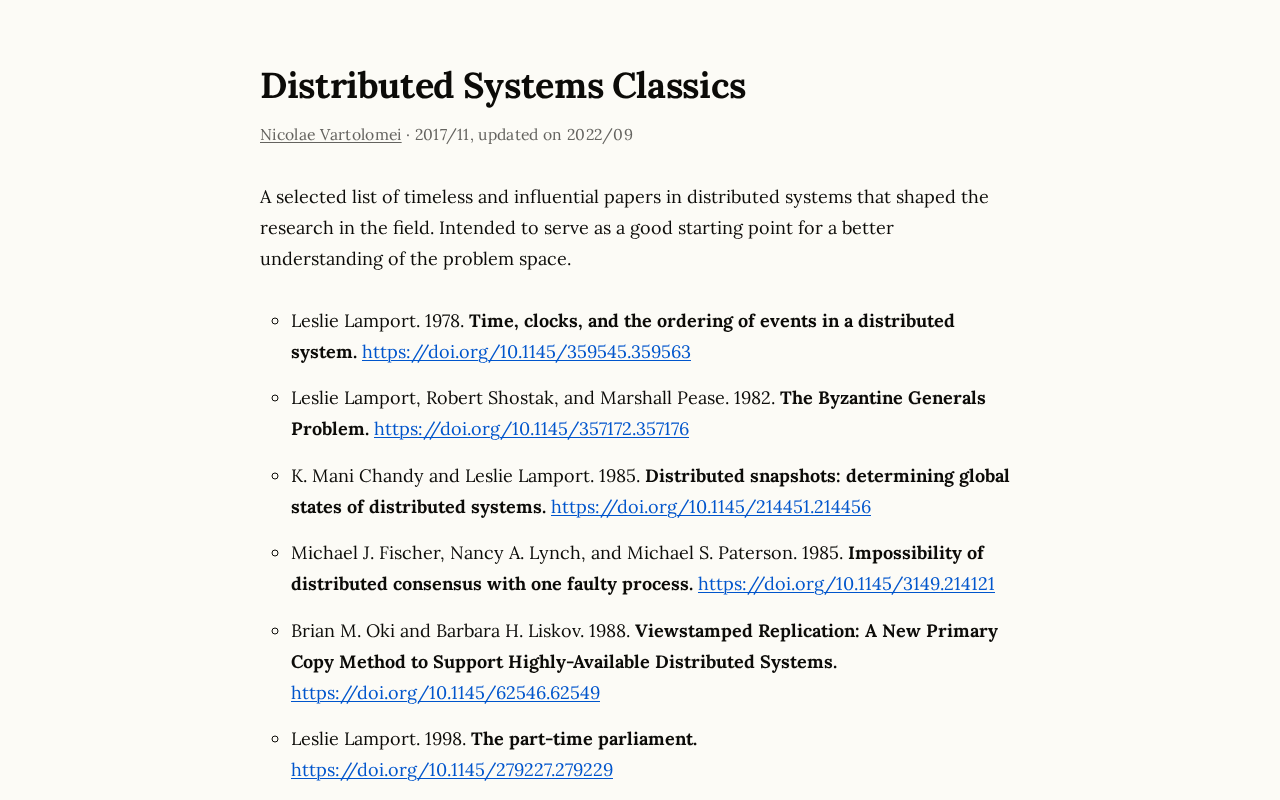
A Reading Guide to Distributed Systems Classic Papers: From Beginner to Expert
A viral Hacker News list of distributed systems classic papers covering consensus algorithms, logical clocks, and the CAP theorem — a structured learning path for engineers.
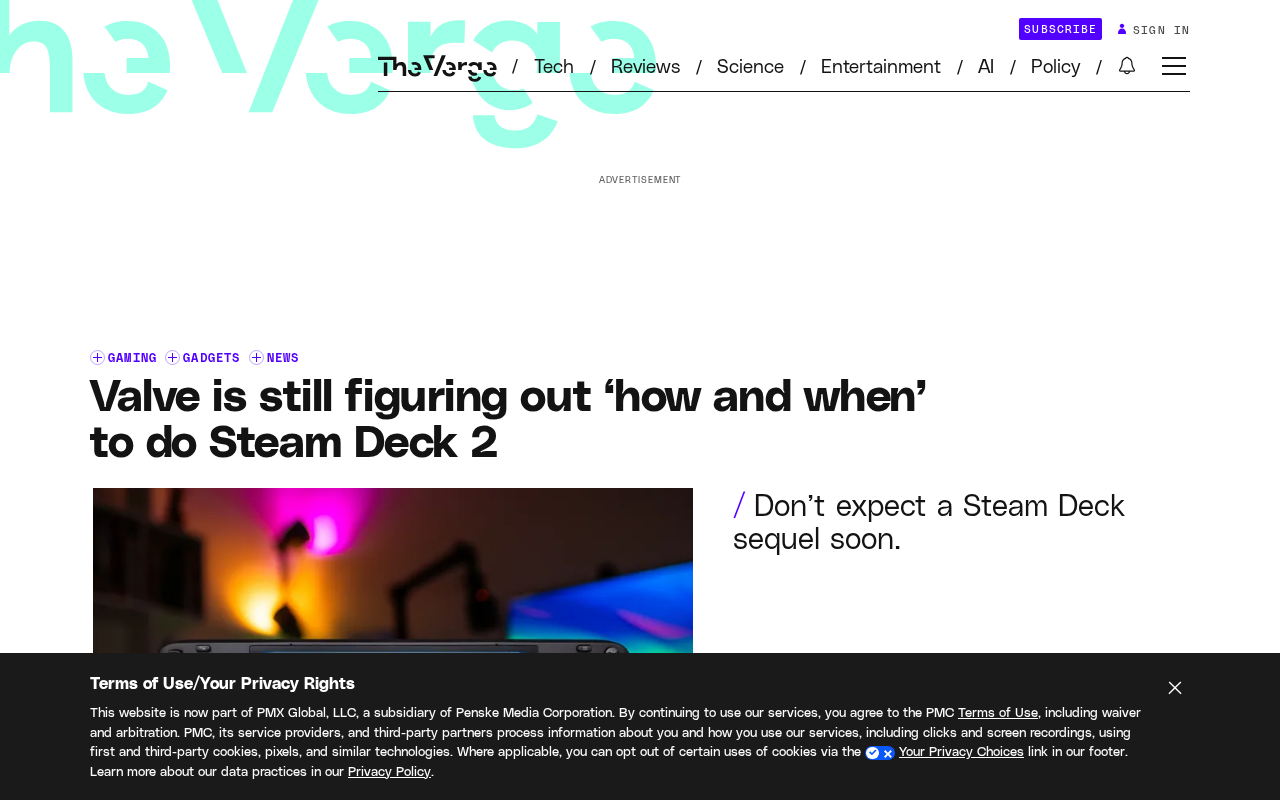
Valve Is Still Weighing When and How to Launch Steam Deck 2
Valve has completed its 2026 hardware lineup with Steam Controller, Steam Machine, and Steam Frame, but Steam Deck 2 still has no set timeline. Valve says it's still weighing "how and when" to launch.
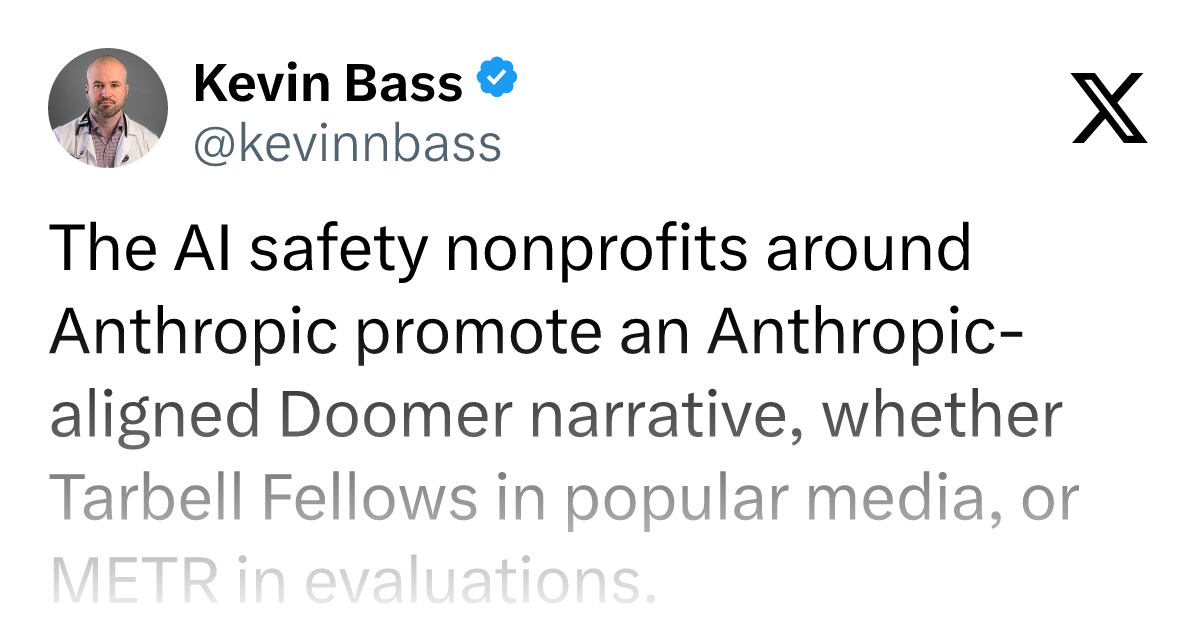
Regulatory Capture Accusations: The Controversy Over Anthropic's Capital and Policy Loop
A Hacker News post questions whether Anthropic is caught in a regulatory capture financial loop. We unpack the concept and why it's being aimed at top AI firms.