Sorinai: The AI Note-Taking Tool That Fills Out Your Forms in Real Time During Meetings — No More Post-Meeting Cleanup

Sorinai fills your meeting note templates in real time using AI, eliminating post-meeting cleanup.
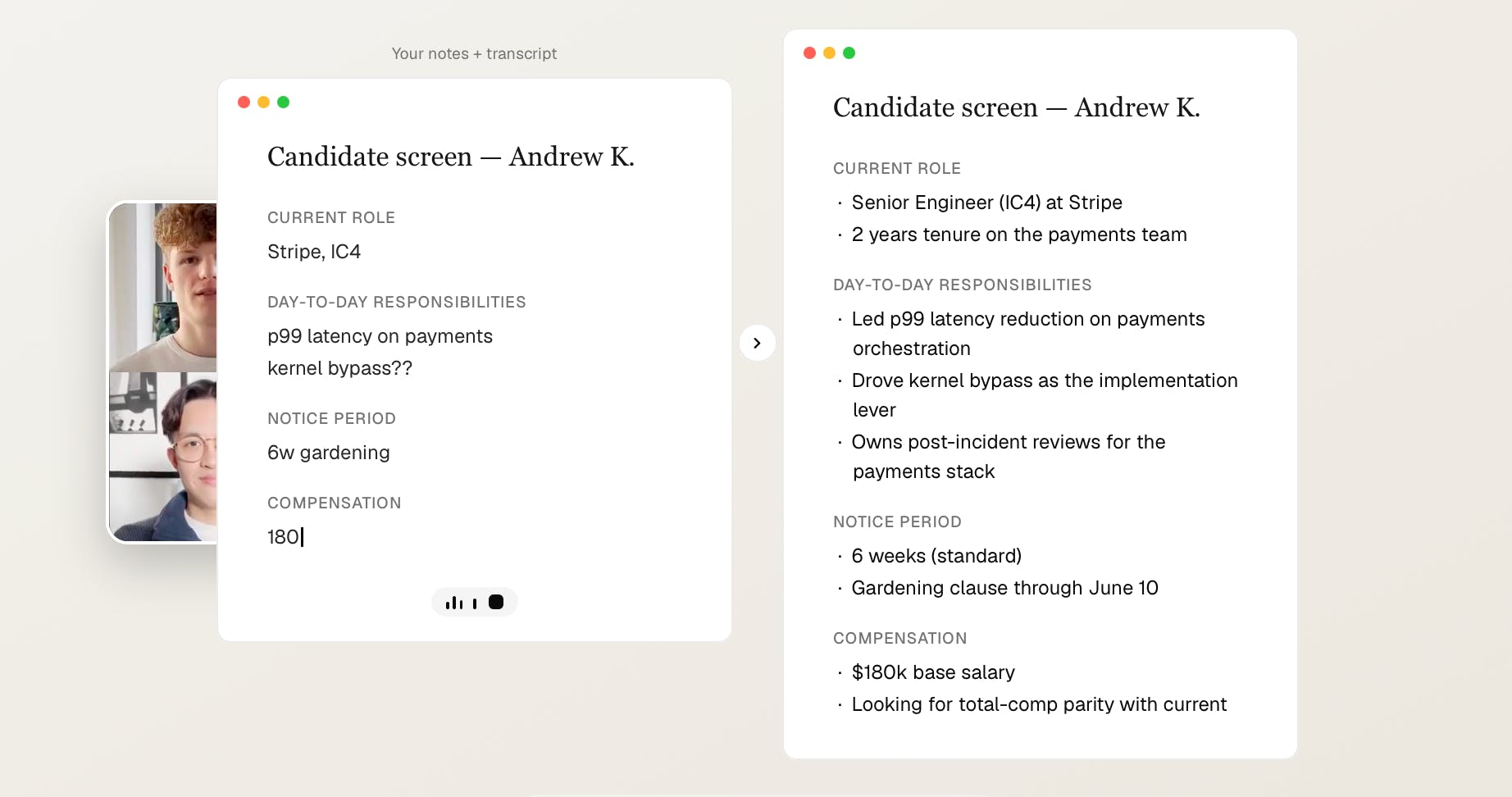
Sorinai is a new AI meeting tool that automatically fills your custom templates in real time during meetings. It captures system audio without adding bots to calls, works across all platforms, and lets you ask AI questions mid-meeting. Currently free with unlimited notes, it represents a shift from post-meeting summarization to real-time AI collaboration.
A New Paradigm for Meeting Notes: From Post-Meeting Cleanup to Real-Time Collaboration
In an era where remote work and video conferencing have become the norm, meeting note tools are hardly new. But the vast majority of products still follow a linear workflow of "record first, transcribe second, organize later" — you have to spend significant time after the meeting listening back, editing, and summarizing before you get a usable set of minutes. A new tool that recently launched on Product Hunt, Sorinai, aims to break this pattern. Its core selling point: while your meeting is still happening, AI has already filled out your note template.
The tech stack of traditional meeting note tools typically includes three independent modules: an ASR (Automatic Speech Recognition) engine converts audio to text, an NLP (Natural Language Processing) module handles sentence segmentation, punctuation, and Speaker Diarization, and finally a summarization algorithm generates structured minutes. This pipeline architecture inherently introduces latency — each module needs complete context to achieve optimal output. Sorinai attempts to compress these three stages into a nearly synchronous single process, which from an engineering perspective means using Streaming Inference — where the model begins producing results as it receives partial input, similar to the token-by-token generation mechanism of large language models.
According to its Product Hunt page, Sorinai currently has 87 upvotes and ranks #20 on the day's leaderboard, categorized under Productivity, Notes, and Meetings. While the vote count isn't blockbuster territory, its product approach is worth paying attention to.
Core Features of Sorinai Explained
Import Your Own Templates Instead of Being Forced Into Preset Formats
Sorinai's most distinctive design choice is allowing users to directly import templates they're already using — whether Word documents, PDFs, or plain text. The tool reads the template's structure, understands the fields within it, and then automatically extracts information from conversation content during calls, filling in each field one by one.
This addresses a major pain point with many AI meeting note tools: they often force users to accept the platform's preset summary format, when in reality every company and team has their own templates refined over years (such as sales call reports, requirements review forms, one-on-one meeting records, etc.). Sorinai's approach is to "accommodate your workflow" rather than making you accommodate it.
From a technical perspective, this "listen and fill" capability falls under Real-time Information Extraction. The model needs two core capabilities: first, semantic understanding of template fields — the model needs to know that a field like "client budget" should be extracted from a certain type of expression in the conversation; second, streaming context management — as the conversation progresses, information extracted earlier may need to be corrected by later content (e.g., a client first says the budget is 500K, then changes it to 1M). This type of task is academically known as Incremental Slot Filling, a classic challenge in dialogue system research. The emergence of large language models has significantly improved generalization for this task, but inference latency and token consumption in real-time scenarios remain engineering bottlenecks.
No Bot Joins Your Meeting — Direct System Audio Capture
Another technical detail is its audio capture method. Many meeting assistants on the market (various Meeting Bots) need to join meetings as a "participant," adding an extra avatar on screen — both awkward and raising privacy concerns.
Sorinai explicitly states "No bot joins your meeting" — it captures your computer's system audio. This means it isn't limited to any specific video conferencing platform: Zoom, Teams, Google Meet and other video calls, phone calls, even in-person meetings — as long as the sound can be captured by your computer's microphone or system audio, it works. This "platform-agnostic" design significantly broadens the applicable scenarios for real-time meeting notes.
System Audio Capture refers to the technology where an application directly intercepts the operating system's audio output stream. On macOS, Apple introduced the ScreenCaptureKit framework starting with macOS 12 Monterey, allowing apps to capture audio output from specific applications or the entire system after user authorization, without requiring virtual audio devices. On Windows, WASAPI (Windows Audio Session API) Loopback mode achieves similar functionality. By contrast, traditional Meeting Bot approaches (used by Recall.ai, Fireflies, etc.) need to join via the meeting platform's API or as a virtual participant, which not only incurs additional API call costs but also exposes the bot's presence in the participant list. However, system audio capture also has its limitations: it can only record sound played on the local machine and cannot access independent audio tracks or speaker metadata provided by the meeting platform, which poses challenges for subsequent speaker diarization accuracy.
Ask AI Questions in Real Time During Meetings: What Should I Say Next?
The feature that best embodies the "Interactive" positioning is Sorinai's support for asking AI questions directly during an ongoing call. The example given in the product description is: you can ask it "what to say next."
Sorinai isn't just a passive meeting recorder — it's more like a real-time meeting copilot. It listens, takes notes, and simultaneously provides prompts based on context. For roles that need instant responses during conversations — sales reps, customer success managers, interviewers — this real-time assistance capability may be more valuable than a perfect post-meeting summary.
Single-Meeting Queries and Cross-Meeting Knowledge Base Search
At the data layer, Sorinai supports asking questions about a single meeting, as well as querying across all historical meetings at once. This effectively upgrades meeting records from "isolated documents" to a "searchable knowledge base." Once you've accumulated dozens or hundreds of meetings, the ability to ask cross-cutting questions like "what common concerns have these clients all mentioned" becomes increasingly valuable as data volume grows.
Sorinai's Differentiated Positioning and Business Strategy
Sorinai currently supports both Mac and Windows platforms and promotes "Unlimited notes, free." In a landscape where AI meeting tools typically use subscription models charging by minutes or number of meetings, the free unlimited strategy is clearly aimed at rapidly acquiring early users and accumulating usage data.
Looking at the competitive landscape, the AI meeting assistant space experienced explosive growth in 2023-2024. Leading players include: Otter.ai (focused on transcription + summaries, with over a million MAU), Fireflies.ai (emphasizing CRM integration and meeting search), Fathom (rapid growth through a free strategy, received HubSpot investment in 2024), Granola (minimalist meeting notes within the Apple ecosystem), and Microsoft Copilot's built-in Teams meeting summary feature. Most of these products follow the post-processing paradigm of "record → transcribe → summarize." Sorinai's real-time interactive positioning is closer to the concept of an "AI Copilot during meetings," and the track's core competitive moat is shifting from "transcription accuracy" to "workflow integration depth" and "real-time intelligence level."
From a product philosophy perspective, Sorinai is taking a clear differentiation path:
- Not building another transcription tool, but rather an interactive meeting assistant with "real-time form filling + real-time Q&A";
- Not tied to any platform, achieving full-scenario coverage through system audio;
- Not forcing formats, respecting users' existing template assets.
Questions Worth Considering Before Using Sorinai
As an early-stage product, Sorinai's vision is clear, but several real-world questions remain to be validated:
Balancing real-time performance with accuracy. Filling fields while listening places extremely high demands on speech recognition and information extraction capabilities in real time. If key information is filled incorrectly during a meeting, users still need extensive post-meeting verification, actually increasing their burden.
Privacy and compliance risks. While capturing system audio avoids the awkwardness of "bots joining meetings," recording call content involves different compliance requirements across jurisdictions — especially for phone calls and in-person meetings. Call recording compliance varies significantly worldwide: the US uses both "One-Party Consent" and "All-Party Consent" standards, with 12 states including California and Illinois requiring all parties' consent for legal recording; under the EU's GDPR framework, recording calls constitutes processing personal data and requires a legal basis (typically explicit consent or legitimate interest); China's Personal Information Protection Law similarly requires notification and consent before collecting personal information. Particularly noteworthy is that when the tool captures system audio, other meeting participants may be completely unaware that the conversation is being recorded and processed by AI — this creates a larger compliance gray area than Meeting Bot approaches (which are at least visible in the participant list). Whether the product can provide clear authorization and notification mechanisms will affect its acceptance in the enterprise market.
Sustainability of the free model. Unlimited free is suitable for cold starts, but AI inference costs are substantial. Based on current market pricing estimates, Whisper-level ASR processing costs approximately $0.006 per minute, while a GPT-4 level model performing summarization and information extraction on a 60-minute meeting transcript consumes approximately 30,000-50,000 tokens (input) + 2,000-5,000 (output), costing about $0.50-$1.50. For real-time streaming processing with mid-meeting Q&A support, costs could double. This means an active user holding 10-20 meetings per month could generate $15-$40 in AI inference costs alone. Under the "unlimited free" promise, Sorinai's early burn rate will be highly correlated with user activity levels. Common subsequent monetization paths include: premium template features, team collaboration subscriptions, enterprise versions with CRM/project management tool integration, or charging for advanced search capabilities across historical knowledge bases. How to find a sustainable revenue model while maintaining the free offering's appeal is a question the team must answer.
Conclusion: Sorinai Transforms AI from Meeting Observer to Active Participant
Sorinai represents an evolutionary direction for AI meeting note tools: from "post-meeting cleanup" to "real-time collaboration." With three clever design choices — importing your own templates, system audio capture, and real-time Q&A during meetings — it transforms AI from a meeting observer into an active participant. For knowledge workers who spend their days in meetings, this experience of "AI taking notes alongside you" may be closer to real needs than a perfect post-meeting summary. Of course, the product is still in its early stages, and its actual performance regarding accuracy, privacy compliance, and commercialization remains to be validated by the market.
Related articles

Lincoln's Great Speeches: Historical Echoes of Leadership and Courage
Deep analysis of the leadership wisdom behind Lincoln's Second Inaugural and Gettysburg Address—from listening skills and bearing immense pressure to the courage to speak truth in moments of victory.

A Non-Programmer's Complete Guide to Building a Hugo Website from Scratch with Claude
How a non-web developer used Claude AI to build a custom Hugo website theme from scratch, with org format support, dark theme, card layouts, and more—from prototype in 5 minutes to polished site in days.
The Mathematical Physics of Rainbows a…
The Mathematical Physics of Rainbows and Glories: From Geometric Optics to Complex Angular Momentum Theory
An in-depth analysis of the mathematical physics behind rainbows and glories, from Descartes' geometric optics and Airy function wave theory to complex angular momentum scattering theory.