SpaceX Eyes Mobile Market: Plans to Tap 80,000 Cell Sites to Challenge Traditional Carriers
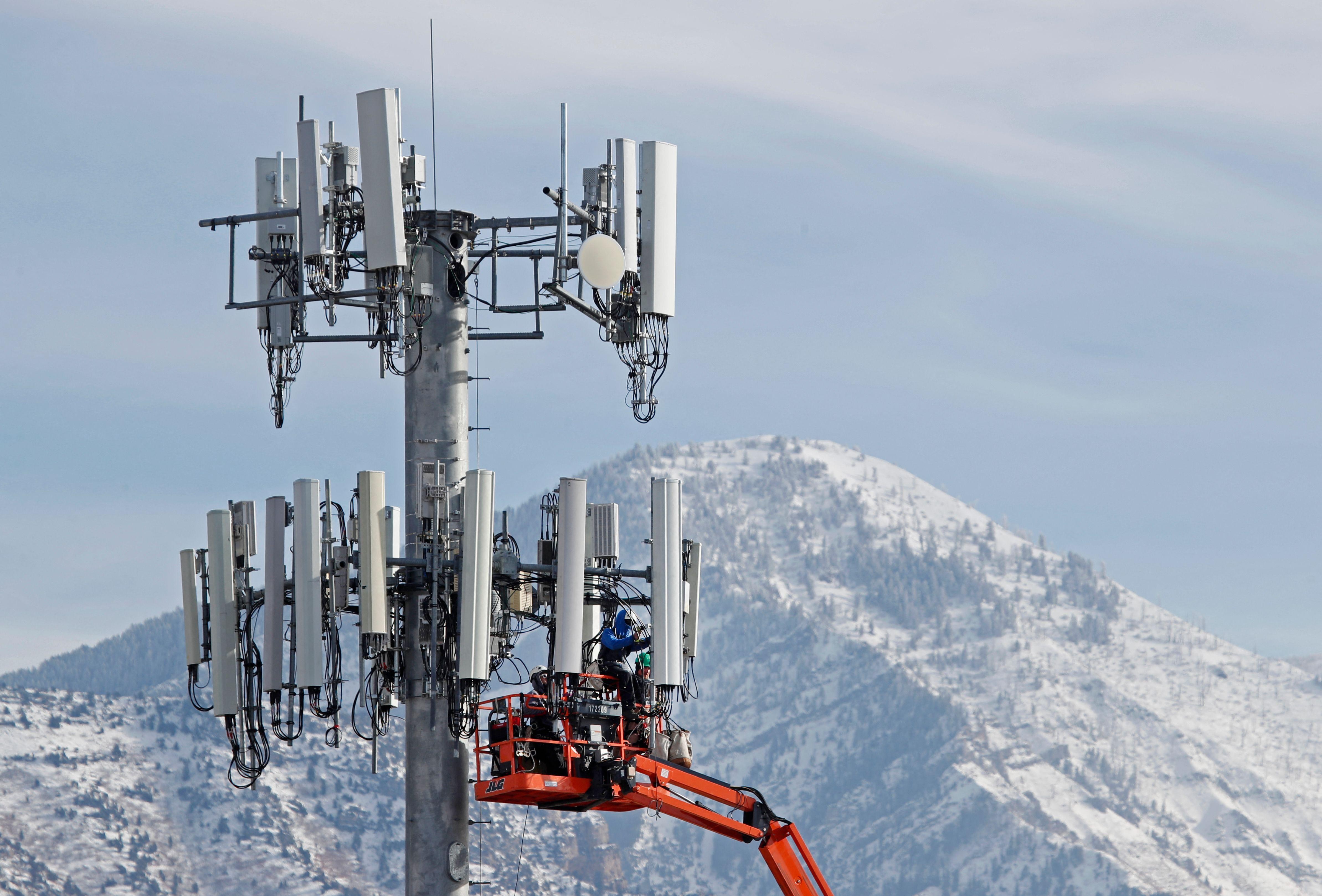
SpaceX plans to access 80,000 terrestrial base stations, entering the U.S. mobile communications market from satellite internet.
According to Bloomberg, SpaceX is planning to access at least 80,000 terrestrial cellular base stations and has entered early talks with Crown Castle, one of the largest U.S. tower companies, aiming to directly challenge Verizon, T-Mobile, and AT&T. The article analyzes that pure satellite solutions have limited capacity in dense areas, and accessing terrestrial sites would allow SpaceX to build an integrated "satellite + ground" network. Technically, SpaceX could act as an MVNO leasing networks or build its own RAN and connect to tower sites, but the latter is constrained by its lack of terrestrial mobile spectrum. Lack of terrestrial operating experience, regulatory approvals, and possible carrier backlash are real obstacles. If successful, the U.S. telecom competitive landscape would change significantly.
SpaceX's ambitions have long extended beyond satellite internet. According to Bloomberg, the company is planning to access at least 80,000 terrestrial cellular base stations to directly challenge the U.S. mobile dominance of Verizon, T-Mobile, and AT&T. Sources say SpaceX is in talks with Crown Castle, one of the nation's largest tower companies. If a deal is reached, SpaceX would gain nationwide terrestrial network resources, paving the way for the mobility of its Starlink business.
From Satellite to Ground: SpaceX's Mobile Network Puzzle
SpaceX's mobile communications play is not a sudden move. Previously, the company has provided satellite broadband through Starlink and partnered with T-Mobile to launch direct-to-satellite phone service, allowing ordinary smartphones to send texts and make voice calls in areas without terrestrial signal. However, pure satellite solutions have limited capacity in densely populated areas and struggle to support large-scale mobile data demand. Accessing terrestrial base stations means SpaceX can build a hybrid "satellite + ground" network, offering competitive service in both cities and remote areas.
Bloomberg's report notes that talks between SpaceX and Crown Castle are at an early stage, with the specific deal structure undetermined. Crown Castle owns tens of thousands of cell site locations; if SpaceX can access most of them, it would gain significant leverage in negotiations with traditional carriers. The move also suggests SpaceX may no longer be satisfied as a carrier partner, but wants to become a true mobile virtual network operator (MVNO) or even build its own network.
Technical Prerequisites for Direct-to-Cell: Ordinary phones cannot communicate directly with satellites hundreds of kilometers away because phone transmit power is low, antenna gain is small, and satellites move at high speed, causing severe Doppler shift. The Starlink-T-Mobile partnership solution is to equip satellites with deployable large-aperture phased-array antennas and use the PCS spectrum held by T-Mobile in the LTE band, so that ground phones can connect without hardware changes. However, limited by link budget and single-satellite capacity, the service initially supports only texting and low-speed voice, and is hard-pressed to carry large-scale data traffic in dense urban areas—this is the fundamental reason SpaceX needs terrestrial base stations to supplement capacity.
What Does 80,000 Base Stations Mean?
80,000 base stations is a considerable number. The three major U.S. carriers each own tens of thousands to 100,000 macro base stations, and Crown Castle's site resources cover major metropolitan areas and transportation corridors across the country. By accessing these sites, SpaceX can rapidly deploy its own radio access equipment without building towers and site resources from scratch—typically the most time-consuming and expensive part of network construction.
From a technical perspective, SpaceX may take two paths: first, acting as an MVNO leasing existing carriers' networks; second, building its own radio access network (RAN) and connecting to Crown Castle's sites. The latter requires spectrum resources, and SpaceX currently does not hold large-scale terrestrial mobile spectrum. However, the company has deep expertise in satellite spectrum, and U.S. regulators are exploring spectrum-sharing mechanisms, which offers SpaceX potential opportunities.
Macro Base Stations and Site Resources: Macro cells are the base station type with the largest coverage radius (typically hundreds of meters to several kilometers) and highest transmit power in mobile networks, carrying most wide-area coverage and capacity in urban areas. The three major U.S. carriers each deploy tens of thousands to 100,000 macro base stations. Tower companies (such as Crown Castle) do not operate networks; they own sites, towers, and supporting power and backhaul resources, leasing them to multiple carriers for sharing to reduce duplicate construction costs. "Accessing 80,000 base stations" does not mean directly obtaining a ready-made network, but acquiring the right to install one's own radio equipment at these sites—a prerequisite for building a self-owned RAN.
Difference Between MVNO and Self-Built RAN: A mobile virtual network operator (MVNO) does not own radio access network or spectrum, but wholesales existing carriers' networks and sells services under its own brand. Barriers to entry are low, but profit margins are constrained by wholesale prices. Building a self-owned radio access network (RAN) requires deploying base station equipment, backhaul links, and holding spectrum, with much higher capital expenditure and regulatory thresholds, but full control over network quality and cost structure. The two paths mentioned in the article represent the divide between these two models.
Why Spectrum Is the Core Bottleneck: Radio spectrum is the "land" of mobile communications, owned by the state and allocated by regulators (the FCC in the U.S.) through licenses. Without spectrum, even with sites, signals cannot be legally transmitted. U.S. terrestrial mobile spectrum has been largely divided among the three major carriers and regional players. If SpaceX wants to build its own RAN, it can only rely on spectrum sharing (such as the CBRS shared access mechanism), acquire companies holding spectrum, or wait for regulators to release new bands—this is the biggest source of uncertainty in its entry into the terrestrial market.
Competitive Landscape and Regulatory Challenges
If SpaceX truly enters the mobile communications market, the competitive landscape of the U.S. telecom industry will change significantly. Verizon, T-Mobile, and AT&T have long dominated the market, and new entrants often face high spectrum costs and network construction barriers. SpaceX's advantages lie in its brand influence, satellite network synergies, and low-cost operating experience. But its disadvantages are equally clear: lack of terrestrial network operating experience and the need to navigate complex regulatory approvals.
In addition, Crown Castle, as a tower company, has long-term partnerships with existing carriers. If SpaceX acquires a large number of site resources, it could trigger backlash from traditional carriers. Some analysts believe carriers may accelerate their own network upgrades or use legal and regulatory means to delay SpaceX's entry.
Starlink's Next Step: The Integrated Network Vision
SpaceX's long-term vision is to build a communications network with seamless global coverage. Starlink satellites handle wide-area coverage, while terrestrial base stations handle capacity and indoor coverage; combining the two can create a highly competitive service. This model is technically feasible but commercially challenging: how to price, how to coexist with existing carriers, and how to persuade regulators to approve are all open questions.
Currently, SpaceX has not responded to the report. Crown Castle also declined to comment. But what is certain is that Musk's company is transforming from satellite internet into an integrated telecom operator, and the 80,000 base stations are just one move in this larger game.
(This article is based on Bloomberg reporting and public information analysis and does not constitute investment advice.)
One-line Summary
SpaceX plans to access 80,000 terrestrial base stations, entering the U.S. mobile communications market from satellite internet.
Paragraph Summary
According to Bloomberg, SpaceX is planning to access at least 80,000 terrestrial cellular base stations and has entered early talks with Crown Castle, one of the largest U.S. tower companies, aiming to directly challenge Verizon, T-Mobile, and AT&T. The article analyzes that pure satellite solutions have limited capacity in densely populated areas, and accessing terrestrial sites would allow SpaceX to build an integrated "satellite + ground" network. Technically, SpaceX could choose to act as an MVNO leasing networks or build its own RAN and connect to tower sites, but the latter is constrained by its lack of terrestrial mobile spectrum. Additionally, lack of terrestrial network operating experience, regulatory approvals, and possible backlash from traditional carriers are real obstacles. If successful, the U.S. telecom competitive landscape would change significantly.
Related articles
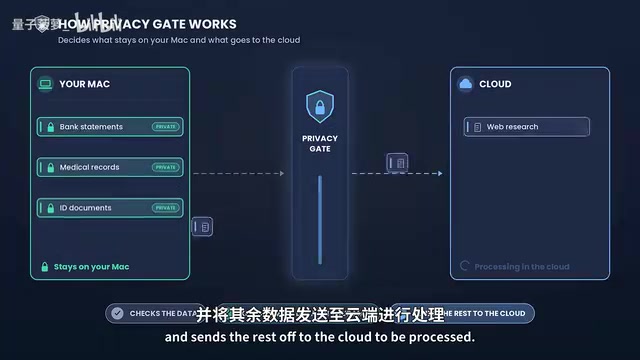
Perplexity Hybrid Compute Tested: Privacy Data Never Leaves the Mac
Perplexity Hybrid Compute tested: how PrivacyGate intercepts sensitive data, how local and cloud models divide work, model differences on 16GB vs 32GB Macs, and privacy protection in real scenarios like bank statements and medical records.

Big Fat Fish Roasts Mainstream LLMs at Home and Abroad: Doubao Takes the Crown, DeepSeek Tied for First
Bilibili creator Big Fat Fish roasts mainstream LLMs: Doubao tops for emotional value, DeepSeek ties first for open-source value, with ERNIE, Hailuo, Yuanbao, Kimi, Qwen, Kling, Claude, Gemini, and Grok each branded with a distinct persona.

How to Truly Test AI Agents Before Production? A Practical Testing and Monitoring Framework
BotGage founder Pramin Pradeep shares a three-step framework for testing AI Agents before production: Agent registration visibility, red teaming, and production observability — plus a real case cutting QA costs from $180K to $80K and an analysis of IT roles shifting to Agent supervisors.