Speech Recognition Is Far From Solved: A Deep Dive with Mistral's Head of Audio Research

Mistral's audio chief breaks down Voxtral and explains why speech recognition remains unsolved in real-world deployment.
In a deep-dive interview with Mistral AI's Head of Audio Research Pavan Kumar Reddy, this article covers the full scope of Mistral's voice technology: Voxtral Chat's end-to-end audio understanding architecture, the TTS model's use of flow matching over discrete RVQ codebooks, tunable latency streaming, built-in speaker diarization, and DPO-based fixes for degenerate generation. Pavan's key takeaway: despite impressive demos, ASR remains far from solved for non-dominant languages and noisy real-world environments — making customization and cascaded system observability still highly valuable in enterprise settings.
Speech is humanity's oldest form of communication, predating written language by millennia. Today's AI voice technology looks nearly flawless in demos — yet Pavan Kumar Reddy, Head of Audio Research at Mistral AI, offers a counterintuitive verdict: automatic speech recognition (ASR) is far from a solved problem. In a wide-ranging podcast conversation, he breaks down Mistral's audio model architecture, the tradeoffs between streaming and batch processing, the challenges of speaker diarization, and the many gaps that surface when voice technology meets real-world deployment.
From Voxtral to End-to-End Speech Models: Mistral's Audio Strategy
Mistral positions itself as a "full-stack AI company," spanning the model layer, application layer (Mistral Vibe coding tool, Vibe Work agentic work platform), AI Studio (APIs and agent workflows), Forge (fine-tuning and model adaptation), and Mistral Compute (AI cloud infrastructure). Pavan's audio research team sits at the core of the model layer.
The audio strategy began with last year's release of Voxtral Chat — a large language model with audio input and text output. It's not just a transcription tool; it's a general-purpose audio understanding interface. You can feed it a lengthy earnings call or podcast recording and interact with it the way you would a text document: What topics were discussed? Who spoke when? At what point was a particular subject mentioned?
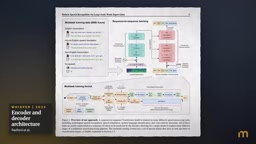
Pavan emphasizes that this kind of "native audio understanding" is fundamentally different from traditional cascaded pipelines (transcribe first, then feed text to a chatbot). End-to-end processing eliminates error propagation across the cascade and captures information that transcriptions simply can't carry — emotion, for instance. More importantly, intermediate transcript formats require upfront decisions about what information to preserve (e.g., timestamp granularity), whereas a native audio model can use attention to directly focus on the relevant parts of the input.
Architecture Choices: The Power of Simple Recipes
Voxtral's architecture embodies a "Lego-style" compositional philosophy. It uses a 3-billion-parameter text model (from the Mistral series) as its trunk, with an audio encoder converting audio into continuous embeddings that are fed directly into the decoder as if they were text tokens — unlike Whisper, which routes encoder outputs through cross-attention. The encoder produces one audio token every 80 milliseconds, or 12.5 tokens per second at a fixed frame rate.
Pavan repeatedly stresses the team's preference for simple recipes: the simpler the recipe, the more it stands the test of time and the easier it is to scale. The model is pretrained end-to-end on just two basic tasks — an interleaved audio-text continuation task, and a transcription task for aligning the audio and text modalities. Even when fusing audio and text tokens in the real-time model, the team chose the simplest possible approach — direct summation — over more elaborate fusion techniques. "It works just as well as the complex methods."
On the generation side, Voxtral TTS — released in March of this year — uses a decoder-only transformer backbone to autoregressively predict continuous latent variables, which are then reconstructed by a neural codec. Why continuous latent variables instead of the mainstream discrete token approach? Pavan explains that discrete token schemes (like EnCodec, SoundStream, or Mimi) require predicting a set of residual vector quantization codebook indices at each timestep. In their setup, that meant over 30 codebooks — requiring 30+ steps of "intra-codebook autoregression" per timestep. To reduce this complexity, the team turned to flow matching — a diffusion-based approach that uses a flow head to predict a velocity field, then integrates over a fixed number of steps at inference time. The number of steps is tunable, providing fine-grained control over the quality-speed tradeoff. Since their neural codec is used purely for generation rather than bandwidth-constrained communication, the "bottleneck" justification for discrete codebooks doesn't apply — continuous embeddings open up more design space.
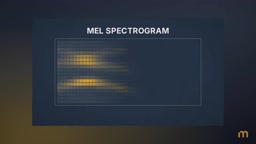
On the choice of input features, Pavan candidly acknowledges this as a classic inductive bias tradeoff. At smaller model scales, mel spectrograms — which encode audio through the lens of human auditory perception — offer higher sample efficiency. But as model and data scale grows, such preprocessing becomes unnecessary, and feeding raw waveforms directly (or even removing the encoder entirely) is becoming increasingly common. This allows general-purpose models to discover better solutions unconstrained by human-designed inductive biases, and makes scaling behavior more predictable.
Flow Matching is a generative modeling paradigm that has gained traction in recent years, best understood as a simplification and generalization of diffusion models. While traditional diffusion models learn to reverse a gradual noising process, flow matching directly learns a continuous velocity field that "flows" a noise distribution toward the data distribution. At inference time, you start from random noise and integrate along the learned velocity field (e.g., via Euler's method) over a fixed number of steps to generate a sample. Flow matching trajectories tend to be shorter and straighter than diffusion paths, requiring fewer integration steps and enabling more efficient inference. In TTS, this means a small number of inference steps can "flow" random noise in the continuous latent space into the target speech representation, which is then reconstructed into a waveform by the neural codec — with the integration step count serving as a tunable quality-speed knob.
Residual Vector Quantization (RVQ) is the discretization scheme used by mainstream neural audio codecs (e.g., EnCodec, Mimi): continuous audio features are quantized sequentially across multiple codebooks, with each codebook capturing the residual error from the previous one. More codebook layers yield higher reconstruction quality, but autoregressively predicting multiple codebook indices per timestep significantly increases computational complexity and generation latency — which is precisely what motivated Mistral's shift to continuous latent variables.
Streaming vs. Batch: A Controllable Quality-Latency Tradeoff
Pavan's honest assessment of the audio field is that no single architecture represents a "final form" — even more so than in text. The goal of streaming models is to have the model "listen continuously" rather than process audio in chunks, inspired in part by Kyutai's latency-stream modeling — with the key difference being that the encoder is trained end-to-end from scratch.
There's a subtle tradeoff here: a model can wait until it has heard all the audio before outputting a transcription (as Voxtral Chat and the original Whisper do), or it can emit tokens immediately upon hearing something like "New York." But immediate output introduces ambiguity — a word prefix can itself be a standalone word. The longer you wait, the less ambiguous the output and the lower the error rate. Mistral's elegant solution is to make "target latency" a parameter of the model itself. Users can tune it based on their use case — subtitle display demands low latency, while archival transcription can tolerate higher latency in exchange for accuracy. You can even run multiple streams at different latency targets simultaneously: a fast stream for immediate display, a slow stream to retroactively correct it.
The podcast host added a practitioner's perspective: you can layer various engineering refinements on top of cascaded systems — for instance, using Claude to refine ASR transcripts, correcting misrecognized names and technical terms using full-document context, or injecting custom vocabularies. Pavan responded that if he were building Voxtral Chat today, it would be a reasoning model — capable of transcribing only what's necessary within its chain of thought, searching the web, retrieving context for disambiguation, and re-transcribing, all within a single model call.
Speaker Diarization: A Hard Problem That's Far From Solved
Mistral builds speaker diarization directly into the model as an autoregressive task, rather than as a separate head or data stream. In the async model, the output is segmented transcription — start time, transcript text, end time — plus a speaker ID (speaker 0 through speaker i), all trained with the same autoregressive loss.
But Pavan is blunt: this problem is "far from solved," especially for multi-speaker scenarios with three or more people and overlapping speech in noisy environments. He even suggests empathizing with the model's difficulty: humans have visual input, sound localization cues, and other signals to help them identify speakers, while an audio model faces a single-channel, downmixed audio stream and must distinguish among strangers it has never heard before — who may sound similar. Real conversations are filled with overlaps (speech doesn't neatly take turns), and the model must not only detect that multiple people are speaking simultaneously, but figure out who is saying what.
The host's practical observations confirm this: streaming models exhibit more failure modes than batch models and frequently "hallucinate" fifth or sixth speakers out of nowhere — a direct consequence of insufficient context. On the classic "cocktail party problem," Pavan believes models could in principle achieve superhuman performance (e.g., simultaneously tracking all speakers from multiple microphones placed around a room), without being constrained to focus on one source at a time as humans are — but current performance remains far from that theoretical ceiling.
Speaker Diarization is the task of segmenting a multi-speaker audio recording by speaker identity and annotating "who spoke when." It is related to but distinct from Speaker Recognition (identifying who someone is) and Speech Separation (recovering individual audio sources from a mixed signal). Traditional pipeline approaches typically involve three independent modules — Voice Activity Detection (VAD), speaker embedding extraction (e.g., d-vectors, x-vectors), and clustering — with errors cascading across each stage. Recent end-to-end approaches (such as the EEND family) attempt to use a single neural network to directly output frame-level speaker labels, but remain severely challenged when the number of speakers is unknown and heavy overlapping speech is present. Mistral's approach of embedding diarization within the autoregressive text generation framework allows the model to leverage semantic context to help determine speaker identity (e.g., inferring turn-taking from topic continuity) — but this comes at the cost of requiring a sufficiently long context window, which is precisely why limited context in streaming scenarios leads to the "hallucinated speaker" problem.
DPO for Fixing Hallucinations: Giving the Model Negative Supervision
The inherent limitations of autoregressive architectures can lead to degenerate generation: once the model makes a few errors, it tends to "commit" to them, falling into infinite loops, repetitive predictions, or skipping entire segments of transcription after drifting off the training distribution.
Mistral uses DPO (Direct Preference Optimization) to address these failure modes. The recipe is straightforward: collect degenerate outputs from the model as "losers," generate correct versions as "winners," pair them up, and train directly. Pavan emphasizes keeping things "on-policy" — the losers must be outputs the target model would actually produce, not hypothetical failures.
Pavan offers a sharp characterization of the fundamental difference between DPO and supervised fine-tuning (SFT): pretraining and SFT provide purely positive supervision — they reinforce "what is correct" but have no mechanism to say "this is wrong; lower the probability of this sequence." DPO (and adjacent RL techniques) provide exactly that negative supervision lever. Looking at the loss function, it resembles a margin loss: pushing positive samples toward higher probability, pushing negative samples lower, with a constraint that prevents the model from drifting too far from its starting point — repairing subtle errors while preserving capabilities acquired during SFT. Detecting degenerate outputs involves a combination of evaluation metrics, error pattern observation, and user feedback; new error patterns not captured by existing evals often signal the need to build new evaluation suites.
DPO (Direct Preference Optimization) is a 2023 alternative to RLHF. Traditional RLHF requires training a separate reward model first, then optimizing the language model with reinforcement learning algorithms like PPO — a complex and unstable process. DPO simplifies this by directly optimizing the policy model on preference pairs (winner/loser), implicitly expressing the reward function as the log-ratio of the policy itself, bypassing explicit reward model training. Its loss function is essentially a KL-constrained margin loss: it raises the relative probability of the winner sequence, lowers the relative probability of the loser sequence, and uses a KL divergence constraint relative to the reference model to prevent the model from drifting too far and forgetting its original capabilities. In voice models, DPO's "negative supervision" property is particularly valuable: traditional supervised fine-tuning can only tell the model what the correct output is — it cannot directly reduce the probability of degenerate sequences (infinite loops, skipped segments), whereas DPO provides training signal precisely targeted at these failure modes.
The Real World Is the Frontier: Where Voice Technology Falls Short in Practice
When asked where the frontier of voice technology lies, Pavan's answer is surprisingly grounded. Despite widespread claims that "ASR is solved," conversations with customers just weeks prior surfaced a recurring complaint: it's "far from solved in actual deployment scenarios." Even in mainstream call center applications, models still make substantial errors, and enterprises are forced to layer on extensive scaffolding to handle edge cases across millions of conversations.
Specific shortfalls include: dramatic performance degradation on non-dominant languages (because English audio data in the wild vastly outnumbers other languages) and poor performance in real acoustic environments like factory floors, with heavy background noise and multiple overlapping speakers. This is precisely where customization delivers value — audio models are small enough to be customized cost-effectively (you don't need to fine-tune a trillion-parameter model), and enterprises can fine-tune on their own in-distribution data with high-quality annotations to achieve "strictly better" performance for their specific context. Mistral's Forge platform is built for exactly this, while also addressing privacy concerns around sensitive data like meeting recordings.
On the debate between end-to-end omni models and cascaded systems, Pavan offers a balanced perspective: today's cascaded voice stacks actually have strong observability and interpretability precisely because each component uses natural language as its interface. Enterprises can layer in safety systems, audit trails, and compliance layers, and adapt each component independently. For enterprises, the definition of "frontier" is your specific use case, not an external benchmark.
Looking ahead, Pavan sees voice as one of the key interfaces for interacting with AI agents — much like how people in organizations today delegate and collaborate with one another. But the host's observation about "cognitive debt" is worth dwelling on: pure voice interfaces can actually be less efficient for open-ended tasks (like email handling or research) because they lack the rapid information intake, branching choices, and behavioral confirmation that visual media provides. Both agreed that the future is more likely a hybrid form — visual interfaces as the primary modality, with voice as an augmentary enhancement. As for whether audio models are inherently less capable than text models, Pavan is clear: that's purely an artifact of how they're currently developed. There is "no fundamental reason" a single model's audio capabilities should be inferior to its text capabilities.
Related articles

5 Practical Ways Real Estate Agents Can Use AI to Boost Efficiency (2026 Edition)
How can real estate agents use AI to boost efficiency? Based on a YouTube walkthrough, this breaks down five methods — ChatGPT for listing descriptions, Canva for marketing materials, forms for open house leads, Zapier for automated follow-up, and seller meeting prep — and flags risk boundaries like fair housing laws, photo authenticity, and price verification.

Grok Bot vs ChatGPT Agent: Which AI Agent Is More Powerful?
How does Grok Bot differ from ChatGPT Agent? This comparison examines how they work: Grok Bot has a cloud computer and runs persistently inside tools to execute multi-step tasks automatically; ChatGPT Agent operates web pages in a browser and is more mature at general tasks. Includes selection advice.

Walmart Agent Gateway: AI Shops for You Automatically—Why Is Amazon Going the Opposite Way?
Walmart's Agent Gateway lets ChatGPT, Gemini and other AI assistants access its product catalog to search, compare and add to cart, with spending limits and per-purchase approval. Amazon blocks external AI agents—two retail giants, opposite paths. Currently US-only, India may follow.