Stack Overflow for Agents Triples Registrations via ChatGPT Plugin

Stack Overflow tripled registrations overnight via the ChatGPT plugin marketplace, transforming into an AI knowledge intelligence layer.
Stack Overflow is transforming from a programmer Q&A community into a "knowledge intelligence layer" for AI Agents. VP of Product Alex Lado revealed that after Stack Overflow for Agents joined the ChatGPT plugin marketplace, registrations tripled overnight. The product transforms scattered context from Slack, MS Teams, Google Docs, etc. into verified trusted knowledge, solving the knowledge source problem for Agents. The team used Codex to go from hypothesis to a fully functional product in two weeks, and in distribution abandoned the traditional MCP route in favor of the ChatGPT plugin marketplace to reduce onboarding friction. The article argues this validates a step-change growth approach of attaching to high-traffic entry points and achieving near-zero-friction onboarding via plugins, but long-term retention still depends on the actual effectiveness of the knowledge intelligence layer.
Stack Overflow is transforming from a programmer Q&A community into a "knowledge intelligence layer" for AI Agents. In an interview, VP of Product Alex Lado revealed a key data point: after Stack Overflow for Agents joined the ChatGPT plugin marketplace, registrations tripled overnight. This case offers a sample worth analyzing for AI product distribution strategies.
From Scattered Context to Trusted Knowledge: A Shift in Product Positioning
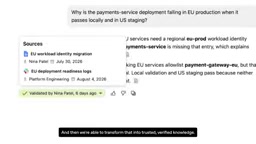
Alex Lado's description of the product is direct: Stack Overflow is building a knowledge intelligence layer that collects raw context scattered across work scenarios like Slack, MS Teams, and Google Docs, and transforms it into verified, trusted knowledge.
This positioning differs notably from the public perception of Stack Overflow. It used to be a community where human engineers asked and answered each other; now it aims to solve the "knowledge source" problem for Agents—Agents need more than general knowledge from training data; they need real, traceable, verified context from within the organization. Scattered documents and conversations are raw material; trusted knowledge is the output, and Stack Overflow wants to own this conversion step.
Building a Product with Codex in Two Weeks: AI Coding Compresses Development Cycles
Stack Overflow for Agents started as a hypothetical product for engineers, initially integrating only Codex. Lado noted that Codex made the team feel like they had "more hands"—the team could first articulate the plan clearly and let AI assist with implementation.
The result was a fully functional product within two weeks, after which they moved to the distribution phase.

This detail is worth noting: it shows that the value of AI coding tools isn't just faster code writing, but enabling small teams to advance 0-to-1 products at a pace close to that of large teams. Going from hypothesis to a distributable product in two weeks is hard to imagine under traditional development models.
Codex here refers to the code generation model/programming assistant capabilities provided by OpenAI (distinct from the earlier Codex model, now mostly offered via API or integrated tools). Its typical usage is "describe the plan first, then let the model generate implementation code," with developers responsible for task breakdown, review, and debugging. The feeling of "more hands" in the article comes from AI taking on a large amount of boilerplate code and repetitive implementation work, allowing small teams to advance multiple modules in parallel. It should be noted that producing a fully functional product in two weeks does not equal completing all engineering work in two weeks; subsequent testing, security, and operations still require investment. What AI compresses is mainly the 0-to-1 prototyping and first-version development cycle.
Abandoning Traditional MCP, Choosing the ChatGPT Plugin Marketplace

After building the product, Stack Overflow faced a choice of distribution path. They did not take the traditional MCP route, but instead decided to enter the ChatGPT app marketplace, building a plugin for Stack Overflow for Agents to accelerate the ability to create Agents within ChatGPT products.
Lado's explanation is that once the plugin exists, onboarding for ChatGPT users becomes a frictionless configuration process. This "frictionless" aspect is key to understanding subsequent growth—users don't need extra redirects, configuration, or learning costs; they can invoke it directly within ChatGPT.
MCP (Model Context Protocol) is an open protocol proposed by Anthropic in late 2024, aimed at providing AI models with a standardized way to connect to external tools and data sources, often compared to the "USB-C interface for AI applications." The traditional MCP route typically requires users to deploy or configure an MCP Server themselves and fill in connection parameters on the client side, which poses a barrier for non-developers. In contrast, the ChatGPT plugin marketplace is a platform-built app directory where users can install with a click and invoke in conversation, shortening the onboarding path. This also explains the meaning of "frictionless configuration": abandoning MCP does not deny its standardization value, but rather prioritizes, at a specific stage, an in-platform distribution channel with broader reach and lower configuration costs.
The Distribution Logic Behind Tripled Registrations
After the plugin launched, registrations for Stack Overflow for Agents tripled overnight.
The significance of this result lies not in the numbers themselves, but in validating a distribution approach: when an AI product attaches to an existing high-traffic entry point and reduces onboarding friction to near zero via a plugin, the growth curve may exhibit step-change behavior. For small teams building vertical AI tools, rather than building their own entry points and acquisition channels, it may be better to prioritize embedding into platforms users already use.
Of course, whether the tripling can be sustained depends on whether the product itself can retain these new users. The plugin solves the "getting in" problem; retention still relies on the actual effectiveness of the knowledge intelligence layer.
The distribution effect of plugin marketplaces deserves separate understanding: a platform app marketplace essentially compresses "discovery—installation—usage" into the same interface, making the path from seeing to using extremely short, thus easily forming step-change growth in registrations over a short period. But this growth differs from a product's organic word-of-mouth growth mechanism; it relies more on platform recommendation slots and directory exposure, and once exposure declines, the new-user curve may quickly fall back. So "tripling overnight" is better interpreted as the release of channel potential rather than validated demand; to measure its true value, one should observe whether activation rates, weekly retention, and paid conversion of new users improve in tandem.
The One Thing Handed to Agents
The interview ended with a light question: if you could hand one thing off to an Agent and never deal with it again, what would you choose? Lado's answer was personal chores like looking up recipes or finding local children's activities—handing off daily small tasks frees up energy for truly complex problems.
This answer actually echoes the product logic of Stack Overflow for Agents: Agents handle repetitive work like context collection and organization, while humans focus on complex problems requiring judgment. That is precisely where the value of the knowledge intelligence layer lies.
One-line Summary
Stack Overflow tripled registrations overnight via the ChatGPT plugin marketplace, transforming into an AI knowledge intelligence layer.
Paragraph Summary
Stack Overflow is transforming from a programmer Q&A community into a "knowledge intelligence layer" for AI Agents. VP of Product Alex Lado revealed that after Stack Overflow for Agents joined the ChatGPT plugin marketplace, registrations tripled overnight. The product transforms scattered context from Slack, MS Teams, Google Docs, etc. into verified trusted knowledge, solving the knowledge source problem for Agents. The team used Codex to go from hypothesis to a fully functional product in two weeks, and in distribution abandoned the traditional MCP route in favor of the ChatGPT plugin marketplace to reduce onboarding friction. The article argues this validates a step-change growth approach of attaching to high-traffic entry points and achieving near-zero-friction onboarding via plugins, but long-term retention still depends on the actual effectiveness of the knowledge intelligence layer.
Related articles

Domestic AI Coding Plans Compared: How to Choose Between Zhipu, Kimi, and MiniMax
Compare Zhipu GLM Coding Plan, Kimi Code, and MiniMax M-Plan on pricing, points/quota rules, and model changes, plus scenario-based selection advice.

JetBrains Open-Sources AI IDE ThinkRail: Multi-Workspace Parallelism and Spec-Driven Development
ThinkRail is an open-source agentic IDE from the JetBrains Innovation Hub built on Pi, featuring multi-workspace parallelism, Git worktree isolation, spec-driven development, and diff review. Completely free under Apache 2.0.

Higgsfield: How AI Video Is Moving from the 1-Minute to the 10-Minute Era
Higgsfield shares AI video breakthroughs from 1 minute to over 10 minutes, covering Astra's text rendering, external tool use for 3D modeling, voice-to-movie, and productivity gains for small creative teams.