Starbucks to Use AI for Personalized Drive-Thru Menus, Making Ordering Easier

Starbucks explores recognizing members in drive-thru scenarios and pushing personalized menus, connecting recognition, recommendation, and payment into a closed loop.
Starbucks CEO Brian Niccol revealed on an earnings call that the company plans to explore AI experiences in the drive-thru scenario: recognizing participating customers when they arrive, presenting a personalized digital menu, and making payment more effortless. This model is built on users actively opting in and aims to shorten ordering decision time, extending the digital membership system into offline, real-time interactions. Smooth payment is key to closing the experience loop and requires recognition, recommendation, and payment to work together. The plan is still in the "exploration" stage and faces implementation challenges such as privacy boundaries, recommendation accuracy, and technical costs; Starbucks needs to validate it in some stores before considering scaling.
Starbucks is bringing AI to the drive-thru. On a recent earnings call, CEO Brian Niccol said the company plans to explore an experience that would "recognize participating customers as they arrive, present a personalized digital menu, and make payment easier." That means in the future, when you pull up to the store, the menu on the screen may no longer be one-size-fits-all but adjusted in real time based on your preferences.
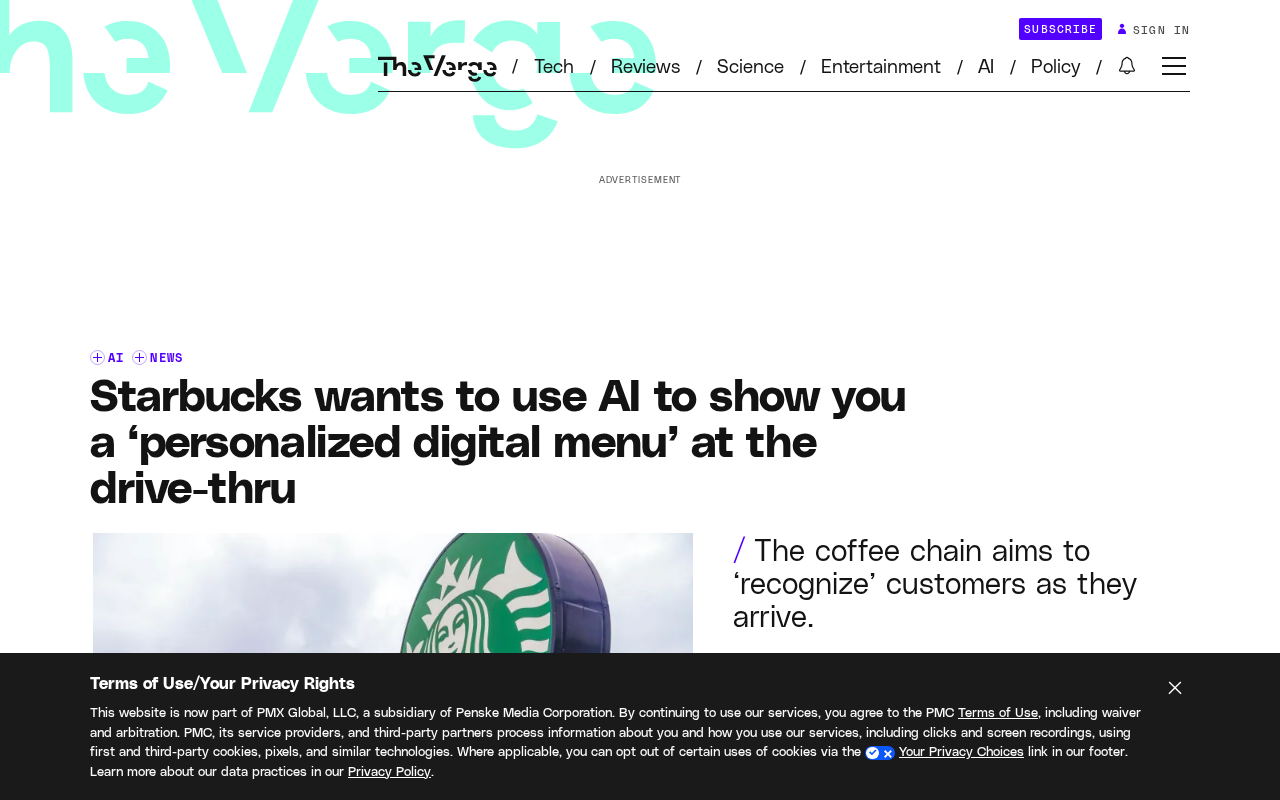
Personalized Menus: From "People Finding the Menu" to "the Menu Finding People"
The traditional drive-thru interaction logic is: customers look at a fixed menu and then order. Starbucks wants to flip that—after the system recognizes an opted-in customer, it directly presents a digital menu tailored to them. This requires integrating the membership system, purchase history, and the real-time ordering system. In Niccol's wording, "recognize participating customers as they arrive" is the premise, indicating that personalization is built on users actively opting in, rather than indiscriminate identification.
The value of this model lies in shortening decision time. For familiar customers, the menu can directly highlight the categories they usually order, reducing scrolling and hesitation; for users trying new items, it may recommend related products. However, the effectiveness of personalized recommendations depends heavily on data quality and the accuracy of the recommendation algorithm—if recommendations miss the mark, they may instead disrupt the ordering flow.
Drive-thru is a typical drive-in service model in the restaurant industry: customers drive into a dedicated lane, order through a speaker, pick up their food at the window, and complete payment, all without leaving their cars. This model is extremely sensitive to efficiency, because the length of the queue in the lane directly affects store throughput and customer experience. The personalized digital menu Starbucks is exploring is precisely about leveraging the "recognize-on-arrival" characteristic of customers in the drive-thru scenario to replace traditional static menus with real-time customized interfaces. Unlike ordering through a mobile app, the drive-thru scenario requires the system to complete recognition, recommendation, and presentation within seconds, placing higher demands on low latency and real-time data.
Making Payment "More Effortless": A Key Part of the Experience Loop
In addition to the menu, Niccol also mentioned "make payment more effortless." In the drive-thru scenario, friction in the payment step is often underestimated—pulling out a phone, scanning a code, confirming the amount—each step can slow down lane efficiency. If Starbucks can connect recognition, recommendation, and payment into a seamless chain—for example, automatically completing the charge after the customer confirms the menu—the entire experience would be much smoother.
This is not Starbucks' first attempt at digital ordering. Its mobile order and pay feature has been running for years, but the drive-thru scenario is more complex: vehicle identification, multi-person orders, and real-time inventory all need to work together. AI's role here is more like integrating existing digital capabilities into offline, real-time scenarios.
Mobile Order & Pay is one of the core features of Starbucks' digital ecosystem, allowing users to place orders and complete payment in advance through the official app and simply pick up their order upon arrival. The feature has been running for years and has accumulated a large amount of user preference and transaction data. However, there are fundamental differences between the drive-thru scenario and mobile ordering: mobile ordering happens before the customer arrives at the store, giving the system ample time to process the order; drive-thru requires the system to complete recognition, menu presentation, and payment authorization the moment the customer drives up, and it must handle complex situations such as multiple passengers in the car and last-minute add-ons. Therefore, Starbucks needs to migrate its existing digital capabilities from an "advance planning" model to a "real-time response" model, which involves a series of technical integrations such as vehicle identification, order consolidation, and inventory synchronization.
Challenges and Boundaries: Privacy, Accuracy, and Rollout Pace
Personalized menus have great imaginative potential, but the implementation difficulties are equally obvious. First is the privacy boundary: are customers willing to be "recognized"? How should the participation mechanism be designed to collect data without overstepping? Second is accuracy: if recommendations do not match the customer's current needs, personalization becomes interference. Third is technical cost: hardware upgrades, system integration, and maintenance at drive-thru stores all require sustained investment.
Niccol's wording is "explore," not "launch," indicating that this is still at an early stage. Starbucks needs to first validate the model in some stores before considering scaling it. For the restaurant industry, this exploration also provides an observation sample: how AI can truly improve the efficiency of offline service without disturbing customers.
Participating customers is a key phrase in Starbucks' privacy design. It means the personalized menu only applies to customers who actively join the membership program and authorize data use, rather than indiscriminately identifying all arriving vehicles through license plates or facial recognition. This "opt-in" mechanism is relatively common in the restaurant industry; it can both reduce compliance risks and increase customer acceptance of recommendation results. But the participation rate itself is a major challenge: if only a small number of customers opt in, the scale effect and training data for personalized menus will be limited. In addition, even if customers have opted in, the system still needs to strike a balance between recognition accuracy and privacy perception—overly precise recommendations can sometimes make customers feel surveilled.
Final Thoughts
Starbucks' personalized drive-thru menu is essentially an extension of the capabilities of its digital membership system into offline, real-time interactions. Whether it succeeds depends on whether recognition accuracy, recommendation quality, and payment experience can work in concert. At least in terms of direction, having the menu "know" the customer is closer to the goal of a seamless experience than making customers search through a fixed menu.
One-line Summary
Starbucks is exploring drive-thru scenarios that recognize members and push personalized menus, connecting recognition, recommendation, and payment into a closed loop.
Paragraph Summary
Starbucks CEO Brian Niccol revealed on an earnings call that the company plans to explore AI experiences in the drive-thru scenario: recognizing participating customers when they arrive, presenting a personalized digital menu, and making payment more effortless. This model is built on users actively opting in and aims to shorten ordering decision time, extending the capabilities of the digital membership system into offline, real-time interactions. Smooth payment is key to closing the experience loop and requires recognition, recommendation, and payment to work together. The plan is still in the "exploration" stage and faces implementation challenges such as privacy boundaries, recommendation accuracy, and technical costs; Starbucks needs to validate it in some stores before considering scaling.
Related articles
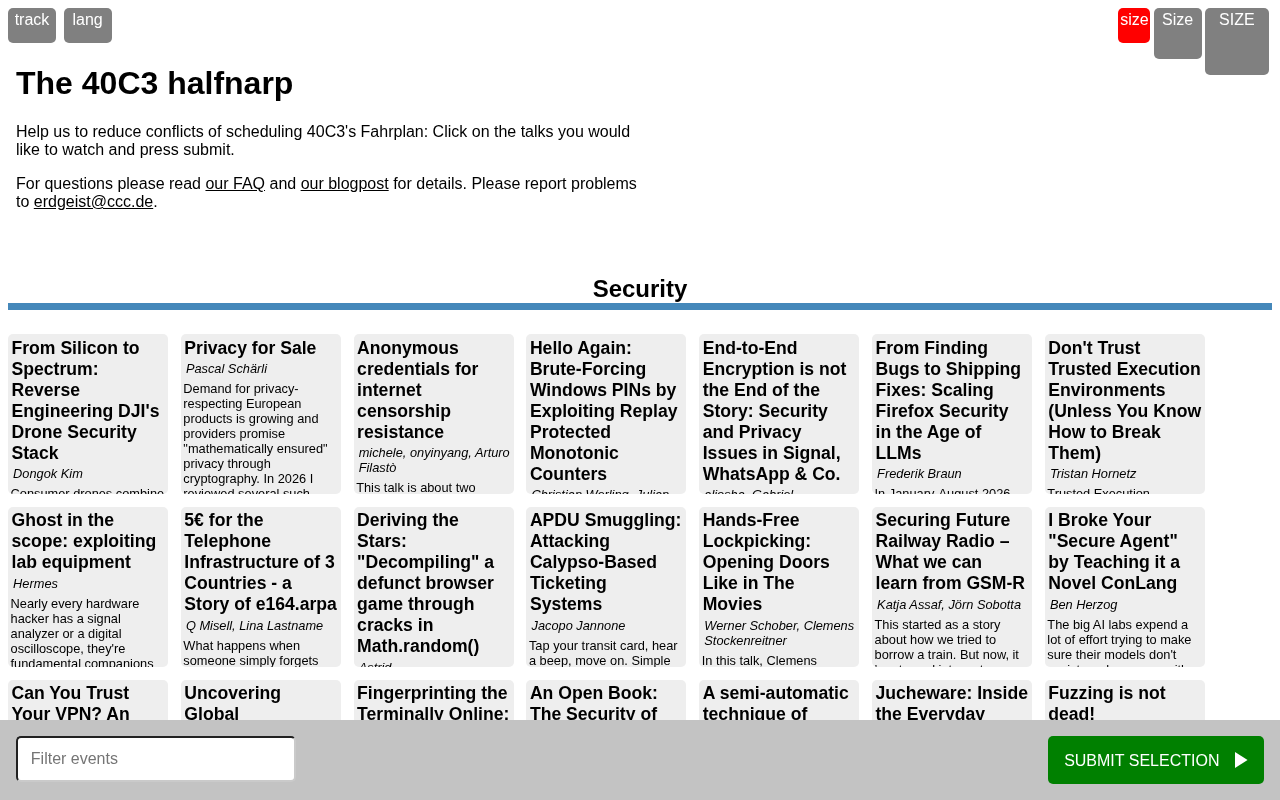
40C3 halfnarp Launches: Optimizing Conference Agendas with Preference Submissions
40C3 halfnarp is a conference scheduling tool on Hacker News that lets attendees submit talk preferences in advance to help organizers optimize agendas and reduce conflicts among popular talks. It's a reference for community tech conferences.
 Tech Frontiers
68% of Americans Support Pausing AI Development; Superintelligence Ban Sparks Debate
A Reddit discussion of a survey showing 68% of Americans support pausing AI development and banning superintelligence reflects public anxiety, the expert-public perception gap, and US-China differences in AI safety discourse.
 Tech Frontiers
Building a Sailing Simulator with Claude Code and Pitting Frontier AI Models Against Each Other
A developer built a sailing simulator with Claude Code and raced frontier AI models in it. Gemini 4 Argon won at one-fifth the cost, highlighting AI coding and multi-model comparison.