Stress Testing Meta Muse: Why the Agent Control Plane Times Out
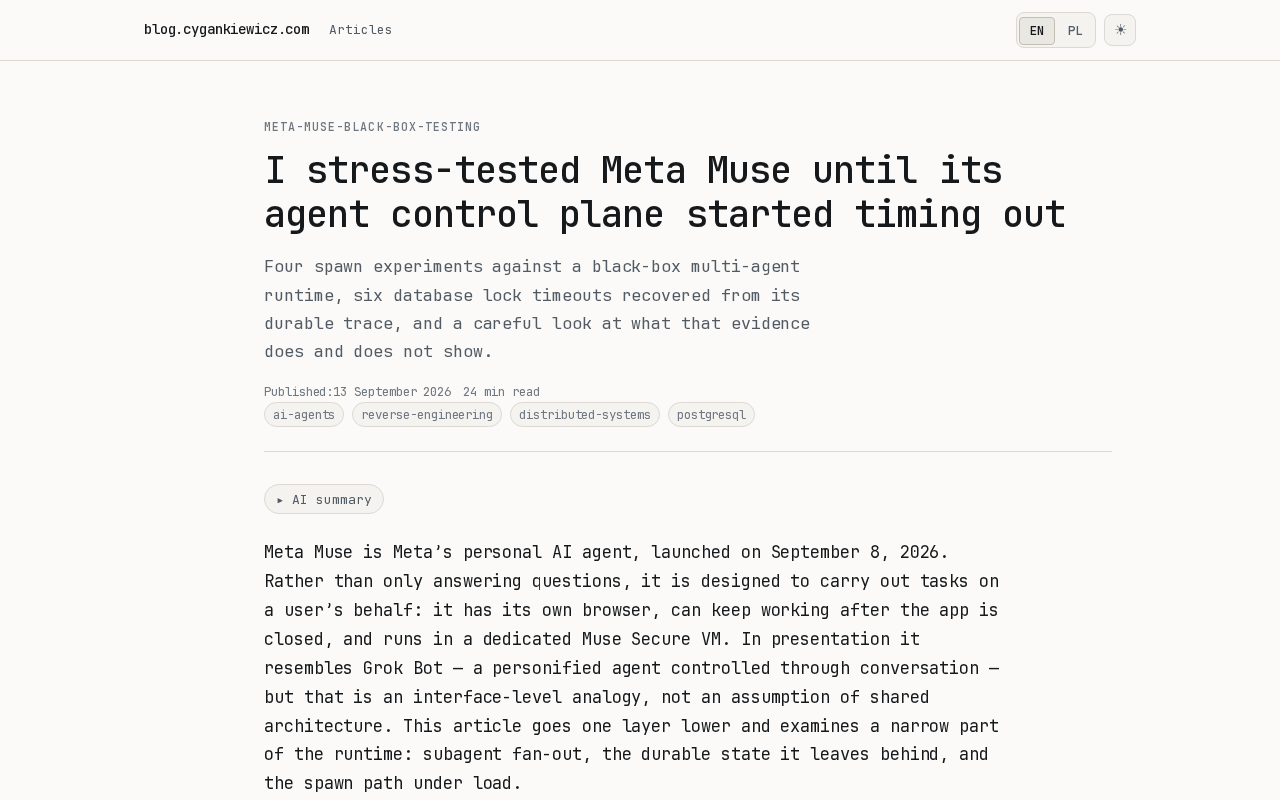
Stress testing Meta Muse to timeout reveals key engineering bottlenecks in scaling AI agent systems.
A brief Hacker News post documented stress-testing Meta Muse's agent control plane until timeouts appeared. Though sparse on details, it surfaces a critical engineering challenge in deploying AI agents at scale. The article explains the control plane's role as the system's 'central nervous system' — handling task scheduling, state management, and multi-agent coordination — and why its load scales non-linearly compared to traditional web services. Three key takeaways emerge: the control plane needs independent capacity planning, timeouts must be treated as first-class citizens, and stress tests should reflect real-world workloads.
A Stress Test That Got People Thinking
A technical post on Hacker News recently sparked a small but pointed discussion. The title was blunt: the author had stress-tested Meta Muse until its agent control plane started timing out. While the original post was sparse — just 5 upvotes and 2 comments — it touched on a real and thorny engineering challenge in deploying AI agent systems at scale: the stability and scalability of the control plane.
It's worth noting upfront that the source material is extremely thin, lacking specific test methodology, quantitative data, or reproduction steps. The analysis below is grounded in the technical topic the title points to, combined with general engineering practices in agent system architecture — treat it as a framework for thinking, not a direct report.
What Is an Agent "Control Plane"?
In distributed systems and cloud computing, the "control plane" and "data plane" are a classic pairing. The control plane handles scheduling, orchestration, state management, and decision-making; the data plane handles actual data processing and transmission. When this concept is applied to AI agent systems, the control plane typically takes on responsibilities like task dispatching, tool-call orchestration, multi-agent coordination, and session state management.
For a product like Meta Muse with agent capabilities, the control plane is the system's "central nervous system." Once it starts timing out under high concurrency or heavy load, agents can no longer receive instructions or return results in time — the entire pipeline stalls. The "timeouts" the author observed are a classic signal that the control plane has hit its load limit.
Why Stress Testing Exposes Control Plane Bottlenecks
Agent systems are fundamentally different from traditional request-response services. A single agent task often involves multiple rounds of reasoning, multiple tool calls, and state write-backs — all of which stack up significant coordination overhead on the control plane. As concurrent request volume grows, the control plane must simultaneously maintain state machines for hundreds or thousands of sessions, and the pressure scales non-linearly.
Common bottleneck sources include: read/write latency in state storage, task queue buildup, lock contention, and cascading latency across service calls. When these factors are amplified under stress testing, timeouts are typically the first failure mode to appear. This is also why experienced engineers often use "stress test until timeout" as a methodology — the timeout point often marks the true capacity boundary of the system.
What Can We Learn From This Test?
Even with limited details, the engineering lessons this post points to are worth recording:
- The control plane requires its own capacity planning. Its load model is fundamentally different from the data plane — you can't simply apply standard web service scaling logic.
- Timeouts should be treated as first-class citizens. Sensible timeout, retry, and graceful degradation strategies do more for overall system availability than blindly raising timeout thresholds.
- Stress tests must reflect real workloads. Agent tasks vary enormously in complexity. Testing with simple requests often produces optimistically misleading results.
For any team building an agent platform, proactively running destructive stress tests to find the control plane's breaking point is far more cost-effective than being caught off guard by failures in production.
Closing Thoughts
This post reads more like a conversation starter than a complete technical report. But it's a useful reminder: as AI agents move from demos to scaled deployment, systems engineering challenges — especially control plane stability — will increasingly determine whether a product succeeds or fails. Hopefully the original author or community members can follow up with more reproducible test data to push this discussion further.
Related articles
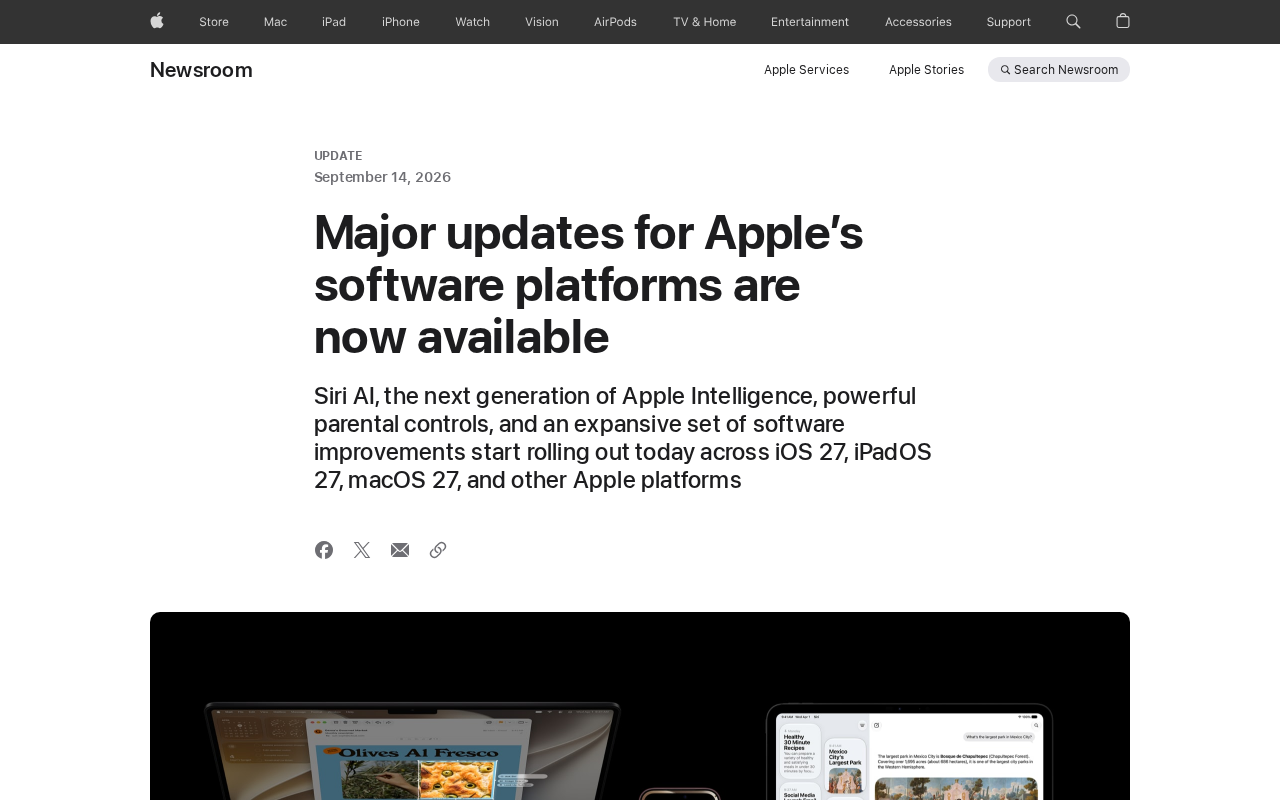
iOS 27, iPadOS 27, and macOS 27: The Information Gap Behind a Discussion
A Hacker News post about iOS 27, iPadOS 27, and macOS 27 sparked speculation about Apple unifying its version numbering. Here's how to read it with limited info.
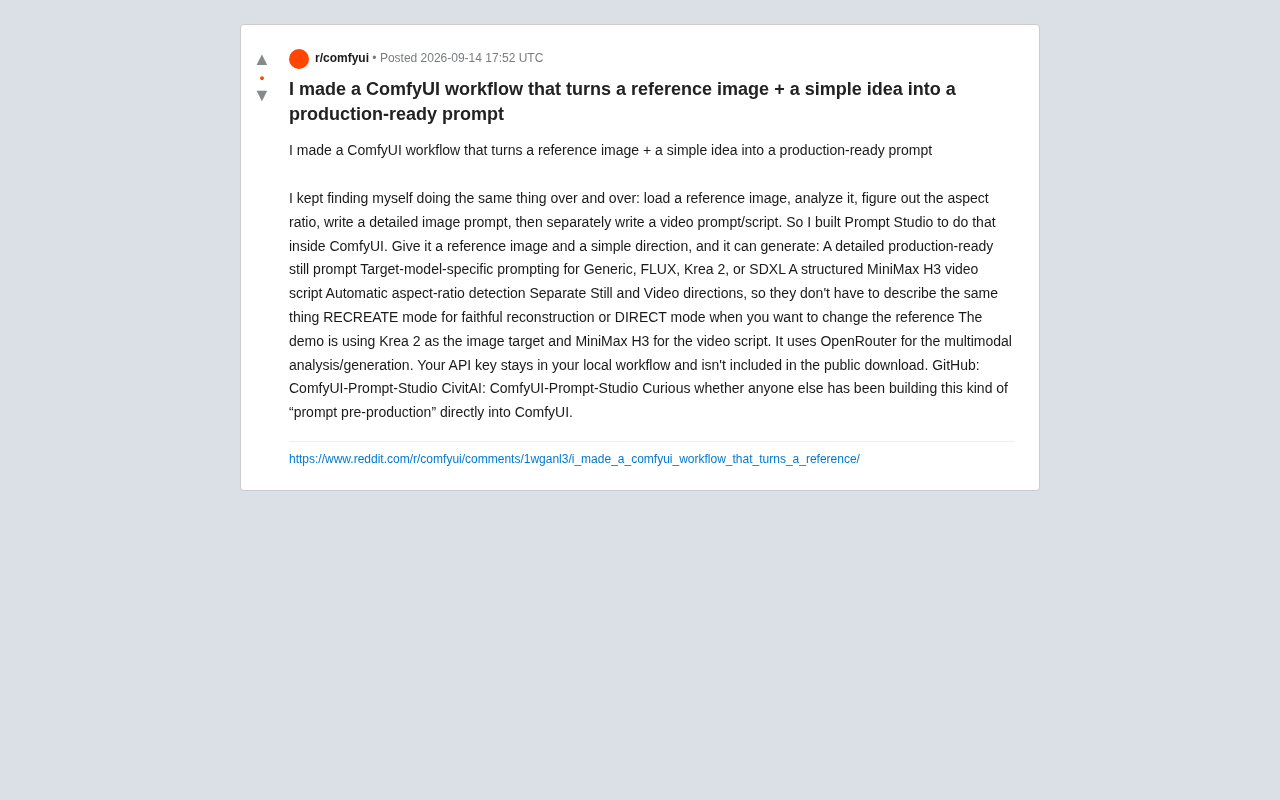
ComfyUI Prompt Studio: A Workflow for Turning Reference Images into Production-Ready Prompts
ComfyUI Prompt Studio is an open-source workflow that auto-generates production-ready image prompts, multi-model custom prompts, and MiniMax video scripts from reference images.

K2 Horizon 7B: A Small Model Punching Above Its Weight
K2 Horizon 7B ranks between Qwen 3.6 27B and 35BA3b on the Artificial Analysis Intelligence Index, delivering near-mid-tier intelligence at 7B parameters — a strong local deployment option.