Suno Launches Visuals: One-Click Lip-Sync Videos from AI Music

Suno launches Visuals, turning songs into lip-sync videos and cover art automatically.
Suno has launched Visuals, letting users turn generated songs directly into AI videos with automatic lyric lip-sync, while also supporting text-prompt thumbnails and album covers. The feature consolidates visualization steps that previously required separate video and design tools into one workflow, shortening the path from inspiration to publishable material. Automated lip-sync is the core differentiator, serving short-video and social scenarios, but key details like video length, resolution, and free quotas remain undisclosed.
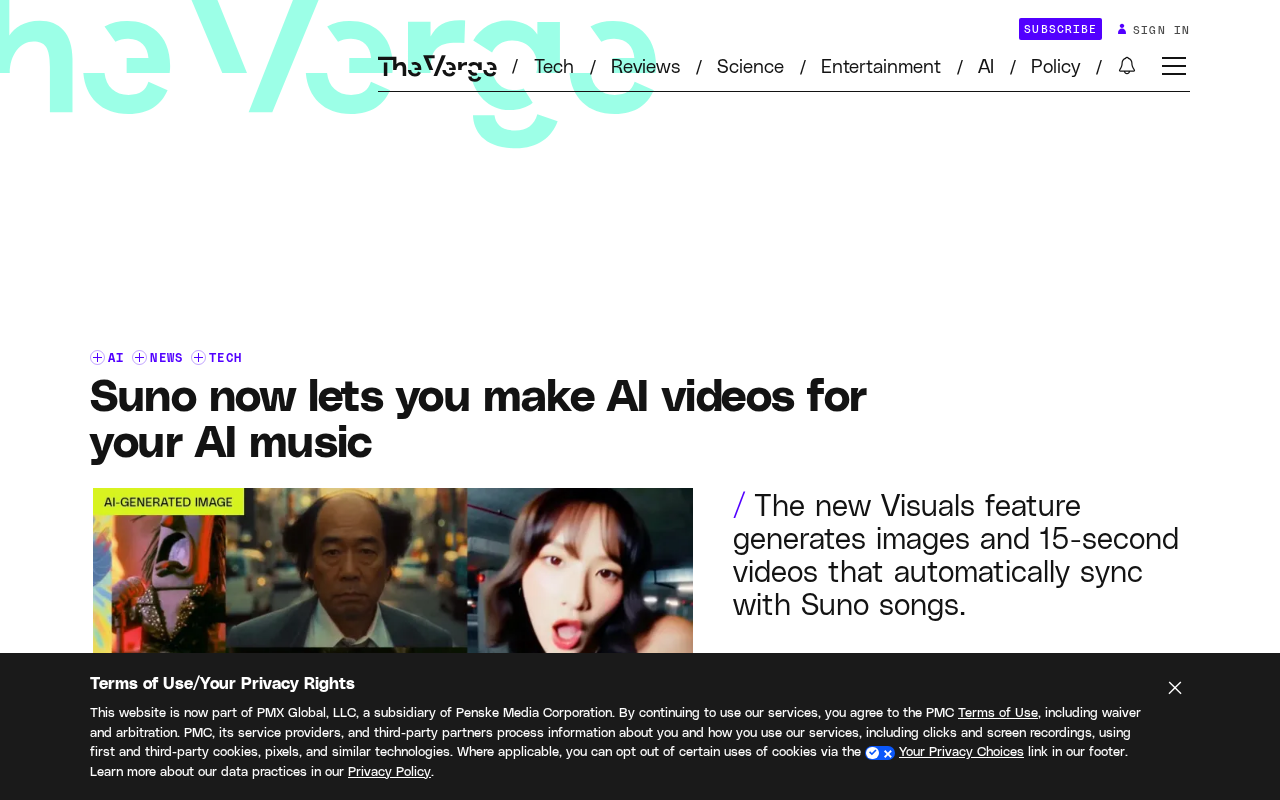
Suno is evolving from a pure AI music generation platform into a more complete creative toolset. The newly launched "Visuals" feature lets users turn Suno-generated songs directly into AI video clips with automatic lyric-to-lip-sync alignment; it can also generate images from text prompts for use as thumbnails or album covers.
What Visuals Can Do: Closing the Loop from Audio to Visual
According to the official description, Visuals has two core capabilities. The first is video generation: after a user selects an existing Suno song, the system generates an AI video in which the person or character on screen automatically lip-syncs to the lyrics. The second is image generation: static images can be produced from prompt descriptions, positioned for use as song thumbnails and album covers.
This means Suno is no longer just a "song-making" tool. In the past, after getting audio, users still had to find separate video tools for visualization and design tools for covers—now these steps are consolidated into a single product workflow. For independent musicians and content creators, the path from inspiration to publishable material has been noticeably shortened.
Why Lip-Sync Is the Key Differentiator
AI-generated music itself is no longer novel, and music generation models on the market are competing fiercely on melody and arrangement. But the combination of "song + character lip-sync video" points directly at short-video platforms and social distribution scenarios—a performance video that syncs to the lyrics is naturally better suited than pure audio for being consumed and shared in a feed.
By making lip-sync an automated capability, Suno effectively hands the most tedious part of video production (audio-visual alignment) over to the model. This is especially valuable for music creators without video editing experience: no frame-by-frame lip adjustment is needed, and the generated result is either directly usable or requires only minor tweaks.
Lip-sync in traditional video production is a post-production step, typically requiring professional software to align phonemes and mouth movements frame by frame, or facial capture devices to drive virtual avatars. In the AI era, lip-sync solutions generally fall into two categories: one directly generates or drives facial lip movements based on audio features (such as wav2lip-style models), and the other combines diffusion models to constrain the correspondence between lip movements and speech while generating video. The former has the advantage of high audio-visual alignment precision, while the latter offers more consistent overall visual style and greater controllability. By packaging this capability into an automated "select a song and get a video" workflow, Suno essentially shifts the technical barrier of audio-driven facial animation from professional editing software into the generative model itself—which is the key technical distinction that sets it apart from pure audio generation platforms.
Platform Ambitions: The Toolchain Is Getting Longer
From a product strategy perspective, Visuals is another step in Suno's boundary expansion. Competition among AI music platforms will ultimately come down to "creator workflow coverage"—whoever can connect songwriting, artwork, video, and publishing is more likely to retain users. Image generation serves covers and thumbnails, video generation serves promotional material, and both land precisely on the must-have points in the music release workflow.
However, the information disclosed so far is still limited: video length, resolution, generation speed, whether custom character appearances are supported, and how free quotas are allocated are all details that remain unclear. Whether the actual Visuals experience can support the "one-stop" narrative will depend on generation quality and controllability after launch.
"Creator workflow coverage" refers to the extent to which a platform can support the complete chain from ideation to publishing. In music, this chain typically includes songwriting and composition, arrangement and recording, mixing and mastering, cover and visual design, promotional material production, and distribution. In the past, these steps were scattered across DAWs, design software, video editing tools, and distribution platforms, forcing creators to repeatedly import and export between multiple products. The core logic of a platform strategy is to use an integrated experience to reduce switching costs and improve retention, but it also has to face the reality that every individual step has mature professional tools competing for it. Therefore, whether a platform can cover "must-have and high-frequency" steps matters more to success than the number of steps covered.
What It Means for Creators
In the short term, Visuals lowers the barrier to visualizing music content and is suitable for short-video soundtracks, personal single promotion, and visual packaging for podcasts or channels. In the long term, if Suno continues to deeply integrate visual capabilities with music generation (for example, automatically matching visual styles to genres), it could evolve into a lightweight content production suite for musicians.
For users already accustomed to making songs with Suno, the migration cost of this feature is almost zero; for creators still on the fence, the addition of visual capabilities could become a point in favor when choosing a platform. What really needs to be observed is whether generation quality can reach a "ready to publish" standard—this determines whether Visuals is merely a nice bonus or a key feature that can change creative habits.
One-line Summary
Suno launches Visuals, automatically turning songs into lip-sync videos and generating cover art.
Paragraph Summary
Suno has launched Visuals, letting users turn generated songs directly into AI videos in which characters automatically lip-sync to the lyrics, while also supporting text-prompt generation of thumbnails and album covers. The feature consolidates visualization steps that previously required separate video and design tools into a single product workflow, significantly shortening the path from inspiration to publishable material. Automated lip-sync is seen as the core differentiator because it directly serves short-video and social distribution scenarios and takes the most tedious audio-visual alignment work off creators' hands. Strategically, this is a step in Suno's evolution from a music generation tool toward a platform covering more creative steps, but key details such as video length, resolution, and free quotas have not yet been disclosed, and the actual experience remains to be verified.
Related articles

Zero-Code Replication of a $10,000 3D Website with Claude Code: A Six-Tool Breakdown
Bilibili creator Yomi used Claude Code plus five free tools to build a 3D product landing page quoted at $10,000 overseas—zero code. Breakdown of the six-tool division of labor, image-to-3D workflow, and the core collaboration method: "give AI a reference, not 'make it look better.'"
Claude Code in Practice: Install, Connect Models, Calculate Tokens, and Ship a Full-Stack Project with a Single Document
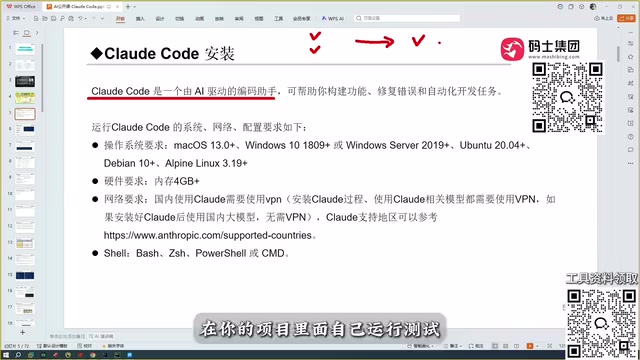
Based on a Bilibili public course demo, this covers Claude Code installation, model connection, token cost calculation, and the practical path of shipping a full-stack project with a single document, plus comparisons with Copilot, Cursor, Trae, and other coding assistants.
Who Accepts AI-Written Code? A 25-Minute Deep Dive into Verification Loops and the New Code Review Paradigm
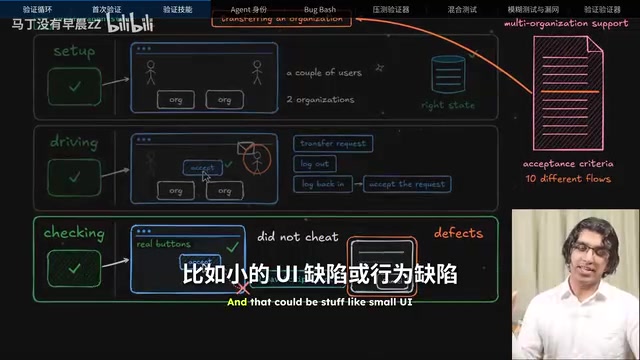
After AI writes lots of code, how should Code Review verify it? This article breaks down the Claude Code team's verification loop framework: surface-level end-to-end verification, setup/drive/check three-stage skills, hybrid end-to-end testing and reliability checklists, and how to tighten the loop when issues slip through.