Superpowers: Enabling AI Agents to Truly Master Software Development Methodology
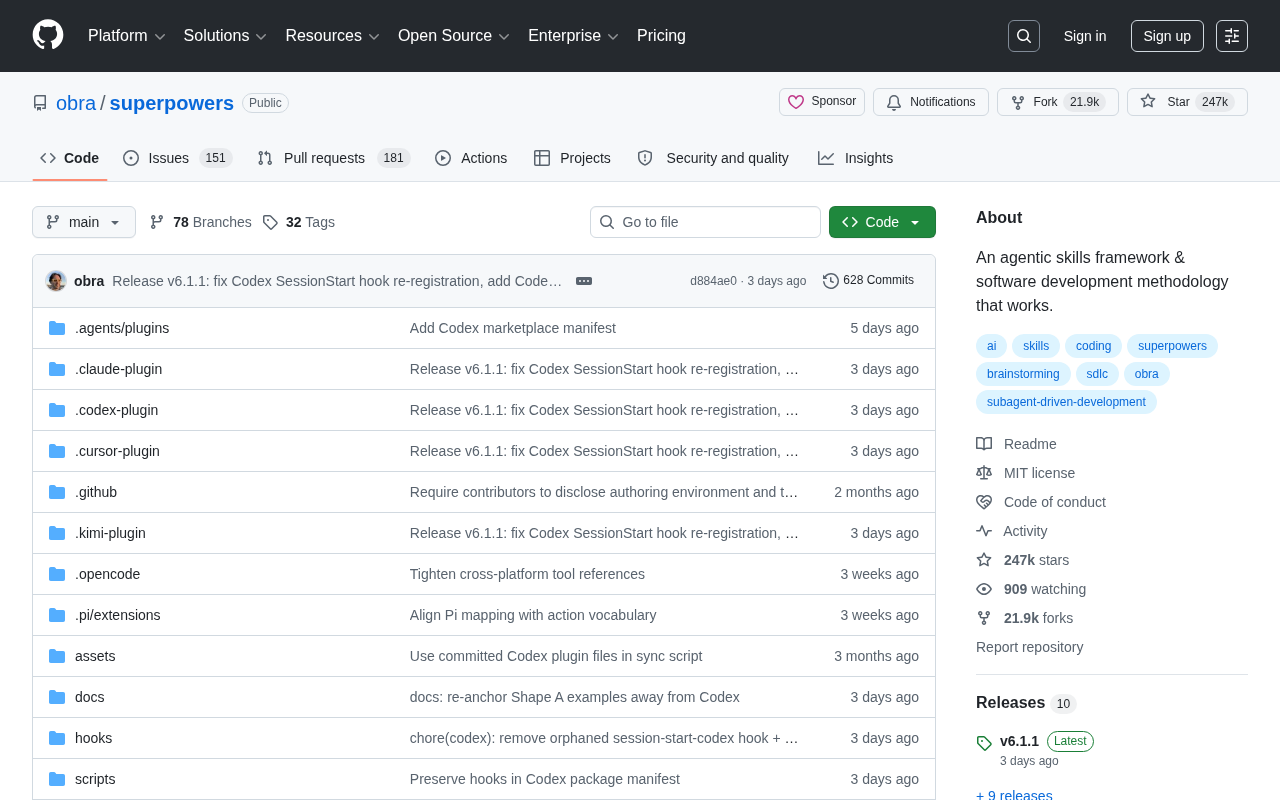
Superpowers encodes software engineering methodology into callable AI agent skills via Shell scripts.
Superpowers is a fast-rising GitHub project that provides an agentic skills framework built with Shell scripts, designed to make AI coding assistants follow proven software engineering methodologies like TDD and progressive refactoring. By decomposing development tasks into composable, callable skills, it addresses AI reliability challenges including hallucinations and context window limitations, representing a shift from capability-driven to methodology-driven AI programming tools.
What is Superpowers
The obra/superpowers project has recently skyrocketed on GitHub, becoming a focal point in the developer community with a growth rate of nearly 900 stars in a single day. The project positions itself as "An agentic skills framework & software development methodology that works."
Unlike many AI coding tools on the market that remain stuck at the demo stage, the key phrase Superpowers emphasizes is that works — it's dedicated to solving the thorniest problem in AI-assisted programming: how to get AI agents to not merely generate seemingly correct code snippets, but to follow a systematic, reusable engineering methodology that truly accomplishes production-grade software development tasks.
From a technical implementation perspective, Superpowers is primarily built with Shell scripts, positioning itself as a lightweight, embeddable toolset for existing workflows rather than a heavyweight standalone platform. The choice of Shell scripting (mainly Bash/POSIX sh) is a deliberate technical decision — one rooted in the deep traditions of Unix philosophy. Unix philosophy was summarized by Bell Labs' Doug McIlroy in the 1970s, with its core principle being "each program should do one thing and do it well; the output of a program should be able to become the input of another." This principle has profoundly influenced modern software engineering. The philosophy finds its most direct expression in Shell through the pipe mechanism, enabling complex tasks to be completed by composing simple tools without building monolithic applications.
Shell is the direct vehicle for this "compose small tools to accomplish big tasks" philosophy, possessing natural capabilities for process orchestration, pipeline composition, and system calls. Compared to languages like Python or Node.js that require runtime environments, Shell works out of the box on the vast majority of Unix/Linux/macOS systems, dramatically reducing environment configuration costs. More notably, the training corpora of mainstream large language models contain vast quantities of Shell scripts — GitHub's public code repositories are estimated to contain hundreds of millions of lines of Shell scripts, which have been incorporated into the pre-training datasets of GPT, Claude, Gemini, and other major models. This means these models have quite deep "memory" of Shell syntax, idiomatic patterns, and best practices. This characteristic allows Superpowers' skill scripts themselves to be autonomously read, understood, and extended by AI agents, creating a virtuous cycle — AI is not only the executor of skills but can also be a creator of skills. This design dramatically lowers the barrier to entry, enabling flexible collaboration with various command-line environments and AI coding assistants.
The Core Value of an Agentic Skills Framework
From "Can Write Code" to "Knows How to Engineer"
Over the past two years, the capability boundaries of AI coding assistants have continuously expanded. From GitHub Copilot's line-level completions to Agent modes capable of independently completing tasks, AI can now handle increasingly complex programming scenarios. Agent mode here refers to a working style where AI systems can autonomously plan and execute multi-step tasks — unlike single-turn Q&A, AI in Agent mode can invoke external tools (such as terminal commands, file systems, browsers), autonomously decide on next actions, and iteratively correct itself based on environmental feedback. Representative implementations include OpenAI's Function Calling mechanism, Anthropic Claude's Tool Use, and various open-source agents based on the ReAct framework.
The ReAct (Reasoning and Acting) framework was proposed in 2022 through a collaboration between Princeton University and Google Research (by Shunyu Yao et al.), and serves as an important theoretical foundation for current mainstream AI agents. Its core idea is to interweave the language model's reasoning process (Chain-of-Thought) with actual actions (tool calls, environment interactions), forming an iterative cycle of "Think → Act → Observe." The key innovation of this design lies in the fact that pure Chain-of-Thought reasoning (CoT) occurs only within the model, lacking information exchange with the real world, and is prone to accumulating errors due to knowledge boundaries or hallucinations. ReAct addresses this by inserting "actions" such as search engine queries, code execution, and API calls into the reasoning chain, allowing the model to obtain real feedback from the external environment and correct its cognitive state at each step. Compared to pure reasoning chains, ReAct enables models to correct their understanding from real environmental feedback, significantly improving completion rates for complex tasks. Current mainstream implementations include LangChain's Agent module, AutoGPT, and Anthropic's Claude Computer Use, among others. However, the core challenge of Agent mode lies precisely in "reliability" — AI tends to hallucinate, drift from objectives, or fall into error loops during long-chain tasks.
Additionally, large language models have an inherent context window limitation. Even the most advanced current models have an upper limit on the number of tokens they can process in a single pass (typically ranging from tens of thousands to hundreds of thousands of tokens), while a medium-scale software project may contain millions of lines of code. This means that when AI agents handle long-term engineering tasks, they cannot "load" the entire codebase into a single prompt and must rely on external memory mechanisms (such as vector database retrieval, file summaries) to maintain contextual coherence. The structured skills framework provided by Superpowers is essentially an engineering technique to combat context forgetting — by decomposing tasks into discrete skills with clearly defined inputs and outputs, it reduces the length of individual reasoning chains, lowering the probability of the model "losing its way" during long tasks.
Real software development goes far beyond just "writing code" — it encompasses a series of interconnected engineering activities including requirements decomposition, architecture design, test verification, code review, and iterative refactoring.
The "skills framework" proposed by Superpowers directly addresses this gap. It abstracts various professional capabilities in software development into composable, callable "skills," allowing AI agents to invoke the appropriate capabilities at different development stages rather than relying on ad hoc performance from single prompts. This modular design makes AI behavior more controllable, more predictable, and more closely aligned with how human engineers actually work.
Methodology Over Tool Stacking
Superpowers simultaneously emphasizes "methodology" in its positioning, revealing the project author's core philosophy: simply stacking AI capabilities is insufficient to guarantee reliable software output — what truly plays the decisive role is the engineering methodology behind it.
In other words, Superpowers doesn't aim to use AI to replace existing best practices in software engineering, but rather to have AI agents learn and follow these practices — such as Test-Driven Development (TDD), small commits, and progressive refactoring. Taking TDD as an example, this practice was systematically articulated by Kent Beck in his 2003 book Test-Driven Development: By Example and is a core element of eXtreme Programming (XP) methodology. XP was developed by Beck during his work on the Chrysler C3 payroll project in the late 1990s and is one of the important origins of the Agile development movement. TDD's core cycle is "Red-Green-Refactor": first write a failing test (Red), then write the minimum amount of code to make the test pass (Green), and finally optimize the code structure without breaking any tests (Refactor). TDD is not merely a coding technique but also a requirements clarification tool — it forces developers to explicitly define the criteria for "done" before writing the implementation.
In the context of AI-assisted programming, TDD holds special and profound value: test cases provide AI with a machine-verifiable objective function, transforming vague natural language requirements into precise pass/fail binary signals. This fundamentally addresses the hallucination problem of AI-generated code that "looks correct but is actually wrong" — when every AI generation must undergo immediate verification through automated testing, the damage from hallucinations is constrained to a single iteration step rather than accumulating infinitely across multi-step tasks. Research shows that AI programming workflows incorporating TDD can reduce code defect rates by 30%-50%, a figure that becomes even more significant in long-chain task scenarios. This "methodology-first" approach is highly aligned with the industry's recent widespread reflection on "AI coding quality."
Why Superpowers Deserves Attention
Community Enthusiasm Reflects Real Demand
The growth rate of nearly 900 stars per day reflects the developer community's intense desire for "reliable AI development workflows." As more teams introduce AI-assisted programming into production environments, ensuring output quality and getting AI to follow team conventions have become urgent, real-world problems.
The rapid rise of Superpowers is essentially a concentrated manifestation of this demand. Developers are no longer satisfied with "AI that can write code" — they're pursuing "AI that can write code that meets engineering standards, is maintainable, and is trustworthy."
Lightweight Design and High Composability
Using Shell as the primary implementation language gives Superpowers natural cross-platform capability and extremely low integration costs. Developers can seamlessly embed it into existing CI/CD pipelines, terminal workflows, or combine it with mainstream AI coding assistants without migrating to a closed platform ecosystem.
CI/CD (Continuous Integration/Continuous Delivery) is a core infrastructure of modern software engineering, and its development history reflects the discipline's ongoing deepening commitment to "fast feedback." The concept of Continuous Integration (CI) was first proposed by Grady Booch in 1991 and was popularized by Martin Fowler and Kent Beck through Extreme Programming practices in the late 1990s — its core idea is to frequently (ideally multiple times per day) integrate developer code changes into a shared mainline, using automated builds and tests to immediately detect integration conflicts. Continuous Delivery (CD) was systematically articulated by Jez Humble and David Farley in their 2010 book of the same name, building on CI to further require that the codebase always be in a state ready for deployment to production. Major platforms include GitHub Actions, GitLab CI, Jenkins, CircleCI, and others.
Modern CI/CD platforms now support calling external AI services within pipelines, opening up a new paradigm of "AI as a Pipeline Stage" — capabilities like code review, security scanning (SAST/DAST), and automated test case generation no longer depend on developers manually triggering them, but become standard checks for every git push, upgrading from occasional manual invocation to mandatory checkpoints in the engineering workflow. Superpowers' lightweight Shell implementation makes it naturally suited to exist as a step within a pipeline — a single bash superpowers/review.sh call can complete AI code review without introducing complex dependencies like Docker images or Python virtual environments, working out of the box in any CI environment. This is precisely its key advantage over AI coding platforms that rely on proprietary plugins or graphical interfaces.
This open, composable positioning aligns with the open-source community's longstanding preference for "small and beautiful" tools, and makes Superpowers easier for teams with different technology stacks to quickly adopt.
A Rational Perspective and Future Outlook
As a newly popular project, Superpowers' actual effectiveness still awaits broader engineering validation. The current high level of attention reflects genuine demand, but may also carry some degree of community bandwagon effect. Teams interested in trying it are advised to first evaluate whether its methodology fits their development workflow in non-critical projects before gradually expanding adoption.
From a more macro perspective, Superpowers represents an important direction in the evolution of AI coding tools: from capability-driven to methodology-driven. The AI development tools that will truly land in enterprise scenarios in the future are likely not those with the largest parameters or the flashiest demos, but open-source frameworks that organically integrate solid software engineering methodology with AI capabilities. Notably, this trend is highly consistent with the evolutionary logic of the software engineering discipline itself: every major productivity leap in history — from structured programming to object-oriented, from waterfall to Agile, from monolithic architecture to microservices — was driven not by pure technical innovation alone, but by paradigm shifts at the methodology level. The maturation path of AI coding tools may similarly need to undergo this leap "from technology to methodology."
For developers and engineering teams watching the future of AI programming, Superpowers provides an extremely valuable reference point — it reminds us that enabling AI to truly "know how to engineer" is far more critical than simply enabling AI to "write code."
Key Takeaways
- The Essence of Superpowers: An AI agent framework that uses Shell scripts as its medium to encode software engineering methodology into callable "skills" — its core value lies in the systematization of methodology rather than mere AI capability stacking
- The Significance of the Technical Choice: Shell scripts combine the heritage of Unix philosophy, zero-dependency portability, and high LLM comprehension — three advantages that make the framework itself a knowledge carrier that AI can read and extend
- The Significance of the ReAct Framework: The "Think → Act → Observe" iterative cycle allows AI agents to correct their cognition from real environmental feedback, but context window limitations make structured task decomposition critical for long-chain task reliability
- TDD's Special Value for AI: Test cases transform vague requirements into machine-verifiable objective functions, fundamentally constraining the damage of AI hallucinations within single iteration steps — one of the most effective quality assurance mechanisms for AI output currently available
- CI/CD Integration Potential: Shell implementation makes Superpowers naturally suited for the "AI as a Pipeline Stage" paradigm, with the potential to upgrade AI code review and test generation from occasional manual triggers to standard mandatory stages in engineering pipelines
- Industry Evolution Direction: The maturation path of AI coding tools is shifting from "capability-driven" to "methodology-driven" — highly consistent with the historical pattern that every major productivity leap in software engineering has originated from paradigm shifts
Related articles

Can 'Your Mother' Make Us Forget Marvel's Blade Disaster?
Marvel's Blade reboot starring Mahershala Ali collapsed due to mismanagement. We explore why its failure may not be the worst outcome — and what 'Your Mother' has to do with it.
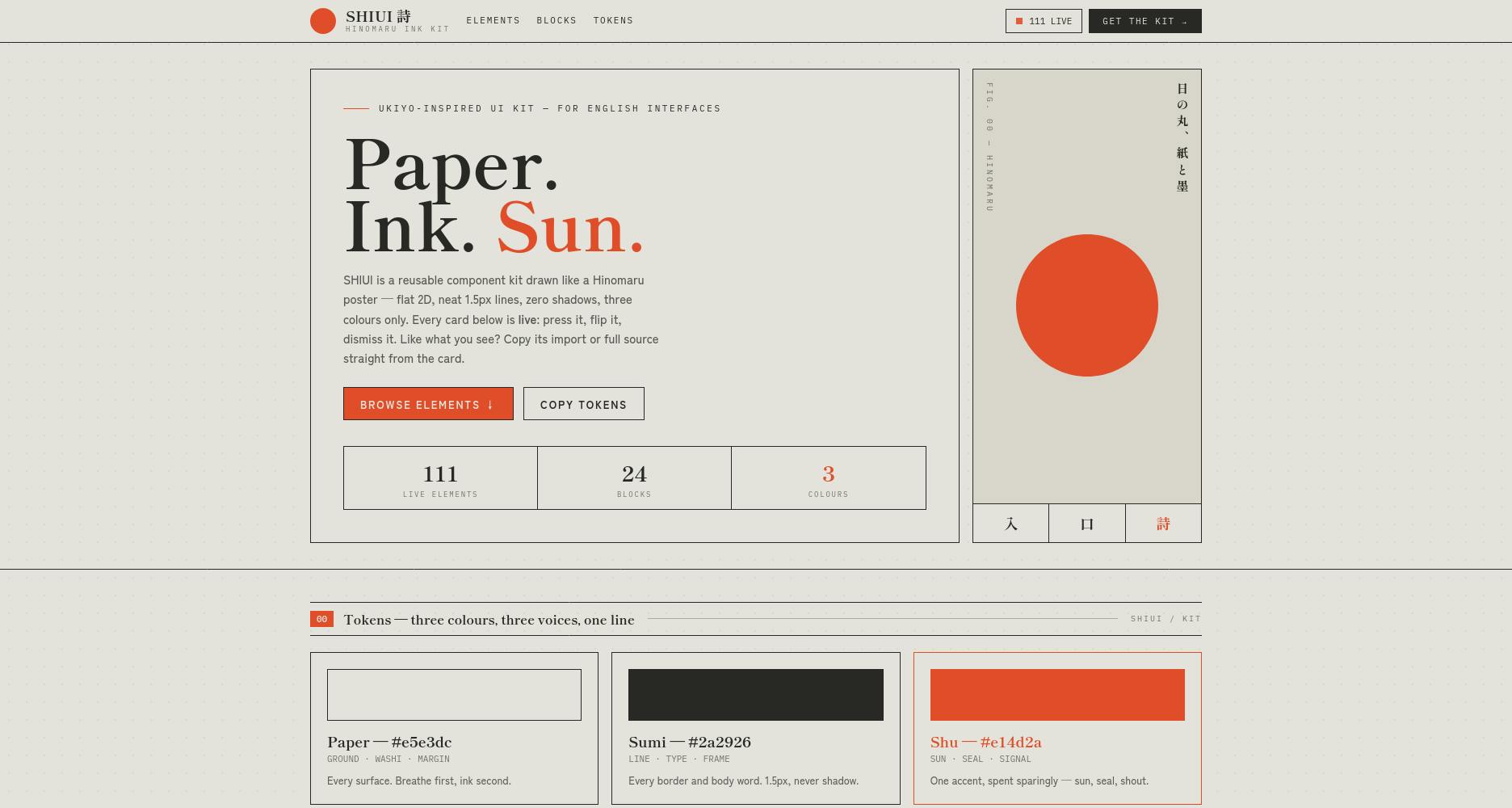
SHIUI: A Minimalist Ink-Wash UI Kit Inspired by Japanese Hinomaru Aesthetics
SHIUI is a flat ink-wash Web UI kit inspired by Japanese Hinomaru poster aesthetics, built around paper, sumi ink, and vermilion with zero shadows. A design breakdown.

Kirokune: An iPhone Work Incident Logger That Requires No Account
Kirokune is an iPhone app for logging workplace incidents — no account required. Combines text, audio, and photos in a timeline. Ranked #9 on Product Hunt with 86 votes.