Switzerland Proposes Ban on Profiling-Based Ads Targeting Minors

Switzerland plans to ban profiling-based targeted ads to minors, sparking debate on platform compliance and enforcement.
Switzerland is advancing a regulatory proposal to ban profiling-based targeted advertising to minors, taking an ex-ante prohibition stance. Profiling relies on behavioral data, interest tags, and location to build user profiles — mainstream for adults but controversial for minors due to data literacy and psychological vulnerability concerns. The EU's DSA has already restricted such ads. Platforms will face age verification, ad system degradation, and compliance audit challenges.
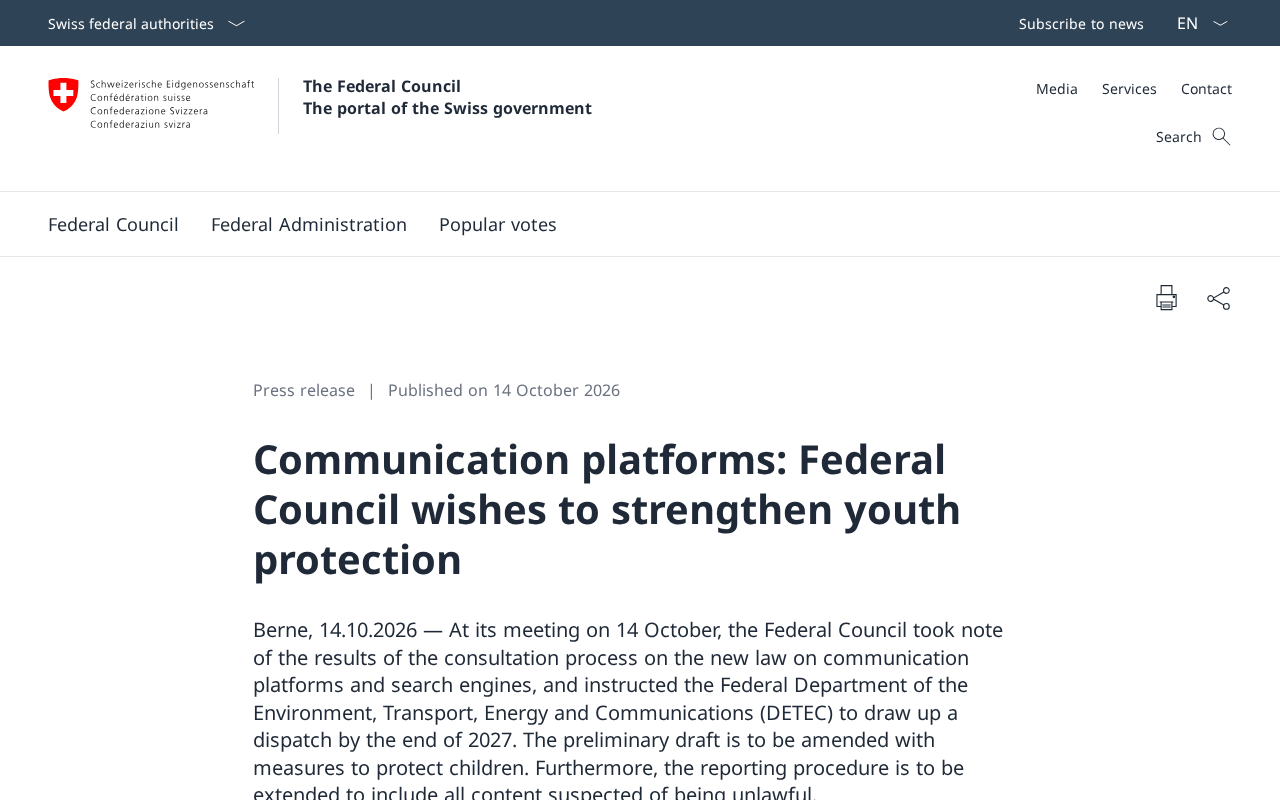
Switzerland is advancing a regulatory proposal targeting online advertising to minors, with the core aim of prohibiting profiling-based targeted ads directed at minors. The news sparked discussion in the Hacker News community, quickly gaining significant attention and comments.
From a technical standpoint, this is not an ordinary advertising compliance adjustment, but a direct restriction on "data-driven personalized recommendation" in the context of minors. The issues it touches on are far more complex than the surface-level question of "whether ads can be served."
What Is Profiling-Based Targeted Advertising
Profiling-based targeted advertising refers to platforms collecting users' behavioral data, interest tags, social relationships, browsing history, and even location trajectories to construct an algorithm-recognizable "user profile," then serving personalized ads based on it.
This practice is already very common among adult users and is the core engine of the mainstream internet advertising system. But when the subjects become minors, controversy erupts: Do minors have sufficient awareness of their data being commercially exploited? Could algorithmically pushed content amplify adolescents' psychological vulnerabilities?
Switzerland's proposal takes a stance closer to "ex-ante prohibition" rather than "ex-post accountability." That is, rather than penalizing after ads cause problems, it directly cuts off the pathway for serving profiling-based ads to minors at the regulatory level.
The precise meaning of profiling in data protection law: In Article 4 of the EU's General Data Protection Regulation (GDPR), profiling is defined as "any form of automated processing of personal data consisting of the use of personal data to evaluate certain personal aspects relating to a natural person," with typical evaluation targets including their performance, economic situation, health, preferences, interests, reliability, behavior, location, or movements. The key to this definition lies in two elements — "automated" and "evaluative inference" — encompassing not only directly collected data but also predictive labels derived by algorithms (such as "likely interested in a certain category of goods"). GDPR Article 22 further grants individuals the right "not to be subject to a decision based solely on automated processing," while data processing concerning children is specifically emphasized in the GDPR preamble as requiring higher protection. Although Switzerland is not an EU member, its Federal Act on Data Protection (FADP), after its 2023 revision, is highly aligned with the GDPR and likewise contains specific provisions on profiling and automated decision-making — this is precisely the legal foundation enabling this proposal to advance rapidly.
The technical divide between contextual targeting and personalized advertising: The original text mentions that platforms may "return to contextual targeting or non-personalized advertising" — the distinction between these two is key to understanding the regulatory consequences. Contextual targeting relies on the content of the page the user is currently viewing, keywords, or time of day, without depending on cross-site historical behavioral data, and therefore does not require building long-term user profiles. Non-personalized advertising goes further, serving ads based only on coarse geolocation or device type. Neither technically requires identifying "who this user is," thereby naturally circumventing profiling compliance issues. The cost is reduced ad relevance — the industry generally estimates that CPM (cost per thousand impressions) may be 30% to 70% lower than behavioral targeting, which is also the core commercial reason platforms resist regulation.
Why This Type of Regulation Is Gaining Increasing Attention
In recent years, legislative discussions around minors' digital rights have noticeably increased. The EU's Digital Services Act (DSA) has already explicitly restricted targeted advertising to minors, and the UK and some US states are moving in similar directions.
Although Switzerland is not an EU member, its data protection tradition has always been relatively strict. If this proposal is enacted, it could affect the product strategies of social platforms, content platforms, and ad tech companies operating in Switzerland.
The comment section on Hacker News presented two typical viewpoints: one side considers this necessary protection for minors, while the other worries about enforcement difficulty — how can platforms accurately identify user age? If relying on self-reporting, the cost of circumvention is extremely low; if relying on behavioral inference, it raises even more serious privacy concerns.
DSA's specific restrictions on targeted advertising to minors: The original text mentions the EU's Digital Services Act (DSA), and its relevant provisions deserve elaboration. DSA Article 28 explicitly prohibits online platforms from serving targeted ads to minors based on profiling, and stipulates that platforms must not present ads in a manner that is not "easily understandable" to minors. Unlike the GDPR's ex-post accountability and individual complaint mechanism, the DSA adopts ex-ante compliance obligations and systemic risk assessments for very large online platforms, with fines of up to 6% of global annual turnover for violations. Additionally, DSA Article 28 requires platforms to prohibit the use of "dark patterns" to induce minors into making adverse data decisions. This legislative approach is consistent with the "ex-ante prohibition" logic of the Swiss proposal, and is important context for understanding why the Swiss plan emphasizes regulatory cutoffs rather than ex-post penalties.
The technical dilemma of age verification: The age identification challenge raised in the comments is known in the industry as the "age assurance" problem, and there are currently three main technical approaches. First is self-reported age, which has the lowest implementation cost but almost no verification validity. Second is behavioral inference — estimating age through indirect features such as usage patterns, social relationships, and content preferences — which has limited accuracy and itself constitutes profiling behavior, conflicting with the spirit of the proposal. Third is hardware or authoritative credential verification, such as credit cards, government digital identities, or carrier age tokens, which offers strong verification but involves identity information collection, bringing new privacy and fairness issues (adolescents without credit cards may be directly excluded). The UK's Online Safety Act has sparked widespread controversy during implementation precisely because of its strict age verification requirements — these practical experiences provide directly relevant reference value for assessing the enforceability of the Swiss proposal.
What It Means for Platforms and Ad Tech Companies
From an engineering and product perspective, this proposal brings several practical challenges:
- Age identification and verification mechanisms need to be redesigned, without sacrificing privacy;
- Ad delivery systems need separate degraded handling for minor traffic, potentially returning to contextual targeting or non-personalized advertising;
- Data retention and profiling construction processes need additional compliance audit points, especially for cross-border data flows.
These costs will ultimately pass through to advertising revenue and product form. For platforms that rely on personalized advertising for monetization, the commercial value of the minor user segment will be significantly compressed.
However, some argue that this type of regulation will force the industry to explore healthier and more transparent advertising models rather than relying solely on behavioral tracking.
The Controversy Remains in Enforcement Details
Currently available public information does not disclose the proposal's specific scope of application, penalty severity, or transition period arrangements. What truly determines the effect is often these enforcement details.
If standards are too broad, platforms may only need to make superficial adjustments; if standards are too strict, it may prompt platforms to directly restrict minors' access to certain services, paradoxically weakening their digital participation opportunities.
Switzerland's proposal is essentially seeking a new balance point between "protecting minors" and "maintaining open internet services." Whether it will become a reference model for other countries is worth continued observation.
One-line Summary
Switzerland plans to ex-ante prohibit profiling-based targeted ads to minors, sparking widespread discussion on platform technical compliance and enforcement details.
Paragraph Summary
Switzerland is advancing a regulatory proposal targeting online advertising to minors, with the core aim of prohibiting profiling-based targeted advertising, adopting an ex-ante prohibition rather than ex-post accountability stance. Profiling-based targeted advertising relies on behavioral data, interest tags, and location trajectories to build user profiles — already mainstream in adult contexts but sparking dual controversy over data literacy and psychological vulnerability when it comes to minors. Regulations such as the EU's DSA have already restricted targeted advertising to minors, and the Swiss proposal continues this regulatory direction. Platforms will face technical challenges including age identification and verification, degraded ad system handling, and data retention compliance audits, potentially compressing the commercial value of the minor user segment. Among enforcement details, the scope of application, penalty severity, and transition period arrangements will be key to determining the proposal's actual effectiveness.
Related articles

Amphibious Transforming Drone: Beyond 100x Power Savings, What Are the Real Needs?
Is the amphibious transforming drone just a gimmick? Starting from the 100x power difference of the M4 Morphobot, explore real application scenarios and thesis topic ideas, analyzing boundary conditions where pure drones and pure ground robots both fail.

Warhound Raises $200 Million: Genetically Engineered "War Dogs" Paired with Anduril Gear
Warhound raises $200M, backed by Ben Lamm and Palmer Luckey, to genetically engineer dogs for military and law enforcement use and equip them with Anduril gear. This article analyzes its technology direction, funding logic, and ethical controversy.

Claude API Comes to Google Cloud: IAM Integration and SDK Access Guide
Anthropic hosts the full Claude API on Google Cloud with IAM-controlled permissions and unified billing. This guide covers the Vertex AI and Anthropic-hosted entry points, IAM role configuration, and SDK access.