Symbolic AI and Neural Networks: A Systematic Learning Path and Core Mathematical Tools

A systematic math learning path for bridging symbolic AI and deep learning through logic, category theory, and optimization.
This article explores the fundamental mathematical divide between symbolic AI (discrete, logic-based) and connectionist AI (continuous, gradient-based), then maps out four key mathematical domains — logic and type theory, category theory, algebraic geometry, and combinatorial optimization — as a structured learning path toward neuro-symbolic integration. Practical guidance and frontier research directions are included.
Can Two Roads in AI Meet at the Mathematical Level?
Modern artificial intelligence has evolved along two distinctly different technical trajectories. One is the Connectionist approach, exemplified by deep learning — relying on gradient descent to optimize across vast parameter spaces, powering today's remarkable large language models. The other is the historically older Symbolic approach, which solves problems through program search, logical reasoning, and discrete structures.
The rivalry between these two paths dates back to the birth of AI in the 1950s. Symbolism was pioneered by McCarthy, Minsky, and others, who argued that intelligence is fundamentally symbol manipulation — with LISP and expert systems as its landmark achievements. Connectionism traces its roots to the McCulloch-Pitts neuron model (1943), and after surviving two "AI winters," staged a dramatic comeback with deep learning's breakthrough performance at the 2012 ImageNet competition. This competition is not merely a technical one — it reflects fundamentally different philosophical assumptions about what intelligence actually is.
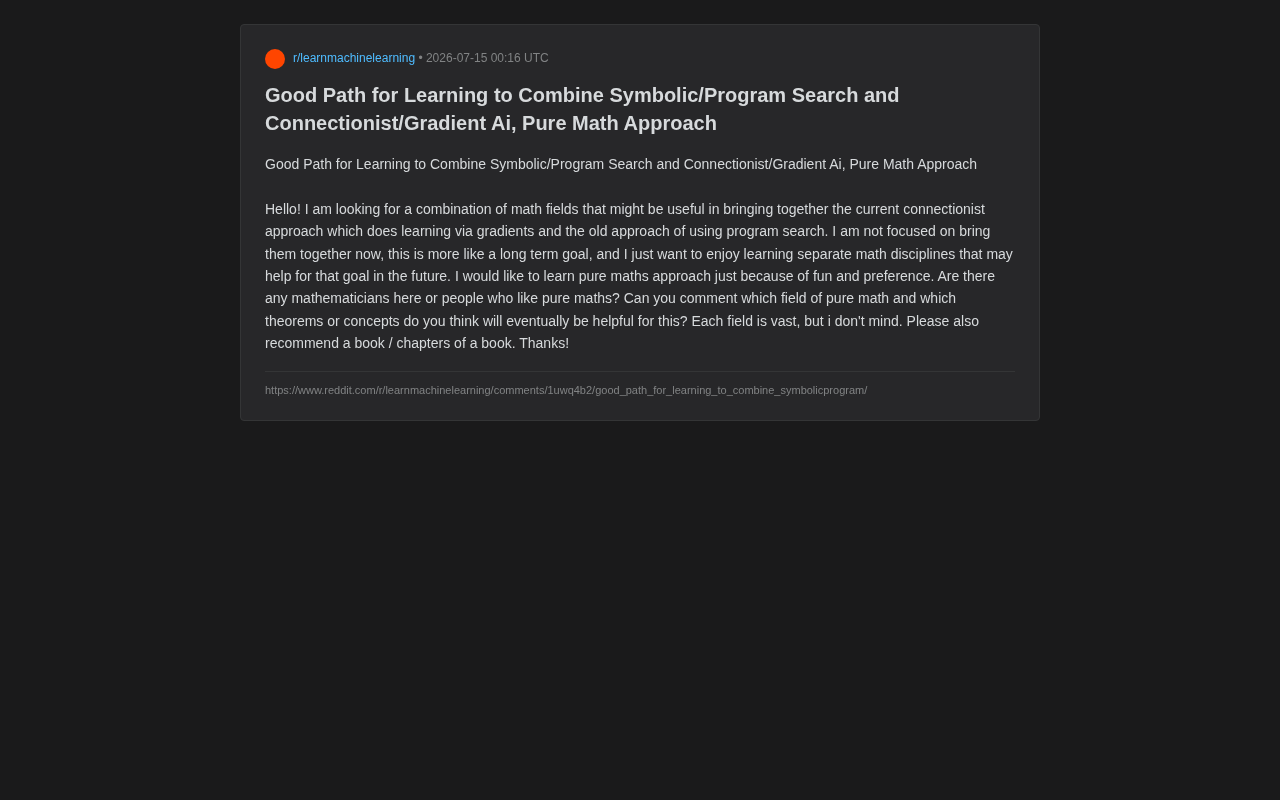
A learner on Reddit posed an ambitiously long-term question: How can we use pure mathematics to understand — and ultimately unify — these two paradigms? Rather than rushing to build a unified framework overnight, they wanted to follow their interests and systematically study the mathematical branches that might prove useful down the road. This question cuts to one of the deepest fault lines in current AI research, and it deserves serious attention from anyone who cares about the foundational principles underlying AI.
The Mathematical Essence of the Two Paradigms
To appreciate the difficulty of unification, we first need to understand the mathematical foundations of each approach.
Continuous World vs. Discrete World
At the heart of gradient learning is continuous optimization. A neural network's parameter space is a high-dimensional real-valued space where the loss function is approximately differentiable — allowing the entire training process to be described in the language of calculus: gradients, Hessian matrices, manifolds. This is a smooth, continuous world.
Program search is the opposite: it lives in a discrete combinatorial space. A program consists of symbols, syntax trees, and logical rules — you cannot take a derivative with respect to "which branch of an if-statement to take." The core tools here are search algorithms, logical calculi, and discrete structures.
This gap between continuous and discrete is the mathematical root of why the two paradigms are so hard to unify. Any attempt to bridge them is, at its core, a search for a mathematical language capable of moving freely between the continuous and the discrete.
Four Mathematical Domains Worth Deep Investment on the Path to Unification
With this goal in mind, the following mathematical paths combine intrinsic beauty with practical relevance and are worthy of sustained study.
Logic and Type Theory
If the goal is a deep understanding of "programs," mathematical logic and type theory are indispensable starting points. The famous Curry-Howard correspondence reveals the profound connection that "programs are proofs" — a foundational cornerstone of symbolic computation.
The Curry-Howard isomorphism (discovered gradually between 1934 and 1969) unveils a stunning structural correspondence between mathematical logic and computer programs: propositions correspond to types, proofs correspond to programs, and proof normalization corresponds to program execution. This means "writing a well-typed program" and "constructing a logical proof" are mathematically the same thing. This correspondence was later extended into a triple isomorphism — "propositions as types, proofs as programs, formula reduction as computation" — and serves as the theoretical foundation for modern dependently-typed languages (such as Coq, Agda, and Lean) and formal verification systems. It is also the key to understanding the neuro-symbolic idea that "program search is proof search."
The more recently developed Homotopy Type Theory (HoTT) further connects type theory with topology, endowing discrete logical structures with geometric intuition. HoTT was developed by Vladimir Voevodsky and others in the late 2000s. Its central insight is to answer the question "when are two proofs equal?" using the geometric language of algebraic topology — specifically, path homotopy. Types are viewed as spaces, their elements as points, and proofs of equality between elements as paths connecting those points. This framework not only brings a revolutionary perspective to the foundations of mathematics, but also introduces continuous topological intuition into discrete logical structures — making it a natural bridge between type theory and algebraic geometry. A good entry point is Benjamin Pierce's Types and Programming Languages, followed by the open-source HoTT textbook.
Category Theory: The Most Powerful Language for Connecting Two Worlds
Category theory is often called "the mathematics of mathematics" — it provides an abstract language capable of uniformly describing seemingly unrelated structures. Recent research on "differentiable programming" and "gradients as Lenses" uses category theory to formalize backpropagation as a categorical construction, making it one of the most promising bridges between gradient learning and symbolic structures.
Key figures in this research direction include Brendan Fong, David Spivak, and Geoff Cruttwell. Their core insight is that the forward pass and gradient backpropagation in neural networks can be precisely described using the categorical construction of a "Lens" — consisting of two morphisms, "get" and "put," which correspond exactly to the bidirectional data flow of forward computation and gradient updates. This formalization not only gives backpropagation rigorous mathematical semantics, but also reveals deep structural connections with seemingly unrelated fields like database queries and game theory, providing a solid theoretical foundation for unifying differentiable programming. A good starting point is Bartosz Milewski's Category Theory for Programmers.
Algebraic Geometry and Optimization Theory
To understand the deeper mechanics of gradient learning, differential geometry (for analyzing the manifold structure of loss surfaces) and convex/non-convex optimization theory are essential. Algebraic geometry has more recently been introduced into neural network research to analyze the expressive capacity and critical point structure of networks. This direction represents the most important mathematical bedrock on the connectionist side.
Combinatorial Optimization and Discrete Mathematics
Program search is fundamentally a combinatorial explosion problem, making combinatorial optimization, graph theory, and constraint satisfaction indispensable discrete math tools. A deep understanding of the mathematical principles behind SAT solvers and A* search helps illuminate the complexity boundaries of symbolic search.
Research Threads at the Frontier of Neuro-Symbolic Integration
This kind of integration is far from pure academic fantasy — current research has already produced several concrete breakthrough directions:
- Differentiable Programming: Making discrete program structures differentiable so that gradients can "search" for programs. The core challenge lies in handling essentially non-differentiable discrete structures in programs — conditional branches, loop counts, discrete sampling, and so on. The main technical approaches include the Straight-Through Estimator, Gumbel-Softmax reparameterization, and neural network-guided beam search. Automatic differentiation (AutoDiff) systems in frameworks like TensorFlow and PyTorch are, at their core, engineering implementations of differentiable programming, relying on dynamic computation graphs and the categorical semantics of backpropagation. Representative work also includes differentiable neural computers and relaxation techniques in program synthesis.
- Neuro-Symbolic AI: Embedding logical constraints into neural network training, or using neural networks to guide symbolic search processes.
- Relaxation and Convexification: Continuously relaxing discrete problems so that optimization tools can be applied — the most common mathematical technique for bridging the two worlds.
The shared mathematical theme across all these directions is building computable mappings between the discrete and the continuous.
A Practical Learning Path
Faced with such a vast landscape, trying to learn everything at once is the most common mistake. Assuming a premise of "interest-driven, long-term commitment," the following phased approach is recommended:
- Build a solid foundation on both sides: Study optimization theory and differential geometry (the continuous side) in parallel with logic and type theory (the discrete side), developing intuition for both worlds.
- Use category theory as a bridge: Once both foundations are mature, introduce category theory as a unifying perspective — it is currently the most active bridging language in the academic community.
- Let cutting-edge papers drive your learning: Continuously follow the latest work in differentiable programming and neuro-symbolic AI, letting concrete problems pull your mathematical studies forward and preventing you from getting lost in pure abstraction.
Conclusion: Mathematics Is the Best Telescope for Understanding This Summit
Unifying symbolic search and gradient learning is one of the great summits on the road toward truly general AI. It requires both the powerful expressive capacity of connectionism and the interpretability and reasoning ability of symbolism. Pure mathematics is precisely the best instrument for mapping the terrain of this summit.
For learners determined to explore this direction, perhaps the most valuable asset is not any "standard answer," but rather a sustained curiosity driven by the beauty of mathematics — because the deepest breakthroughs in AI most often emerge from exactly this kind of seemingly "impractical" exploration.
Related articles
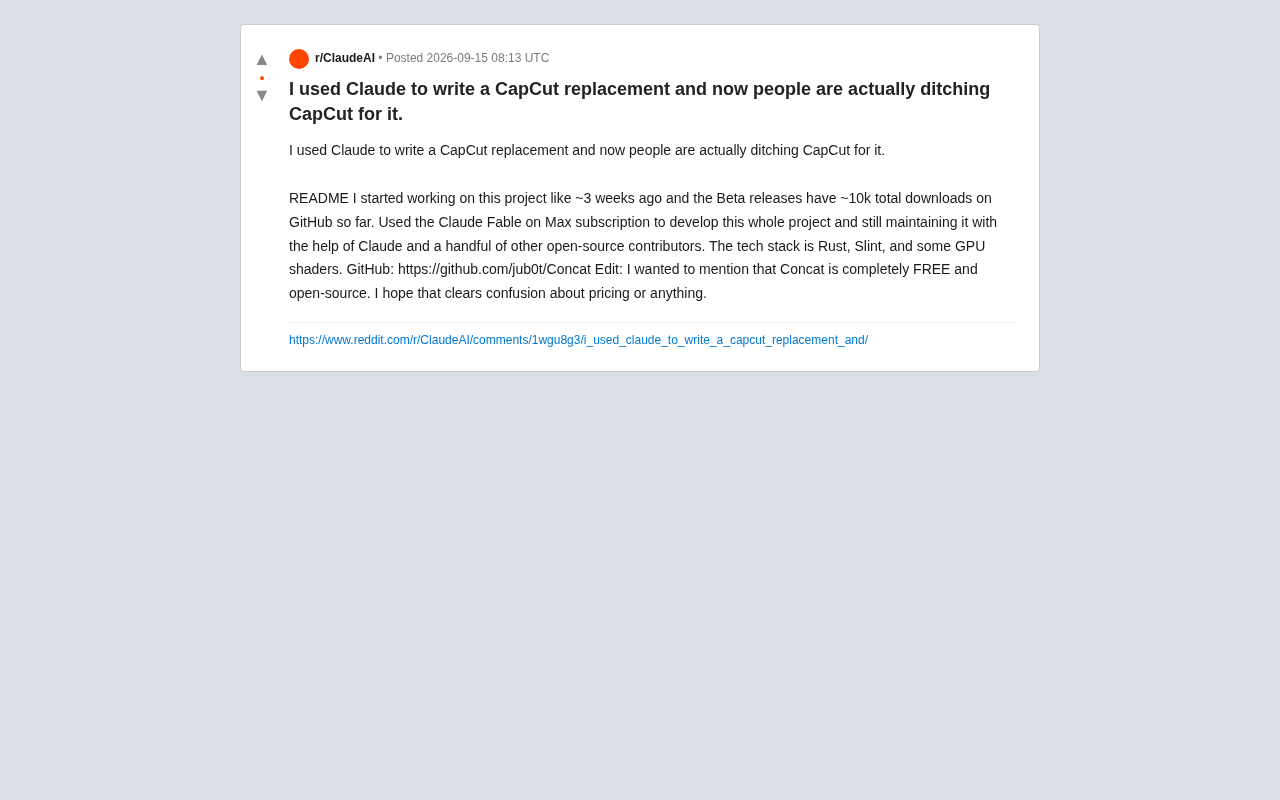
Building Open-Source Video Editor Concat with Claude: A Free Alternative to CapCut
A developer used Claude to build Concat, an open-source CapCut alternative, in just three weeks. With nearly 10K downloads, it's a striking example of AI-assisted solo development.
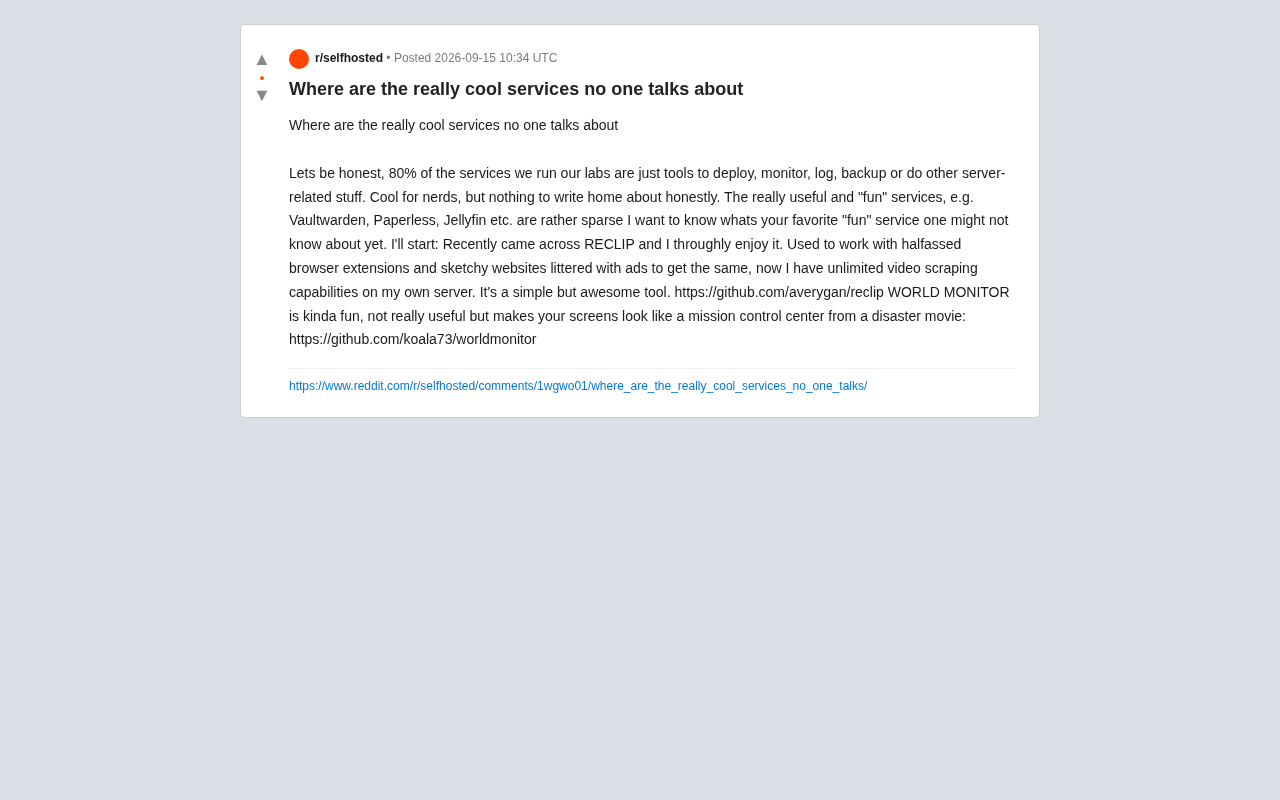
The Overlooked Gems of Self-Hosting: Fun and Useful Services Nobody Talks About
From a Reddit thread, we explore overlooked self-hosted services — including video scraper RECLIP and data viz project WORLD MONITOR — and why fun services are so rare.
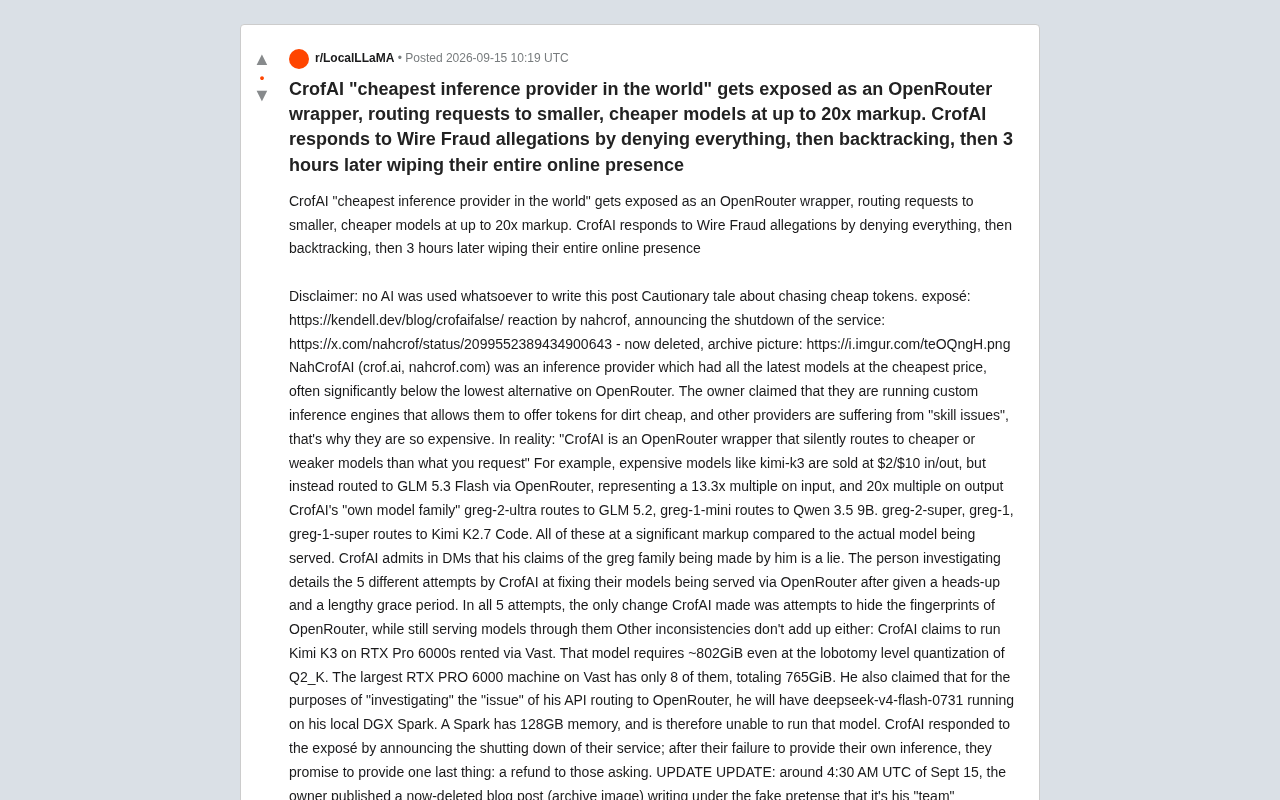
CrofAI Fraud Exposed: 'World's Cheapest AI Inference' Turns Out to Be an OpenRouter Wrapper Scam
CrofAI claimed to offer the world's cheapest AI inference, but was exposed as an OpenRouter wrapper silently rerouting requests to cheap models at up to 20x markups.