T3 Code: One Tool Aggregates All AI Coding Assistants and Models
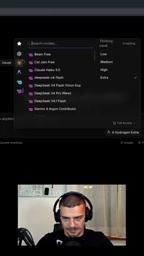
T3 Code aggregates multiple models and coding assistants into one interface, enabling mid-conversation switching with automatic context handoff.
T3 Code is an aggregation tool aimed at solving the fragmentation of AI coding tools. It brings models and coding assistants (harnesses) from different vendors into a single chat interface, letting users freely switch models mid-session while automatically passing previous conversation context to the new model—no need to re-paste prompts or restart the session. The demo shows continuous switching from an initial model to Claude Sonnet 5.5 and then DeepSeek v4.1 Flash. Typical use cases include side-by-side model comparison and routing by task difficulty. However, the material comes only from a feature demo video; handoff fidelity, capability differences between harnesses, and stability in real projects remain unverified, with actual performance depending on vendor API compatibility and context window matching.
AI coding tools are becoming increasingly fragmented—some people subscribe to Claude, others are used to DeepSeek, and teams may even mix multiple models. T3 Code attempts to solve this pain point: bringing models and coding assistants (harnesses) from different vendors into a single unified chat interface, allowing instant switching with automatic context handoff.
Core Selling Point: One Interface, All Models
According to a YouTube channel's demo of the tool, T3 Code's greatest value lies in freely switching model providers within the same session. The demonstrator's tone was direct: "This is the main advantage of T3 Code—you use all the harnesses, all the subscriptions, all the models in one central place."
This logic has real appeal for multi-model users. Developers often hold subscriptions to multiple AI services simultaneously, yet can only converse with each in its own client, with no way to share context. T3 Code consolidates this fragmented state into a single window.
Harness in the AI coding context typically refers to the interaction framework built around a large model, responsible for managing conversation state, tool calls (such as reading/writing files, executing commands), trimming and stitching the context window, and converting model output into concrete coding actions. Harness designs vary greatly across vendors: some lean toward a full agent loop, others only do lightweight completion. T3 Code bringing different harnesses into the same interface means it needs to adapt at the middle layer, unifying each party's differing conventions for message formats, tool protocols, and context lengths. This is also the technical difficulty of such aggregation tools—when switching models, it's not just about passing chat history, but also enabling the target harness to understand the structured context produced by another harness.
Switching Test: From Claude to Sonnet to DeepSeek
The demo flow clearly illustrates the switching mechanism. The demonstrator first opened a conversation with one model and sent "hi"; after receiving a reply, switched directly to Claude and selected Sonnet 5.5, then said "not sure yet, I'm not sure how it can help me."
The key detail: after switching models, the previous conversation context is automatically passed over. The demonstrator specifically pointed out "you can see the context was handed off from the original model to Sonnet." He then switched again to the DeepSeekAd harness, using DeepSeek v4.1 Flash, and continued asking "How are you doing today?"

The entire process involved no re-pasting of prompts and no restarting of the session. For users who need to compare answer quality across models or choose models based on task type, this saves a great deal of repetitive work.

Context handoff refers to the process of migrating existing conversation history, system prompts, tool call records, and other state to a new session when switching models or assistants. Simply stitching historical messages into the new model's prompt is only the most basic approach; the real challenge is: different models have different context window sizes, so when history is too long it needs summarization or truncation; different harnesses may define message roles inconsistently; and whether to retain intermediate results from tool calls also requires trade-offs. The higher the handoff fidelity, the less the user notices the switch; conversely, the model may "forget" prior agreements or repeat questions. The demo only shows handoff with short conversations—performance in long sessions and complex tool-call scenarios still needs real-world testing.
Use Cases and Things to Watch For
The most typical use is side-by-side model comparison: letting different models handle the same requirement without repeatedly copying context between multiple tabs. Another use is routing by task difficulty—using lightweight models for simple questions and switching to stronger models for complex reasoning.
The demo finally switched to the DeepSeek harness and DeepSeek v4.1 Flash, indicating the tool covers not only mainstream closed-source models but also other vendors' coding assistant ecosystems.

It should be noted that the current material comes from a feature demo video, primarily presenting the switching and context handoff storyline. The video does not elaborate on handoff fidelity, capability differences between harnesses, or stability in real projects. The long-term performance of such aggregation tools often depends on vendor API compatibility and context window matching, and evaluation should be based on actual project trials.
API compatibility and context window matching are two hard constraints determining the long-term viability of such aggregation tools. Vendor APIs are not unified in authentication methods, streaming output formats, function calling protocols, or rate limits—any party upgrading its interface could break the aggregation layer. Regarding context windows, different models range from tens of thousands to millions of tokens; when switching, if the target window is smaller, previously accumulated context needs compression, and the compression strategy directly affects answer quality. Additionally, subscription-based services usually do not grant full API access to third-party clients, so whether an aggregation tool can call stably also depends on each vendor's authorization policy. Therefore, when evaluating such tools, beyond feature demos, more attention should be paid to their maintenance frequency across multiple APIs and degraded-mode handling mechanisms.
Summary
T3 Code captures a genuine gap in needs: more models, more scattered subscriptions, yet users' chat windows remain isolated islands. Bringing harnesses, subscriptions, and models into one central place—and letting context flow with switches—is the core differentiator of this tool compared to single-vendor clients.
Related articles

Zero-Code Replication of a $10,000 3D Website with Claude Code: A Six-Tool Breakdown
Bilibili creator Yomi used Claude Code plus five free tools to build a 3D product landing page quoted at $10,000 overseas—zero code. Breakdown of the six-tool division of labor, image-to-3D workflow, and the core collaboration method: "give AI a reference, not 'make it look better.'"
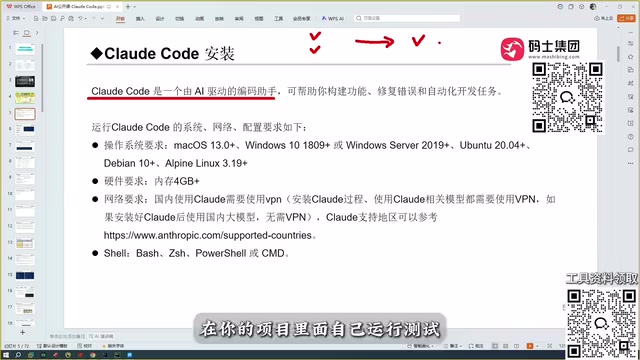
Claude Code in Practice: Install, Connect Models, Calculate Tokens, and Ship a Full-Stack Project with a Single Document
Based on a Bilibili public course demo, this covers Claude Code installation, model connection, token cost calculation, and the practical path of shipping a full-stack project with a single document, plus comparisons with Copilot, Cursor, Trae, and other coding assistants.
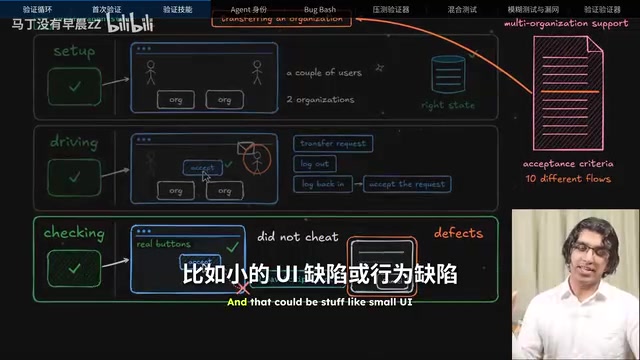
Who Accepts AI-Written Code? A 25-Minute Deep Dive into Verification Loops and the New Code Review Paradigm
After AI writes lots of code, how should Code Review verify it? This article breaks down the Claude Code team's verification loop framework: surface-level end-to-end verification, setup/drive/check three-stage skills, hybrid end-to-end testing and reliability checklists, and how to tighten the loop when issues slip through.