TaoMate H3 Three-Step LoRA Now Compatible with ComfyUI: Accelerating MiniMax H3 Image Generation
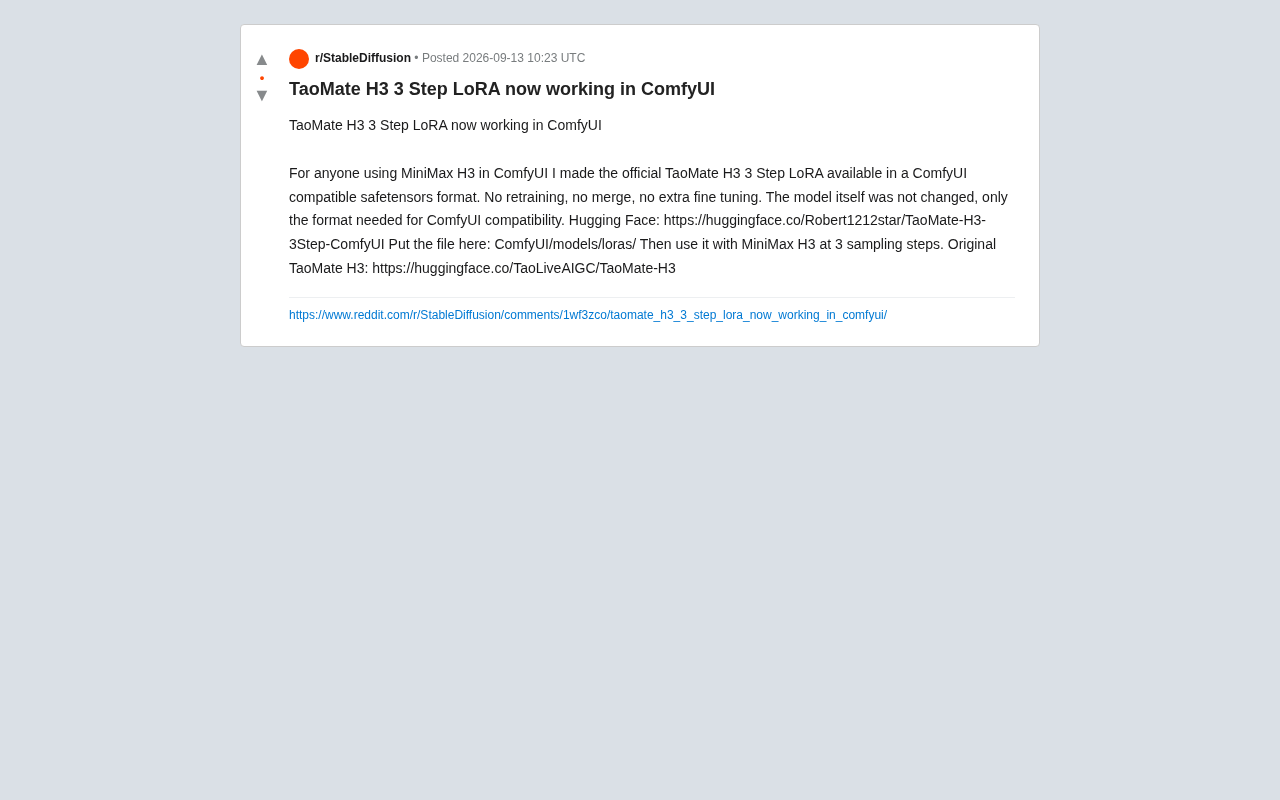
TaoMate H3's 3-step acceleration LoRA is now converted and ready for direct use in ComfyUI.
A community contributor converted the official TaoMate H3 3 Step LoRA to a ComfyUI-compatible safetensors format — no retraining or weight merging required, with capabilities identical to the original. The LoRA's key value is compressing MiniMax H3's image generation down to just 3 sampling steps, dramatically speeding up inference compared to the typical 20–50 steps. Deployment is simple: download from Hugging Face, drop the file into ComfyUI's loras directory, and set sampling steps to 3. This case also highlights the value of open-source community "last mile" work, where contributors handle format and packaging to bring frontier models into everyday local workflows.
TaoMate H3 Three-Step LoRA Arrives in ComfyUI
A Reddit user recently announced the conversion of the official TaoMate H3 3 Step LoRA into a safetensors format compatible with ComfyUI, making this acceleration tool directly accessible to a wider range of local deployment users. The conversion involved no changes to the model itself — no retraining, no weight merging, no additional fine-tuning — just a file format adjustment so that ComfyUI can recognize it.
For users who spend a lot of time building workflows in the ComfyUI ecosystem, format compatibility is often a major barrier to practical use. Many excellent open-source models and LoRAs are released in non-standard formats, preventing local users from loading them directly. This conversion essentially brings a resource that was already capable but "in the wrong format" into ComfyUI, one of the most popular local inference platforms.
What Three-Step Sampling Actually Means
LoRA (Low-Rank Adaptation) is a lightweight model adaptation technique that modifies output behavior by adding low-rank matrices on top of the base model, without altering the large underlying weights. The core value of TaoMate H3 3 Step LoRA lies in those "3 steps" — it enables the MiniMax H3 model to complete image generation in just 3 sampling steps.
Conventional diffusion models typically require 20 to 50 sampling steps, each involving a full denoising computation — more steps means more time. Compressing that down to 3 steps can theoretically yield several times to over ten times the inference speed, which is especially significant for local users with limited VRAM or those who need rapid iteration. This class of "few-step acceleration" LoRAs has grown increasingly popular in the open-source community in recent years; they essentially package distillation-based acceleration into a plug-and-play adapter layer.
How to Use It in ComfyUI
The deployment process described by the publisher is straightforward. First, download the converted file from Hugging Face (repository: Robert1212star/TaoMate-H3-3Step-ComfyUI), place the safetensors file in the ComfyUI/models/loras/ directory, then load the LoRA in your workflow alongside the MiniMax H3 model and set the sampling steps to 3.
It's worth noting that since the model content itself has not been modified in any way, the generation quality should theoretically match the original TaoMate H3 (available at the TaoLiveAIGC/TaoMate-H3 repository). Users get the exact same capabilities, just wrapped in a format that ComfyUI can recognize. This purely format-based conversion also eliminates the risk of quality drift that can come from secondary training.
Completing the "Last Mile" in the Open-Source Ecosystem
This kind of conversion work may seem low on technical novelty, but it fills an indispensable role in the open-source ecosystem. Base model development teams are typically focused on model performance itself and may not prepare ready-to-use formats for every downstream inference platform. Community contributors who proactively handle format adaptation, node packaging, and workflow templates are the ones who complete the "last mile" that brings cutting-edge models to everyday users' desktops.
For users focused on local image generation efficiency, if you're already working with MiniMax H3, this 3-step LoRA offers a low-cost path to faster inference. One caveat: this information comes from a single Reddit post, and the actual speedup and generation quality may vary across different hardware setups and workflows. It's recommended to test it yourself after downloading before deciding whether to incorporate it into your regular production pipeline.
Related articles

Can 'Your Mother' Make Us Forget Marvel's Blade Disaster?
Marvel's Blade reboot starring Mahershala Ali collapsed due to mismanagement. We explore why its failure may not be the worst outcome — and what 'Your Mother' has to do with it.
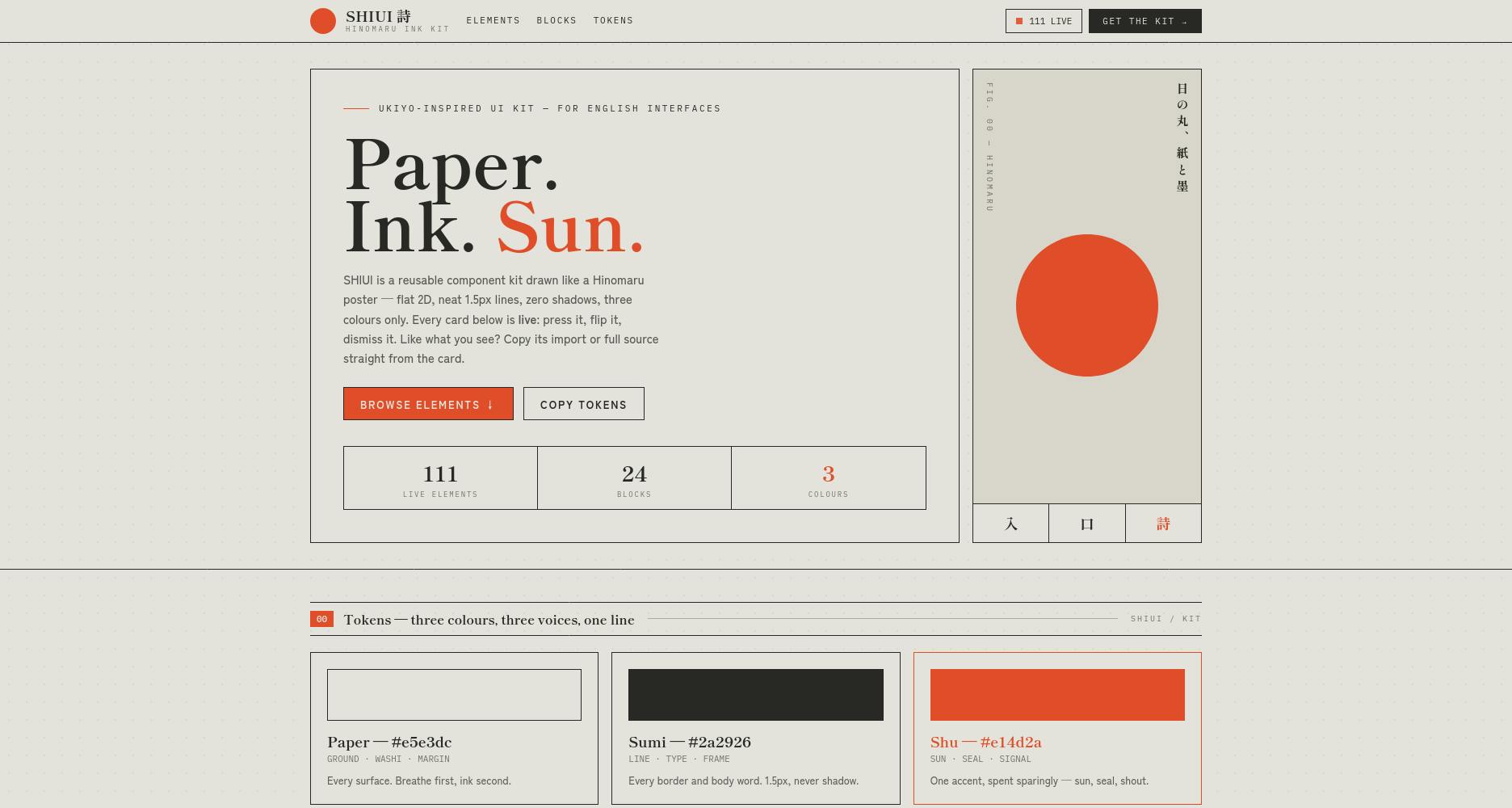
SHIUI: A Minimalist Ink-Wash UI Kit Inspired by Japanese Hinomaru Aesthetics
SHIUI is a flat ink-wash Web UI kit inspired by Japanese Hinomaru poster aesthetics, built around paper, sumi ink, and vermilion with zero shadows. A design breakdown.

Kirokune: An iPhone Work Incident Logger That Requires No Account
Kirokune is an iPhone app for logging workplace incidents — no account required. Combines text, audio, and photos in a timeline. Ranked #9 on Product Hunt with 86 votes.