Teachoo: A Guided AI Learning Tool That Teaches You to Solve Problems Instead of Just Giving You Answers
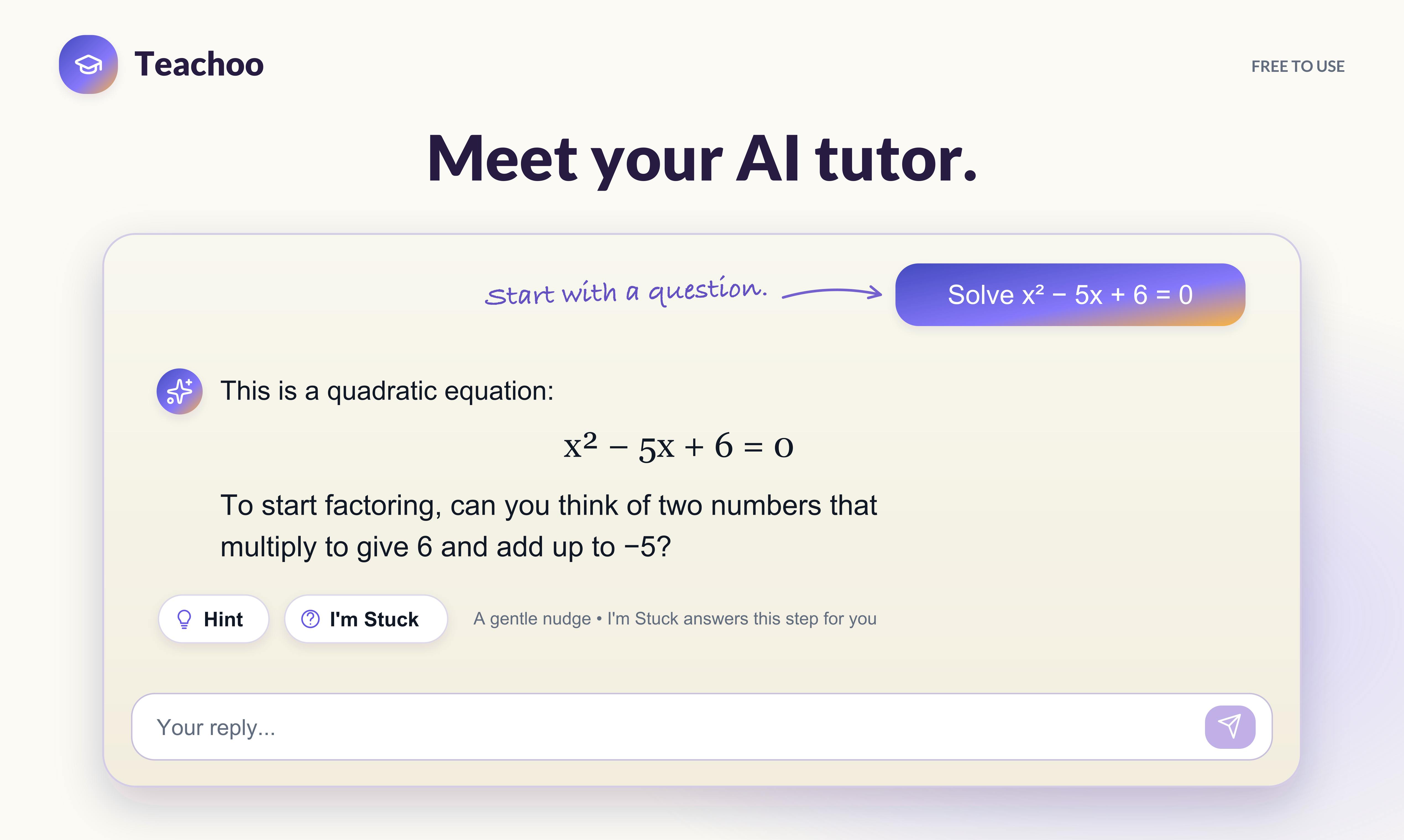
Teachoo guides students to solve problems themselves using Socratic AI questioning instead of just giving answers.
Teachoo is an AI learning assistant that reached #4 on Product Hunt by refusing to hand students direct answers. Instead, it uses tiered hints and Socratic-style questioning to guide learners to solutions themselves. It supports text and photo input, is free to use, and targets student homework scenarios — reflecting the growing split in educational AI between efficiency-first and process-first philosophies.
An AI Learning Assistant That Goes Against the Grain
In an era where ChatGPT can instantly answer any homework question, Teachoo has taken the opposite approach — instead of handing you the answer, it acts like a patient tutor, walking you through the problem step by step. This AI education product, which landed at #4 on Product Hunt's daily rankings with 105 upvotes, has a clear core philosophy: the value of learning lies in the process, not the outcome.
Teachoo is straightforward to use: type in a problem or simply upload a photo, and the AI will guide you to the answer through a series of leading questions, feedback, and hints. The product sits at the intersection of Education, Artificial Intelligence, and Online Learning, primarily targeting students working on assignments. The team even extends a rather intriguing invitation — "Try a problem you haven't been able to solve for years."
Guided Learning: A Response to the "AI Does the Work" Problem
What makes Teachoo most worth discussing is how it responds to a widespread problem with AI educational tools. When students can get a standard answer with a single click, the training value of homework is hollowed out. What kids learn isn't how to think — it's how to prompt an AI to do the assignment for them.
Teachoo's "one question at a time" approach deliberately creates friction for thinking. When you hit a wall, you can actively ask for "a bigger hint" or request an explanation of the logic behind a particular step. This tiered hint system keeps the initiative in the student's hands, with AI stepping back into a supporting role.
This stands in sharp contrast to traditional answer-delivery tools. It's closer to Socratic teaching — guiding learners to construct their own understanding through continuous questioning. For parents and educators, this "scaffolding" style of support is far more aligned with how learning actually works than simply feeding students answers.
The Socratic Method, rooted in ancient Greek philosophy, is built on the idea that teachers don't deliver answers directly — instead, they use persistent questioning to spark self-reflection, letting learners reach conclusions on their own. Its modern educational foundation comes from constructivism: the idea that knowledge isn't poured in from outside, but actively built by the learner. When students are pushed to explain their own reasoning, they exercise metacognition — the ability to "think about how they think" — leading to deeper and more lasting understanding. The related concept of Scaffolding, introduced by psychologist Vygotsky, refers to providing appropriate support at the edge of a learner's capability, gradually withdrawing that support as ability grows until the learner can solve problems independently. Teachoo's tiered hint system — from small hints to bigger hints to step-by-step explanations — is a digital implementation of exactly this theory.
Product Highlights and Real-World Limits
Based on publicly available information, several design choices in Teachoo deserve recognition:
- Multimodal input: Supports both text input and photo uploads, lowering the barrier to entry — especially useful for math and science problems involving formulas and diagrams.
- Tiered hint system: Hints, feedback, bigger hints, and step-by-step explanations form a progressively structured help framework.
- Free to use: Student-friendly, with no paywall blocking initial access.
That said, based on current information, a number of questions remain unanswered. The product claims it can help you "learn anything and everything," but the actual range of subjects covered, its ability to handle complex problem types, and the accuracy of its guidance all lack verification. If AI leads students down an incorrect reasoning path during the guided process, it could actively mislead them — an accuracy challenge that every tool of this kind must confront. Additionally, only 4 reviews means real user feedback is still quite limited.
The Diverging Paths of Educational AI
Teachoo's emergence reflects a growing split in educational AI products between two approaches. One is efficiency-first — delivering answers as fast as possible, typified by photo-based homework solver apps. The other is process-first — emphasizing the development of independent thinking. Teachoo falls firmly in the latter camp.
From a long-term value perspective, the process-first approach is clearly more aligned with the true nature of education. But it also faces a real paradox: when students reach for a learning tool, they usually want the easy way out. Whether a product that "doesn't give you the answer directly" can hold its ground against user demand for quick answers depends entirely on whether the guided experience is smooth enough and rewarding enough. If the questioning process feels too tedious, users will easily switch to a more "satisfying" alternative.
For students, parents, and teachers who care about actual learning outcomes, Teachoo offers a new option worth trying. Whether it can truly "teach you to learn" rather than "do it for you" will require more real-world use to validate. But at the level of philosophy, it points toward a healthier direction for AI-assisted learning.
This divergence is being discussed in both academic and industry circles. Research from institutions like MIT has found that over-reliance on instant answers undermines the memory consolidation effects of "desirable difficulties" — it's precisely the struggle of working through a problem that drives the brain to encode information more deeply. Meanwhile, products like Khan Academy's Khanmigo and Carnegie Learning have also taken the "conversational tutoring" route, showing that Teachoo isn't alone — it represents a well-grounded product philosophy within the broader "AI tutor" category. The real challenge lies in user behavior: in the short term, the dopamine hit of "getting an answer" is far stronger than the delayed gratification of "learning a method." Designing enough immediate sense of achievement into the guidance flow is the key variable for retention in products like this.
One-line Summary
Teachoo is an AI education tool that refuses to give direct answers, instead using Socratic-style questioning to guide students toward solving problems on their own.
Paragraph Summary
Teachoo is an AI learning assistant that reached #4 on Product Hunt's daily rankings by doing the opposite of most answer-driven AI tools: rather than delivering solutions directly, it uses tiered hints and guided questioning to help students reach answers themselves. The product supports both text input and photo uploads, is currently free to use, and is primarily aimed at student homework scenarios. Its design reflects the growing split in educational AI between "efficiency-first" and "process-first" approaches — Teachoo firmly chooses the latter, aligning more closely with constructivist educational principles. Whether it can hold its ground against users who just want a quick answer, and how it ensures the accuracy of its AI-guided reasoning, remain the practical challenges the product must face.
Related articles
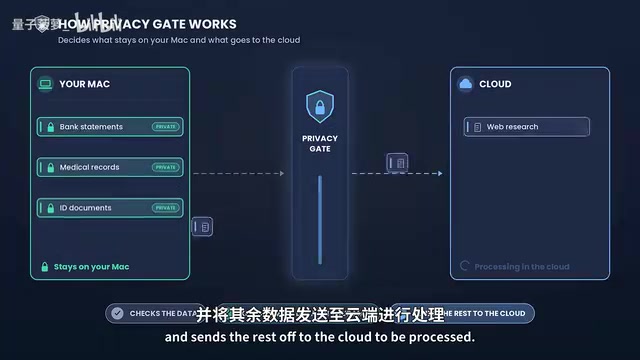
Perplexity Hybrid Compute Tested: Privacy Data Never Leaves the Mac
Perplexity Hybrid Compute tested: how PrivacyGate intercepts sensitive data, how local and cloud models divide work, model differences on 16GB vs 32GB Macs, and privacy protection in real scenarios like bank statements and medical records.
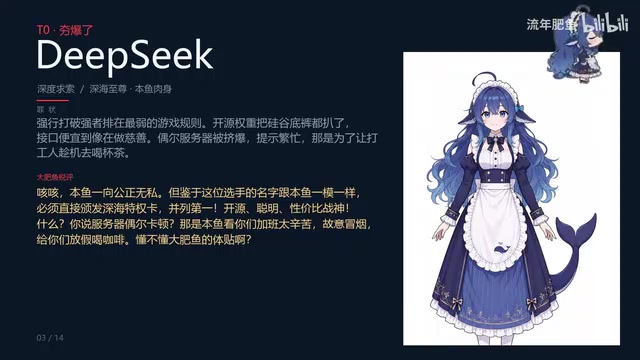
Big Fat Fish Roasts Mainstream LLMs at Home and Abroad: Doubao Takes the Crown, DeepSeek Tied for First
Bilibili creator Big Fat Fish roasts mainstream LLMs: Doubao tops for emotional value, DeepSeek ties first for open-source value, with ERNIE, Hailuo, Yuanbao, Kimi, Qwen, Kling, Claude, Gemini, and Grok each branded with a distinct persona.

How to Truly Test AI Agents Before Production? A Practical Testing and Monitoring Framework
BotGage founder Pramin Pradeep shares a three-step framework for testing AI Agents before production: Agent registration visibility, red teaming, and production observability — plus a real case cutting QA costs from $180K to $80K and an analysis of IT roles shifting to Agent supervisors.