Teasing Before Launch: The Product Hype Logic Behind AI Dance Training
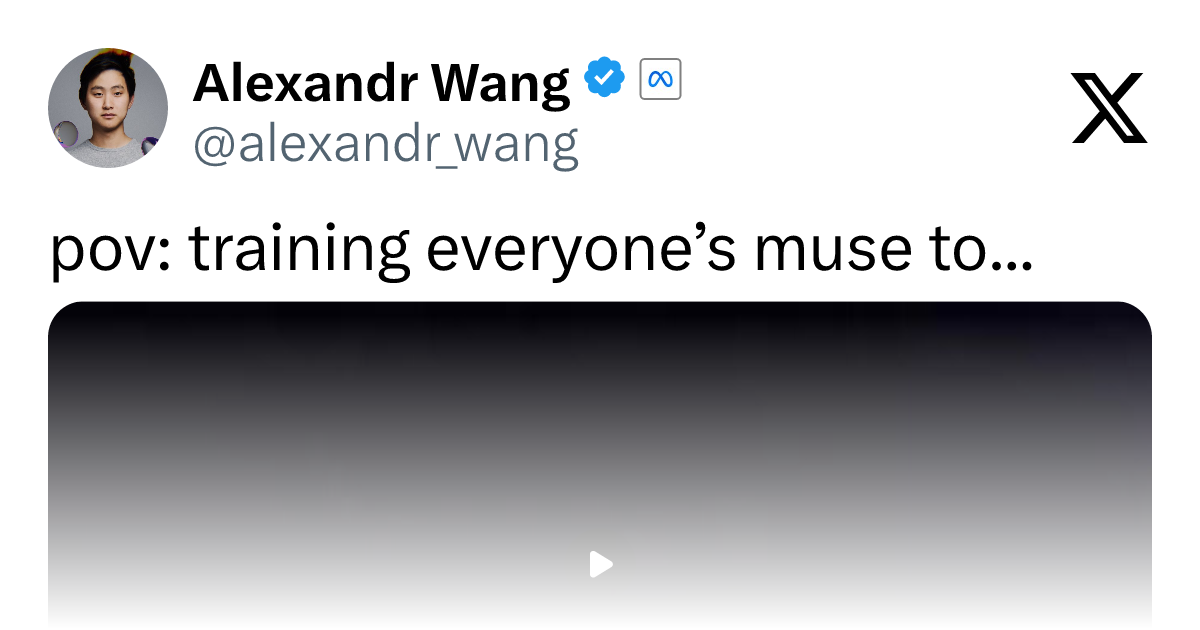
A tweet teasing an AI product with the imagery of 'a muse dancing' reveals a new marketing trend where experiential narrative replaces technical narrative.
The article dissects a one-sentence AI product teaser tweet: "pov: training everyone's muse to dance before our launch this week." The author argues that the tweet personifies the product as a 'muse' that inspires creators, uses the 'dance' imagery to suggest smooth and natural interaction, and closes the distance with users through the 'pov' perspective. This meme-style teaser lowers expectation-management risk while cultivating community belonging, reflecting AI product marketing's shift from technical-spec narrative to experiential and character-based communication. But the article also notes that creative teasers amplify delivery pressure at launch, and marketing cannot replace product substance.
Why One Tweet Drew Attention
"pov: training everyone's muse to dance before our launch this week" — this short tweet from Twitter, paired with a pre-launch training scene, quickly spread through tech circles and creator communities. The tweet disclosed no product name, technical details, or team background. With just two images — "everyone's muse" and "dance" — it sketched an AI character being "trained." This "tease before release" marketing approach is itself a sample worth dissecting.
Literally, the tweet describes the team training an object called a "muse" to dance ahead of an upcoming product launch. But given the typical rhythm of AI product releases, this is more likely a deliberate teaser: showing off product capabilities in an anthropomorphic voice while avoiding revealing technical cards too early. For readers interested in AI applications and product experience, there are at least three layers of information worth unpacking here.
"Muse" as a Marketing Metaphor for an AI Character
Calling the product "everyone's muse" is an ingenious rhetorical choice. In creative contexts, a muse refers to a source of inspiration — implying the product is not a cold tool but a character that accompanies creators and sparks inspiration. This positioning aligns with the current trend of AI applications evolving from "functional" to "character-based" — users no longer care only about what a model can do, but also about what identity it interacts with them under.
"Training it to dance" further reinforces the sense of character. Dance is a highly anthropomorphic behavior requiring coordination, rhythm, and expressiveness. By choosing "dancing" rather than "generating text" or "processing data" to describe the training process, the team is essentially conveying that the product has smooth, natural, and expressive interaction capabilities. Although the tweet gives no technical parameters, this imagery-based expression has already completed the preset of the product's character.
POV (Point of View) is a common narrative tag on social media, originally meaning "perspective," often used in video or text content to let readers insert themselves into a scene in the first person. Using "pov:" at the start of a tweet is an invitation for readers to imagine themselves at the pre-launch training scene, watching "everyone's muse" dance. This expression is more approachable and scene-setting than an official announcement and effectively reduces the advertising feel of commercial promotion. The popularity of the POV tag also reflects contemporary users' preference for "behind-the-scenes" and "authentic perspectives," which brands use to close the psychological distance with their audience.
The Rhythm and Boundaries of Pre-Launch Teasers
In terms of communication rhythm, this tweet was posted before "this week's launch," making it a typical pre-launch teaser. Unlike traditional feature previews, it doesn't list features but uses the "pov" perspective (first-person immersion) to close the distance with users. "pov" is a common narrative tag on social media emphasizing immersion and scene-setting, making the tweet feel more like behind-the-scenes footage than an official announcement.
The advantage of this approach is reduced expectation-management risk: with no specific promises, there's no "not what was advertised" gap. But the boundaries are also clear — if the teaser stays only at the meme level without follow-up information release, users' curiosity may fade quickly. For developers who genuinely care about the product, what they want to know is: what architecture does this "muse" run on? Where does the training data come from? Are the dance moves generated or choreographed? The tweet leaves all of this blank.
Pre-launch teaser is a common strategy in product marketing, referring to using fragmented information, suspense, or interactive content to generate attention in the period before a product's official release without disclosing full details. Its core purpose is to build anticipation, accumulate early users and media attention, while retaining room for adjustment. Common teaser formats include countdown posters, feature silhouettes, behind-the-scenes footage, and meme-style tweets. Compared with official announcements, teaser content is usually vaguer and more emotion-oriented, to avoid locking users' expectations to specific features. But teasers also need the right rhythm: too little information released may cause attention to drain, while too much may weaken the surprise at launch. Successful teasers often build topic momentum before launch and complete the loop with the product's substance at launch.
Implications for AI Product Communication
The spread of this tweet reveals a shift in AI product marketing: technical narrative is giving way to experiential narrative. In the past, AI product launches often used benchmark scores and model scale as core selling points; today, more and more teams choose scene-based, character-based content to reach users — first building an emotional connection, then explaining technical capabilities.
The wording "everyone's muse" also implies a community-oriented approach — not "our product" but "everyone's muse." This helps cultivate a sense of belonging before launch, making early followers feel they are participating in the growth of a shared character. Publicly showing the dance-training process also carries a "raising" flavor, encouraging users to keep following subsequent progress.
Of course, marketing tactics cannot replace product substance. The more creative the teaser, the greater the pressure to deliver at launch. If the "muse" ultimately turns out to be just an ordinary chat or generation tool lacking the interaction expressiveness matching the "dance" imagery, the earlier character-based groundwork will instead amplify the gap. For observers, the value of this tweet lies not in what it says but in how it anchors the product's character with the fewest words.
Conclusion: A Big Signal in a Short Tweet
In a social media environment of information overload, the fact that a one-sentence tweet can spark discussion itself demonstrates its communicative efficiency. It has no parameters, no dates, no link details, yet through the combination of "pov," "muse," "dance," and "launch," it accomplishes three functions at once: character setting, capability suggestion, and launch teaser. For practitioners interested in AI applications and product experience, this provides a teaser template worth referencing: first build cognition with imagery, then fulfill that cognition with the product. As for how this "muse" ultimately dances, we'll have to wait until after launch to find out.
Related articles

Seven Years of Evolution: How Far Has the Foldable Come From the First Generation?
From the first foldable to today's latest models, what has seven years changed? Shallower creases, higher brightness, thinner bodies, and smoother software migration—has the foldable crossed the chasm from enthusiasts to ordinary users? This article discusses the question based on a video comparison.

When Did Humans Start Eating Salt? A 10,000-Year History of Salt
When did humans start eating salt? From salt use at the dawn of agriculture 11,000 years ago to ancient seawater evaporation and rock salt mining, and on to the salt trade, salt taxes, and Gandhi's Salt March, this article traces salt's key role in human civilization.
Microsoft Paza Research: How African Language Speech Recognition Breaks Through Architecture and Data Bottlenecks
Microsoft's Paza research evaluates 53 speech models across 39 African languages, revealing architecture choice matters more than pre-training coverage, 200-300 hours is the practical data threshold, and language typology deeply influences recognition performance.