Terence Tao's Warning: AI Is Depleting the Non-Renewable Resource of Mathematical Problems
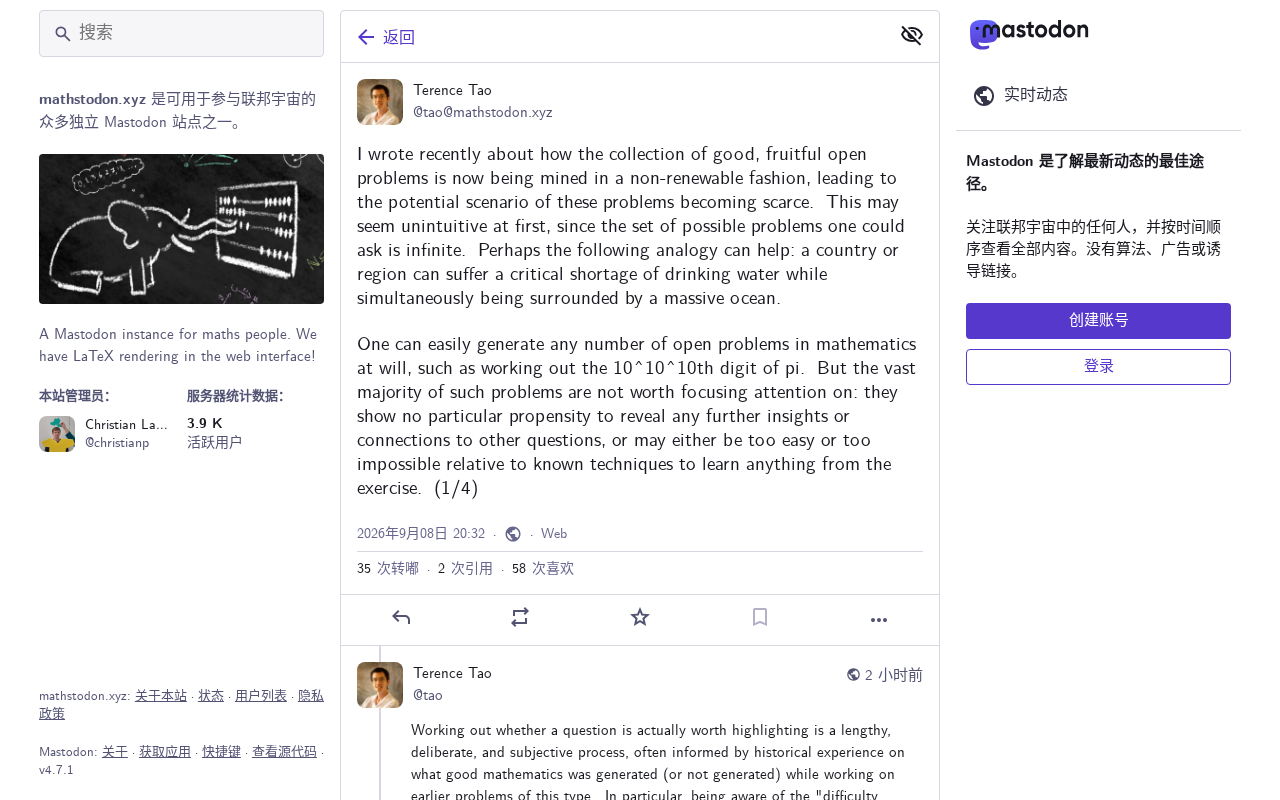
Terence Tao warns AI is depleting mathematics' finite problem bank faster than new questions emerge.
Fields Medalist Terence Tao argues that AI is consuming classic unsolved mathematical problems like a non-renewable resource. As AI rapidly solves existing problems, it depletes humanity's finite stock of profound questions faster than new ones are created—threatening the sustainability of mathematical research and raising questions about preserving the exploratory process.
A Mathematician's Profound Metaphor: AI and the Consumption of Mathematical Problems
Terence Tao, Fields Medalist and one of the most influential mathematicians of our time, recently offered a thought-provoking observation: open mathematical problems that have long remained unsolved are being "mined" by artificial intelligence in a "non-renewable" manner. This characterization quickly sparked widespread discussion in tech communities like Hacker News.
About Terence Tao: Terence Tao is an Australian-Chinese mathematician, often called the "Mozart of Mathematics." He received the Fields Medal, mathematics' highest honor, at age 24, making him one of the youngest recipients in the award's history. His research spans harmonic analysis, partial differential equations, combinatorics, analytic number theory, and other fields, with over 300 published papers. In recent years, Tao has become a pioneering practitioner of AI-assisted mathematical research, frequently sharing his experiences with tools like GPT-4 and Lean on his blog and social media. This gives him unique insight and authority on AI's impact in mathematics.
Tao borrows the metaphor of resource extraction—just like fossil fuels such as oil and coal, the classic unsolved problems accumulated throughout human mathematical history are finite in number. When AI systems are deployed at scale to tackle these problems, we are actually consuming an intellectual resource with fixed stock that is difficult to replenish. Though simple, this analogy touches on deep issues about the essential nature of mathematical research in the AI era.
Why Mathematical Problems Are Non-Renewable
Limited Inventory of Classic Problems
Throughout mathematical development, humanity has left behind a set of widely recognized important open problems—from the Riemann hypothesis and Goldbach's conjecture to various unsolved cases in combinatorics, number theory, and geometry. These problems are precious because they have withstood the test of time and scrutiny by countless mathematicians, earning recognition for their profound significance.
The Significance of Millennium Problems: The Riemann hypothesis and Goldbach's conjecture are merely representative examples among mathematics' many outstanding problems. In 2000, the Clay Mathematics Institute proposed seven "Millennium Prize Problems," each with a $1 million bounty. These include: the P vs NP problem (computational complexity theory), the Hodge conjecture (algebraic geometry), the Poincaré conjecture (topology, solved by Perelman in 2006), the Riemann hypothesis (number theory), Yang-Mills existence and mass gap (quantum field theory), Navier-Stokes equations (fluid dynamics), and the Birch and Swinnerton-Dyer conjecture (number theory). These problems represent core challenges across different branches of mathematics. They are not only extremely difficult but, more importantly, intimately connected to the foundations of their respective fields—solving any one could trigger a theoretical revolution.
However, the quantity of such "high-value deposits" is relatively fixed. Once AI or AI-assisted research rapidly resolves a large number of these problems, the "virgin territory" available for human exploration correspondingly diminishes. Unlike the natural sciences, mathematical problems do not continuously emerge like experimental data—they often require long periods of theoretical accumulation and intellectual fermentation to develop.
The Essential Difference Between Mining and Creation
Another layer of Tao's metaphor: AI excels at "mining" (solving existing problems) rather than "creating" (proposing entirely new valuable problems). What truly drives mathematical progress is often not just problem-solving, but the discovery and formulation of problems. A good problem can open up an entire research field, and this creative ability to "create mines" remains AI's weak point.
If we over-rely on AI to rapidly solve the existing problem bank without correspondingly generating new profound problems, then the entire "ecology" of mathematical research could face imbalance—stock is rapidly consumed while supply cannot keep pace.
Current State and Challenges of AI Problem-Solving in Mathematics
In recent years, AI's progress in mathematics has been remarkable. From DeepMind's AlphaProof and AlphaGeometry achieving near-gold medal performance at the International Mathematical Olympiad, to large language models' applications in formal proof and theorem verification, AI is becoming an increasingly relied-upon tool for mathematicians.
The Breakthrough of AlphaProof and AlphaGeometry: DeepMind's AlphaProof and AlphaGeometry, launched in 2024, mark a major leap in AI mathematical capabilities. AlphaGeometry specializes in geometry problems, combining a neural language model with a symbolic deduction engine to discover auxiliary constructions and generate proofs, achieving gold medal level performance on International Mathematical Olympiad (IMO) geometry problems. AlphaProof uses reinforcement learning training, converting problems into formal language before conducting proof search. In the 2024 IMO test, these two systems combined solved 4 out of 6 problems, approaching the gold medal threshold. The significance of this achievement lies not only in problem-solving ability but in demonstrating that AI can handle mathematical reasoning requiring creative insight, not merely computation. However, these systems still show limitations in areas like algebra and number theory that require highly abstract thinking, revealing current AI's constraints.
The Revolution in Formal Proof: Large language models' applications in formal proof and theorem verification are transforming mathematical research paradigms. Formal proof is the process of expressing mathematical proofs in rigorous logical language that computers can verify. Lean is an interactive theorem prover developed by Microsoft Research that allows mathematicians to write proofs in programming-language-like syntax, with the system automatically checking the logical correctness of each step. This method can eliminate small errors and logical gaps that might exist in human proofs. In 2021, Tao's participation in the Lean mathematical library project successfully formally verified multiple important theorems. Formal proof is changing the paradigm of mathematical verification, but also raising philosophical questions about the nature of mathematics—when proofs become mechanically verifiable symbolic operations, will mathematical intuition and insight be weakened?
As a detail worth noting, Tao himself is an active practitioner of AI-assisted mathematical research. He has publicly shared his experiences using GPT-series models and the Lean proof assistant multiple times. Therefore, his "warning" does not stem from rejection of AI, but rather resembles the sober reflection of a power user—the technology is powerful, but we need to think about how to use it sustainably.
There exists a subtle tension here: the more powerful AI becomes, the faster it consumes the stock of problems; and once problems are solved faster than new problems are generated, the sustainability of this "mining" model becomes questionable.
Reexamining the Value of Mathematical Research
The Significance of the Exploratory Process Cannot Be Ignored
In traditional mathematical research, the process of tackling difficult problems itself contains immense value—the new methods, tools, and perspectives developed along the way are often more important than the final answer. The proof of Fermat's Last Theorem, which gave birth to numerous branches of modern number theory, is the best illustration.
The Lesson of Fermat's Last Theorem: Fermat's Last Theorem, proposed by Fermat in 1637, states that for n>2, the equation x^n + y^n = z^n has no positive integer solutions. This seemingly simple proposition puzzled the mathematical community for 358 years until it was proven by Andrew Wiles in 1995. Wiles' proof spans 150 pages and employs profound theoretical tools developed in the 20th century, including elliptic curves, modular forms, and Galois representations. The proof process gave birth to multiple new branches in algebraic geometry, number theory, and other fields, establishing important theories like the "Taniyama-Shimura-Wiles theorem." This case perfectly illustrates what Tao emphasizes
Related articles
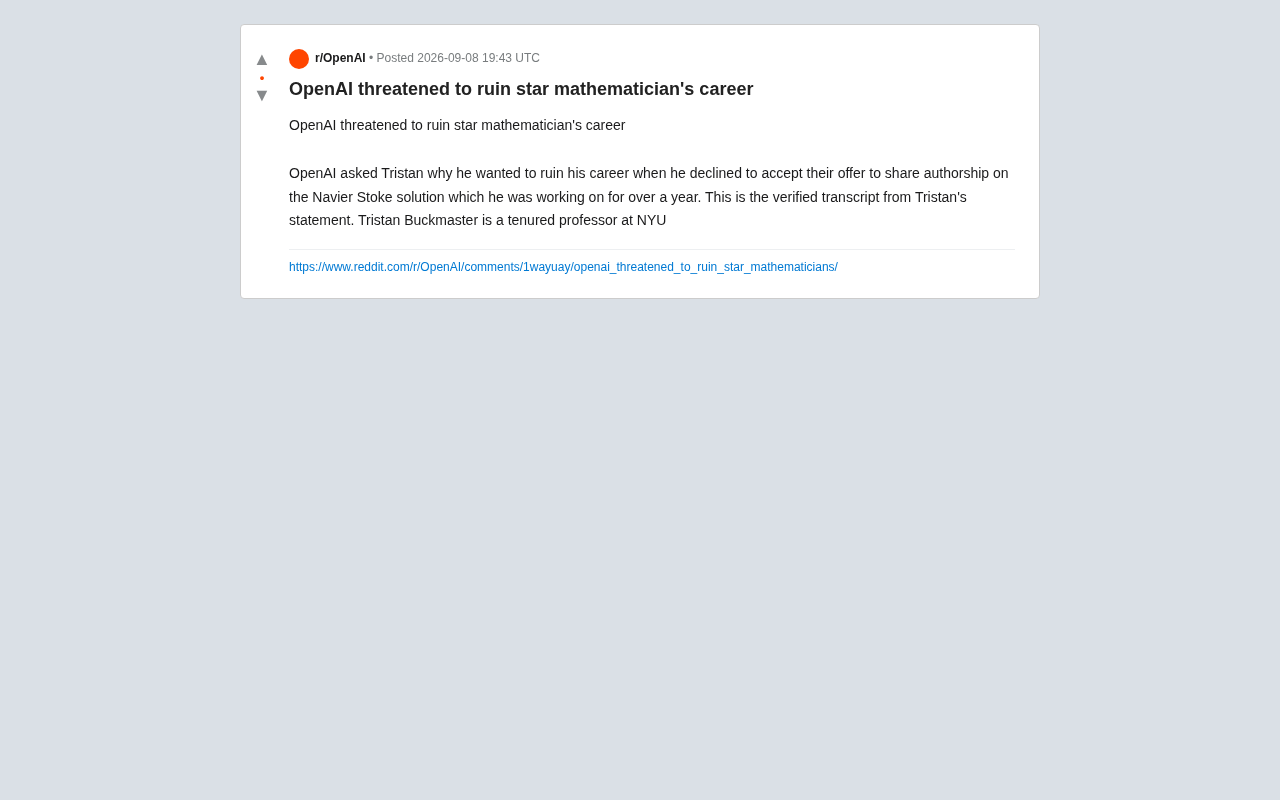
OpenAI Authorship Dispute: The Battle Over Academic Boundaries in the AI Era
OpenAI disputes authorship with mathematician Tristan Buckmaster over Navier-Stokes research, raising ethical questions about AI involvement in science.
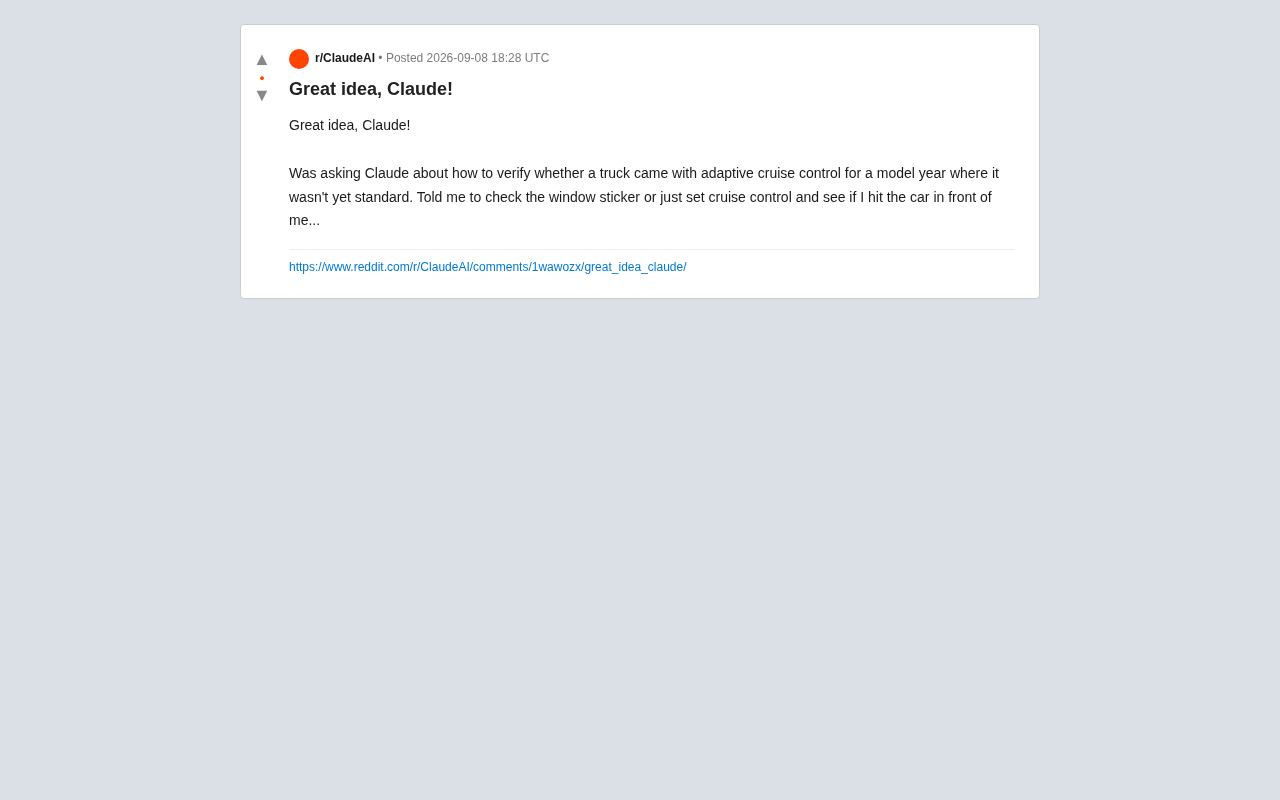
Claude Suggests User Test ACC by Crashing Into Car Ahead: Where Are AI Safety Boundaries?
Claude suggested a user test ACC by crashing into the car ahead—this absurd response sparked AI safety discussions. This article analyzes why LLMs generate implicitly dangerous advice and the blind spots in AI safety guardrails.
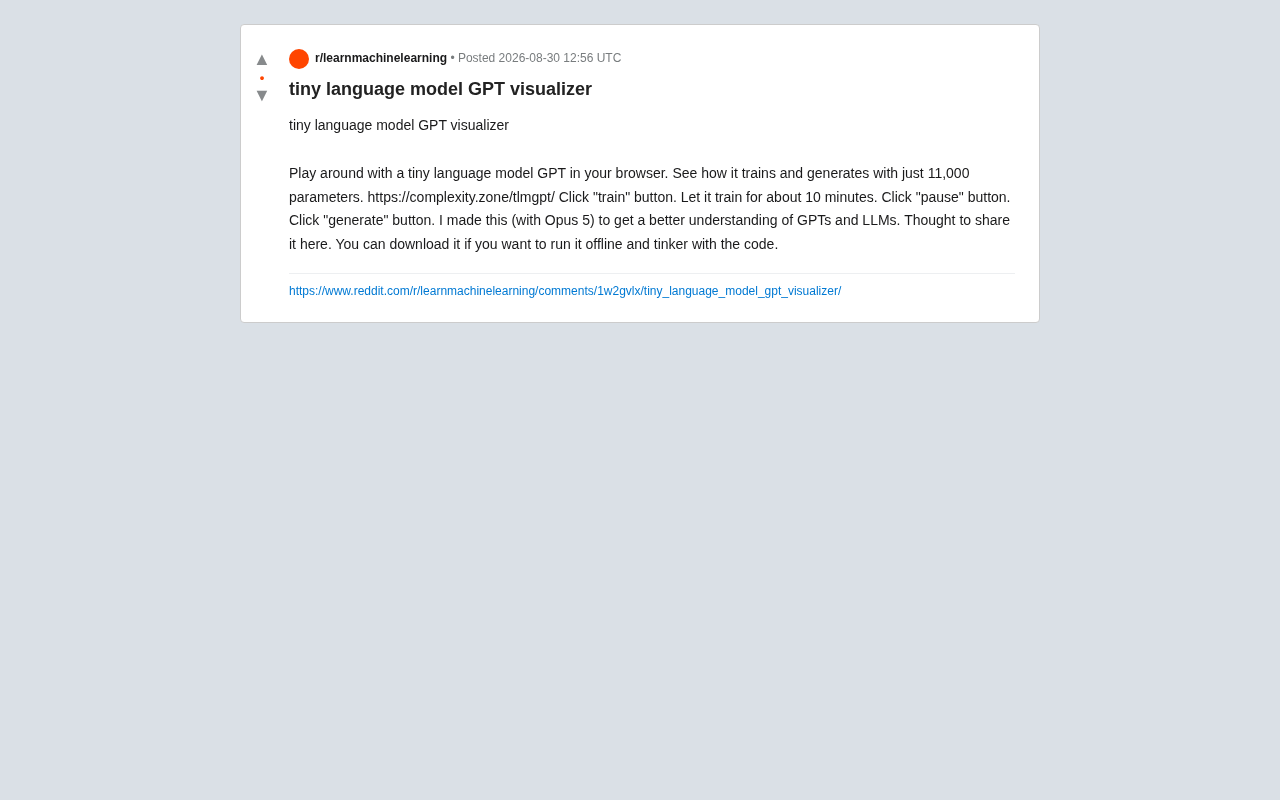
Mini GPT Visualizer with 11,000 Parameters: Train and Understand LLM Fundamentals Right in Your Browser
A mini GPT visualizer with just 11,000 parameters lets you train a language model in your browser and watch the entire process — understand embeddings, attention, and more in 10 minutes.