Ternary Bonsai 2.5 27B: 27B Coding Power Packed into 5.9GB, Code Stays Local

Ternary quantization compresses a 27B coding model to 5.9GB for local use with improved multi-turn ability.
A US AI company released Ternary Bonsai 2.5 27B, a local coding model using ternary quantization to keep each weight at -1, 0, or +1, compressing 27B parameters into 5.9GB. The vendor claims a coding score of 75.6, up from 60.8, and near the base model's 80.6, with notable progress on multi-turn code editing, testing, and fixing. It supports Apple Silicon and NVIDIA/Intel GPUs, is open source and free from November 24, and keeps code and documents local for privacy and compliance. But the context window and full benchmark table are undisclosed; all data are vendor claims pending independent verification.
Recently, a US AI company released a new-generation local coding model, Ternary Bonsai 2.5 27B, which compresses model size in an extreme way: each weight retains only three values — -1, 0, +1 — squeezing 27B parameters into just 5.9GB. This is not just a numbers game; it could reshape the usability boundaries of local coding assistants.
Ternary Quantization: Squeezing 27B into 5.9GB
The core idea of Ternary Bonsai 2.5 27B is ternary quantization: each weight takes only one of three discrete values — -1, 0, +1. Compared with traditional 16-bit or 8-bit floating point, this approach dramatically reduces storage and computation overhead, allowing a 27B-parameter model to exist at 5.9GB.
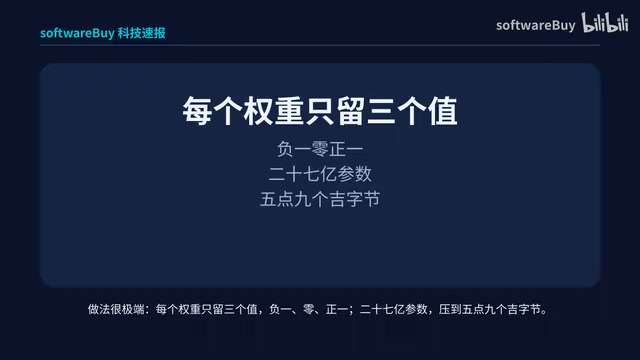
Technically, ternary quantization is not a brand-new concept, but applying it to a 27B-class coding model while maintaining usable performance is an engineering breakthrough. The compression of model size means it can run on consumer-grade hardware without relying on cloud GPU clusters.
Background on quantization and ternary quantization
Model quantization refers to techniques that represent neural network weights (and activations) at lower precision, commonly including 16-bit floating point (FP16) and 8-bit integer (INT8). The goal is to reduce memory footprint, speed up inference, and enable models to run on consumer hardware. Ternary quantization is one of the most aggressive forms in the quantization spectrum: weights retain only three discrete values {-1, 0, +1}, theoretically requiring about 1.58 bits (log₂3) of information per weight — roughly a 10x compression compared with FP16's 16 bits. The cost is limited expressiveness, which usually requires quantization-aware training (QAT) or carefully designed scaling factors to maintain performance.
5.9GB for 27B parameters means an average of about 1.75 bits per parameter, slightly above the theoretical lower bound. This indicates that in addition to ternary weights, there are extra overheads such as scaling coefficients, embedding layers, or some high-precision components. Another advantage of ternary quantization is computation: multiply-accumulate operations can degrade into additions/subtractions and conditional selections, significantly reducing energy consumption and latency on specific hardware — an important reason it can adapt to multiple consumer platforms such as Apple, NVIDIA, and Intel.
Coding Benchmarks and Official Claims
Benchmark data published by the vendor shows that Ternary Bonsai 2.5 27B scored 75.6 in coding tests, a clear improvement over the previous generation's 60.8, while the original base model scored 80.6. This means the quantized model retains most of its capability while substantially reducing size.
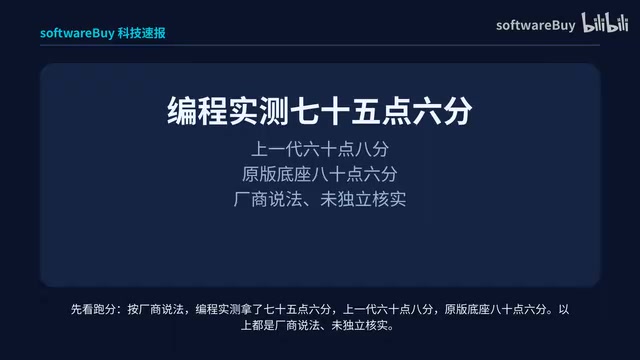
It is important to emphasize that the above data all come from vendor claims and have not yet been verified by independent third-party evaluations. For quantized models, benchmark scores and real-world experience may diverge, especially in multi-turn tasks and long-context scenarios.
How to interpret benchmark scores and third-party evaluations
Coding benchmarks are usually based on HumanEval, MBPP, or SWE-bench, measuring the correctness rate of generated or fixed code. The gap between 75.6 and 80.6 is about 5 points — perceptible but not enormous in benchmark terms; however, scores from different benchmarks cannot be directly compared across tests, and quantized models often perform close to the original on short-sample tests while degrading more easily in complex scenarios such as long contexts and multi-file dependencies.
The value of independent third-party evaluation lies in eliminating the influence of selective vendor reporting (e.g., publishing only favorable subsets or using lenient pass criteria). When evaluating quantized models, beyond the total score, one should also consider: success rates on multi-turn tasks, performance degradation curves under long contexts, and whether actual inference speed and memory usage match the claims. Until such data are published, benchmark scores should be treated as a reference upper bound rather than a basis for adoption.
Multi-turn Tasks: Where the Biggest Progress Lies
The vendor claims that this generation has made significant progress in multi-turn interactions on common tasks — continuously modifying code, running tests, and fixing issues based on results, all in one flow. The previous generation often "dropped the ball" on such long-chain tasks, and version 2.5 specifically strengthens multi-turn task capabilities.
This capability is crucial for a local coding assistant. What developers really need is not a single code generation but reliable support throughout the entire development workflow. If the model can complete multi-turn debugging locally, with code and data never leaving the machine, privacy and latency issues would be fundamentally improved.
Runs Locally, Code Never Leaves Home
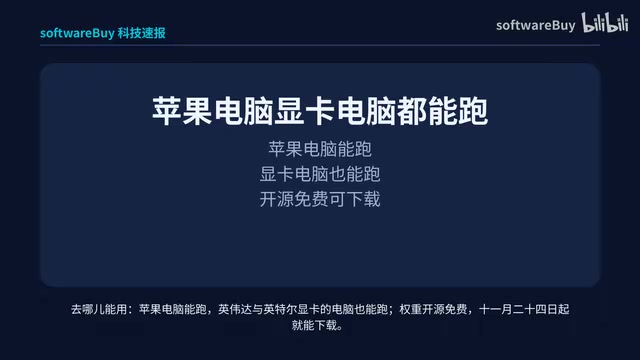
Ternary Bonsai 2.5 27B supports running on Apple Silicon Macs as well as computers with NVIDIA and Intel GPUs, and is fully open source and free, available for download starting November 24.
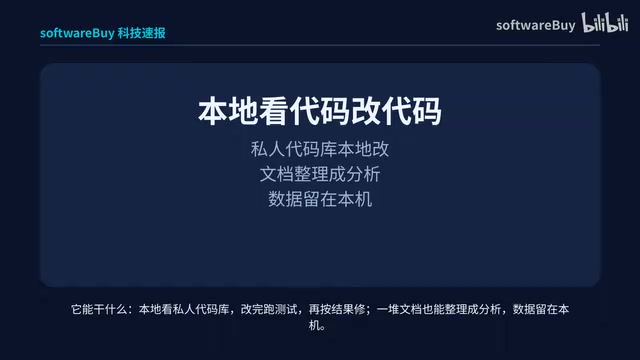
Beyond coding, it can also handle local document organization and analysis, with all data kept on the machine. For teams dealing with sensitive codebases or private data, this localized approach offers natural compliance advantages.
Hardware and compliance background for local inference
Running large models locally depends on inference frameworks' support for quantized formats. Apple Silicon can efficiently carry quantized weights through Metal and unified memory architecture; NVIDIA GPUs support various quantization kernels via the CUDA ecosystem; Intel platforms can run via CPU instruction sets or integrated graphics. Open source and free means weights and inference code can be audited and self-deployed, which is particularly important for regulated industries.
"Code never leaves home" corresponds to the localization principle in data compliance: in finance, healthcare, government, and enterprise scenarios, source code and private data are often not allowed to be uploaded to third-party cloud services. Local inference architecturally eliminates the data egress step while avoiding network latency and per-token costs. However, local deployment also means teams must bear hardware procurement, model updates, and security maintenance themselves — factors that cannot be ignored when assessing total cost of ownership.
Information Still Awaited
Currently, the vendor has not specified the context window size nor provided a complete benchmark table. This information is critical for evaluating the model's practical usability, especially for long code files and complex project scenarios. It is advisable to wait for independent evaluations before making adoption decisions.
Summary
Ternary Bonsai 2.5 27B demonstrates a new path: through extreme quantization strategies, compressing large model capabilities into a size that consumer hardware can handle, while focusing on optimizing multi-turn task performance. Although official data remain to be verified, the trend it points to is worth watching — local, private, usable coding AI is becoming more realistic.
One-line Summary
Ternary quantization compresses a 27B coding model to 5.9GB, runs locally, and improves multi-turn capability.
Paragraph Summary
A US AI company released Ternary Bonsai 2.5 27B, a local coding model that uses ternary quantization so each weight takes only -1, 0, +1, compressing 27B parameters to 5.9GB. The vendor claims a coding score of 75.6, up from 60.8 in the previous generation and close to the original base model's 80.6, with notable progress on long-chain tasks like multi-turn code editing, test running, and issue fixing. The model supports Apple Silicon and NVIDIA/Intel GPUs, is open source and free, and available for download from November 24, keeping code and documents on the local machine for privacy and compliance advantages. However, the context window and full benchmark table have not been published; all data are vendor claims and should await independent verification before adoption decisions.
Related articles

Single Is Not Failure: Rethinking Love and Wholeness Through Faith Traditions
A Vox video explores the emotional interrogation single people face during holidays, offering two insights from a Catholic priest and nun: humans are made for love but love takes many forms, and being loved is a gift of existence, not an achievement. Learn to respond to "are you dating?" with "I am deeply loved."

GTA VI Developer's Union Vote Falls Short: The Industry Undercurrent Behind a Mere 25% Support Rate
Rockstar Games, developer of GTA VI, acknowledges its union recognition vote failed, with only 25% of employees supporting unionization. IWGB says union members will continue organizing. This article analyzes the significance of the vote result for labor relations in the gaming industry.

AI Makes Everyone Sound Like Claude: A Quiet De-individualization
Jack Despain Zhou notes that AI is causing a de-individualization of expression: Claude's voice echoes through YouTube videos, conference talks, and email submissions. This article analyzes the causes of this homogenization, its impact on reputation and trust structures, and how to balance efficiency with individual voice.