Terrence Tao on AI Coding Agents: How a Mathematician Sees the Transformation of App Development
Terrence Tao on AI Coding Agents: How …
Fields Medalist Terry Tao on how AI coding agents transform app development for knowledge workers.
Fields Medalist Terry Tao shares his firsthand experience using modern AI coding agents to rebuild legacy applications and rapidly build new tools. From a mathematician's rigorous perspective, he examines where these agents excel, where human oversight remains essential, and how they redefine who can write code.
When a Fields Medalist Starts Coding with AI
Fields Medalist Terry Tao recently shared his firsthand experience using modern AI coding agents to build applications. The Fields Medal, often called the Nobel Prize of mathematics, is awarded every four years to mathematicians under 40 who have made outstanding contributions. Tao received this honor in 2006 at just 31 years old, making him one of the youngest recipients in the award's history—he has made groundbreaking contributions across multiple fields including harmonic analysis, partial differential equations, and combinatorial number theory, and is especially renowned for the Green-Tao theorem, proven with Ben Green, which established that "there exist arbitrarily long arithmetic progressions of prime numbers." He has long shared his mathematical thinking and tool explorations openly on his personal blog, which lends his assessments of AI coding agents a unique authority in reaching a wide audience. As one of the most brilliant mathematicians of our time, Tao's observations on AI tools often transcend the purely technical level, pointing directly to how tools change the very nature of creative work. This time, he focused on a concrete and practical question: with the help of AI coding agents, how can we rebuild legacy applications, and how can we rapidly build entirely new tools?
This topic sparked discussion on Hacker News. Although the number of comments was modest, it touched on one of the most fundamental transformations in software development—AI coding agents are redefining "who can write code" and "how high the barrier to writing code is."
Why Mathematicians Pay Attention to AI Coding Agents
Tao is not a professional programmer, but he has long needed various computational tools in his research and teaching. The demand for computational tools in mathematical research is nothing new, but it is highly fragmented and personalized. The toolchains researchers commonly use include: Mathematica and Maple for symbolic computation; Python's NumPy/SciPy for numerical computation; SageMath as an open-source comprehensive mathematics platform; and ad hoc scripts written for specific problems. These tools often exist in ecological silos, and integrating across them requires a great deal of glue code. A deeper challenge is that the computational needs of mathematical research are often "one-off"—a tool created to verify a particular conjecture loses any incentive for maintenance once the verification is complete. Such scenarios frequently arise in mathematical research: to verify a conjecture, visualize a structure, or handle large amounts of symbolic computation, researchers need to write small tools on the fly. In the past, such needs were often shelved because the programming cost was too high—the time spent writing code could far exceed its actual payoff.
The Deeper Significance of Lowering the Barrier to Creation
Modern AI coding agents fundamentally change this cost structure. It's worth noting that the "AI coding agents" referred to here are far removed from early code-completion tools. Starting with GitHub Copilot (released in 2021), and through several generations of technological evolution, the new generation of "coding agents"—represented by Cursor, Devin, Claude Code, Gemini CLI, and others—can not only generate code, but also autonomously invoke terminal commands, read and write files, run tests, and iterate on fixes based on error messages. This leap from "code completion" to "autonomous execution" is precisely the technical foundation that makes the scenarios Tao describes possible. When mathematicians can describe their needs in natural language and have an AI agent generate runnable code, those small tools that were "wanted but never had time for" suddenly become within reach. This is the core value of Tao's discussion of "new and old applications":
- The rebirth of old applications: Many tools that were once abandoned due to high maintenance costs can now be quickly rebuilt and modernized with the help of AI.
- The emergence of new applications: Ideas that never materialized in the past because the return on investment wasn't worthwhile can now be rapidly validated at low cost.
This shift is especially important for someone like Tao, who works at the frontier of knowledge production—it dramatically shortens the distance between thinking and implementation.
The Actual Capability Boundaries of AI Coding Agents
What gives Tao's sharing its weight is his consistently rigorous attitude. He doesn't simply hype the magic of AI, but rather tends to dissect where the tools are effective and where they still have limitations.
Scenarios Where AI Coding Agents Excel
From broad practice, modern AI coding agents perform well in the following scenarios:
- Rapid prototyping: Quickly building a usable minimal version to verify whether an idea is feasible.
- Boilerplate code generation: Efficiently handling repetitive, pattern-based code structures.
- Cross-domain technical bridging: Helping non-professional developers enter unfamiliar tech stacks, such as enabling mathematicians to smoothly use web frontend frameworks.
Core Steps That Still Require Human Oversight
The reliability of AI-generated code remains a key issue, and one now backed by empirical research. Mainstream large language models exhibit several typical defects when generating code: referencing nonexistent or deprecated library functions ("hallucinated API calls"), improper handling of boundary conditions, and security vulnerabilities such as missing SQL injection protection. Research from Stanford University found that in security-sensitive scenarios, about 40% of AI-generated code contains exploitable vulnerabilities. For scenarios like mathematical computation that demand extremely high precision, problems such as floating-point overflow and numerical instability are especially fatal—a tiny deviation in a numerical calculation can lead to entirely wrong conclusions. Therefore, users like Tao often emphasize: AI is an accelerator, not a replacement. It takes on the tedious implementation work, but judgment, verification, and ultimate intellectual responsibility still belong to humans. The industry calls this principle "human-in-the-loop"—AI is responsible for generation, humans for review and verification.
From Individual Practice to Industry Trends
Tao's personal experience reflects a larger industry trend: AI coding agents are evolving from a tool exclusive to programmers into a general-purpose capability for knowledge workers.
When mathematicians, biologists, and economists can all direct AI to complete software development through natural language, the scarcity of programming skills is being redefined. This doesn't mean professional developers will disappear, but rather signals a structural adjustment in the industry landscape:
- The long-tail demand for software is being met: Borrowing Chris Anderson's "long tail theory" framework, there are hundreds of millions of niche, personalized, one-off tool needs in the software market that have long gone unmet because the cost of serving them was too high. By dramatically compressing the marginal cost of "custom development," AI coding agents make this long-tail market addressable for the first time—this follows the same historical logic as cloud computing lowering the infrastructure barrier and low-code platforms lowering the barrier to building applications, except this time it targets a more fine-grained layer of personalized demand.
- The role of professional developers continues to move up: From writing specific code to architecture design, quality control, and complex system integration.
- Creativity becomes a more critical differentiator: When the implementation barrier is lowered, "what to do" becomes increasingly more important than "whether it can be done."
Takeaways for Ordinary Developers
Tao's sharing offers several thought-provoking insights for technology practitioners at large.
Re-examine Your Toolbox
If even a top mathematician who is not a professional programmer is actively embracing AI coding agents, professional developers have even less reason to avoid them. The key is not whether to use them, but how to use them well—treating AI as a powerful collaborative partner while maintaining control over code quality and logical correctness.
Shift from "Can It Be Done" to "Is It Worth Doing"
When development costs drop dramatically, the center of gravity for decision-making naturally shifts as well. Projects abandoned in the past because they required too much investment may now be worth re-evaluating. This requires us to develop a new kind of judgment intuition: identifying which ideas truly become feasible with AI assistance.
Conclusion
Tao's sharing on "new and old applications and modern AI coding agents" may seem like nothing more than a mathematician's technical musings, but it actually reflects a profound shift in the paradigm of software development. As the barrier to creating tools continues to fall, what will truly be scarce is no longer programming ability itself, but the wisdom to ask good questions, judge good directions, and verify good results. This is perhaps precisely why the mathematician's perspective is especially worth listening to—no matter how powerful the tools become, the responsibility of thinking can never be outsourced.
Key Takeaways
Related articles
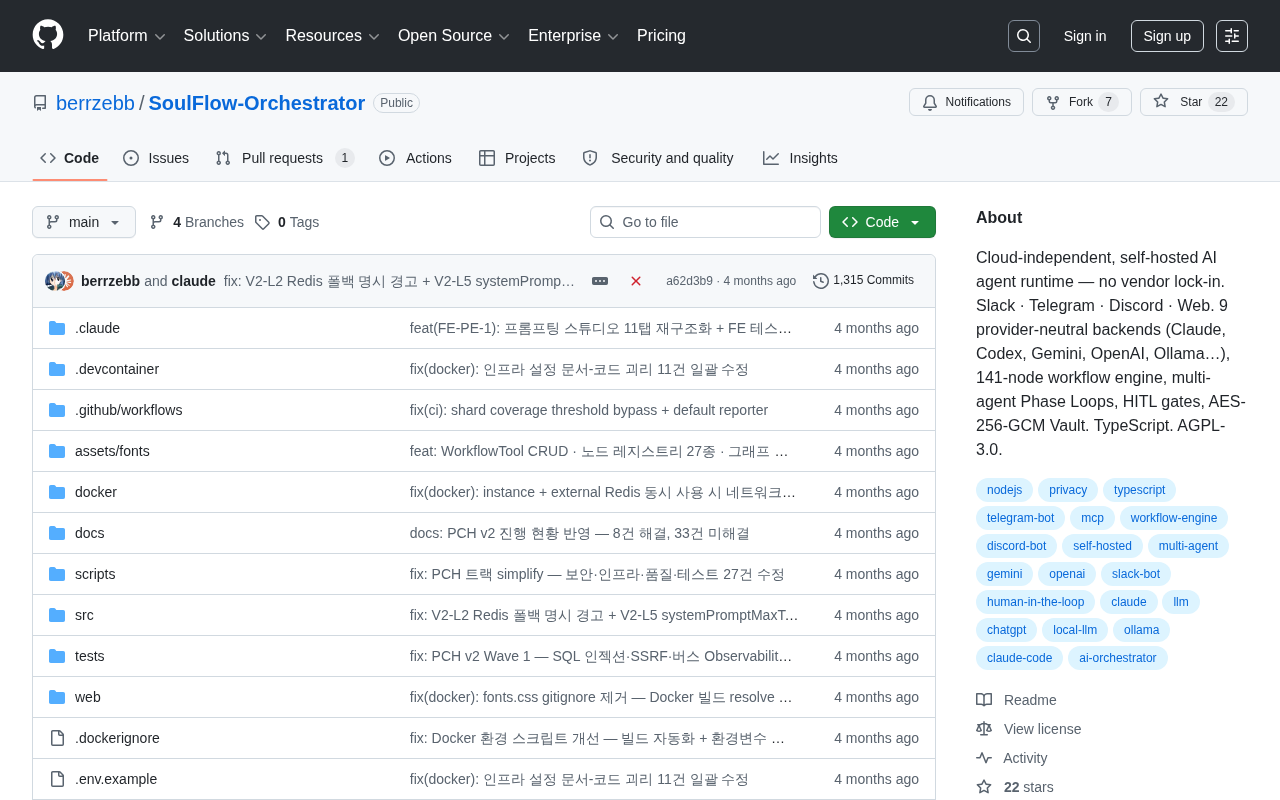
SoulFlow-Orchestrator: A Self-Hosted, Vendor-Lock-In-Free AI Agent Runtime
SoulFlow-Orchestrator is an open-source, self-hosted AI agent runtime with no vendor lock-in. Supports 9 neutral backends (Claude, OpenAI, Ollama), 141-node workflow engine, multi-agent loops, and HITL gates.
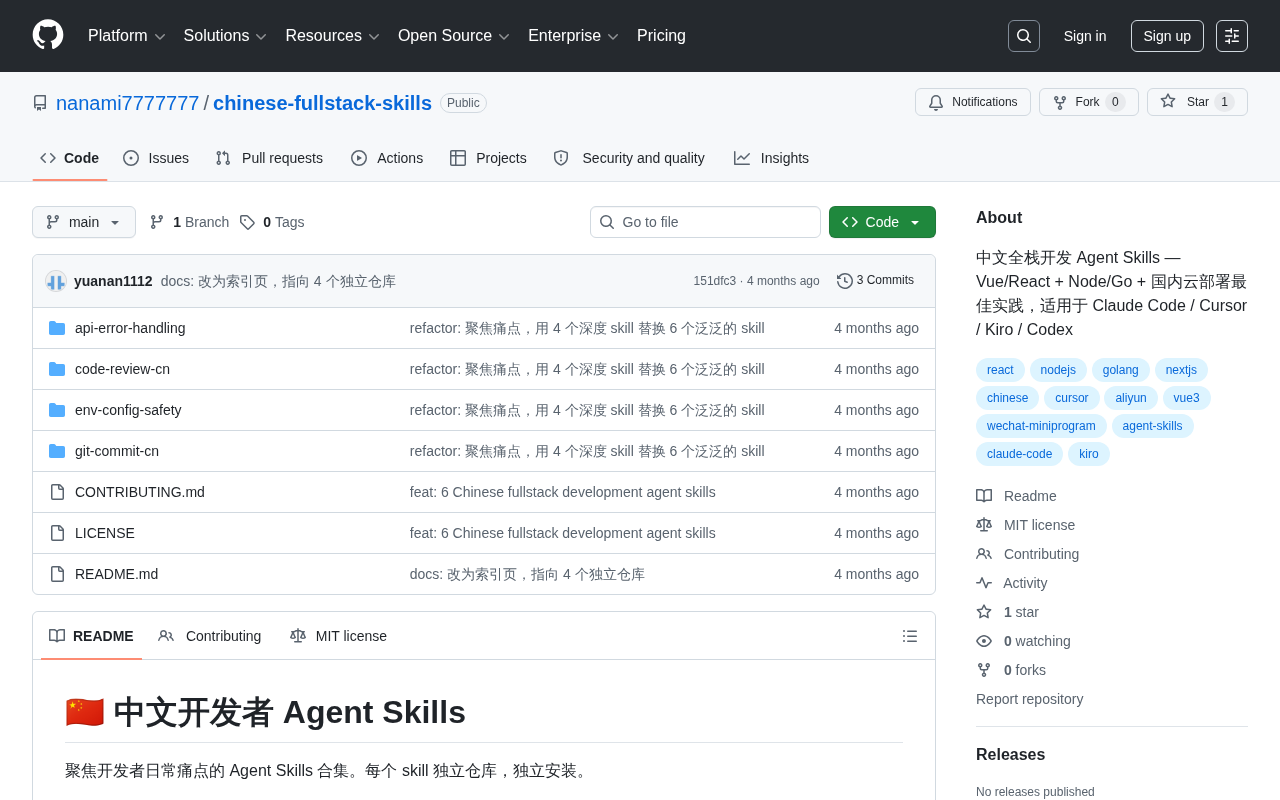
Chinese Full-Stack Agent Skills: A Skill Library Tailored for Domestic AI-Assisted Development
chinese-fullstack-skills is an Agent Skills library for Chinese full-stack development, covering Vue/React, Node/Go, and domestic cloud deployment best practices. Compatible with Claude Code, Cursor, Kiro, and Codex.
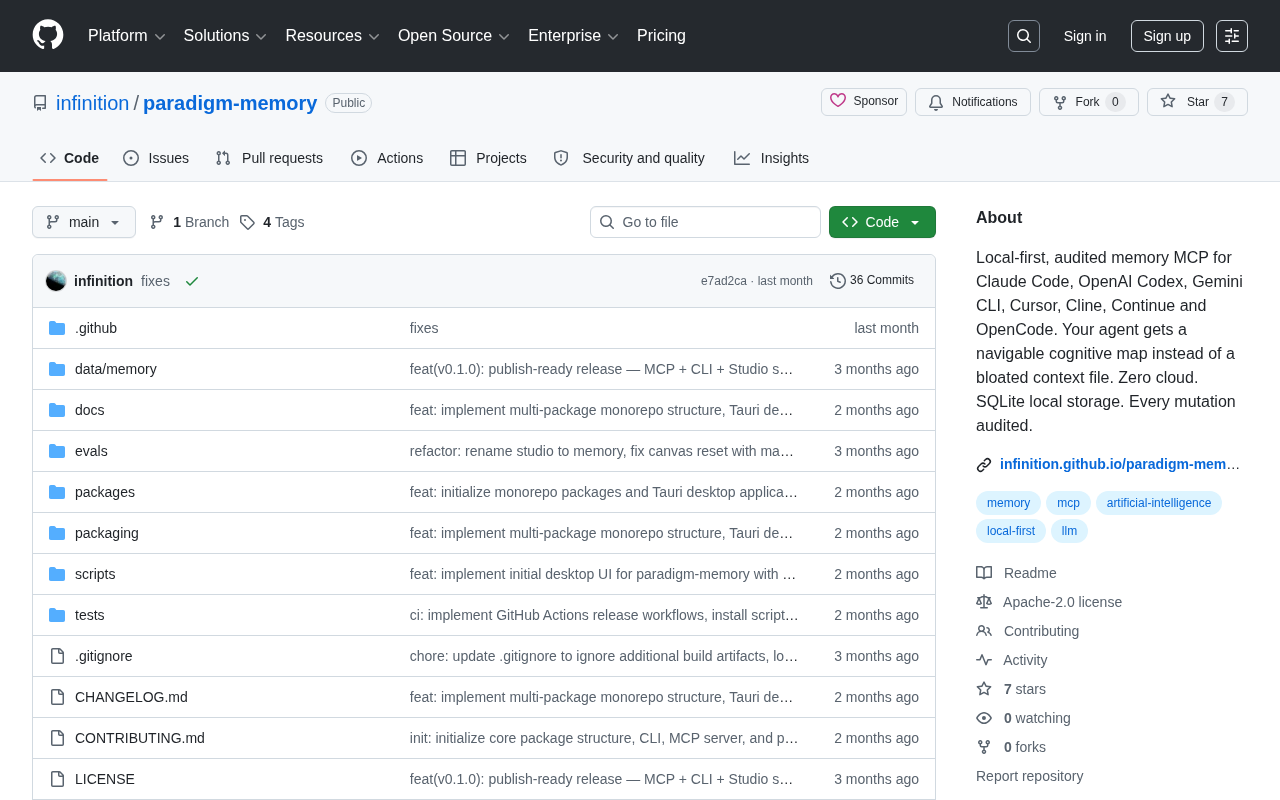
Paradigm Memory: A Local-First Memory System for AI Coding Assistants
paradigm-memory is a local MCP memory tool for Claude Code, Cursor, and Cline. It uses SQLite local storage, zero cloud, full audit trails, and a navigable cognitive map instead of bloated context files.