Tesla Delivers Over 486,000 EVs in Q3, Showing Resilience Despite US Market Headwinds

Tesla Q3 deliveries top 486K, stabilizing despite US market pressure thanks to global diversification.
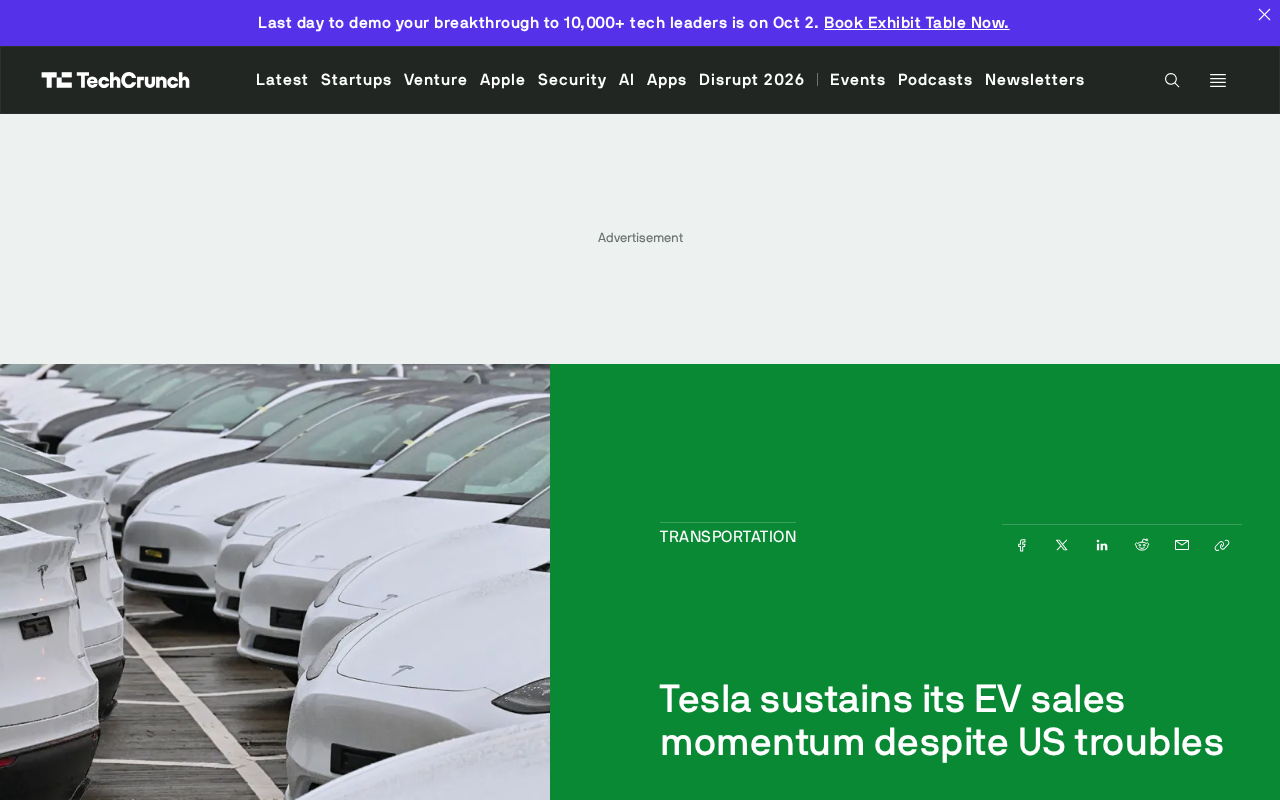
Tesla delivered over 486,000 EVs in Q3, falling short of last year's record high but showing sequential improvement. In the US, high interest rates, softening consumer demand, and a flood of competing models continued to weigh on sales. Contributions from China and Europe helped sustain overall delivery momentum, underscoring the value of global diversification when a single market falters. The result also reflects a broader industry shift — from high-speed expansion to an increasingly competitive battle for existing EV demand, where leading automakers must balance scale, margins, and market share.
Tesla delivered more than 486,000 electric vehicles in Q3, a figure that — while below last year's record — signals a stabilization after a period of declining sales. Against a backdrop of mounting pressure in its home market, the result shows that Tesla's global sales momentum has not lost steam.
What the Delivery Numbers Are Telling Us
The quarterly delivery figure of 486,000 units is one of the most closely watched indicators of Tesla's operational health. While it fell short of last year's peak, the sequential trajectory is moving in a positive direction. For a carmaker operating at a high base in a slowing growth cycle, stabilizing sales is itself a meaningful achievement.
Delivery numbers don't just reflect end-market demand — they directly affect Tesla's revenue and cash flow. Amid price wars, fading subsidies, and intensifying competition, holding delivery volume steady suggests that Tesla's core market position remains intact.
Multiple Pressures Weighing on the US Market
The "US troubles" referenced in the headline deserve closer attention. Tesla faces a convergence of challenges on home turf: domestic EV demand growth has cooled, with consumer appetite dampened by interest rates and vehicle pricing, while rivals are launching a wave of new models that are chipping away at the market share Tesla once dominated.
In this environment, Tesla's ability to sustain overall delivery momentum owes a great deal to overseas markets — particularly China and Europe. Its multi-market global footprint has served as a buffer, offsetting weakness in any single region.
The impact of interest rates on EV consumption is especially direct. The Federal Reserve's aggressive rate-hiking cycle since 2022 has pushed auto loan rates sharply higher, driving up monthly payments — an effect amplified by EVs' generally higher sticker prices. At the same time, the EV tax credit provisions under the Inflation Reduction Act (IRA) come with vehicle price caps and buyer income limits, conditions that have disqualified certain Tesla models from eligibility at various points, further suppressing latent demand. On the competitive front, legacy automakers like Ford, GM, and Hyundai, as well as Chinese brands (despite tariff restrictions), have rapidly expanded their lineups, eroding the premium pure-electric segment that Tesla once nearly owned outright.
Where the Growth Momentum Is Coming From
Looking at the trend data, Tesla's deliveries are "moving in a positive direction" on a sequential basis — suggesting that a quarter-over-quarter recovery is taking hold. The factors driving this improvement likely include demand unlocked by pricing strategy adjustments, continued penetration of new markets, and improved factory utilization rates.
For investors and industry watchers, the marginal change in deliveries often carries more weight than the absolute number. Even if year-over-year comparisons are unfavorable, sustained sequential improvement is enough to underpin confidence in the company's fundamentals.
It's worth noting that "deliveries" and "production" are two distinct metrics — the gap between them reflects inventory accumulation or drawdown. When deliveries outpace production, it typically signals that previously built-up inventory is being absorbed by the market, a positive indicator of demand recovery. The reverse may point to overcapacity pressure. Tesla has made repeated use of price cuts in recent years to accelerate inventory turnover — a strategy that boosts delivery numbers but compresses per-vehicle gross margins. Analysts therefore tend to read quarterly delivery data alongside gross margin figures to assess the quality of that growth.
What This Means for the EV Industry
As a bellwether for the global EV industry, Tesla's quarterly results reflect the broader adjustment phase the sector is navigating. The era of rapid, incremental growth is gradually fading, and automakers must now find a new equilibrium among scale, profitability, and market share.
Tesla's case — stumbling in the US yet holding up overall — illustrates the strategic value of global diversification in the current environment. Volatility in a single market is no longer enough to destabilize a leading player's overall position, but it does serve as a reminder to all participants: the EV market has shifted from a land-grab phase to a more grinding battle for existing demand.
Conclusion
Delivering 486,000 vehicles is a solid result for Tesla navigating a complex operating environment. While there is still a gap to close before reaching historical peaks, the directional signal of stabilization and recovery carries positive implications — both for Tesla and for the broader EV industry. The market will now be watching closely to see whether Tesla can convert this momentum into sustained growth.
Related articles

uGAP: An AI Platform Unifying 100+ African Geospatial Datasets
uGAP is an African geospatial AI platform by a University of Cape Town team, unifying 120+ African datasets with a Python SDK for discovery, processing, and model training, already used in cyclone flood mapping.

Cursor Can Now Control Your Computer: AI Agents Can Drive Desktop Apps for Testing
Cursor adds desktop control: AI agents can drive desktop apps like the iOS Simulator to test their own features. We analyze the impact on dev workflows, possible technical approaches, and reliability concerns.

Vibecoding a Custom Inference Engine: High Hopes, Harsh Reality
A Reddit developer shares the real experience of vibecoding a custom inference engine: running GGUF Q4 models in the browser with WebGL2 and GLSL, only to fall into tokenizer debugging hell. This article analyzes the engineering challenges of browser-side LLM inference and why cloning llama.cpp is the more rational choice.