Tesla FSD v15: Generative Interface Makes Driving Visualization Feel Like GTA

Tesla rolls out FSD v15, reshaping assisted driving interaction with generative Reality View and an end-to-end rebuild.
Tesla has begun rolling out FSD (Supervised) v15, described as a complete end-to-end rebuild. Its highlight is Reality View: real-time generative top-down visuals styled like GTA, letting drivers see plans and intervene via touch. Under the hood, perception, planning, and control are reintegrated to cut hand-coded rules, though performance gains are undisclosed. It remains Supervised. The gamified interface raises distraction and responsibility debates; Tesla says it shows only in assisted mode and needs active operation. Rollout has started; coverage and timing are unannounced.
Tesla has begun rolling out Full Self-Driving (Supervised) v15, which the company describes as a complete rebuild of its end-to-end assisted driving system. The most striking change in this version is a real-time generative display called Reality View, which replaces traditional wireframe graphics with a dynamic top-down perspective, allowing drivers to intuitively see the vehicle's plans and intervene via touch.
From Wireframes to Real-Time Generation: The Visual Revolution of Reality View
In the past, the FSD interface outlined roads, vehicles, and obstacles with simple lines and icons—low in information density and lacking immersion. With v15's Reality View, generative technology renders a real-time top-down view of the environment around the vehicle, a style outsiders have described as approaching the visuals of Grand Theft Auto (GTA). This rendering is not pre-recorded animation but generated in real time from sensor data, so it accurately reflects the world as the vehicle currently perceives it.
According to Tesla, the goal of Reality View is to help drivers understand the system's intentions more clearly. For example, when the vehicle plans to change lanes or detour, the top-down view directly presents the corresponding trajectory and target area, and the driver can confirm or adjust with a tap on the screen. This "what you see is what you get" interaction turns the previously abstract autonomous driving decision-making process into something visible and operable.
End-to-End Rebuild: More Than Just the Interface
Although Reality View takes the visual spotlight, the underlying changes in v15 are equally critical. Tesla calls it a "from scratch" end-to-end system overhaul, meaning the perception, planning, and control modules have been reintegrated rather than patched on the old architecture. The advantage of an end-to-end approach is reducing hand-coded rules, letting the neural network generate driving commands directly from sensor input—theoretically better equipped to handle complex scenarios.
However, Tesla has not disclosed the magnitude of v15's improvement on specific performance metrics. What is known is that the system remains in the "Supervised" stage, requiring the driver to stay attentive and ready to take over at any time. Reality View's touch-intervention feature is, in a sense, a reinforcement of this supervisory role—it shifts the driver from passive monitoring to active participation.
End-to-end autonomous driving refers to using a unified neural network model to map raw sensor data (camera images, radar point clouds, etc.) directly to driving commands (steering angle, throttle, braking), thereby skipping the traditional architecture's cascading "perception—prediction—planning—control" pipeline in which each module is optimized separately. Traditional approaches rely on large amounts of hand-written rules and intermediate representations (such as bounding boxes and lane lines); errors between modules accumulate level by level, and it is difficult to cover all long-tail scenarios. End-to-end approaches instead let the network learn decision logic on its own from massive driving data, theoretically performing better on unseen situations and reducing rule-maintenance costs. But the price is its "black box" nature: the intermediate decision process is hard to explain and debug, and once an error occurs, it is difficult to pinpoint whether the problem lies in perception or planning—raising higher requirements for safety validation and regulatory compliance. Tesla is the most aggressive practitioner of this approach.
Supervised is Tesla's term for its assisted driving capability tier, emphasizing that the system remains SAE Level 2 driver assistance rather than true autonomous driving. At this stage, the vehicle can continuously perform dynamic driving tasks such as steering, acceleration, and braking, but the driver must remain attentive throughout, keep hands on the wheel, and be ready to take over at any time; legal and safety responsibility still rests with the driver. Tesla deliberately avoids wording such as "Autonomous" precisely to distinguish it from Level 3 and above, where the system bears responsibility under specific conditions. Understanding this positioning helps clarify the meaning of Reality View's touch-intervention feature: it is not meant to let drivers disengage, but to reinforce human supervision and final decision-making authority while the system operates.
The Pros and Cons of Gamified Interaction
Making the driving interface look like GTA undoubtedly enhances the sense of technology and user interest, but it has also sparked discussion. Supporters argue that the intuitive top-down view and instant feedback lower the cognitive barrier for drivers to understand system status, reducing anxiety caused by "not knowing what the car wants to do." Especially at complex intersections or in congested sections, clear intent display helps build human-machine trust.
Opponents worry that an overly gamified interface may distract drivers and even blur the boundaries of driving responsibility. Tesla's response is that Reality View is displayed only when the vehicle is in assisted driving mode, and touch operations require the driver to actively perform them—it is not encouraging fiddling with the screen while driving. How it feels in practice will require more user feedback.
Human-machine teaming and takeover is a core issue in the assisted driving field. The stronger the system capability and the less it intervenes, the more easily drivers fall into "automation complacency," losing attention and failing to react in time when the system issues a takeover request—a common factor in many assisted driving accidents. Industry research generally holds that keeping system intent transparent to the driver and providing predictable interactive feedback is key to mitigating this problem. Reality View uses visualized trajectories to show the vehicle's plans in advance, essentially shortening the driver's cognitive path to "understanding system status" and transforming passive waiting for takeover into active, informed supervision. But visual interfaces themselves may also bring new competition for attention, so how to strike a balance between information transparency and driver distraction is a topic that such interaction designs need to continuously validate.
Rollout Pace and Future Outlook
Tesla has begun pushing v15 to some owners but has not announced coverage scope or a specific timetable. Based on past patterns, initial rollouts usually target early test users before gradually expanding. As the core selling point of v15, Reality View's rendering quality and interaction smoothness will directly affect user reviews.
Looking further ahead, v15's generative display offers a new approach to autonomous driving human-machine interaction: as systems grow more complex, how do we help humans understand machine decisions? Visualization may be one answer. Whether Tesla's attempt can become an industry standard depends on whether it can find a balance between catching the eye and ensuring safety.
One-line Summary
Tesla rolls out FSD v15, reshaping assisted driving interaction with generative Reality View and an end-to-end rebuild.
Paragraph Summary
Tesla has begun rolling out FSD (Supervised) v15, which it calls a complete rebuild of its end-to-end assisted driving system. The most notable feature is Reality View: it replaces traditional wireframe graphics with real-time generative top-down visuals styled close to GTA, letting drivers intuitively see vehicle plans and intervene via touch. Under the hood, v15 reintegrates perception, planning, and control modules to reduce hand-coded rules, but performance gains are undisclosed. The system remains in the Supervised stage, requiring driver attention. The gamified interface has sparked discussion about distraction and responsibility boundaries; Tesla responds that it displays only in assisted driving mode and requires active operation. Rollout has begun, with coverage and timeline not yet announced.
Related articles
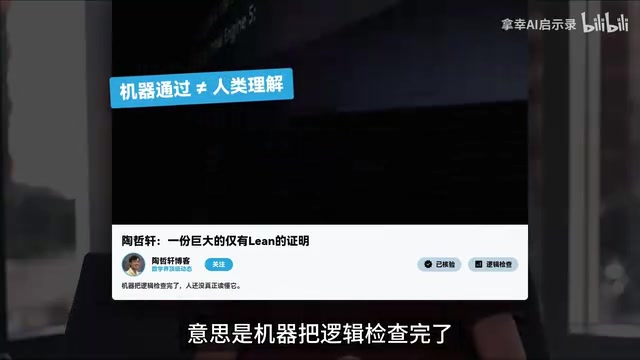
AI Teams Up with Mathematicians to Attack the Riemann Hypothesis: 17 Million Lines of Code Tear Open a 167-Year Gap
In November 2026, Anthropic mathematicians and Claude claimed to have discovered a proof of the Riemann Hypothesis, publishing 17 million lines of Lean formalized code that passed machine verification. This article analyzes the event's impact on mathematics and cryptography, and the deeper questions raised by the separation of discovery and understanding.
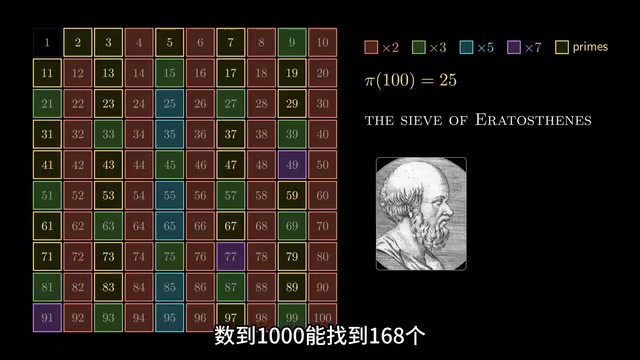
AI Claims Formal Proof of the Riemann Hypothesis — But Machine Verification Isn't a Mathematical Proof
In Nov 2026, Anthropic's Levent Alpöğe released a Riemann Hypothesis proof of 175,000 code files that passed machine formal verification. But machine verification isn't a mathematical proof: the kernel can't confirm the proposition is the Riemann Hypothesis humans understand, and there's no human-readable paper. This article breaks down how ζ function zeros determine prime-count deviation, and the core of the controversy.
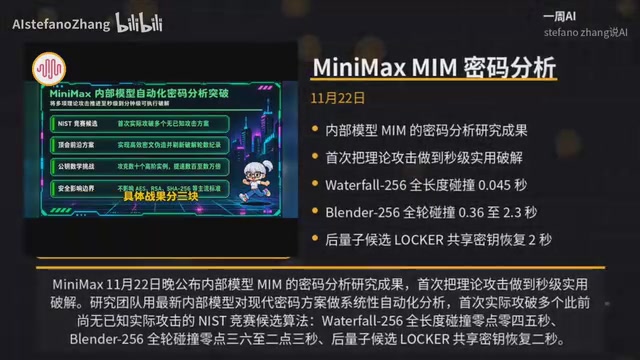
Anthropic Raises Over $80 Billion in IPO, DeepSeek Secures $100 Billion in Funding: AI Weekly Roundup
This week in AI: Anthropic's Nasdaq IPO raises $93.5B in the largest ever, DeepSeek closes ~100B yuan round, AI claims formal Riemann proof, MiniMax breaks crypto candidates in seconds.