Tesla Responds to Fatal Texas Crash: Whether Autopilot Was Engaged Becomes Central Dispute

Fatal Texas Tesla crash reignites debate over Autopilot activation and autonomous driving safety.
A fatal Tesla crash in Texas has reignited controversy over whether Autopilot was active at the time of the incident. Tesla quickly disputed claims that the system caused the accident, but the truth hinges on vehicle data log analysis. The case highlights the automation paradox, data transparency concerns, and the ongoing tension between rapid autonomous driving innovation and regulatory oversight.
Event Overview
Recently, a fatal traffic accident involving a Tesla vehicle occurred in Texas, USA, once again thrusting Tesla's Autopilot driver-assistance system into the spotlight of public debate. Tesla quickly pushed back against the narrative that its Autopilot system caused the crash, but the true cause of the accident still awaits final confirmation from investigators through the vehicle's data logs.
Technical Background of the Autopilot System
Tesla Autopilot is an Advanced Driver Assistance System (ADAS) based on multi-sensor fusion, with hardware architecture that has undergone multiple iterations. The current version primarily relies on a camera-based vision approach, combined with ultrasonic sensors (removed in some newer models) for environmental perception. The system's core runs on Tesla's proprietary FSD (Full Self-Driving) chip, using deep neural networks for real-time inference on road scenes. Autopilot consists of multiple functional modules: Traffic-Aware Cruise Control (TACC) handles longitudinal speed management, while Autosteer handles lane keeping and lateral control. Notably, Tesla has been gradually abandoning millimeter-wave radar in favor of a pure vision approach (Tesla Vision) since 2022—a technical route choice that has sparked ongoing controversy in the industry. Critics argue that the lack of radar redundancy reduces system reliability under extreme weather and lighting conditions.
Core Dispute: Was Autopilot Actually Engaged?
Three Possibilities Coexist
The central dispute in this accident is: what state was the Autopilot system in at the time of the incident? Currently, three possibilities exist:
- The system was indeed activated — If true, this would raise further questions about Autopilot's safety in specific scenarios
- The driver had manually overridden the system — Meaning the driver had taken over vehicle control before the accident
- The system experienced a fault or anomaly — Technical issues at the software or hardware level caused abnormal system behavior
These three scenarios correspond to entirely different liability attributions and technical assessment conclusions, and the final answer can only be revealed through investigators' in-depth analysis of the vehicle's data logs.
How Vehicle Data Logs (EDR) Reconstruct the Truth
The data recording system equipped in Tesla vehicles far exceeds the traditional automotive Event Data Recorder (EDR). A traditional EDR is like a simplified version of an aircraft black box, typically recording only key parameters from about 5 seconds before a collision, such as vehicle speed, brake pedal status, and seatbelt engagement. Tesla's onboard logging system, however, continuously records a much richer data stream, including Autopilot activation status, torque signals indicating whether the driver's hands are on the steering wheel, object information perceived by cameras, the timeline of system warnings, and the driver's response behavior to those warnings. This data is stored locally on the vehicle in encrypted form and can also be transmitted back to Tesla's servers via OTA. It is precisely this dual-storage mechanism that makes the ownership of data interpretation rights a point of contention—independent investigators need Tesla to provide decryption tools or cooperation to fully reconstruct the accident scenario.
Tesla's Official Position
Tesla's consistent strategy is to speak out quickly after an accident, emphasizing Autopilot's safety record and usage limitations. The company typically points out that Autopilot is a driver-assistance system rather than a fully autonomous driving system, and that drivers should maintain attention and control of the vehicle at all times.
The Trust Dilemma of Driver-Assistance Systems
This accident reflects the fundamental challenge facing current autonomous driving assistance technology: the gray zone of human-machine collaboration. When a system is intelligent enough that drivers let their guard down, but not intelligent enough to handle all unexpected situations, accident risk may actually increase. This phenomenon is known in academia as the "automation paradox."
The Deeper Mechanism of the Automation Paradox
The Automation Paradox was first proposed by researchers in the field of human factors engineering in the 1980s. The core argument is: the more reliable an automated system becomes, the more likely operators are to develop over-trust and attention complacency, and once the system fails in rare circumstances, operators—having been out-of-the-loop for extended periods—are unable to effectively take over control in time. Closely related to this phenomenon is the issue of "skill degradation"—drivers who rely on automation for extended periods see their manual driving abilities gradually decline. In the SAE International levels of driving automation, L2 (the level at which Autopilot operates) requires the driver to monitor the driving environment at all times and be ready to take over. However, the highly automated performance of L2 systems tends to induce drivers into mistakenly believing they are in an L3 or higher level of autonomous driving—this cognitive misalignment is called "mode confusion" and represents the greatest human factors safety challenge facing current L2+ systems.
Data Transparency Raises Concerns
Tesla vehicles are equipped with comprehensive data recording systems that can theoretically precisely reconstruct system status and driver operations before and after an accident. However, the interpretation rights and timing of disclosure of this data are often in Tesla's hands, which has raised ongoing concerns about data transparency from outside parties.
The Tug-of-War Between Regulation and Technological Innovation
The National Highway Traffic Safety Administration (NHTSA) has launched multiple investigations into Tesla's Autopilot system in recent years. Every fatal accident could become a catalyst for pushing stricter regulations.
The Evolution of NHTSA Regulatory Investigations
Since the first fatal Tesla Autopilot accident in 2016, NHTSA has initiated multiple rounds of investigations into Tesla. In August 2021, NHTSA formally opened a Preliminary Evaluation (PE) of Tesla's Autopilot system, covering approximately 765,000 vehicles, with the investigation focused on Autopilot's deficiencies in recognizing parked emergency vehicles. In 2022, the investigation was upgraded to an Engineering Analysis (EA)—the final investigation stage before a recall. In December 2023, Tesla recalled over 2 million vehicles due to insufficient driver monitoring mechanisms in Autopilot, adding more frequent driver attention reminders through an OTA software update. Additionally, NHTSA launched a separate investigation into Tesla's FSD Beta feature in 2024. These regulatory actions reflect the lag in the current U.S. regulatory framework when dealing with rapidly iterating autonomous driving technology—there is currently no unified federal legislation specifically targeting L2+ driver-assistance systems.
Fundamental Divergence in Industry Technical Routes
For the entire autonomous driving industry, finding the balance between technological innovation and public safety remains an unresolved proposition. Tesla's autonomous driving technical route is distinctly unique in the industry. Unlike Waymo's approach using LiDAR + HD maps + multi-sensor redundancy for L4-level autonomous driving, Tesla insists on a pure vision-centric end-to-end learning approach, attempting to progressively approach full autonomous driving by training neural networks with massive fleet data. These two routes represent a fundamental industry divergence: the former pursues engineering redundancy and deterministic safety boundaries, while the latter bets on data scale and algorithm generalization capabilities. Cruise (under GM) and Baidu Apollo have adopted hybrid approaches between the two. Notably, Tesla's "Shadow Mode" strategy—having millions of vehicles on the road worldwide continuously collect driving data in the background for model training—gives it an unparalleled data advantage. However, the reliability boundaries of this statistical learning-dependent method when handling rare dangerous scenarios in the long-tail distribution remain difficult to formally verify.
Conclusion
Until investigators complete their comprehensive analysis of the vehicle's data logs, the truth about this fatal Texas accident will remain in dispute. Regardless of the final conclusion, this incident once again reminds us: on the long road toward full autonomous driving, every step of technological progress carries heavy safety responsibilities. The public, companies, and regulatory agencies need to collectively face the complex challenges of this technological transition period.
Key Takeaways
Related articles
AlphaGenome 2 Released: Predicting Variant Effects by Cell Type
Google DeepMind releases AlphaGenome 2, a conditional DNA sequence model predicting regulatory activity and variant effects by cell type, open via AlphaGenome API for non-commercial research. This article examines the significance of conditional modeling, API distribution trade-offs, and validation challenges.
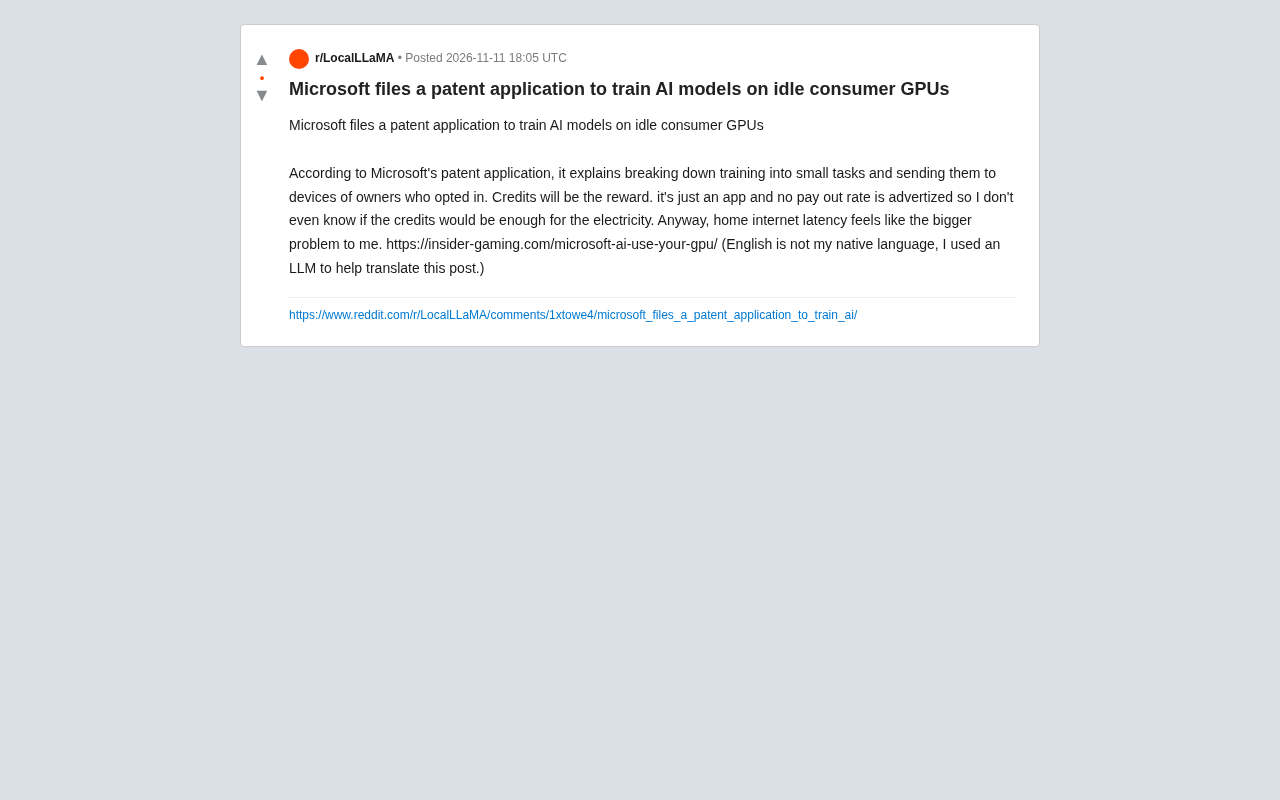
Microsoft Patent: Train AI on Your Idle GPU for Points—Is It Worth the Electricity Bill?
A Microsoft patent proposes splitting AI training tasks across users' idle GPUs with points as rewards. This article analyzes its incentive design, network latency bottlenecks, and differences from existing distributed training, exploring whether the model can be deployed.

Reddit User Shares Free Fable Credits, Sparking Discussion
A Reddit user claims to have received 3 free Fable credits, sparking debate over whether AI tool freebies are universal. This article reviews the post and common operational logic, reminding users to rely on official statements.