Tesla Robotaxi Expands Again: San Antonio Becomes Fourth Texas City

Tesla expands Robotaxi to San Antonio, its fourth Texas city, signaling a shift from single-point pilots to regional rollout.
Tesla has expanded its Robotaxi service to San Antonio, making it the fourth city in Texas to offer the service. The move signals a shift from single-point pilots to regional rollout. Texas, as Tesla's home base, is becoming its highest-density validation ground. The four-city layout means operational experience, regulatory communication, vehicle dispatch, and remote support systems are beginning to show regional-level replicability. However, whether the service can truly scale still depends on three hard indicators: safety records, operational economics, and regulatory continuity. The original source did not disclose the specific scale, vehicle count, or operating hours of the San Antonio service, and its substantive impact awaits verification through subsequent data. The industry's competitive focus is also shifting from single-city pilots to regional density and operational efficiency.
Tesla Robotaxi Map Expands as San Antonio Joins the Roster
Tesla's autonomous ride-hailing service has taken another step forward. According to an RSS source, Tesla has expanded its Robotaxi service to San Antonio, making it the fourth city in Texas where the company has launched the service.
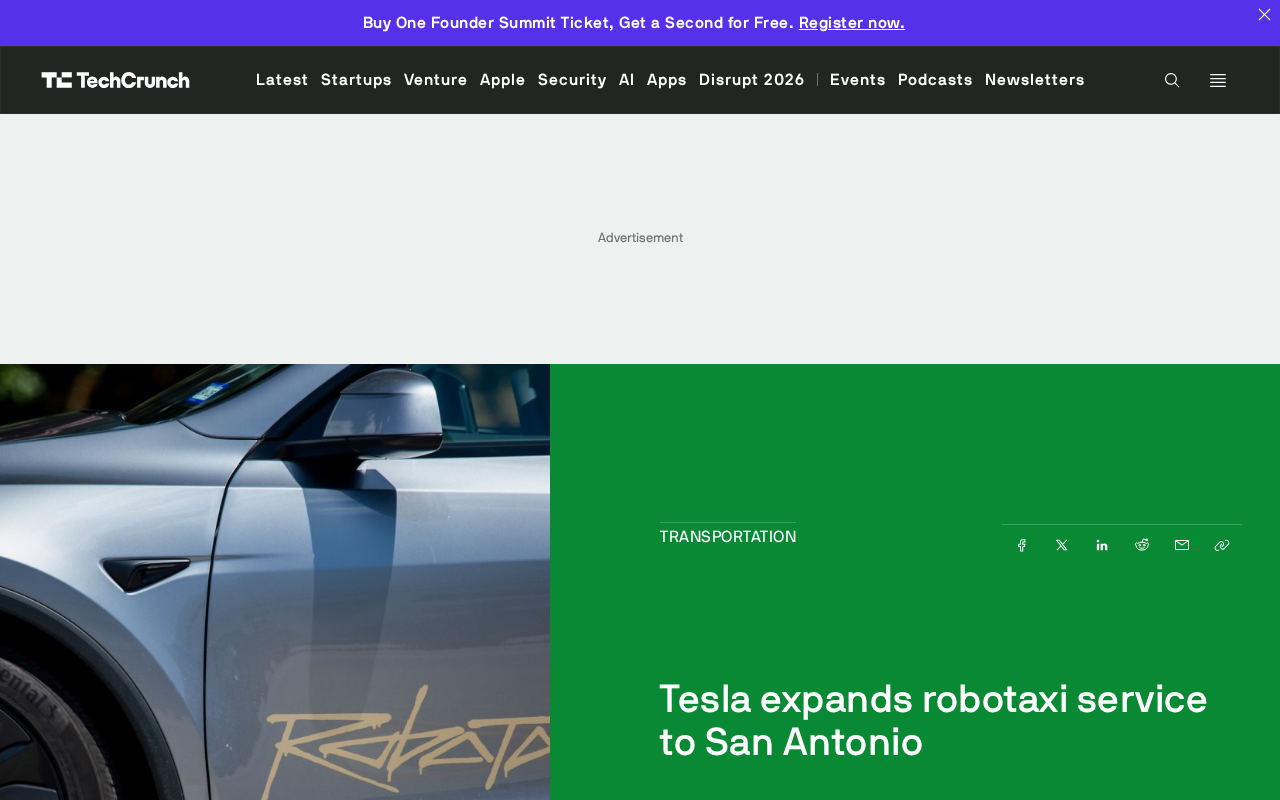
The news itself doesn't carry much information, but in the context of Tesla's autonomous driving strategy, it points to a clear signal: Robotaxi expansion is shifting from single-point pilots to regional rollout. Texas, as one of Tesla's home bases, is becoming the highest-density validation ground for this service.
What the Fourth Texas City Means
From Isolated Points to a Network
Robotaxi testing in a single city is nothing unusual; the hard part is creating a replicable operating model that spans neighboring cities. The four-city layout in Texas is essentially a regional-level reuse of operational experience, regulatory communication, vehicle dispatch, and remote support systems.
With each new city, Tesla must handle variables including local regulatory permits, differences in road scenarios, charging and maintenance locations, and user-side service reach. San Antonio's addition shows that these processes have already developed a certain degree of standardization.
Robotaxi (autonomous ride-hailing) service is fundamentally different from ordinary autonomous driving road testing: the former involves commercial passenger operations open to the public, and therefore must meet stricter entry requirements. In the United States, state-level regulatory frameworks for autonomous passenger transport are not uniform—Texas as a whole takes a relatively open stance toward autonomous driving, allowing driverless operations, but city-level specifics may still involve local permits, operational filings, and insurance requirements. This means that with each new city, companies must not only complete technical adaptation but also go through a compliance process. Tesla's successive launches across four Texas cities are in effect a repeated rehearsal of this "technology + compliance + operations" combination—the value lies in validating the reusability of the process, not merely adding service locations.
The Home-Field Advantage
Tesla has production facilities and strong local resources in Texas, giving it conveniences in fleet operations, personnel deployment, and regulatory coordination that are hard to match in other markets. Choosing to roll out densely in Texas is a pragmatic strategy: first refine operational details in a controllable environment, then replicate to markets with more complex regulatory environments.
Remote support systems are a key component of Robotaxi operations. When vehicles encounter edge cases they cannot handle autonomously (such as construction zones, temporary traffic controls, or complex interactions), remote operators need to step in to provide decision assistance or recovery instructions. This system places high demands on network latency, personnel training, and multi-vehicle concurrent processing capability, and the ratio of remote interventions directly affects unit operating costs. On the fleet dispatch side, Robotaxis need to dynamically allocate capacity among charging, maintenance, cleaning, and high-demand areas to improve vehicle utilization. These back-end capabilities are often not publicly disclosed, yet they are the hidden infrastructure that determines whether a service can scale from pilot to mass deployment.
Questions That Still Need Answers Behind the Expansion
The number of cities covered is a visible metric, but whether Robotaxi can succeed depends on several harder indicators.
First, safety records. The prerequisite for scaling an autonomous ride-hailing service is sustained, verifiable safety performance—any serious accident could force a slowdown in expansion pace.
Second, operational economics. Fleet utilization, remote intervention ratios, and cost per mile determine whether Robotaxi is a money-burning experiment or a sustainable business. Increasing the number of cities does not directly improve these metrics.
Third, regulatory continuity. Different cities have varying requirements for autonomous passenger services; entering a new city is only the starting point—maintaining permits over the long term is equally critical.
The original source did not disclose the specific scale, vehicle count, or operating hours of the San Antonio service, so the substantive impact of this expansion still needs to be verified with subsequent data.
Industry Perspective: The Regional Density Battle
Over the past few years, the focus of competition in the autonomous ride-hailing sector has been technology demonstrations and single-city pilots; now it is gradually shifting toward regional density and operational efficiency. Rather than announcing a large number of cities at once, forming a dense network in adjacent regions is more conducive to amortizing operational costs and accumulating local data.
Tesla's choice to advance city by city with Texas as its axis fits this logic. San Antonio, as the fourth Texas city, derives its true value not from adding another service point, but from validating whether a "replicable city expansion process" has been successfully established.
Going forward, key observation points include: whether Tesla will replicate this model in markets outside Texas, and whether it will disclose more quantitative operational data during the expansion process.
Cost per mile is one of the core metrics for determining whether the Robotaxi business model is viable, typically composed of vehicle depreciation, energy, insurance, maintenance, remote support labor, and dispatch management. During the single-city pilot phase, this cost is often far higher than traditional ride-hailing because the fleet is small and the operations system has not yet been amortized. The significance of regional density improvement lies in the fact that neighboring cities can share maintenance locations, spare parts inventory, and remote support teams, thereby reducing the fixed cost allocation per vehicle. This is why the industry generally believes that "density" reflects operational maturity better than "number of cities"—a single-city network with fifty vehicles and a mature dispatch system may be more economical than five isolated pilots each with only ten vehicles.
One-line Summary
Tesla expands Robotaxi to San Antonio, its fourth Texas city, signaling a shift from single-point pilots to regional rollout.
Paragraph Summary
Tesla has expanded its Robotaxi service to San Antonio, making it the fourth city in Texas to offer the service. The move itself carries limited information, but within Tesla's autonomous driving strategy it signals a shift from single-point pilots to regional rollout. Texas, as Tesla's home base, is becoming its highest-density validation ground. The four-city layout means operational experience, regulatory communication, vehicle dispatch, and remote support systems are beginning to demonstrate regional-level replicability. However, whether the service can truly scale still depends on three hard indicators: safety records, operational economics, and regulatory continuity. The original source did not disclose the specific scale, vehicle count, or operating hours of the San Antonio service, and its substantive impact awaits verification through subsequent data. The industry's competitive focus is also shifting from single-city pilots to regional density and operational efficiency.
Related articles
Claude Fable 5.2 Hands-On: Top Intelligence but Absurdly Expensive
Anthropic releases Claude Fable 5.2 and Mythos 5.2, topping the Artificial Analysis intelligence leaderboard with big gains in scientific reasoning, strong game and hardware design, but max mode costs ~$26.54 per task. Hands-on game, circuit board design, and pricing advice.

1,000 AI Agents Formalize Fermat's Last Theorem in 30 Hours, Anthropic Releases New Claude Models
Anthropic releases Claude Fable 5.2 and Mythos 5.2: 1,000 agents formalize Fermat's Last Theorem in 30 hours, coding costs halved, plus hardware design and physics.

Claude Fable 5.2 Released: A Thousand AI Agents Build a Bootable OS in 8 Days
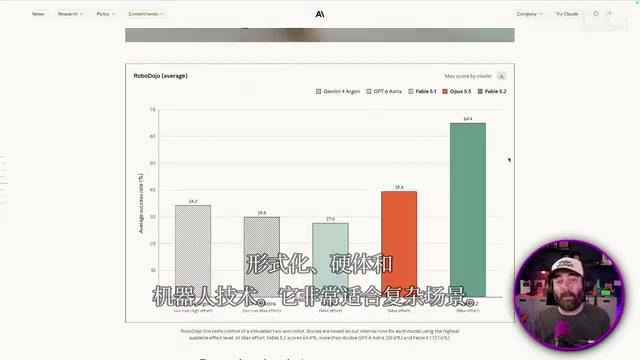
Anthropic releases Claude Fable 5.2 and Mythos 5.2—same model, two safety tiers. Demo shows 1,000 AI agents build a bootable OS in 8 days, formalize Fermat proof in 30 hours, score 64.6 beating Gemini 4 Carbon, price cut 20%.