Text Agent Store: An AI Agent Marketplace You Can Access by Text Message
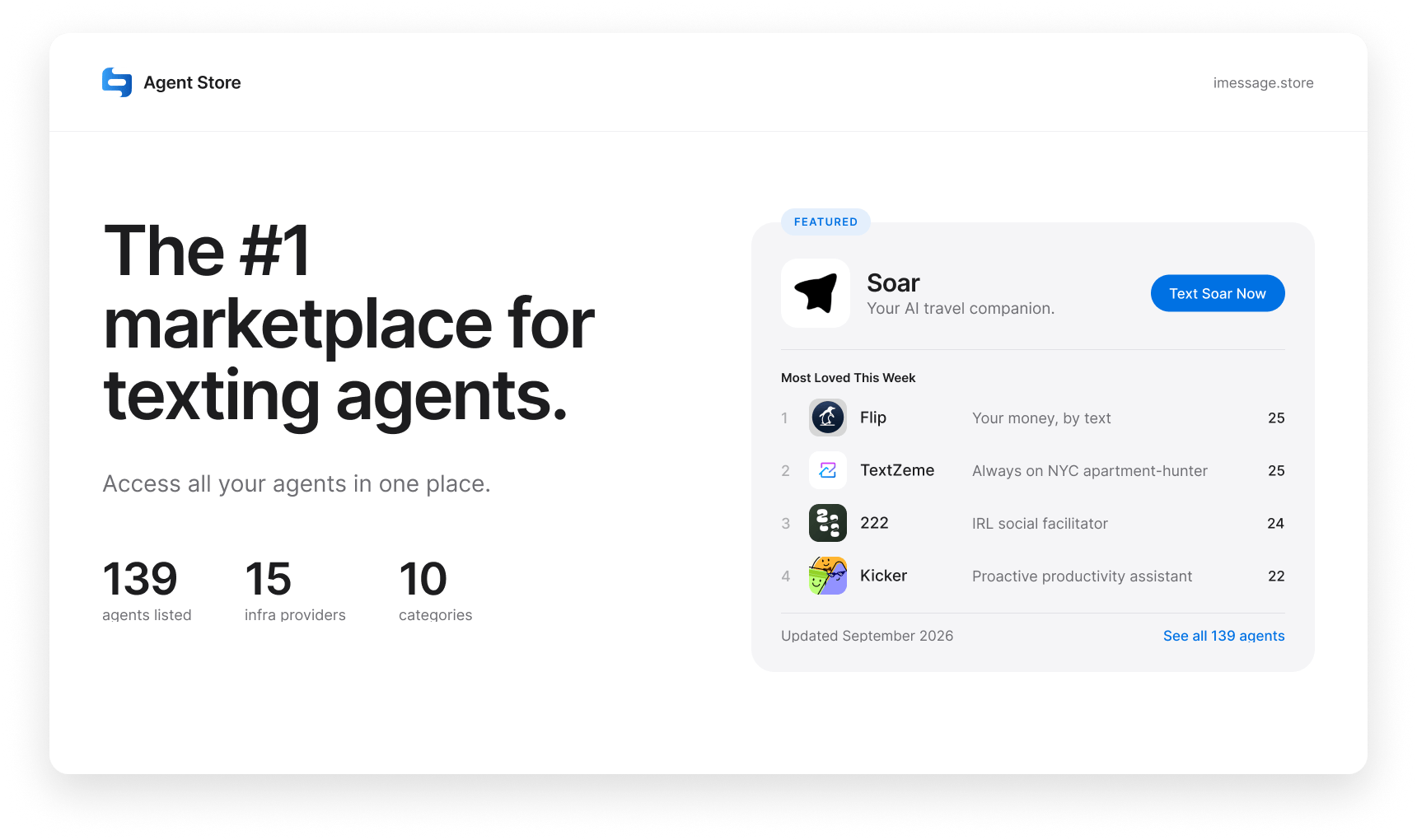
Text Agent Store turns AI agents into phone contacts — just send a text to get started, no sign-up needed.
Text Agent Store is an AI agent marketplace that uses SMS and iMessage as its interaction layer. Users need no account, app, or configuration — just text a contact to invoke any available AI agent. Its core value is eliminating the onboarding friction common to AI tools by embedding AI capabilities into the most familiar habit users already have. Built on a marketplace model, it aims to aggregate vertically focused agents and create network effects akin to an "SMS App Store." Despite limitations in rich-media support and cross-platform reach, the product represents a meaningful shift in how AI is distributed — from apps you visit to services you can summon anytime.
An AI Agent Marketplace Hidden in Your Contacts
While most AI products are still competing for your browser tabs and home screen real estate, Text Agent Store has taken a more clever route — turning AI agents into a contact in your phone's address book. Its positioning is straightforward: a marketplace for AI agents you can text.
The product recently climbed to third place on Product Hunt, earning 131 upvotes and 22 comments, and was listed under the Messaging, Artificial Intelligence, and iMessage Apps categories. Its core proposition comes down to a single line: browse an ecosystem of text-based agents, send a message to get started — no sign-up, no download, no setup required.
"Zero Friction" Is Its Biggest Selling Point
What Text Agent Store is really trying to solve is the onboarding cost that plagues most AI applications. The typical flow for trying out an AI tool today looks something like this: find the website, create an account, verify your email, download the app, grant permissions, learn the interface — and every single step is a point where users drop off.
Text Agent Store compresses that entire journey to its absolute minimum. Its agents "live" as a contact in your phone's address book, and all you have to do is send a text. No account system, no installation package, no configuration. For everyday users, sending a text is practically instinctive — there's almost no learning curve whatsoever.
The value of this design philosophy lies in removing the last barrier between AI capabilities and the people who could benefit from them. When invoking an AI agent is as simple as messaging a friend, both the frequency of use and the range of applicable scenarios expand dramatically.
Rethinking SMS as an AI Interaction Interface
Using text messaging — especially iMessage — as the delivery layer for AI agents is a product decision worth examining closely.
SMS as an interaction interface has several natural advantages. It's a native capability built into every phone, independent of any third-party ecosystem. Its asynchronous nature is a natural fit for AI tasks — you send a request, the agent processes it in the background, and replies when done, with no loading spinner to stare at. It also comes with the built-in mental model of "contacts," giving abstract AI agents a concrete, recognizable identity.
Of course, the SMS interface has obvious limitations too. It struggles to support complex rich-media interactions, multi-step structured workflows, or tasks that require visualization. Plain text has a finite expressive range. This makes the format better suited to lightweight, clearly-defined, conversational use cases rather than heavy productivity tools.
iMessage and standard SMS/MMS differ significantly at the technical architecture level, and this directly shapes the product's usability boundaries. iMessage is Apple's proprietary internet-based protocol between Apple devices, supporting rich text, read receipts, and end-to-end encryption — but it's exclusive to the Apple ecosystem. The moment the other party uses Android or loses internet connectivity, messages automatically fall back to standard SMS green bubbles, losing most advanced features. Text Agent Store classifies itself under iMessage Apps, meaning its core experience depends on the Apple ecosystem. This is a reasonable bet in the US market (where iPhone market share exceeds 55%), but represents a meaningful coverage gap in regions with lower iPhone penetration. For agent developers hoping to reach a broader audience, this ecosystem lock-in is a distribution constraint that must be evaluated before choosing to integrate.
The Promise and Challenges of the Marketplace Model
Text Agent Store isn't building a single agent — it's positioning itself as a marketplace, a browsable directory of agents where users can discover and select text-based agents with different capabilities.
This platform-oriented approach sets it apart from single-purpose tools. If the ecosystem continues to grow, it has the potential to become an "App Store for SMS" — aggregating vertically focused agents and building network effects. For developers, plugging into a distribution channel that requires no registration or download from users also means significantly lower user acquisition costs.
That said, a marketplace model's success hinges on the quality and breadth of its supply side. Whether the catalog contains enough genuinely useful agents will directly determine whether users return repeatedly. The SMS medium also introduces real-world constraints: the cost of sending SMS/MMS messages, carrier restrictions, and regional variation in iMessage support could all impact the experience and the product's ability to scale.
From a business model perspective, the monetization paths for an SMS agent marketplace differ fundamentally from a traditional App Store. The App Store has built a mature revenue structure around in-app purchases and subscription commissions, while the SMS medium inherently lacks a native payment entry point. Products in this space typically rely on one of two approaches: charging developers access or distribution fees (similar to a SaaS platform's seat-based model), or charging end users a monthly SMS subscription that covers the underlying gateway costs (SMS API providers like Twilio and Sinch typically charge per message, which becomes non-trivial at scale). Beyond that, SMS channels face strict carrier scrutiny around spam and compliance. In the US, the A2P 10DLC registration system requires commercial SMS senders to complete brand and campaign registration — failure to do so risks message filtering or account suspension. These hidden costs and compliance hurdles are challenges that SMS agent platforms often underestimate in the early stages, only to see them surface in full force during scaling.
A Product Signal Worth Watching
Text Agent Store, built by Jayanth Sidamsety and his team, reflects a clear trend in product design: AI is gradually shifting from "an app you need to go visit" to "a service you can call on anytime."
Its significance isn't in the technical complexity — it lies in the choice of interaction paradigm. Using the most universal, lowest-barrier channel imaginable — text messaging — as the entry point for AI. This category of "AI hidden inside familiar interfaces" may well be one of the most important ways to bring AI to a much broader audience.
For practitioners who follow AI product design, Text Agent Store offers an excellent case study: in a world where everyone is building AI apps, the best distribution channel might sometimes be the SMS icon that's already been sitting on users' phones all along.
Related articles
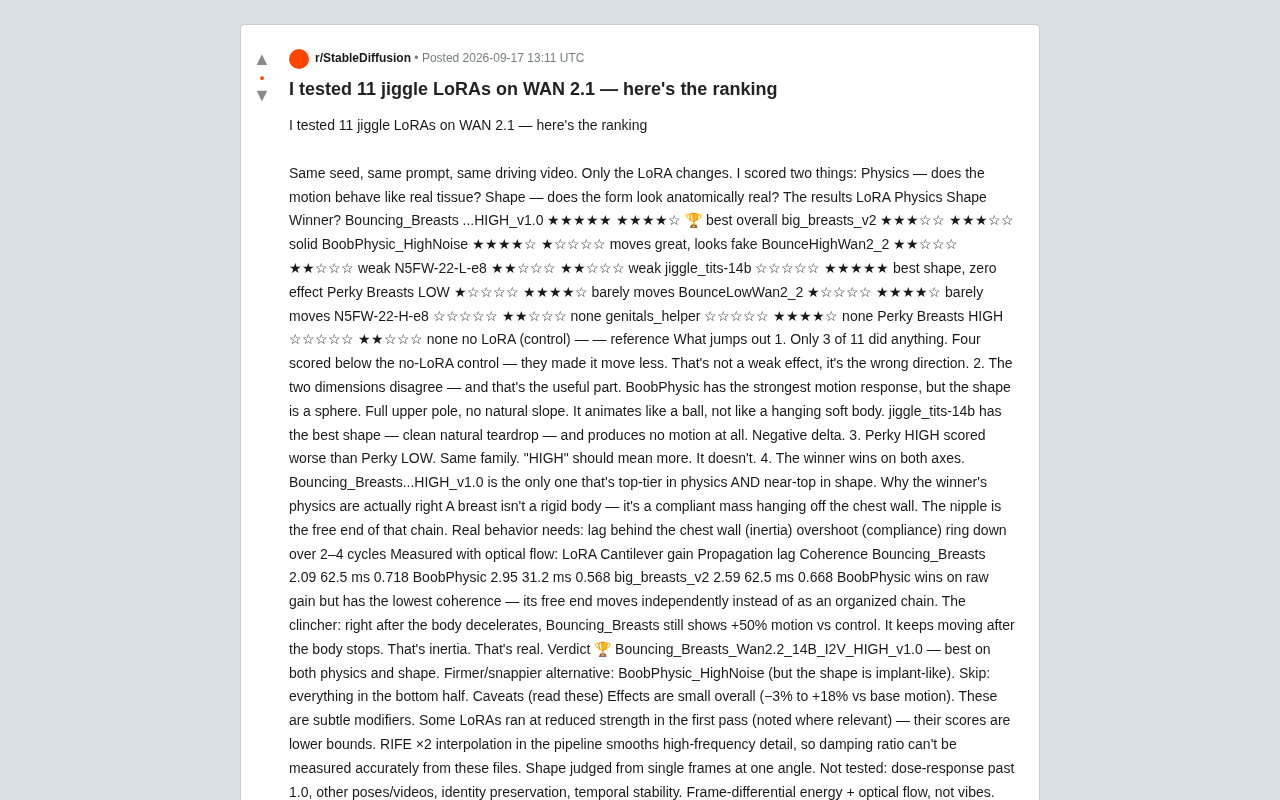
WAN 2.1 Physics Motion LoRA Benchmark: Rankings and Methodology for 11 Models Tested
A Reddit user benchmarked 11 physics-motion LoRAs on WAN 2.1 using optical flow analysis. Only 3 worked meaningfully; 4 scored below the no-LoRA baseline. Full rankings and methodology inside.
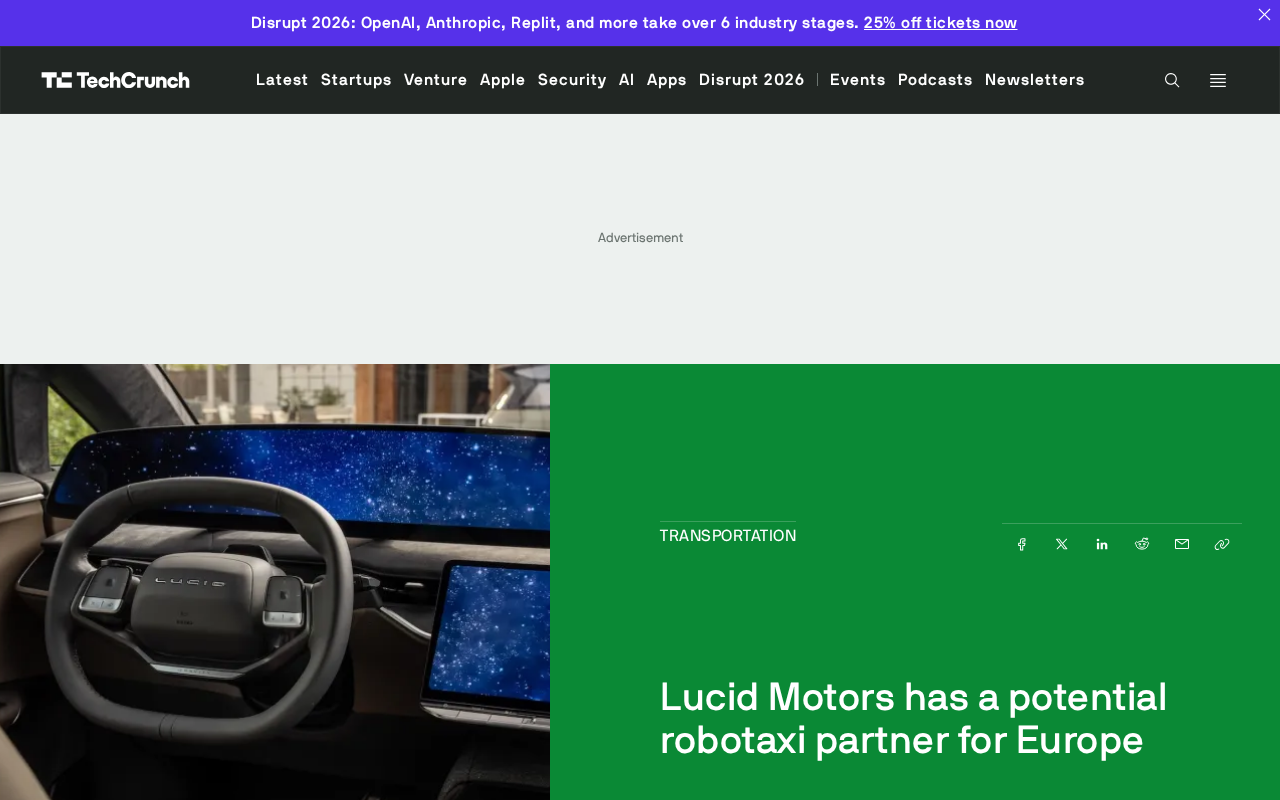
Lucid Partners with Bolt to Target European Robotaxi Market
Lucid Motors has signed a letter of intent with European mobility platform Bolt to explore Robotaxi services in Europe, though no vehicle orders have been placed yet.
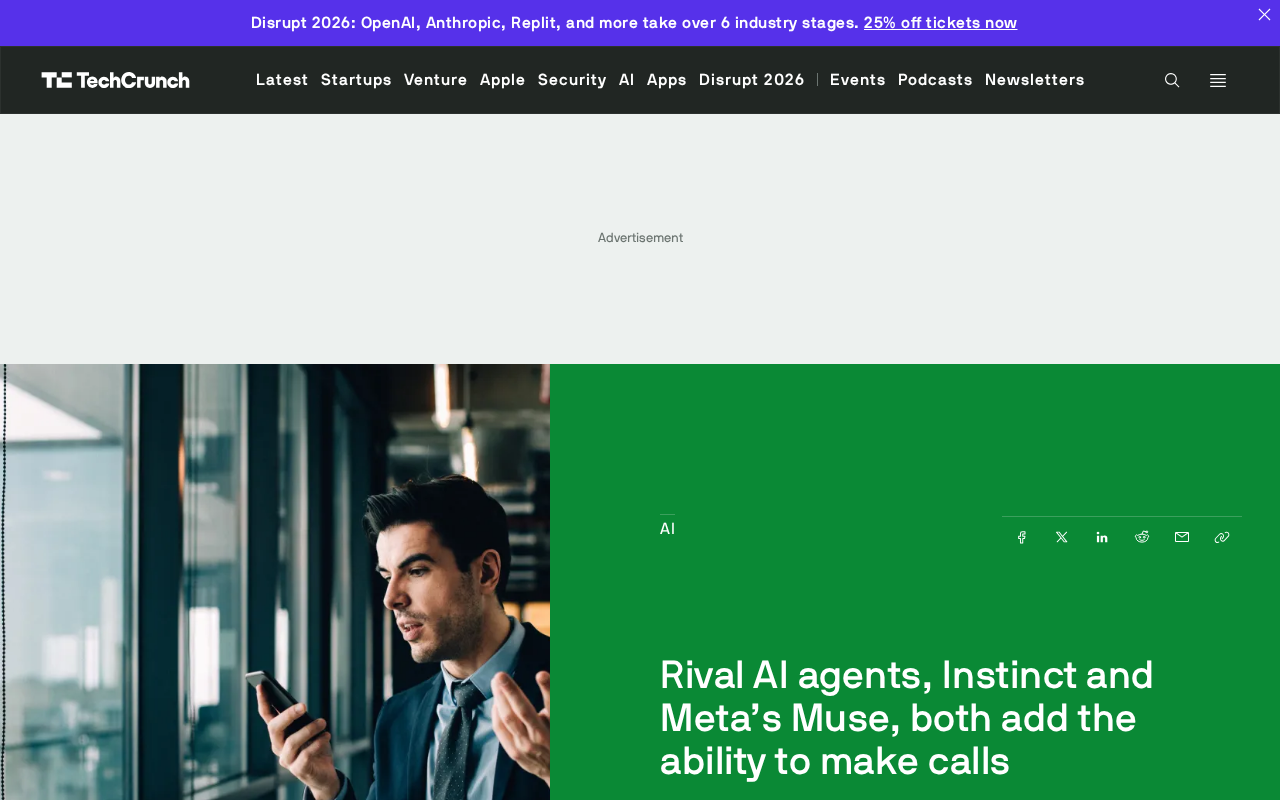
AI Assistants Enter the "Phone Call" Era: Instinct and Meta Muse Add Voice Task Execution
AI assistants Instinct and Meta Muse now make phone calls on your behalf — booking restaurants, canceling subscriptions — marking a leap from chat tools to real-world agents.