Thanksgiving Dinner from Scratch: A First Look at NYT Cooking's New Trailer

NYT Cooking's new trailer showcases Eric Kim's vegetable-forward Thanksgiving feast and 26 rounds of mashed potato experiments.
NYT Cooking has released a Thanksgiving dinner trailer hosted by food editor Eric Kim, presenting a holiday table through a complete "from start to finish" process. The core trends revealed include vegetables upgraded from side dish to star, mashed potatoes systematically tested across 26 batches and distilled into a simplified Mashed Potatoes 101 approach, the use of umami to elevate traditional holiday dishes, and cranberry sauce reinterpreted while preserving its classic flavor. The article argues that this complete-menu content reflects a shift in home cooking content from scattered single-item tutorials toward executable overall plans, emphasizing simplified processes, intensified flavor, and greater practicality.
Thanksgiving is approaching, and NYT Cooking has released a new trailer just in time, with food editor Eric Kim leading viewers through a complete Thanksgiving dinner from start to finish. Though brief, the trailer is packed with information and reveals several cooking trends worth noting.

A Thanksgiving Where Vegetables Take the Lead
At the opening of the trailer, Eric Kim makes it clear that this will be "my very vegetable Thanksgiving." This statement is no accident—in recent years, the share of plant-based eating on holiday tables has continued to rise, and even for Thanksgiving, where turkey is the traditional centerpiece, chefs are beginning to explore how to make vegetables the true star rather than a side dish.
From the tone of the trailer, Eric Kim is enthusiastic about this direction. He does not position vegetables as a "substitute" but gives them independent flavor value—an approach that aligns with the "vegetable-forward" philosophy in contemporary high-end dining.
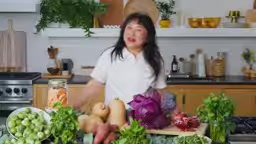
The rise of plant-based diets on holiday tables is closely tied to the growing popularity of the flexitarian concept in recent years. Flexitarianism does not require completely giving up animal products; instead, it encourages making plant-based ingredients the main body of the plate, with meat as an accent or optional item. This approach is especially well suited to Thanksgiving: turkey can still be kept, but vegetables are no longer supporting players next to the roast turkey—they are main dishes with their own seasoning logic and presentation. In high-end dining, "vegetable-forward" means chefs need to design acidity, fat, textural layers, and sources of umami specifically for vegetables, making up for the fact that their natural flavor intensity is weaker than that of meat. Common techniques include roasting to develop browning, smoking, pickling, and using complex sauces.
The Ultimate Mashed Potato Experiment: 26 Batches Refined
The most striking data point in the trailer is undoubtedly that Eric Kim tried 26 different batches of mashed potatoes. This almost obsessive testing spirit ultimately condensed into a simplified approach called "Mashed Potatoes 101."
"I made it very simple"—behind that sentence lies extensive distillation after much trial and error. Mashed potatoes seem basic, but they actually involve multiple variables, including potato variety selection, starch content control, and the balance of fat and dairy proportions. Twenty-six iterations mean he systematically optimized texture, flavor, and ease of execution.
The texture differences in mashed potatoes mainly depend on the starch type of the potato variety: high-starch russet potatoes are fluffy but prone to gumminess, while medium-to-low-starch Yukon Gold potatoes are finer and smoother. When making them, two variables usually need to be controlled—first, after boiling, the potatoes should be mashed while hot and not overmixed, to prevent cell rupture and starch release that lead to a gluey texture; second, the order and temperature at which fat and dairy are added, since cold milk or cold butter can cause starch retrogradation and a firmer texture. In addition, the timing of adding salt affects how much the potato cell walls soften. The so-called "26 batches" of iteration are essentially repeated combinations of these variables in search of the best balance among texture, flavor, and tolerance for error in execution.
Umami Boost and a Reinvention of Cranberry Sauce
The trailer also mentions two key flavor directions. The first is "umami"—Eric Kim describes a certain dish as "packed with umami," suggesting that he incorporates techniques to elevate umami levels in traditional Thanksgiving dishes, possibly involving ingredients such as mushrooms, soy sauce, or fermented seasonings.
The second is "culture in cranberry sauce." Here, "culture" may refer to fermentation culture, or it may refer to a reinterpretation of the traditional recipe. He makes clear that this sauce "still has everything you love about cranberry sauce"—in other words, the innovation does not sacrifice classic flavor.
Umami is recognized as the fifth basic taste and comes mainly from substances such as glutamate, inosinate, and guanylate. In home cooking, the most common ways to boost umami include using dried shiitake mushrooms, tomato products, Parmesan cheese, soy sauce, miso, and stocks made from fish and shellfish. Notably, when glutamate is present together with inosinate or guanylate, an umami synergy effect occurs, multiplying the overall umami intensity—which is also why many classic pairings (such as tomato with beef, or mushrooms with chicken) stand out for their flavor. Introducing umami thinking into Thanksgiving dishes usually means replacing some water or cream with mushroom stock, adding dried shiitake to stuffing, or using soy sauce and fermented seasonings to add depth to vegetable dishes.
New Directions in Home Cooking Content, as Seen in the Trailer
NYT Cooking's choice to present the Thanksgiving meal as a complete "from start to finish" process reflects a shift in home cooking content: viewers are no longer satisfied with scattered single-item tutorials; they need an executable overall plan. The trailer opens with precise ingredient phrasing such as "three ways, two eggs, one cup of whole milk," which also reinforces the content's practicality.
For home cooks hoping to try new dishes during the holidays, the trailer sends a clear signal: simplify the process, intensify the flavor, and give vegetables a voice. The full content is worth looking forward to.
"From start to finish" complete-menu content stands in contrast to the long-standing single-item tutorial model in food media. Single-item tutorials focus on a single technique or dish and are suited to fragmented browsing, but when users actually host a full banquet, they still need to figure out timing, burner allocation, and dish pairing on their own. Complete-process content makes this tacit knowledge explicit, including which steps can be completed a day ahead, which dishes can share an oven temperature, and how the serving order should be arranged. This shift is also related to the commercial logic of home cooking content: complete menus are more likely to become serialized, subscription-based content products and to drive derivative content such as ingredient lists and cookware recommendations.
One-line Summary
NYT Cooking's new trailer showcases Eric Kim's vegetable-forward Thanksgiving feast and 26 rounds of mashed potato experiments.
Paragraph Summary
NYT Cooking has released a Thanksgiving dinner trailer hosted by food editor Eric Kim, presenting a holiday table through a complete "from start to finish" process. The core trends revealed in the trailer include: vegetables upgraded from side dish to star, creating "a very vegetable Thanksgiving"; mashed potatoes systematically tested across 26 batches and ultimately distilled into a simplified Mashed Potatoes 101 approach; the use of umami to elevate the flavor layers of traditional holiday dishes; and cranberry sauce reinterpreted while preserving its classic flavor. The article argues that this kind of complete-menu content reflects a shift in home cooking content from scattered single-item tutorials toward executable overall plans, emphasizing simplified processes, intensified flavor, and greater practicality.
Related articles
 Tech Frontiers
Stylome Bot Slammed as Useless Junk: Why Do AI Detection Tools Keep Failing?
Reddit users test the Stylome AI detection bot: Gemini-rewritten text judged human-written, consistently low confidence. An analysis of AI text detection's technical dilemmas, privacy concerns, and credibility crisis in community governance.
 Tech Frontiers
When AI Becomes a Productivity Divide: Clarity or "AI Psychosis"?
A civil engineer's deep use of agentic AI boosted efficiency but bred contempt for peers who refuse to learn. Is this clarity or AI psychosis? An analysis of the cognitive and psychological challenges behind the AI productivity divide.
 Tech Frontiers
Opus 5.5 Benchmark Scores Climb, Community Says Its "Weights Are Blessed"
Reddit community discusses Opus 5.5's rising scores on the Benchmaxxing Bench, with users describing its performance as "weights are blessed." This article interprets the community reaction and cautions against conflating benchmark scores with real capability.