The Age of Agents: Developers Speak — Opportunity and Anxiety in Equal Measure

Developers share honest takes on AI coding: lower barriers, higher efficiency — but steeper skill demands and rising compute costs.
This article captures first-hand developer voices from an AI Agent-focused workshop. AI coding tools have dramatically lowered the development barrier, allowing even non-technical participants to build professional-grade products through natural language alone. Yet efficiency gains come with new pressures: model outputs require repeated verification, foundational skills and judgment matter more than ever, and compute costs are emerging as a serious bottleneck for individual developers — one that grows steeper as models become more powerful. Developers' ultimate vision is to build complex projects as naturally as having a conversation, and the most practical advice they offer today is simple: keep trying, keep learning.
When AI Enters the Development Floor: A Real Conversation About Efficiency and Anxiety
At a workshop focused on the theme of AI Agents, developers from diverse backgrounds shared their honest experiences with AI-powered coding tools. Their voices captured both the excitement of riding a technology wave and the quiet anxieties around costs, learning curves, and rising skill demands. Compared to the relentlessly upbeat messaging from vendors, the feedback from developers on the ground was far more nuanced and grounded.
One developer said it plainly: "I don't feel like AI has made things easier — if anything, it's made me feel more exhausted." That slightly exasperated remark captures a tension that many developers feel in the age of Agents: technology is advancing, but progress itself brings new pressures.
Lower Barriers: Ordinary People Can Now Build Professional-Grade Products
The most striking takeaway from the workshop floor was just how dramatically the barrier to entry has dropped. A developer with a technical background observed that the workshop drew both people with coding experience and those with none at all — and after a simple set of prompts, "they were all able to build things that, before, only professional or semi-professional developers could produce."

At the heart of this shift is a fundamental change in how people interact with computers. In the past, building a complex project required full-stack knowledge — not just the frontend, but also the backend and an understanding of the overall architecture. Now, "as long as you can describe what you want in natural language, an Agent can make it happen."

One developer recalled that just a couple of years ago, they had to invest heavily in learning basic programming, whereas now a simple natural-language description is enough to produce a reasonably polished game or interactive desktop application. That means ideas can go from concept to reality far faster, and far more people can bring what's in their head to life.
Underpinning this shift is the rise of the "natural language programming" paradigm. Traditional development demands that developers master precise syntax rules, calling conventions, and toolchain configurations — a single misstep in any one area can grind a project to a halt. AI coding tools that center on large language models (such as GitHub Copilot, Cursor, and Claude Code) translate natural-language intent into runnable code, bridging the gap between "idea" and "implementation." Agent mode goes even further: rather than generating a single code snippet, it can autonomously plan task steps, call external tools, read and write files, and even execute command-line operations — decomposing a vague requirement into a chain of executable subtasks. This means that someone with no formal programming training simply needs the ability to clearly describe what they want in order to drive a complete development workflow — something that previously required years of training to build up the systematic thinking for.
Behind the Efficiency Gains: Skill Demands Rise, Not Fall
Yet lower barriers do not mean things are easy. Multiple developers described AI as a double-edged sword. Some jokingly called pre-AI development "artisanal coding," and acknowledged that large models and off-the-shelf AI coding tools have genuinely boosted research and development efficiency.
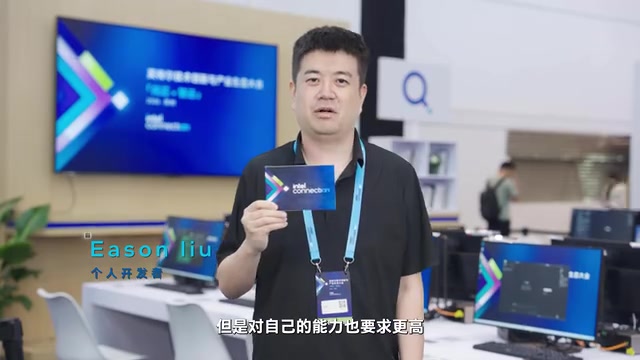
But the flip side of greater efficiency is higher skill demands. "Especially when working on more complex projects now, the requirements for model capability may be higher — but the requirements for your own capabilities are also higher, and you end up learning even more," one developer admitted candidly. He stressed the importance of "going back to the fundamentals repeatedly," because he frequently runs into situations that require rework.
The answers a model gives aren't always right — "you have to keep hammering at it" — and that process can be "maddening, genuinely maddening." It's clear that Agents are not an all-knowing black box; users still need judgment and domain expertise to wield them effectively.
This phenomenon is what technology-diffusion researchers call "skill-biased technological progress" — new tools raise overall output while simultaneously increasing the premium on high-end skills, rather than evenly leveling everyone's abilities. In the context of AI coding, the developers who get the most out of Agents are precisely those with enough foundational knowledge to validate model output, catch errors, craft effective prompts, and manually correct things when the model goes wrong. Those with weaker fundamentals may be able to produce an initial prototype with AI's help, but when project complexity rises, hard-to-reproduce bugs appear, or performance optimization is needed, they often find themselves stuck in an endless back-and-forth with the model that never converges. "Drilling the basics" is therefore not old-fashioned advice — it's a practical necessity for maintaining judgment and control in an AI-assisted development environment.
Compute: The New Bottleneck for Individual Developers
When model capability is no longer the primary obstacle, a new scarce resource comes into focus: compute. Some workshop attendees argued that "the models from every major player are blooming right now — they're all excellent, each with different strengths" — and for individual developers, what's actually scarcer is compute.

"Compute consumption is fairly significant in the workflow of an individual developer. The more powerful models get, the more expensive compute becomes — compute could become a pretty heavy burden going forward." This observation highlights a real-world cost that is easy to overlook as Agents become more mainstream. Finding a sustainable balance between cost and capability may well be an ongoing challenge that individual developers face for years to come.
This also reinforces the value of hardware-software integrated solutions — by optimizing the underlying compute infrastructure, more people can participate in Agent development at a cost they can actually afford.
The sources of compute cost are worth unpacking. When individual developers use AI coding tools, compute expenses show up at two main levels: first, the token fees for calling cloud-based large-model APIs — the more powerful the model (higher parameter count) and the longer the context window, the higher the cost per call; second, if developers choose to self-host open-source models (such as Llama or Qwen), they need their own GPU hardware, which carries a significant upfront investment. Agent workflows are especially "token-hungry" — completing a complex task often requires dozens of rounds of model inference and tool calls, each of which consumes tokens. As model capability improves and task complexity grows, the cost of a single development session can easily run to several dollars or more. This structural tension means that the more powerful models become, the higher the effective barrier for ordinary developers — "compute equity" is a core problem that the Agent ecosystem must solve if it is to reach mainstream adoption.
The Ultimate Vision: Building Complex Projects as Naturally as Chatting
Despite all these challenges, developers' hopes for the future remain clear and consistent. The widely shared end goal is: "to let any ordinary person build a complex, working project just by having a conversation."
The cross-disciplinary exchange at the workshop itself proved inspiring. One developer said that the ideas shared by fellow attendees gave him many new angles and helped him work through problems he had previously been stuck on. That spirit of collaboration is a microcosm of the open ecosystem that the age of Agents is beginning to foster.
For those who haven't yet taken the plunge, the developers' advice was refreshingly simple: "Be bold and try it. Try it." Because AI is evolving so quickly, the best approach is to keep getting hands-on, keep talking to AI, and gradually come to understand and harness what the technology has to offer.
A Final Word
The arrival of the Agent era has made software development simultaneously easier and more complex. Easier, in that the barrier to bringing ideas to life has dropped; more complex, in that it places new demands on users' judgment, foundational skills, and cost management. The real voices of developers remind us: AI is a powerful amplifier, but it is not a shortcut that replaces thinking. In this period of rapid technological iteration, maintaining a mindset of constant experimentation and learning may be the true key to mastering Agents.
Related articles

Is the Agent Harness Dead? Cursor's Early Engineer Breaks Down the Real Architecture of AI Coding Agents
Cursor early engineer Jediah breaks down the real architecture of the agent harness: why "the harness is dead" is only half right, how the data flywheel lets the harness obsolete itself, and how Grokbot, software factories, and primitive design open new frontiers for agents.
Python Visitor Pattern and Better Alternatives Explained
A deep dive into Python's visitor pattern and four alternatives: method pattern, pattern matching, dictionary mapping, and functools.singledispatch. Choose the best decoupling design by change frequency.

357 Days of Deep Experience: Why Omarchy Made Me Stop Distro-Hopping
A 357-day deep dive into Omarchy: 59-second install, out-of-the-box audio and GPU support, the Quattro QuickShell rewrite migration pains, and why Arch users should try it.