The Age of AI Agents: Opportunities, Anxieties, and the Compute Bottleneck Through Developers' Eyes

Developers share how AI Agents lower coding barriers while raising costs, workloads, and compute challenges.
At an AI workshop, developers from varied backgrounds shared candid takes on the Agent era. The consensus: natural language is replacing specialized syntax as the development interface, letting non-coders build professional-grade tools. But the flip side is real — AI hasn't made development easier. Models are pricey, outputs need repeated correction, and complex projects demand more from developers, not less. When asked what's most scarce, the answer was clear: compute costs are the true bottleneck, and the dream of letting anyone build complex projects as naturally as chatting remains unrealized. The session closed with a simple call to action: get hands-on and keep trying.
From "Ancient-Style Coding" to Natural Language Development
At an AI workshop, developers from diverse backgrounds shared their honest impressions of the Agent era. One shift came up again and again: the barrier to programming is dropping at an unprecedented pace.
Some developers described pre-AI development as "ancient-style coding" — a process requiring hours of learning foundational programming concepts just to build a game or interactive project. Now, "simple natural language is enough to accomplish" similar development tasks. Ready-made AI coding tools and large language models have delivered a genuine boost to development efficiency.

The most vivid proof of this shift played out on the workshop floor itself. One experienced developer observed that attendees ranged from those with strong technical backgrounds to people with zero development experience. Yet after a brief nudge, "they were all able to build products that previously only professional or semi-professional developers could make." Over the past year, the evolution of Agents has been helping more ordinary people rapidly turn their ideas into reality.
The Fear Is Fading: Everyday Users Can Now Get Started
For many people, words like "Agent," "command line," and "code" once felt like a wall. One developer at the event put it plainly: "The biggest fear people have is whether an ordinary person can actually get started."

But AI Agents have changed the very foundation of that fear. "As long as you can describe something in natural language, an Agent can take care of it for you." This means the interaction model for development has shifted from learning specific syntax to everyday natural expression. One developer shared a concrete use case: when dealing with a tricky data report in daily life, you can just use an Agent to build a small tool to solve it.
The leap from needing to learn foundational programming to building through conversation lowers not just the technical barrier, but the psychological one. Multiple speakers offered the same advice — just try it — because "the pace of development really is fast right now; the more you get hands-on, the more you'll pick up."
The core mechanism behind an Agent is the combination of a large language model with tool-calling, memory management, and task-planning capabilities. This allows it to break down complex goals, autonomously invoke external tools, and execute multi-step tasks — rather than simply answering a single question. Once a user describes what they need in natural language, the Agent decides on its own which tools to call (such as a code executor, file system, or web search) to complete the task. The fundamental difference from traditional programming is this: traditional development requires a developer to precisely translate intent into syntax a computer can understand, whereas an Agent internalizes that translation layer — users only need to express what they want, not how to achieve it. This is precisely the mechanism that allows users without any programming background to use Agents to build small tools with real functionality.
The Other Side of the Efficiency Gain: It's Actually More Exhausting
Agents are not all upside. There was plenty of candid venting at the event, painting a more clear-eyed picture of the technology.
"I don't think AI has made things easier for me — if anything, I feel more exhausted." That was one developer's summary. His frustrations centered on a few points: models are getting more expensive, the answers they give aren't always accurate, and you have to go back and forth repeatedly before getting a usable result. That iterative "wrangling" process, he said, "just makes you frustrated — really frustrated."
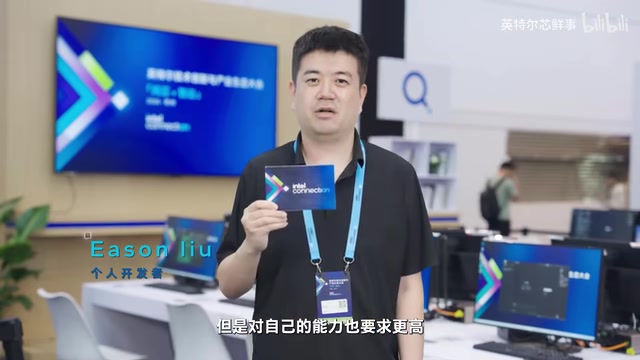
The deeper reason is that on complex projects, "the demands on the model's capabilities may be higher, but the demands on your own capabilities are higher too, and you end up learning more as well." In other words, AI has taken on the foundational work but pushed developers toward higher-order challenges. The constant "back-to-square-one" cycles that came up during development led multiple developers to stress the same point: foundational knowledge still needs to be continuously sharpened — you can't abandon that accumulation just because you have AI.
That said, the developers who held this view also added: "It's a process of continuous improvement." Anxiety and growth are often two sides of the same coin.
The Real Scarcity: Compute and "Development for Everyone"
When asked what is most scarce in the age of AI Agents, developers offered two thought-provoking answers.
The first was compute. One independent developer noted that "every major model out there right now is flourishing — they're all excellent, each with its own strengths" — the models themselves are no longer the bottleneck. The real constraint is compute: "Compute consumption can be quite significant in the workflow of an individual developer, and as models get stronger, compute will only get more expensive." As model capabilities improve, compute costs may become the primary burden for independent developers.

The second answer leaned more toward a vision: "What's most lacking is the ability for any ordinary person to develop a complex, functional project just by chatting." This reflects both an expectation for the current experience and a direction for Agent tools to grow toward — not just barely usable, but as natural as having a conversation.
The event also touched on the idea of combining software and hardware, with hopes of leveraging Intel's software-hardware solutions to collectively raise efficiency across the open-source community and industry, and to address the compute shortfall.
The root cause of high compute costs lies in the inference stage of large models, which consumes enormous GPU resources. The more parameters a model has and the longer the context, the greater the computational load per inference — reflected in rising API prices charged per token. For Agent applications that require frequent model calls, a single complex task may trigger dozens or even hundreds of model invocations, causing costs to accumulate rapidly. Individual developers typically cannot build their own GPU clusters and must rely on cloud-based APIs, making them especially sensitive to pricing changes. Chip manufacturers like Intel are attempting to reduce dependence on expensive cloud compute by optimizing CPU/NPU inference efficiency and offering local deployment options — this is the technical context behind the software-hardware integration approach mentioned at the event.
Advice for Everyday People: Connect, Experiment, Repeat
As the event wrapped up, developers offered consistent advice for anyone who hasn't yet explored AI Agents: get hands-on, try things out, and talk to people.
"If you don't know much about AI Agents yet, just try them out — the pace of development really is fast right now." Interacting with AI more in daily life and learning is the most practical way to keep up with this wave.
This Connection event and workshop gave organizers a glimpse of the potential in participants from all walks of life. The significance of the Agent era may not lie in replacing anyone, but in giving more people the ability to bring their ideas to life — even if that comes with invoices, anxiety, and the frustration of endless debugging. It's still a process worth being part of.
Related articles

Workbuddy for Absolute Beginners: How a Desktop AI Agent Fits Into Real Workflows
A beginner's guide to the Workbuddy desktop AI agent: installation, claiming credits, file management, and building automated workflows—compared with CodeX for fit and cost, helping professionals shift from AI question-askers to AI managers.

OpenAI's New Agent Stack: Computer Use, Decisions API, and Ultra-Fast Workflows
OpenAI Dev Day unveiled a new agent stack: Computer Use outperforms humans, Decisions API delivers ultra-low-latency classification via Luna, Agents API opens the same Computer Use capabilities, and GPT-6.1 Sol costs only one-seventh of Astra. Core updates, benchmark data, and developer insights.

Liang Wenfeng Open-Sources DeepInfo Inference Framework, Takes On U.S. Ban
DeepSeek open-sources its DeepInfo inference framework after its models, featuring GPU/CPU cross-pipelining, small-model prediction with large-model verification, and full Huawei Ascend and NVIDIA chip support—facing the U.S. federal ban head-on. This article analyzes its significance for AI deployment and open-source strategy.