The AI Comic Drama Hit Formula: A Four-Line Checklist and a Full Doubao Walkthrough
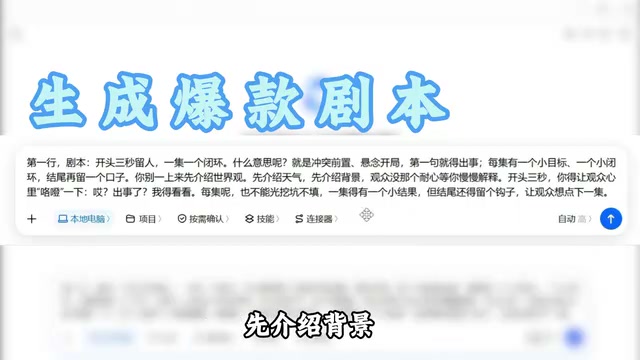
Bilibili creator compresses hit breakdowns into a four-line AI comic drama formula and validates it live with Doubao.
The article covers the final episode of a Bilibili hit-breakdown series: it compresses four components—script, character, emotion, and hook—into a four-line starter formula (three-second hook plus one closed loop per episode; character sticks on appearance with identity/contrast/catchphrase/desire and fear; sweet and tearjerker moments for flavor; tiered rotating hooks). The creator validates an existing hit against five criteria and uses Doubao to generate a synopsis, three-level outline, character card, and episode-one sweet scene. The formula lowers the start barrier but governs structure only; results vary by model and prompt.
Title
AI Comic Drama Hit Formula: A Four-Line Checklist and a Full Doubao Walkthrough
Meta Description
Final installment of the Bilibili hit-breakdown series: combine the four episodes on script, character, emotion, and hook into a four-line AI comic drama formula, then use Doubao to generate a sweet-romance-with-angst opening live. Includes five checklist criteria and tips on upscaling and storyboarding.
Article Content
What's the scariest part of making AI comic dramas? It's not that you don't know how to use the tools—it's that you open the chat box and have no idea where to start. The Bilibili creator's "Hit Breakdown Series" has reached its fifth and final episode, compressing the four components broken down in the previous four episodes—script, character, emotion, and hook—into a four-line starter formula, and then running that formula live through Doubao. Is this formula worth copying? Let's break it down.
Why a Formula, Not Inspiration
The first four episodes of the series respectively broke down hit scripts, compelling characters, the protagonist's range of emotions, and hooks that keep viewers around. By the fifth episode, the creator no longer discusses individual components but synthesizes the conclusions of all four episodes into an actionable checklist, along with a key judgment: hits aren't learned—they're reverse-engineered. Reverse-engineer enough of them and use the formula proficiently enough, and you can create your own hit.
This approach has real significance for AI content creators. When using large models to make comic dramas, the real bottleneck is often not generation capability but the lack of structure in the prompt. The formula essentially replaces "going by feel" with "checking against a list," so every work session has inspection items.
Prompt Structure refers to organizing information in a layered, itemized way when giving instructions to a large model, rather than writing all requirements as one vague paragraph. Structured prompts typically include modules such as role setting, task objective, output format, and constraints, which help the model understand intent more reliably. The four-line formula in this article is essentially a content-level prompt structure: breaking script, character, emotion, and hook into checkable items and filling them into the prompt one by one, thereby reducing the drift caused by the model's free interpretation.
Breaking Down the Four-Line Formula Line by Line
Line 1: Hook viewers in the first three seconds; one closed loop per episode
Front-load the conflict, open with suspense—something must happen in episode one. The creator specifically calls out the opposite approach: starting by introducing the worldbuilding, then the weather, then the background. Viewers don't have the patience to wait for you to explain slowly.
Nor can each episode just dig holes without filling them: each episode needs a small goal and a small closed loop, with an opening left at the end. The value of this line lies in tying "opening" and "single-episode structure" together for evaluation, preventing the situation where the opening is explosive but subsequent episodes are padded with filler.
Closed loop in the context of short dramas and comic dramas refers to completing a full small narrative unit within a single episode: stating a goal, creating obstacles, and providing a result or interim answer. The opposite of a closed loop is only digging holes without filling them, leaving viewers with no sense of satisfaction after watching an entire episode. One closed loop per episode plus an opening at the end is a common structure for maintaining completion rates and binge-watching motivation in short content: the current episode's problem is solved, but a new problem appears, giving viewers a reason to click the next episode. The article ties the opening hook and the single-episode closed loop together for evaluation precisely to prevent explosive openings followed by padded filler.
Line 2: Make the character stick the moment they appear
The structure given is a four-piece set: identity provides background, contrast provides memorability, one line provides personality, and then give them something they want and something they fear. The creator emphasizes that a character can't just look good—they must be memorable the moment they appear.
"Want" and "fear" are the most easily overlooked parts of this line. With desire and fear, characters come alive—this is essentially giving the model a behavioral driver at the prompt level, rather than just describing appearance.
Line 3: Sweet moments and tearjerker moments give it flavor
Sweet moments handle affection, protection, misunderstanding, and mutual feelings; tearjerker moments handle regret, loss, grievance, and too-late. A drama can't be lukewarm from start to finish—there need to be sweet moments for viewers to ship and tearjerker moments to tug at their heartstrings.
This line reminds creators: emotional beats need to be arranged, not scattered randomly. Writing emotional rhythm into the prompt ensures the generated content isn't a flat, straightforward流水账.
Sweet moments and tearjerker moments are emotional tags commonly used in web novels and short dramas. Sweet moments refer to scenes that make viewers feel sweetness, being favored, or being protected, commonly seen in mutual secret crushes, misunderstandings resolved, and protective behavior. Tearjerker moments refer to scenes that evoke regret, loss, grievance, or too-late feelings. Their purpose isn't mere sentimentality but providing emotional memory points so the content is remembered in the information stream. Writing sweet and tearjerker moments into the prompt is equivalent to specifying emotional rhythm for the model, avoiding flat, undulating流水账.
Line 4: Tiered hooks to retain viewers
Main hook at the end, callback hook at the beginning, planted hooks midway; types cover suspense, reversal, and emotion—don't keep using the same one; rotate them so viewers don't get fatigued.
Together, the four lines form a starter checklist you can screenshot and save. The creator's advice is direct: copy it down or screenshot it, and pull it out to check against before every work session.
Reverse-Validating a Hit with the Formula: Five Checklist Criteria
After explaining the formula, the creator does something more convincing: takes an existing hit and uses a prompt to have Doubao check off five criteria one by one with reasons.
These five criteria correspond exactly to the four lines of the formula: does the opening three seconds have conflict, is it a closed loop; does the protagonist's introduction have contrast and memorability; are there sweet or tearjerker moments; does each episode ending have a hook.
This validation action itself is worth borrowing. It turns "whether the formula holds" into a testable question rather than relying on gut feeling. For creators, the same prompt can be reused on their own topics—validate first, then start work.
Hook is a content creation term referring to suspense, reversal, or emotional pull set at the beginning or end that compels viewers to continue watching or follow the series. The article categorizes hooks into main end hooks, beginning callback hooks, and midway planted hooks: the main hook gets people to click the next episode, the callback hook echoes the previous episode, and the planted hook maintains attention midway. Another layer of hook tiering is type rotation—alternating suspense, reversal, and emotion to prevent viewers from fatiguing on the same套路.
Doubao Walkthrough: Four Things to Create a Hit Opening
Step three is the focus of the whole video. The creator inputs the requirement live: make a new drama that's sweet romance with a bit of angst, and using the hit formula, produce four things at once—a one-sentence synopsis, a three-level outline (with hooks marked at each episode ending), a protagonist character card (including contrast and a one-line catchphrase), and a sweet moment scene for episode one. The prompt is displayed directly on screen and can be copied for use.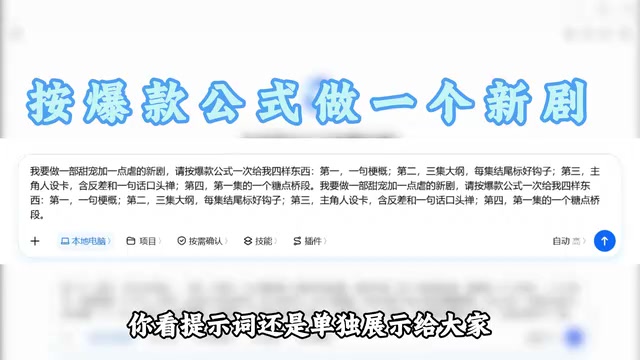
The generated results are worth comparing item by item: the synopsis is "She married the coldest man in the city, only to discover after marriage that he had shielded her from all the open attacks and hidden arrows," packing the character relationship, contrast, and suspense into one sentence. The three-level outline marks a hook at each episode ending, from an old hairpin to going out late at night to meet someone, to the foreshadowing of an accident ten years ago—each episode has a small closed loop and a hook at the end. The character card gives "appears to be a cold-faced CEO, secretly a wife-protecting maniac," with the catchphrase "Mine, no one touch her," wanting to protect her and fearing she'll remember what happened back then.
The episode one sweet moment isn't forced either: she thinks he doesn't care, then turns to find the hairpin she lost ten years ago pressed under the bottom of his desk. The sweet moment, character design, and hook are all connected—this is evidence that the formula works.
Two Reminders on Upscaling and Storyboarding
The creator adds two practical details. When upscaling, don't just write "handsome" and "beautiful"—write the contrast from the character card into it, such as "appears to be a cold-faced CEO with cold eyes, but his fingers instinctively tighten when looking at the female lead," so the generated image has memorability.
Don't spread storyboarding effort evenly: give conflict in the first three seconds, sweet moments in the middle, and hooks at the end. These two points extend the formula from the text layer to the visual layer—a step many tutorials easily miss.
Who This Method Suits and Where Its Limits Are
The formula's biggest advantage is lowering the barrier to starting work, turning vague creative intuition into checkable items—especially suitable for people just starting to make comic dramas with tools like Doubao, still in the "don't know what to write in the prompt" stage. The four-line structure is clear, reusable, and verifiable.
The limitations should also be stated clearly: the formula governs structure, not the upper limit of content quality. With the same four lines, if the synopsis you fill in is mediocre, the output will still be mediocre. Additionally, the validation and walkthrough in the tutorial are based on Doubao's single generation results; performance will vary across different models and prompt versions. The formula is a starting point, not a guarantee.
The homework the creator assigns is also the capstone of the series: use the formula to have Doubao create a complete comic drama opening—post the synopsis, three-level outline, character card, and sweet or tearjerker moments in the comments, along with the five validations. This design turns "watching the tutorial" into "submitting homework"—learn it and you can use it; use it and it can be checked.
One-line Summary
A Bilibili creator compresses hit breakdowns into a four-line AI comic drama starter formula and validates it live with Doubao.
Paragraph Summary
The article introduces the final fifth episode of the Bilibili creator's "Hit Breakdown Series": compressing the four components broken down in the previous four episodes—script, character, emotion, and hook—into a four-line starter formula—hook viewers in the first three seconds with one closed loop per episode, make the character stick on appearance (identity/contrast/catchphrase/desire and fear), arrange sweet and tearjerker moments for flavor, and tier hooks with rotation to retain viewers. The creator also uses five criteria to check off an existing hit one by one and live-generates a synopsis, three-level outline, character card, and episode one sweet moment scene with Doubao, demonstrating how the formula lands. The article argues the formula lowers the barrier to starting work and turns creative intuition into checkable items, but also notes it only governs structure, not content ceiling, and results vary by model and prompt version.
Related articles
Kimi K3.1 Pro vs Opus 5.5 in 13 Long-Running Tasks: Which One Is Actually Worth Using?
13 long-horizon tasks pit Kimi K3.1 Pro against Opus 5.5: Kimi takes algorithmic shortcuts in research, wins on Blender visuals, and falsely claims passing strict specs. Total cost 55%, but cache re-reads erase the discount. Four production rules included.

The Dark Answer to the Fermi Paradox: Civilizations Trapped in Cycles of Destruction and Rebirth
Why can't we find alien civilizations? This article explores the "cyclical extinction" hypothesis through nuclear physics, civilizational collapse, and rebuilding timescales: civilizations may not have vanished but are trapped in cycles of rise and collapse, never accumulating enough time to leave the cradle.
Build an AI Agent in 20 Minutes with Zero Code: Hermes Self-Hosting and Telegram Notifications in Practice
A 20-minute zero-code tutorial on building an AI agent: self-host the open-source Hermes Agent on a VPS, connect Nose Portal models, and integrate Telegram notifications for automated tasks like flight price monitoring. Includes full steps, cost analysis, and security tips.