Build an AI Agent in 20 Minutes with Zero Code: Hermes Self-Hosting and Telegram Notifications in Practice
Beginners can self-host the open-source Hermes agent on a VPS in 20 minutes with zero code, achieving model freedom and data sovereignty.
The article introduces a self-hosting solution for the open-source AI agent Hermes Agent: it distinguishes itself from chatbots through tool use, autonomous execution, and memory, and offers three advantages—model choice freedom, ownership, and data sovereignty. The tutorial uses Hostinger's VPS template for one-click deployment, connects to over 200 models via Nose Portal, and recommends the cheap, tool-use-savvy DeepSeek Flash for beginners; then integrates Telegram via QR code and sets it as the home channel for notifications. The first monitoring task tracks flight prices, running every 6 hours and alerting only on changes, with first-day model costs of just eight cents. The article also acknowledges that self-hosting shifts operational and security responsibilities to the user.
AI agents are evolving from chatbots into digital assistants that can autonomously execute tasks. But most people are still held back by the technical barrier—until open-source tools like Hermes Agent came along. According to a tutorial by Bilibili creator Matt, complete beginners can, without writing a single line of code, get an agent running around the clock on their own server in just 20 minutes and receive notifications via Telegram. Behind this is self-hosting's redefinition of ownership and control.
The Essential Difference Between AI Agents and Chatbots
Chatbots follow a simple "input-answer-wait" loop, while agents leap forward in three dimensions. Tool use lets them search the web, read and write files, and run programs; autonomous execution means that given a goal, they can plan steps themselves and repeat tasks according to that plan; memory lets them learn user preferences and understand you better the more they're used. According to Matt, he runs more than 20 tasks a day with his agent, and millions of people have built their own agents through his YouTube tutorials.
Every agent is powered underneath by an AI model, the same kind that drives ChatGPT and Claude. The difference lies in everything built around the model—tools, autonomy, and the memory system. This is exactly where Hermes Agent comes in.
Why Choose Hermes Agent: Model Freedom and Data Sovereignty
Hermes Agent, developed by North Research, is a free and open-source AI agent. Users only pay for the AI model and the server it runs on. Compared with ChatGPT and Claude, it offers three things closed-source services cannot.
Freedom of model choice is the primary advantage. ChatGPT and Claude only allow their own models, while Hermes can connect to any model from any company—use a cheap model for simple tasks and switch to a powerful one for complex tasks, all within the same agent. Ownership is the second safeguard: ChatGPT and Claude are rented services with weekly limits and features that may be taken away; Hermes runs on your own server, and no company can throttle or shut it down. The difference in habitat is equally key: closed-source services can only converse within their own apps, while Hermes has its own independent Telegram, WhatsApp, or Slack account and can proactively send messages within everyday applications.
Matt particularly emphasized the difference in memory architecture between agents and ChatGPT: ChatGPT creates a separate project for each task, with knowledge confined to that project; Hermes has only one agent that understands the entire work environment and records what it learns as reusable skill notes, so it gets better and better at your work.
Self-hosting refers to deploying and running software on your own server rather than using a vendor-hosted cloud service. In the AI agent context, self-hosting means model calls, task scheduling, and memory data all pass through the user's own machine, and the service provider cannot throttle, censor, or unilaterally shut it down. The cost is that users must handle server operations, security patches, and backups themselves. The opposite is the SaaS model (like ChatGPT), which works out of the box but gives control to the vendor. Self-hosting is often tied to the concept of "data sovereignty"—sensitive data never leaves your own environment, making it suitable for enterprises and individuals with privacy or compliance requirements.
Server Selection: Why It Must Be a VPS
An agent needs a machine that is always on, because scheduled tasks, monitoring, and message pushes all depend on it staying running at 3 a.m. This machine must also be isolated from personal data—the agent will execute commands, install software, and modify files, and these operations should take place in an environment without personal photos, passwords, and sensitive work files. Matt compares this isolated environment to a "practice workshop": if you break it, deleting and starting over takes only ten minutes.
A VPS (Virtual Private Server) is the ideal choice—a computer in a data center that runs continuously and only you can log into, for as little as a few dollars a month. You can also install it on your own computer, but then it's only usable when the machine is on, and the risks directly affect your personal files. The tutorial uses Hostinger's Hermes template, which skips the terminal installation steps and provides a login page, backups, one-click updates, and a restart button.
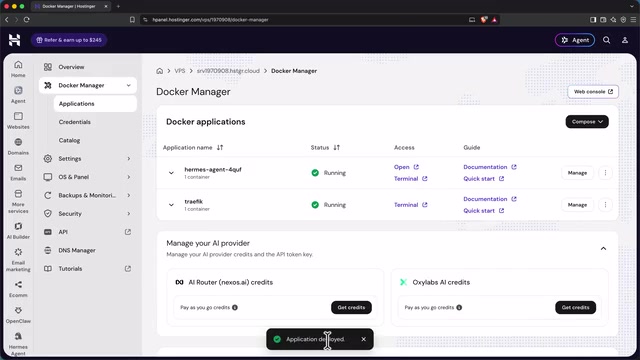
During the purchase process, be sure to uncheck the bundled AI services; the KVM 1 plan is enough to easily run one agent, and you can upgrade seamlessly later. After deployment, confirm in the Docker manager that the Hermes application has turned into a green checkmark status, and then you can access the dashboard through your browser.
VPS (Virtual Private Server) uses virtualization technology to divide a physical server into multiple isolated virtual instances, each with its own operating system, CPU, memory, and disk quota. Users get root access and can install software just like on an independent computer. Compared with shared hosting, a VPS has dedicated resources and better isolation; compared with a dedicated server, it is much cheaper, usually starting at a few dollars a month. Major providers include Hostinger, DigitalOcean, Vultr, and others. The KVM mentioned in the article is a hardware-assisted virtualization technology that provides performance and isolation closer to a physical machine, and it is the mainstream approach for VPS today.
Model Configuration: Getting Reasoning Capability at the Lowest Cost
Hermes does not come with a model built in; it needs to connect to a model provider. The tutorial uses Nose Portal, from the same team as Hermes, which is already built into Hermes. Just log in to connect to more than 200 models from major AI companies and call tools such as web search, image generation, browsing, and voice. For $20 a month you get $22 in credit, and through the exclusive link the first month is only $5.
For model selection, Matt recommends starting with a fast and cheap model. DeepSeekAd Flash is the top choice because it excels at tool use and costs far less than competitors. Simply search on the model page and switch to the latest Flash version—don't obsess over version numbers, since the version at the time of recording may have been iterated many times by the time you watch it.
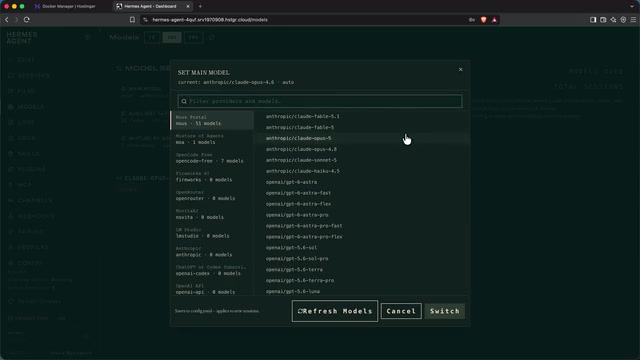
After connecting, type a message in the chat box to test, and the agent will reply. Ask it about its built-in tools, and it will list capabilities such as browser, terminal commands, file handling, code execution, web search, sub-agent delegation, memory, and scheduling.
Tool Use / Function Calling is the key capability that distinguishes agents from chatbots: when generating a response, the model can output a structured "call request" specifying the function to execute and its parameters, which an external runtime actually executes (such as searching the web, reading and writing files, or running terminal commands), and then passes the result back to the model to continue reasoning. The model itself does not directly operate the computer; instead, it "directs" tools through this protocol. Therefore, how well a model follows the tool-calling format and how accurate its parameters are directly determine the success or failure of agent tasks—this is also why the article recommends that beginners prioritize models that are "good at tool use."
Telegram Integration: Let the Agent Find You Proactively
Telegram is the preferred channel because it is the easiest to set up (just scan a QR code) and convenient for daily use. Hermes also supports more than 20 platforms including Discord, Slack, and WhatsApp.
In the Hermes console, go to the Channels page on the left, enable Telegram, and restart the gateway. Click "Create with QR code," then use your phone camera to scan the code into the conversation with the NOS-hosted Hermes bot, click to create the bot, and connect. After saving and restarting, send a message to the bot in Telegram to test. You need to run the /set home command to set Telegram as the primary channel—this is the destination for scheduled task results and cross-platform messages.
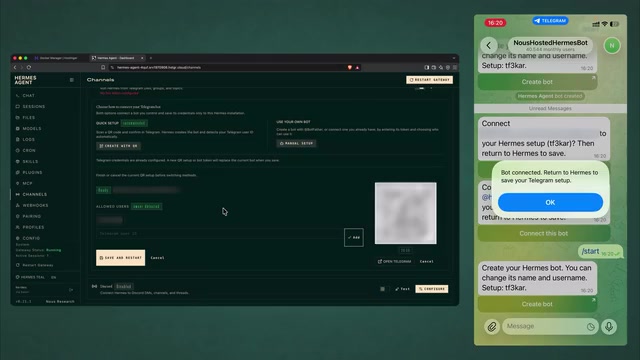
On the security side, Matt recommends adding your Telegram account to the allowlist to prevent others who find the bot from sending messages. He also reminds users that Telegram chats are not end-to-end encrypted, so passwords or banking information should not be sent through it.
The First Monitoring Task: Starting with Flight Price Tracking
The most beginner-friendly task is monitoring—checking something on a schedule and notifying only when it changes. Matt demonstrated a task tracking Barcelona-to-London flight prices: he asked the agent to "build a reusable check skill, check every few hours, and notify via Telegram only when there is something new." This task took 30 to 45 minutes; the agent connected to the live internet, found the best method, built the tool workflow, created the skill, and set up a scheduled task, and it also set up memory to record what had already been shown.
The scheduled task page shows that this monitor runs every 6 hours, scrapes the latest prices, and proactively sends a message when they change. Matt's own agent runs more than 20 similar tasks: checking accounts every Monday, tracking birthdays to research gifts in advance, planning trips and getting quotes twice a day, and following up on negotiation progress. Monitoring targets can be prices, topic news, or even the weather. If a website blocks the agent, just have it switch to another source.
On cost, the server costs a fixed few dollars a month, and the model is billed per message. On the first day of building the agent, Matt spent only a little over eight cents on the model.
Cron Job / Scheduled Task refers to a program execution mechanism that triggers automatically at preset intervals, named after the Unix cron daemon. In the agent context, scheduled tasks let the agent run periodically without user triggering: waking up on schedule, executing a preset skill workflow (such as scraping web page prices), comparing with historical results, and pushing a notification through the messaging channel only when a change is detected. This "polling + diff detection" pattern is the foundation of automation tasks such as price monitoring, news tracking, and schedule reminders, and it also explains why an agent must run on a VPS that is on around the clock.
Practical Considerations for Self-Hosted Agents
The core value of this approach is turning the agent from a "rented service" into an "owned asset." Freedom of model choice means room for cost optimization—use cheap models for daily tasks and switch to high-end models for complex reasoning. Data sovereignty addresses enterprise users' concerns about sensitive information leaking out.
But self-hosting also means a transfer of responsibility. Server maintenance, security updates, and backup strategies must all be managed by the user. Hostinger's template lowers the entry barrier, but long-term operation still requires basic operational awareness. For beginners who want complete control and are willing to take on a small amount of technical responsibility, Hermes offers a viable path from zero to one.
Related articles
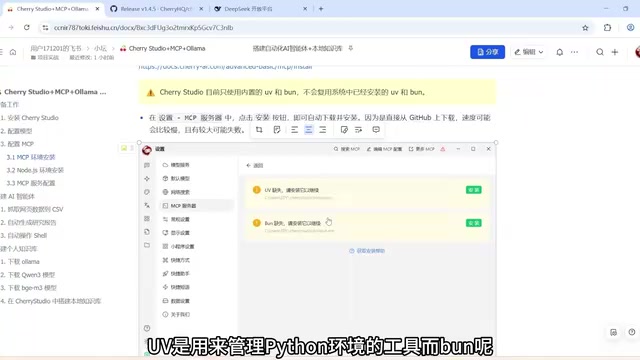
Hands-On: Building Automated AI Agents and a Local Knowledge Base with Cherry Studio + MCP
A hands-on guide to configuring MCP servers in Cherry Studio with DeepSeek V3 for file and web automation, plus a private local knowledge base using Ollama and bge-m3.

The Most Comprehensive WorkBuddy Tutorial on Bilibili: Master Automated Office Work and AI Creation from Scratch
A 426-episode WorkBuddy beginner tutorial on Bilibili covers automated office work and AI content creation. This article analyzes WorkBuddy's advantages as a domestic alternative to Codex, its curriculum, and learning path to help you go from beginner to expert and boost productivity.
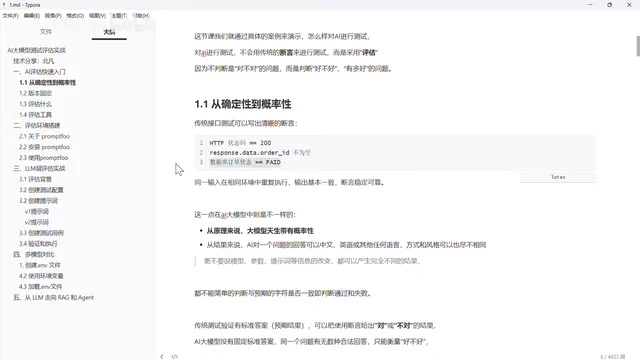
Three Stages of AI LLM Testing: The Testing Transformation from Assertions to Evaluations
AI LLM testing is shifting from assertions to evaluations. This article outlines the three-stage evolution—testing with AI, alongside AI, and AI itself—and explains why probabilistic outputs defeat traditional assertions, covering version pinning, three evaluation layers, and Promptfoo tool selection.