The Dark Answer to the Fermi Paradox: Civilizations Trapped in Cycles of Destruction and Rebirth
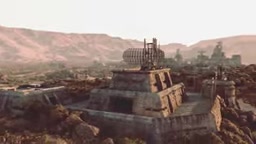
Civilizations may not be absent—they may be trapped in the cradle by repeated collapse and rebuilding, never accumulating enough time for interstellar expansion.
The Fermi Paradox asks why the universe is so silent. One often overlooked explanation: completely exterminating an intelligent species is far harder than imagined; nuclear war, pandemics, and climate collapse usually destroy only the current civilization, not the species itself, and survivors rebuild with knowledge. The real difficulty is that for cyclical collapse to be a valid answer to the Fermi Paradox, some mechanism must repeatedly interrupt civilizations before they can accumulate enough capability to take root among the stars. Isolated colonies lack Earth's support network; a broken supply chain may be lost forever. The Moties model shows the most terrifying cycle: a civilization remembers, plans, yet remains trapped by systemic constraints. Humanity's long-term redundant thinking may be the key to breaking the cycle.
The Fermi Paradox asks "where is everybody"—the universe looks so old and vast that intelligent life should be everywhere, yet we've had our ears to the sky for over half a century and heard nothing but static. One often overlooked explanation: civilizations aren't absent—they're trapped in cycles of rise, collapse, and rebuilding, never accumulating enough time to leave the cradle.
Another Reading of the Great Silence
The Milky Way is over ten billion years old, and Earth is young by comparison. Even if an intelligent civilization arises only once every few million years, by now there should be hundreds or thousands of them expanding, building, and broadcasting signals. Yet wherever telescopes point, what comes back is silence.
When physicist Enrico Fermi casually posed the question over lunch, it became the hardest contradiction in astrobiology to sidestep. The common answer is that civilizations are short-lived—nuclear war, pandemics, climate collapse burn themselves out. But the video's author offers a more intriguing correction: truly exterminating a species is far harder than imagined; what happens easily is civilizations being repeatedly interrupted and restarted.
The Fermi Paradox was proposed by physicist Enrico Fermi in 1950, originating from a lunchtime conversation with colleagues at Los Alamos about alien civilizations and faster-than-light travel. Its core contradiction: the universe is about 13.8 billion years old and the Milky Way about 100,000 light-years across; by probability estimates, intelligent civilizations should have appeared multiple times and developed interstellar colonization capabilities, yet humans have found no conclusive evidence. The paradox is not a strict scientific theorem but a heuristic question that has spawned many explanatory frameworks such as the Drake Equation, the Dark Forest hypothesis, and the Rare Earth hypothesis. It is a central topic in astrobiology and the Search for Extraterrestrial Intelligence (SETI).
Extinction Is Hard, Replacement Is Easy
Popular fears of nuclear winter often overestimate physical reality. Spread 50,000 nuclear warheads across Earth's 50 million square miles of land, and you average one per thousand square miles; the residual radioactive material, at about 0.1 kg per square mile, brings extra radiation of roughly 0.1 millisieverts per year, while the global average background dose is 2.4 millisieverts. Isotopes also settle with rain and get buried in soil. Plutonium-239 has a half-life of about 24,100 years—a long time for humans, but merely an instant in the million-year collapse cycles of alien species.
In other words, nuclear war can destroy "this current civilization," not "this species." The survivors of the worst catastrophes are often precisely those best at survival—they know what radio is, and can dig manuals and parts out of the rubble. Collapse is replacement, not erasure. An AI uprising might directly inherit infrastructure; a genetically modified subspecies might overthrow its creators while keeping cities running; uplifted animals might take over Earth as successors. The torch changes hands, but rarely goes out completely.
This logic, in turn, poses a problem for the Fermi Paradox: if species are extremely hard to wipe out completely, then either intelligent life is inherently rare, or interstellar travel is truly extremely difficult. Because one civilization's end is often the next one's beginning—as long as someone can do it, sooner or later someone will.
Why the Cycle Might Be a Doom Loop
What really blocks this explanation is the timescale. A thousand-year dark age is catastrophic for those experiencing it, but nearly zero for the galaxy. Even ten thousand or a hundred thousand years is not enough to explain the silence, as long as the species eventually rebuilds.
For the cycle to truly answer the Fermi Paradox, there must be some mechanism that repeatedly brings disaster before any single cycle can accumulate the ability to "take root elsewhere." The video offers an apt analogy: the Norse settlements in Greenland. Habitable by Earth standards, they were still fragile in the face of cold spells; when support broke, the colony withered, and centuries later newcomers reoccupied the ruins—the cycle repeating.

Isolation in space is even more lethal. A Mars colony, lunar base, or interstellar ark lacks Earth's "pressure relief valve"—where one region has trouble, others can help. In space, a broken supply chain is permanent, and once specialized skills are lost, it may take generations to recover.

The Norse settlements in Greenland refer to two main settlements (the Eastern and Western Settlements) established around 985 AD by Norse immigrants led by Erik the Red on the island of Greenland. At their peak, the population was about 2,000 to 3,000, living by herding, hunting walrus, and trade. Between the 14th and 15th centuries, due to multiple factors—climate entering the Little Ice Age, declining demand for walrus ivory, reduced contact with mainland Norway, and overexploitation of resources—the settlements gradually declined and eventually disappeared. This case is often used to discuss the vulnerability of isolated societies under environmental and supply-chain stress, highly similar to the situation of space colonies lacking external support.
Knowledge Can Persist, but the Scaffolding Is Hard to Rebuild
Collapse rarely means knowledge is completely forgotten. The formula for Greek fire was lost, but the chemistry of incendiaries was not; we can't say exactly how each stone of the Great Pyramid was placed, yet we are fully capable of building equivalent structures. What is lost is the recipe, the craft, the supply chain—not metallurgy, chemistry, and the scientific method itself.
The truly fragile things are scale and support systems. Anyone can look up the principles of making chips, but without cleanrooms, rare elements, lithography equipment, and global supply chains, it remains a dream. Civilization doesn't forget how to make things; the scaffolding beneath its feet collapses.
Therefore, a self-sustaining interstellar colony with enough industrial depth is itself a "seed" for civilizational restart. Once a colony can build another colony, the logic changes completely: one world's collapse does not equal a species reset. For a cyclical apocalypse to hold, all branches must be struck down before they reproduce, or there must be a failure mode that can cross interstellar distances and hit all colonies simultaneously—which almost implies the existence of faster-than-light communication or travel.
Greek fire was an incendiary weapon used by the Byzantine Empire around the 7th century, reputedly able to burn on water and used in naval battles to defeat Arab fleets. Its exact formula is lost to this day; it may have contained petroleum distillates, sulfur, and saltpeter. This case illustrates that knowledge has two layers: basic scientific principles (combustion chemistry) tend to persist, while specific craft recipes, supply chains, and operational traditions are easily lost amid turmoil. Similarly, the details of Roman concrete's formula were once lost, though modern concrete technology far surpasses ancient methods. This distinction is crucial for understanding the difficulty of rebuilding after civilizational collapse.
The Moties Model: Knowing the Cycle but Unable to Escape
The Moties, created by Larry Niven and Jerry Pournelle in The Mote in God's Eye, are the most powerful fictional example of cyclical collapse. Their reproductive drive explodes, forcing constant expansion, yet they are trapped in an impassable region of space; each time they reach their resource limit, war breaks out, civilization collapses, rebuilds, and repeats.
What makes the Moties terrifying is not that they collapse, but that they remember, they plan, and they still cannot escape. Each cycle builds to just the height where it will fall, and each time the available resources are less than the last.
This offers a grim perspective on the Fermi Paradox: many civilizations are not destroyed but repeatedly dragged back to square one by their own growth patterns, ecological overshoot, and cultural rigidity. The constraints are biological, ecological, systemic—not simple stupidity.
Larry Niven is an American hard science fiction writer known for Ringworld; Jerry Pournelle was an American science fiction and fantasy writer; the two collaborated on several works. The Mote in God's Eye, published in 1974, is a novel co-authored by the two, telling the story of an alien race, the Moties, trapped within a special region of space. The Moties have an extremely high reproductive rate and must constantly expand, but are confined by an impassable boundary; each time they reach their resource limit, war breaks out and civilization collapses, then rebuilds, repeating the cycle. This setting is often cited as a literary example that "intelligent civilizations may still be trapped to death by systemic constraints."
Choosing Silence and Self-Editing
Beyond passive collapse, there is the possibility of civilizations actively withdrawing. The "Dark Forest" hypothesis holds that civilizations hide to avoid hostility; but even without alien threats, a species with nuclear arsenals, AI, climate engineering, and synthetic plagues might realize the cost of error is too high and actively contract.

Other civilizations might sink into virtual reality or exist in non-biological forms, leaving no traces we can recognize. The result: intelligent life is not absent—it has simply edited itself out of visibility.
Signals Fade, Ruins Linger
There is also an unavoidable temporal mismatch. A civilization may broadcast for only a few centuries, while signals must cross thousands of light-years. True interstellar communication is more likely to use power-saving narrow-beam relays and highly compressed signals—and compression, by its nature, removes patterns, making it look like noise.
So a galaxy may be full of civilizations, yet they are out of phase: everyone is talking, but never at the same time or on the same channel. A room full of monologues, not a single conversation.
Radio silence is easy to explain, but physical ruins are harder. If a civilization mines asteroids, builds habitats, and terraforms a galaxy for thousands of years, those machines and landscapes will outlive the civilization itself. We currently have almost no ability to identify alien archaeological traces around distant stars, so "no abandoned habitats found" proves little. But this gives the hypothesis a testable future: if better telescopes begin to find dead industrial galaxies and inert megastructures, cyclical collapse becomes more convincing; if everything is clean everywhere, the claim that "civilizations always collapse" becomes increasingly hard to sustain.
Can We Break the Cycle?
Humans have an unusual trait: we are obsessed with the past and future, write warnings, build seed vaults and redundant systems, and repeatedly simulate apocalyptic scenarios through fiction. This instinct for long-term thinking may be the key to breaking the cycle.
To break the hypothesized cycle, we need to value endurance as much as growth, scatter seeds across the stars and accept that some will fail, cultivate institutions that preserve knowledge and adaptability rather than just technology, and refuse to treat collapse as inevitable. Collapse is common—locally, even a good thing that brings change; extinction is another matter, requiring effort or astonishing indifference.
Stay curious, and maintain diversity in thought, geography, and technology—that is how we leave resilience for ourselves and those who come after. Even if we fall, we leave a light—perhaps faint, perhaps flickering, but still visible to those who follow. Civilizations rise and fall, but the story need not end there; it only means the next chapter is still waiting to be written.
One-line Summary
Civilizations may not be absent—they may be trapped in the cradle by repeated collapse and rebuilding, never accumulating enough time for interstellar expansion.
Paragraph Summary
The Fermi Paradox asks why the universe is so silent. One often overlooked explanation: completely exterminating an intelligent species is far harder than imagined; nuclear war, pandemics, and climate collapse usually destroy only the current civilization, not the species itself, and survivors rebuild with knowledge. The real difficulty is that for cyclical collapse to be a valid answer to the Fermi Paradox, some mechanism must repeatedly interrupt civilizations before they can accumulate enough capability to take root among the stars. Isolated colonies lack Earth's support network; a broken supply chain may be lost forever. The Moties model shows the most terrifying cycle: a civilization remembers, plans, yet remains trapped by systemic constraints. Humanity's long-term redundant thinking may be the key to breaking the cycle.
Related articles

Expected Volume of Two Intersecting Spheres: A Geometric Probability Puzzle
A geometric probability puzzle: two unit spheres intersect randomly; find the expected volume of their intersection. This article explains the problem setup, probabilistic modeling, and the integration framework—a great challenge for math enthusiasts.

iPhone Duo Foldable: A Step Back for Vertical Video, or a Return to Landscape?
YouTube analysis says the iPhone Duo foldable's identical outer/inner aspect ratios crop vertical video into a square, hurting the experience. If the Duo catches on, landscape video may return.

WorkBuddy Complete Beginner's Guide: A Full Breakdown of the Interface and Features, from Getting Started to Hands-On Practice
How to use Tencent WorkBuddy? Based on an ultra-detailed Bilibili tutorial, this article breaks down WorkBuddy's interface layout, workspace, assistant, projects, experts, skills, MCP connectors, scheduled tasks, and knowledge base to help beginners quickly get started with the AI office workbench.