The AI Data Center Boom Is Colliding With Cities Scarred by Heavy Industry

AI's data center expansion is colliding with post-industrial communities, sparking environmental justice debates nationwide.
The generative AI boom is driving a data center construction surge, with siting logic pushing these facilities into post-industrial communities that already have industrial land and power infrastructure. Philadelphia's case shows that neighborhoods historically burdened by refinery pollution are being asked to host high-energy, high-water infrastructure once again. Opposition centers on rising electricity prices, water competition, limited local jobs, and lack of meaningful public participation — escalating from isolated cases into a nationwide movement raising fundamental environmental justice questions.
The Other Side of the AI Frenzy: Growing Tensions Between Data Centers and Cities
The generative AI explosion is driving an extraordinary surge in demand for computing power — and the physical infrastructure behind that power, data centers, requires enormous amounts of land, electricity, and water. Behind this wave of capital and technology, a sharpening social conflict is coming into focus: data center siting decisions are increasingly clashing with urban communities already bearing deep wounds from heavy industry.
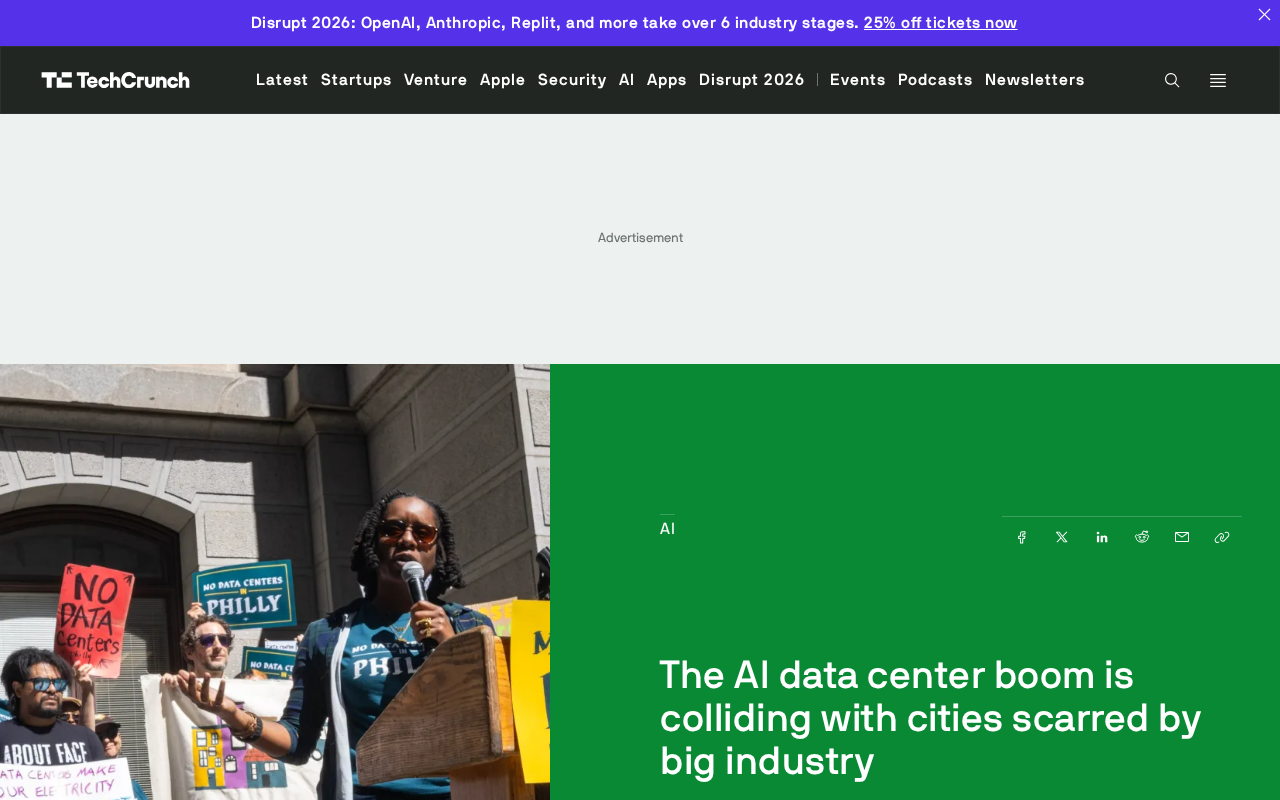
Philadelphia offers a telling example. Local officials reportedly proposed building a data center in a neighborhood already severely impacted by a now-shuttered oil refinery. For residents who have long endured industrial pollution, health risks, and economic decline, a massive new energy-hungry infrastructure project is hard to see as a straightforward development opportunity.
Why Scarred Cities Become Targets
Data center operators typically favor sites with ready-made industrial land, existing power infrastructure, and relatively permissive regulatory environments. These conditions are concentrated precisely in older industrial cities and post-industrial communities that once depended on heavy manufacturing.
Land left behind by oil refineries, chemical plants, and power stations usually comes with large-scale power capacity and ample space, making conversion relatively cost-effective. For companies, this is a rational business decision. But for local residents, it can mean once again living in the shadow of large industrial facilities — except this time, smokestacks have been replaced by server halls and cooling towers.
This pattern raises deep environmental justice concerns: why do communities that have already been sacrificed historically keep bearing the costs of each new wave of infrastructure expansion?
Environmental Justice is a policy and social movement concept that emerged in the United States in the 1990s. Its core argument is that communities of color and low-income communities have historically borne a disproportionate burden of industrial pollution, hazardous waste sites, and high-risk facilities, while being systematically excluded from policy decisions. The EPA has incorporated environmental justice into its federal policy framework, requiring assessments of cumulative impacts on vulnerable communities during project approvals. In the context of data center siting, critics invoke this framework to argue that when the same communities are repeatedly selected to host high-energy, resource-intensive infrastructure, this is not a coincidental market outcome but a continuation of structural inequality — local residents often lack the legal resources and political influence to block projects, making "already-scarred communities" the path of least resistance for capital.
A Nationwide Wave of Resistance
Reports indicate that protests against data center construction have grown into a nationwide public movement, with Philadelphia representing its latest flashpoint. Residents and activists have centered their concerns around several key issues:
- Energy consumption: Large data centers draw enormous amounts of electricity, potentially driving up regional electricity prices and straining the grid.
- Water stress: Cooling systems' water demands can compete directly with local residential water supply.
- Environmental injustice: Projects tend to land in vulnerable communities, compounding existing inequalities.
- Questionable job quality: The long-term local employment created by data centers is relatively limited and disproportionate to the resources they consume.
This opposition is not simply a case of "not in my backyard" — it represents a systemic challenge to the entire model of AI infrastructure expansion.
The NIMBY (Not In My Back Yard) effect typically refers to residents accepting the social necessity of a certain type of facility while opposing its placement near their homes, a stance often characterized as self-interested. The article specifically notes that current resistance to data centers has moved beyond NIMBY: opponents are not merely objecting to the facilities themselves, but questioning the entire decision-making logic behind AI infrastructure expansion — who benefits, who bears the costs, and whether the process is fair and transparent. This distinction carries real weight in legal and policy terms: pure NIMBY arguments often struggle to gain traction in environmental review processes, while claims rooted in environmental justice, cumulative health risks, and procedural fairness can trigger stricter scrutiny and receive greater support in courts.
A Structural Conflict Between AI Growth Logic and Community Interests
At its core, this collision reflects a structural tension between the logic of exponential growth driving the tech industry and the sustainable development aspirations of local communities. Tech companies need to deploy massive computing capacity rapidly to support AI model training and inference — and that urgency often conflicts with the careful assessment, public participation, and long-term planning that communities need.
When a community that has already endured refinery pollution is selected again, the question is no longer just "do we want a data center?" It becomes: "who decides, who bears the burden, and who benefits?" If the decision-making process lacks transparency and meaningful resident participation, data centers are easily perceived as yet another externally driven project that offloads its costs onto local people.
The resource consumption of data centers typically exceeds public intuition. On electricity alone, a large hyperscale data center can consume hundreds of megawatts annually — equivalent to the combined usage of hundreds of thousands of households. Training a single large language model can consume an estimated several times what an average household uses in years. On the cooling side, air cooling and liquid cooling are the two dominant approaches; the latter is more efficient but can consume millions of gallons of fresh water per day. In regions with water scarcity or limited grid capacity, these numbers translate directly into regional energy price increases and water supply pressure — not just abstract figures in corporate carbon reports. It is this concrete, quantifiable resource competition that gives community-level opposition its tangible, quality-of-life foundation.
Trends Worth Watching
As AI applications continue to expand, data center siting disputes will almost certainly play out in more cities. Likely battlegrounds ahead include: stricter environmental impact assessments, community benefit agreements, mandatory integration of renewable energy and water recycling technologies, and stronger local government authority in the approval process.
Philadelphia's conflict is a reminder to the industry: AI has a real physical footprint. It is not an abstract concept floating in the cloud — it lands concretely in specific neighborhoods, on specific plots of land, and among specific communities of people. Finding a balance between scaling computing capacity and protecting community rights will be an unavoidable challenge for AI infrastructure development going forward.
Related articles
Free DeepSeek V4.1 Flash via DSH: Bulk Point Collection & International WorkBuddy Tested
DSH project update tested: WorkBuddy now offers 100 points per claim, rate limits raised beyond 80M tokens with faster resets, and international WorkBuddy supports free Hunyuan 4 and DeepSeek V4.1 Flash.
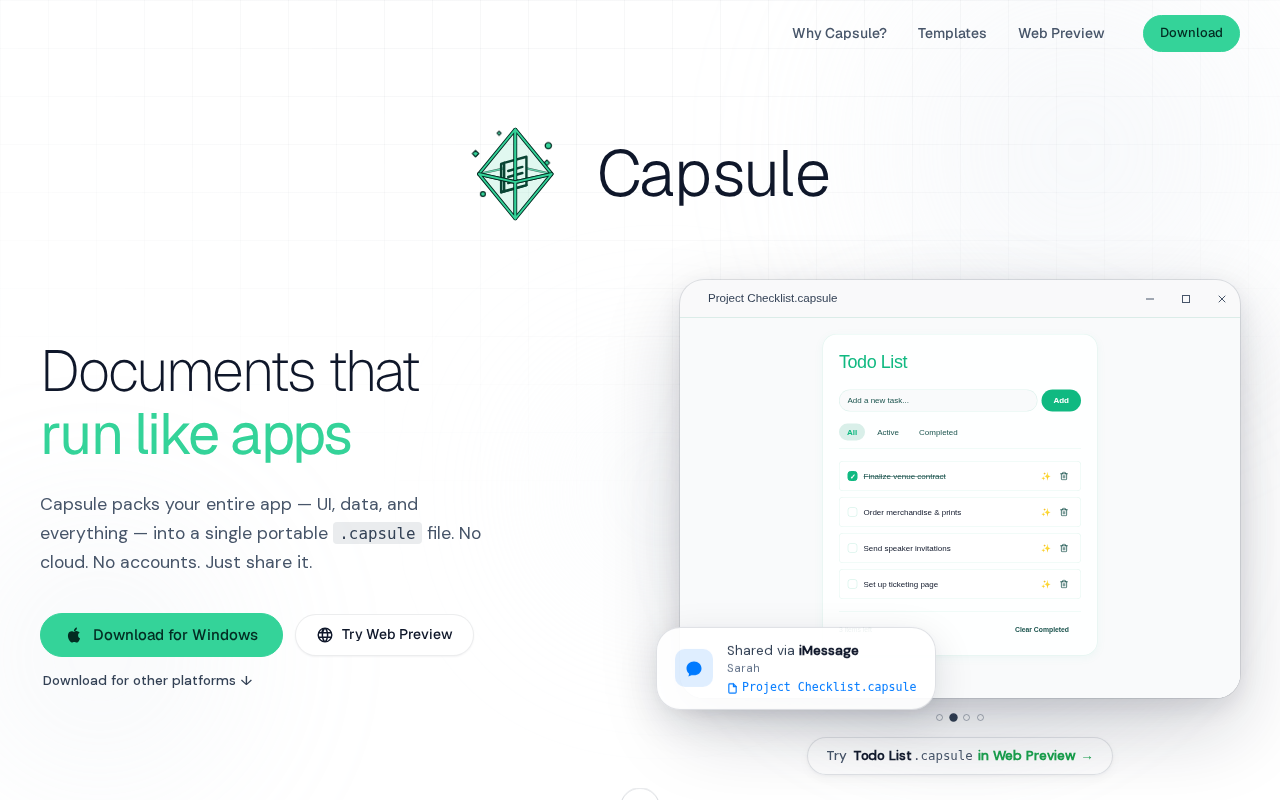
Capsule: Pack Web Apps and Data into a Single SQLite File
Capsule is a Rust/Tauri 2.0 tool that packs HTML web apps and data into a single SQLite file — privacy-first, local storage, portable sharing, with AI support.

DSH-SUBAGENT-UI Plugin: The Ultimate Sub-Agent Manager for DeepSeek Harness
DSH-SUBAGENT-UI is a DeepSeek Harness browser plugin offering sub-agent overview, search, local categorization, and completion snapshots — install with one command.