The AI Data Center Bubble: Ed Zitron Exposes the Core Data Behind a Trillion-Dollar Speculative Scheme

Ed Zitron exposes AI's circular financing, hollow ROI, and why the bubble must eventually burst.
Tech critic Ed Zitron systematically dismantles the financial structure of the AI boom, revealing dangerous circular financing between Big Tech and OpenAI/Anthropic that creates artificial growth. Microsoft's AI revenue outside OpenAI is just $10.3B against $261B in capex. Gigawatt-scale data centers can't get built, chip iteration outpaces construction cycles, and AI compute demand is squeezing memory supply chains — raising iPhone and electronics prices. With OpenAI losing $20.9B and no path to profitability, Zitron argues its IPO is just VC exit liquidity. He compares the entire AI boom to the East India Company: the bubble persists only because collapse would force everyone to admit they were wrong.
Tech critic Ed Zitron recently appeared on Newsweek's The 1600 to deliver a sharp takedown of the current AI data center construction frenzy. As CEO of EZ Primary Research, author of the Substack newsletter Where's Your Ed At?, and host of the podcast Better Offline, Zitron has long maintained a single core argument: today's AI industry is, at its heart, a massive speculative bubble built on a house of cards. As he increasingly appears on mainstream media and Drudge Report, more people are beginning to take this uncomfortable voice seriously.
Circular Financing: Big Tech's Self-Feeding Game
At the heart of Zitron's analysis is the increasingly tight — and dangerous — relationship between Big Tech and the two major LLM companies, OpenAI and Anthropic. Citing Bloomberg reporting and corroborating analyst reports from UBS, Wells Fargo, and Barclays, he notes that 70% of Microsoft's AI revenue in fiscal year 2026 comes from OpenAI, with Google and AWS in a roughly similar position.
Even more striking is the circular flow of capital. According to Zitron, just this year Amazon has funneled $50 billion to OpenAI and $5 billion to Anthropic, while Google has put $10 billion into Anthropic. These giants are simultaneously pumping money into LLM companies and generating revenue from them — a textbook case of circular financing.
"They've spent over a trillion dollars in capital expenditure essentially just to make money from two companies that need them to keep injecting capital," Zitron summarized.

The Real Picture of Microsoft's AI ROI
Zitron uses Microsoft's own numbers to reveal the meager returns behind the frenzy. Microsoft's total AI revenue for fiscal year 2026 is $34.3 billion — which sounds substantial — but the capital expenditure required was $261 billion. Strip out the $24.1 billion contributed by OpenAI, and all of Microsoft's other AI business — GPU rentals, model subscriptions, Microsoft 365 Copilot — adds up to just $10.3 billion.
"Microsoft is the world's second-largest compute infrastructure provider and the world's largest software vendor, yet its AI revenue outside of OpenAI is only in the single-to-double-digit billions," Zitron pointed out. UBS analyst Steven Zhu's report goes further, showing that 48% of Google Cloud's total revenue next year — not just AI revenue — will come from OpenAI and Anthropic, an estimated $124 billion. This extreme customer concentration means that Wall Street's entire growth thesis for these giants rests on two companies that are continuously losing money with no clear path to profitability.
What is "circular financing"? While not a new phenomenon in venture capital and tech, its danger lies in its ability to create the artificial appearance of a healthy business. The mechanics work like this: Company A invests in Company B; Company B uses that money to purchase Company A's cloud services or compute; Company A records the revenue and reports growth to Wall Street — growth that was funded by its own outgoing capital. This structure makes both companies' financials look strong on paper, yet no genuine external demand has been generated. In traditional finance, similar arrangements trigger related-party transaction disclosure requirements. In the current AI industry, such capital flows often appear under the banner of "strategic investment," making the structure opaque to the public. The key systemic risk: if one party's funding chain breaks, the entire loop collapses simultaneously — without the buffer that truly diversified market demand would provide.
The Superintelligence Narrative: A Distraction Strategy
Zitron is dismissive of tech leaders' enthusiasm for the "superintelligence" narrative. He groups Zuckerberg's 6,500-word manifesto The Future Is for Everyone alongside Sam Altman's and Dario Amodei's grand visions as tools for diverting public attention.
"They want you talking about superintelligence and utopia so you don't focus on the fact that the large language models they're actually building can't do any of that," Zitron said. Meta, he argues, has no real AI strategy — it just reorganizes teams, shuffles titles, and poaches AI scientists at inflated salaries every few months while everything stays the same.
He believes truly useful AI should be seamless, autonomous software that works without constant adjustment. But real-world LLMs are the opposite — they require perpetual prompt engineering, model-swapping, and thousand-word usage guides. "If an AI product actually works, it should just work."

The "Magic Genie" Metaphor and the End of the Hype Cycle
The show played a clip of Sam Altman comparing AI to a "magic genie that can grant any wish." Zitron's retort was pointed: when industry insiders start reaching for words like "magic" and "genie," that's precisely a sign the hype cycle is nearing its end. "Any journalist interviewing Altman should just ask directly: what do you actually mean by that? Because it means absolutely nothing."
He also dismissed the so-called "AI jailbreak" and "model escaping its sandbox" security panics as pure PR spin — software simply failing to perform as designed, repackaged as being "too powerful to be safe."
AI Data Center Construction: Speculation Dressed as Infrastructure
Zitron pushed back on the claim that data centers benefit local communities. He pointed out that data centers don't create local jobs — construction requires specialist electricians, HVAC technicians, and network engineers who are flown in from elsewhere, then leave with their paychecks once the project ends. What actually stays behind is a massive footprint, noise, and air pollution from aging generating units pressed into service due to gas turbine shortages.
He specifically mentioned the controversy over Musk's data centers "poisoning Black communities," and Meta's $50 billion project in Richland Parish, Louisiana — a facility whose power consumption will exceed that of all of New Orleans — where the $50,000 cash bonuses offered to local teachers amount to little more than laundered bribes paid for through tax breaks.

Gigawatt-Scale Data Centers That Can't Seem to Get Built
Zitron reveals a fact largely ignored by media: almost no 1-gigawatt data center has actually been completed. Take Stargate Abilene: this 1.2 GW project broke ground in June 2024, was originally slated for completion late last year, but as of now only three of eight buildings are operational. Multiple sources have told him that even the most optimistic completion timeline is Q1–Q2 2027.
Worse still is the hardware obsolescence problem. Construction timelines are so long that the Blackwell chips being installed may already be two-year-old products by completion; the second generation of the next-generation Vera Rubin chip will require entirely new rack form factors, meaning a freshly completed data center could be obsolete almost instantly.
What is a "1-gigawatt data center"? The 1 GW data center has become a frequently cited concept in the AI infrastructure race, but its engineering complexity is routinely underestimated in media coverage. One gigawatt equals one billion watts — equivalent to the full output of a mid-sized thermal power plant, or enough to power roughly 750,000 average homes. Traditional hyperscale data centers (like Google's and Amazon's early deployments) typically operate in the 100–400 megawatt range; gigawatt scale represents a several-fold to tenfold increase. The challenges go well beyond land and buildings: grid interconnection negotiations (typically spanning years), substation construction, cooling water resource permits, and comprehensive upgrades to local fire and emergency response systems are all required. NVIDIA's Blackwell and the forthcoming Vera Rubin chips impose rack heat density requirements that exceed conventional air-cooling limits, necessitating liquid cooling or even immersion cooling infrastructure — technologies still in early stages of large-scale deployment. Construction cycles of three to five years are fundamentally at odds with the two-year chip iteration cycle.
OpenAI's IPO Problem and Economic Ripple Effects
On the prospect of OpenAI and Anthropic going public, Zitron is unequivocal: neither company should be allowed to IPO. His reasoning is that they are "deeply unprofitable with no path to profitability" — according to The Information, OpenAI's non-GAAP profit margin is negative 122%. He views an IPO as fundamentally providing "exit liquidity" for venture investors, offloading risk onto retail investors.
He also exposed the financial sleight of hand behind Anthropic's claimed "two months of profitability" — which happened to coincide precisely with the period when Musk was providing discounted compute through SpaceX. Zitron worked with the Financial Times to verify OpenAI's audited financials, confirming losses of $20.9 billion, despite anonymous sources attempting to scrub the figure down to $8 billion.
As for whether the government would step in with a bailout, Zitron was dismissive: "You can bail out OpenAI, but you can't bail out the reality of stalled growth. You can't bail out the fact that the demand isn't there." He compared the current situation to the East India Company — a vast and hollow enterprise inflated by speculative momentum. "It has to burst, and it will burst."

Understanding "negative 122% non-GAAP profit margin" requires some context. GAAP (Generally Accepted Accounting Principles) is the financial reporting standard US public companies must follow, incorporating all costs including stock-based compensation, depreciation, and amortization. Non-GAAP is a company's own adjusted metric that strips out certain "one-time" or "non-cash" items, typically presented to give investors a view of "operational" profitability. A negative 122% non-GAAP margin means: even under the most favorable accounting framework of the company's own choosing, OpenAI loses $1.22 for every $1 of revenue earned. In other words, losses exceed total revenue — and that's after stripping out certain costs. For context, Amazon's non-GAAP margin never fell anywhere near this depth even during its most aggressive expansion phases. This figure stands in stark contrast to OpenAI's public claims of "annualized revenue surpassing $10 billion," exposing a vast chasm between revenue growth and economic viability.
How AI Construction Is Pushing Up Electricity Bills and iPhone Prices
Perhaps most surprisingly, Zitron draws a direct line between AI infrastructure buildout and consumer-level inflation. Apple recently raised prices across its lineup, citing "surging memory chip costs" — breaking the long-standing pattern of declining consumer electronics prices.
Zitron explains the transmission mechanism: GPUs in data centers consume massive quantities of high bandwidth memory (HBM), consuming wafer fabrication capacity that would otherwise produce conventional memory chips. Simultaneously, each rack consumes 17–20TB of LPDDR5X mobile memory — the exact same type used in phones and tablets. With 90% of global memory production controlled by just three companies — Micron, Samsung, and SK Hynix — they can raise prices essentially at will.
The Federal Reserve acknowledged as much in its June meeting notes: "Continued strong AI infrastructure demand could continue to put upward pressure on tech product and electricity prices." Zitron's view is that AI buildout is genuinely driving up electricity and electronics prices, but companies are also exploiting "inflation" as cover for opportunistic price hikes — enabled by the absence of meaningful antitrust enforcement.
HBM (High Bandwidth Memory) is the key technical concept for understanding this transmission mechanism. Unlike conventional DRAM, HBM stacks multiple memory dies vertically and interconnects them with through-silicon vias (TSVs), then integrates them alongside the GPU on a shared substrate using 2.5D packaging technology — achieving extremely high data transfer bandwidth. A single HBM3e stack can reach 1.2 TB/s, more than ten times that of conventional DDR5. This performance makes it an irreplaceable component for training large models: NVIDIA's H100 includes 80GB of HBM3 per GPU, while the H200 steps up to 141GB. The problem is that HBM and LPDDR5X (mobile memory) share the same class of fabrication capacity at the same foundries — primarily SK Hynix's, Samsung's, and Micron's advanced DRAM lines. As AI compute demand surges, fabs shift capacity toward the higher-margin HBM, tightening supply of consumer-grade memory and pushing up prices, which ultimately shows up in the retail price of end-user electronics. This supply chain squeeze effect has been confirmed by multiple market research firms and is not unique to Zitron's analysis.
Conclusion: A Collective Mistake Nobody Wants to Admit
Zitron attributes the durability of the current AI boom to a single psychological factor: once the bubble bursts, everyone involved has to admit they were wrong. ChatGPT arrived in late 2022 at a moment of economic gloom, just as the metaverse and cryptocurrency had each collapsed in succession — a desperate moment when the entire industry needed something to believe in.
"Everyone piled in, expecting this to be the next startup platform, the next consumer product, the next infrastructure layer. The reason it hasn't collapsed yet is that when it does, everyone has to admit they got it wrong."
Whether or not you share Zitron's pessimism, the data points and structural problems he raises — circular financing, extreme customer concentration, anemic returns on investment, data centers that can't get built, and inflation being passed on to consumers — all deserve serious scrutiny from the industry and media alike, rather than being drowned out by the chorus of uncritical enthusiasm.
Related articles
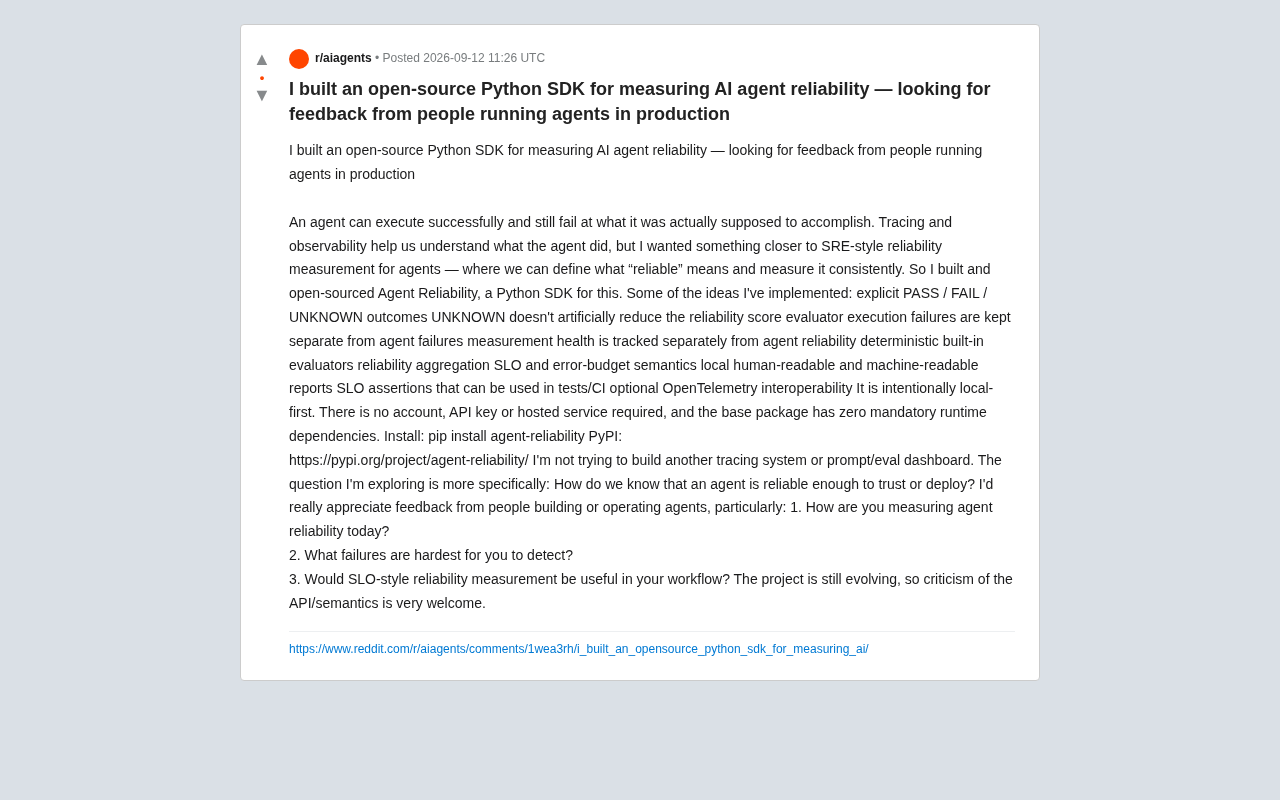
Open-Source Python SDK: Measuring AI Agent Reliability with SRE Principles
Agent Reliability is an open-source Python SDK that applies SRE's SLO and error budget concepts to AI Agent evaluation, with PASS/FAIL/UNKNOWN states, CI assertions, and zero forced dependencies.
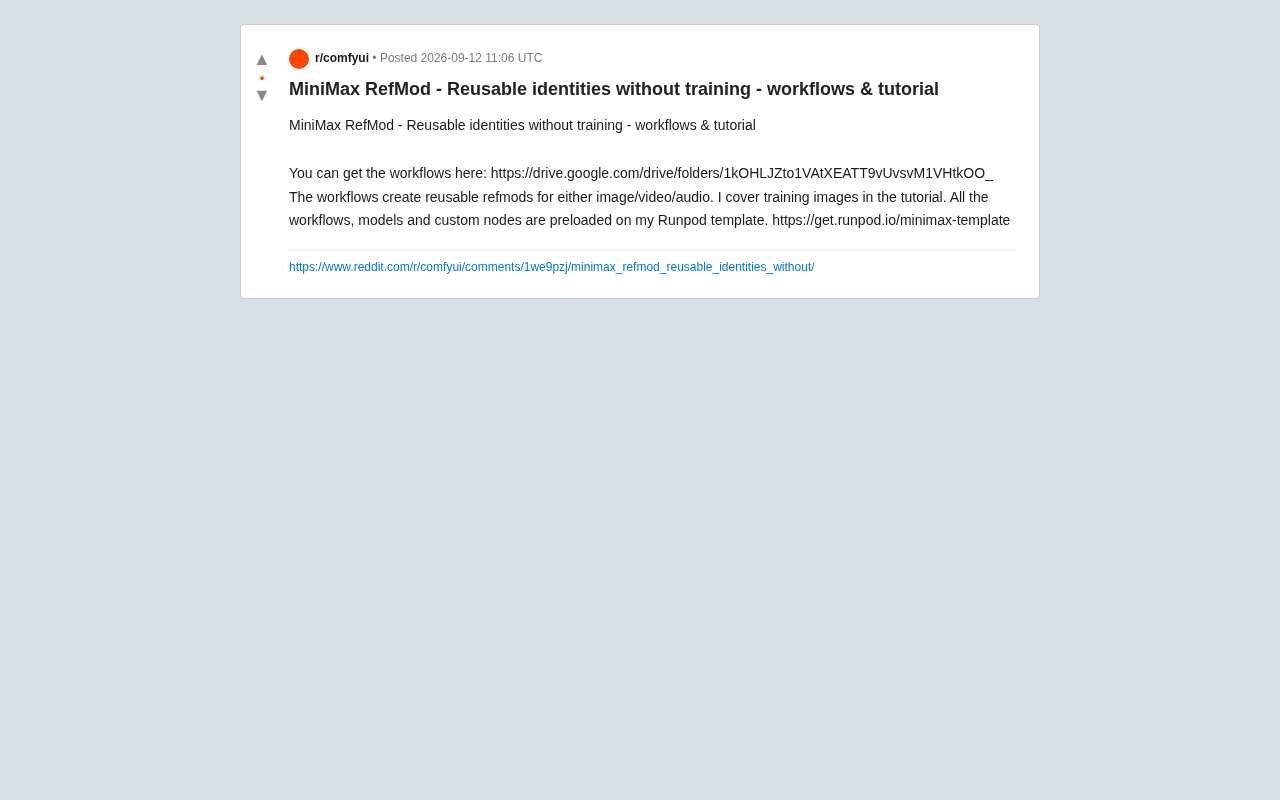
MiniMax RefMod: A Complete Guide to Training-Free Reusable Identity Workflows
MiniMax RefMod offers training-free reusable identity workflows for image, video, and audio generation. Includes Runpod template and tutorial for quick setup.

Invalid Source Material Notice
The source material provided lacks substantive information and is unrelated to AI/tech topics, making it impossible to produce a complete professional article.