The AI Graveyard: Lessons from Failed AI Projects and Startups
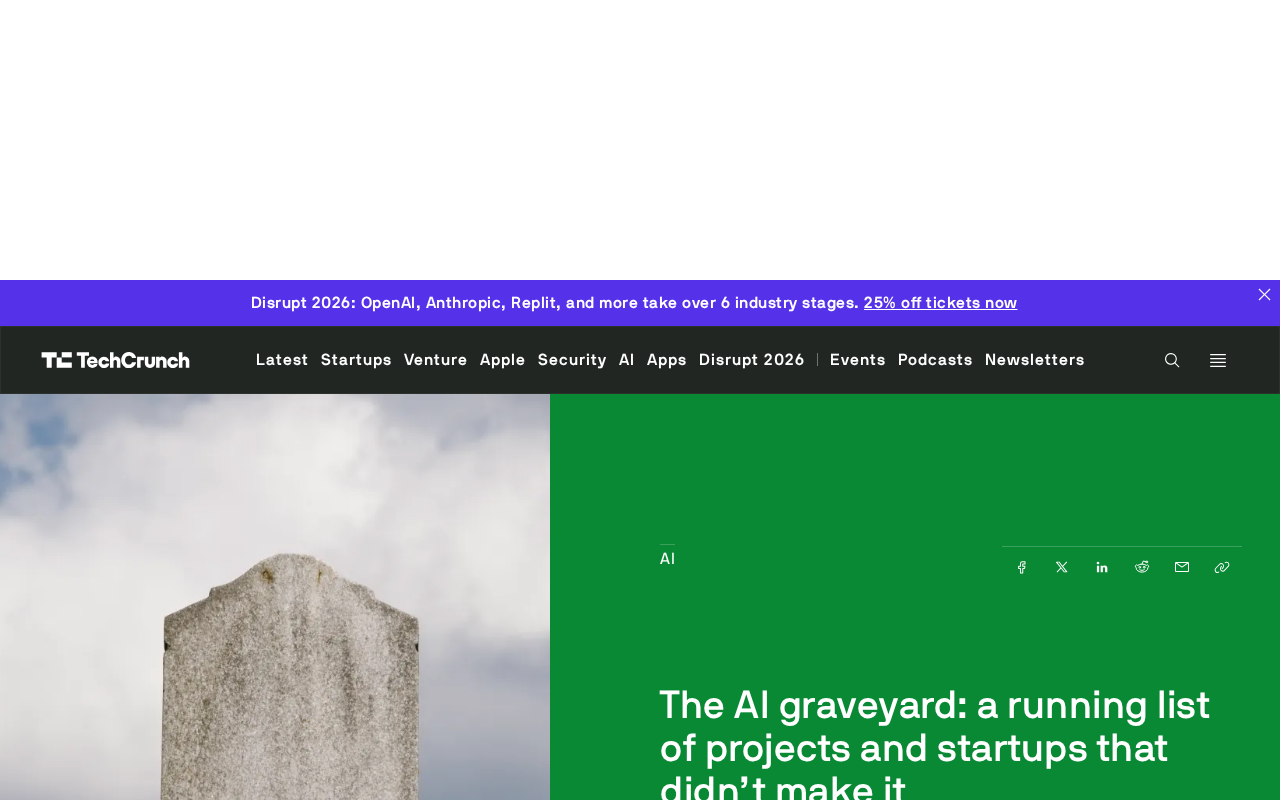
The AI graveyard reveals overpromising, fuzzy business models, and commoditization as the top killers of AI projects.
As the generative AI boom roars on, a quieter parallel story is unfolding: a growing list of AI projects shut down, delayed, or falling short of expectations. Apple's repeated Siri postponements expose how hard it is to integrate frontier models into consumer products; OpenAI's chaotic super app rollout shows that technical leadership doesn't guarantee product success. Three common failure patterns emerge: expectation management collapse, unclear monetization against steep compute costs, and commoditization that wipes out thin-wrapper apps. The AI graveyard is a reminder to founders to focus on real needs and profits, and to investors to stay rational amid the hype.
The Other Side of the AI Boom
While the entire tech industry celebrates the breakthroughs of generative AI, a quieter timeline is unfolding in parallel — one filled with AI projects that have been shut down, indefinitely delayed, or simply failed to meet expectations. From Apple's repeatedly postponed Siri upgrades to OpenAI's chaotic rollout of its so-called "super app," the graveyard of AI failures keeps growing.
These failures are not isolated incidents. They reflect a set of structural problems endemic to the current AI wave: overpromising, insufficient technical maturity, unclear paths to monetization, and an arms-race mentality among tech giants.
Even Giants Stumble
Apple Siri's Long History of Delays
Apple's trajectory in AI is one of the most telling examples. The long-awaited upgrade to Siri's AI capabilities has been delayed multiple times. For a company renowned for the predictability of its product delivery, these repeated postponements reveal the immense pressure Apple faces in the era of large language models — integrating cutting-edge model capabilities in a stable, safe way for consumer products is far harder than shipping a demo.
For a company as committed to user privacy and on-device experience as Apple, delivering a competitive AI experience without compromising its core principles remains an unsolved problem.
The fundamental tension in Apple's AI architecture stems from its "Private Cloud Compute" approach. To honor its privacy commitments, Apple must run large model inference on its own custom-chip servers rather than relying on third-party cloud services like its competitors do. This means Apple must simultaneously clear three hurdles — model capability, chip performance, and privacy compliance — and any delay in one area drags down the entire delivery timeline. Meanwhile, Apple's reliance on third-party models (such as routing complex queries to ChatGPT) has sparked internal debates over brand consistency and user data control. This "on-device first" technical philosophy offers long-term differentiation, but in the short term it has left Apple visibly behind competitors who build directly on top of cloud-based large models.
OpenAI's "Super App" Struggles
Even OpenAI, the company that ignited this wave, has seen the rollout of its "super app" described as chaotic. This serves as a reminder to the industry: having the most powerful model does not automatically translate into great product design or flawless market execution. A vast gap still exists between technical leadership and product success.
Common Patterns Behind the Failures
Looking across this ever-growing list, AI project "deaths" tend to follow a few recurring patterns.
The first is runaway expectation management. Many projects generate enormous hype before launch, and once real-world performance fails to match the marketing, user trust and market patience evaporate quickly.
The second is an unclear business model. A significant number of AI startups can deliver dazzling technical demos but never manage to answer the fundamental question: "Who will keep paying for this?" Sky-high compute costs further compress their margins and survival window.
The third is being squeezed out by incumbents. As the capabilities of foundation models are rapidly iterated and made available cheaply — or even for free — by a handful of large players, many small AI products built around a single narrow feature lose their reason to exist almost overnight.
This phenomenon of being squeezed out by incumbents even has a dedicated industry term: "Foundation Model Commoditization." As companies like OpenAI, Anthropic, and Google open up increasingly powerful base capabilities through low-cost APIs, "wrapper apps" that simply layer a thin interface on top of a foundation model quickly lose their pricing power. This pattern has played out before in the waves of cloud computing and SaaS: as the platform layer matures, it inevitably consumes the middle-layer products that relied purely on platform capability gaps. The vertical AI products that do survive tend to possess real moats — data flywheels (barriers built from proprietary industry data), deep workflow integration (high switching costs), or regulatory and compliance expertise — rather than relying solely on the ability to call a model API.
What This Graveyard Tells Us
Systematically documenting these failures is itself a valuable exercise. It holds up a mirror to the entire industry: AI is not a magic wand that turns everything to gold, and it is subject to the same fundamental rules of product development and business viability as everything else.
For founders, these lessons point toward a pragmatic direction — stop chasing the hottest technical buzzword and instead focus on genuine, sustainable user needs and a clear path to profitability. For investors, they serve as a reminder to maintain rational judgment in the midst of euphoria.
The long-term value of AI is beyond doubt, but the road to realizing that value is littered with projects that won't make it. This graveyard is a record of the inevitable cost this technological revolution must pay.
Related articles
Free DeepSeek V4.1 Flash via DSH: Bulk Point Collection & International WorkBuddy Tested
DSH project update tested: WorkBuddy now offers 100 points per claim, rate limits raised beyond 80M tokens with faster resets, and international WorkBuddy supports free Hunyuan 4 and DeepSeek V4.1 Flash.
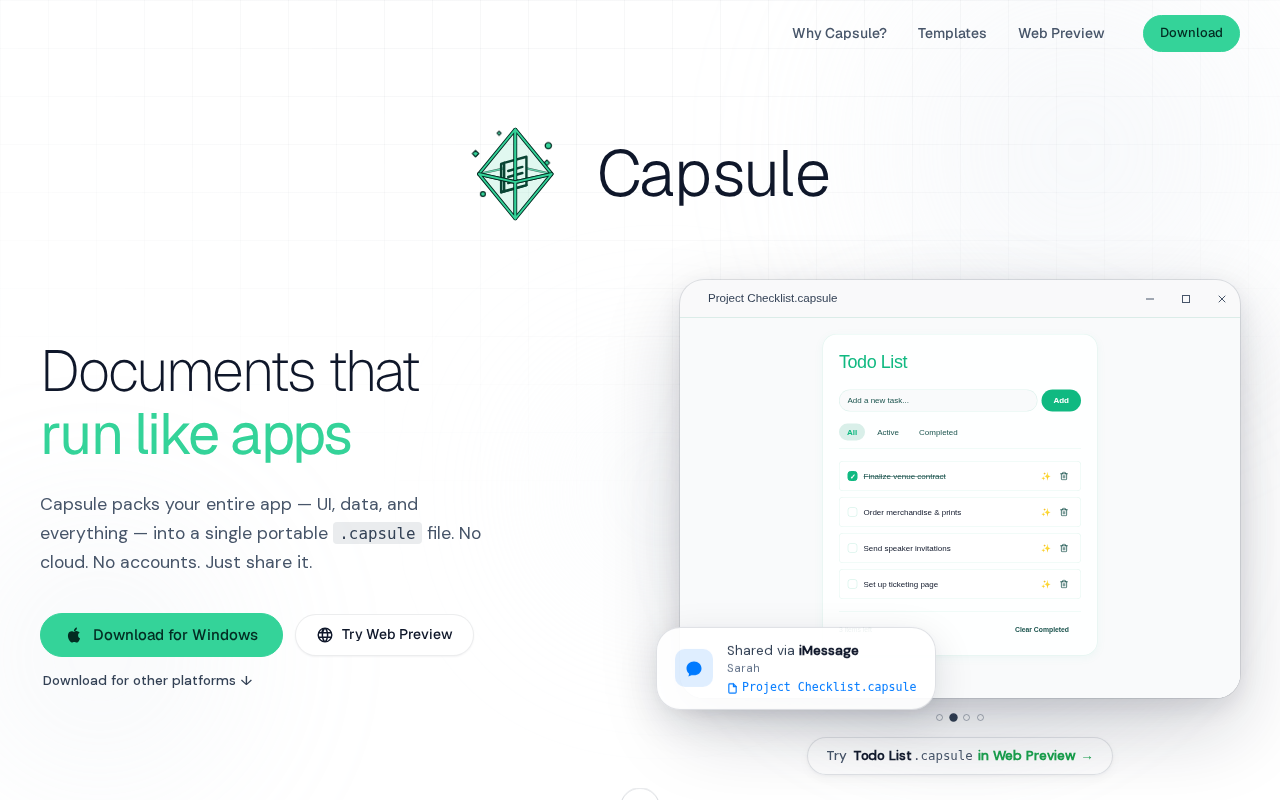
Capsule: Pack Web Apps and Data into a Single SQLite File
Capsule is a Rust/Tauri 2.0 tool that packs HTML web apps and data into a single SQLite file — privacy-first, local storage, portable sharing, with AI support.

DSH-SUBAGENT-UI Plugin: The Ultimate Sub-Agent Manager for DeepSeek Harness
DSH-SUBAGENT-UI is a DeepSeek Harness browser plugin offering sub-agent overview, search, local categorization, and completion snapshots — install with one command.