The AI Model Versioning Crisis: What an Industry Rumor Reveals About Iteration Chaos

A community rumor about a lost AI model version exposes the industry's version management and compliance challenges.
A Reddit rumor about an AI CEO's lost "version 5.6" model checkpoint may be gossip, but it spotlights three real industry pain points: the near-impossibility of reproducing high-performing model checkpoints, the growing compliance burden of regulatory frameworks like the EU AI Act, and the chronic failure of fast-moving teams to systematically preserve model assets.
An Intriguing Industry Rumor
Recently, a Reddit discussion has been quietly circulating among AI practitioners. The rumor claims that the CEO of an open-source coding tool (OpenCode) privately tested a model version codenamed "5.6" during an alleged "regulatory window," and that his lingering attachment to this version surpassed even his regret over losing another project called "Fable 5."
The story itself carries the unmistakable flavor of community gossip, and its authenticity remains unverified. But strip away the drama, and it reflects a very real and widespread pain point in today's AI industry — the chaotic management, preservation, and iteration of model versions. Rather than treating the rumor as fact, this article uses it as a lens to examine the deeper technical and organizational questions it raises.
Why Would Losing a Model Version Be Worth "Getting Depressed Over"?
The Staggering Cost of Model Training
To understand why losing a specific model version is so painful, you first need to appreciate the cost structure of modern large-scale model training. Training a competitive model typically requires millions to tens of millions of dollars in compute, plus months of engineering tuning and data preparation.
When an intermediate checkpoint (like the rumored "5.6") shines during internal testing, it represents three layers of value that are extremely difficult to replicate:
- A hyperparameter combination that's nearly impossible to reproduce: Deep learning training has inherent randomness — re-running training with identical configurations doesn't guarantee identical results. Sources of randomness permeate the entire process: random seeds for weight initialization, the shuffling order of data batches, stochastic noise introduced by Dropout regularization, and non-deterministic floating-point rounding errors that accumulate in distributed training. Even with all random seeds fixed, different hardware or parallelism configurations can introduce subtle deviations that a large model amplifies into significant capability differences. This is why the industry sometimes calls high-performing checkpoints "lottery wins" — their emergence carries an element of chance that simple re-runs can't reliably reproduce.
- A specific data snapshot and training trajectory: A model's final capabilities are tightly coupled to the data version and training step count at which it was trained.
- An intangible "feel": Many developers report that certain versions have real-world usability advantages that standard benchmarks simply fail to capture.
For all these reasons, when a high-performing intermediate version isn't properly preserved, the loss is far greater than "just re-running training."
What Non-Integer Version Numbers Tell Us
A version number like "5.6" itself signals a fast-paced, experimental iteration rhythm. In AI product development, teams often generate a large number of small experimental versions between major releases, and some of these "intermediate states" may actually outperform the final shipped version on specific dimensions.
This raises a classic engineering dilemma: How do you avoid losing those serendipitous high-quality versions in the middle of rapid iteration?
Three Real Issues Behind the Rumor
Issue One: The Version Control Problem in AI Development
Traditional software development has mature version control systems like Git, but managing AI model versions is far more complex than managing code. A complete model version encompasses at minimum:
- Weight files (typically starting at tens of gigabytes)
- Versioned snapshots of training data
- Training configurations and runtime environments
- Evaluation results and benchmark datasets
Tools like MLflow, DVC, and Weights & Biases are working to solve this problem. MLflow, open-sourced by Databricks, provides an integrated platform for experiment tracking, model registry, and deployment. DVC borrows from Git's design philosophy and is purpose-built for versioning large files and datasets, allowing model weights of hundreds of gigabytes to be tracked via pointers. W&B is known for its intuitive visualization interface and is the go-to choice for many research teams.
However, these tools share a common weakness: they depend on teams proactively and consistently logging metadata. Under the pressure of rapid iteration, engineers often skip this step, creating a management gap where the tools exist but go unused. If the rumor is true, it illustrates that even a team's own leader can lose critical work to such oversights.
Issue Two: Compliance Concerns Around "Regulatory Windows"
The detail about "testing during a regulatory window" touches on one of the most sensitive topics in the AI industry right now — compliance and regulatory pressure. Global AI regulation is currently in an accelerating legislative phase: the EU AI Act came into force in 2024, imposing differentiated compliance requirements based on risk level, with high-risk applications requiring stringent transparency and explainability reviews. The United States primarily relies on executive orders and voluntary commitment frameworks, though multiple legislative proposals are advancing.
For foundation model developers, the window of any "regulatory gap" is closing fast. Requirements around model capability evaluation, safety testing reports, and training data provenance are steadily moving from industry self-regulation to legal mandate — making comprehensive model version documentation a potential compliance obligation, not just good engineering practice.
Whether or not the story is true, it reflects a widespread anxiety among practitioners about regulatory uncertainty.
For open-source tools, the challenge is especially complex: open-source implies greater transparency requirements, yet it also means models may be used in ways developers cannot control. How to strike the right balance between innovation velocity and compliance is a question no AI team can avoid.
Issue Three: The Resource Trade-offs of Running Multiple Projects in Parallel
The emotional contrast between "losing 5.6" and "losing Fable 5" reflects an unavoidable reality for teams running multiple projects simultaneously — resources are finite, and trade-offs are inevitable.
Those trade-offs aren't just about compute and budget; they're also about judgment and emotion. A technical leader's attachment to a particular version often stems from the fact that it came closest to their technical vision, or that it demonstrated surprisingly strong performance during testing that proved impossible to replicate.
"Being more upset about losing 5.6 than losing Fable 5" captures something true about the psychology of technical decision-makers — the most heartbreaking losses are always the ones that came closest to succeeding.
From Rumor to Insight: What AI Teams Should Do
Build a Systematic Model Asset Management Process
Regardless of whether the rumor is true, it serves as a reminder to every AI team: high-quality model versions are core assets that require systematic preservation and traceability. This means automated checkpoint archiving, comprehensive experiment logging, and clear, consistent version naming conventions.
Maintain "Rollback" Capability During Rapid Iteration
Rapid iteration is an inherent part of AI innovation, but speed shouldn't come at the cost of traceability. Any version that enters production testing should be fully reproducible or safely rollback-able — this isn't a nice-to-have, it's a fundamental requirement of engineering maturity.
Embed Compliance Into the Development Process, Not as an Afterthought
Rather than hoping for a "regulatory window," teams should proactively integrate compliance requirements into every stage of the development workflow. In the long run, compliance capability is itself becoming an important source of differentiation for AI products.
Conclusion
The reason a community rumor of uncertain authenticity can resonate so widely is precisely because it strikes at the industry's collective anxiety. In an era of breakneck progress in large model technology, pursuing iteration speed is undeniably important — but the engineering rigor and asset management capabilities to match that speed are equally indispensable.
For legendary versions like "5.6," the best farewell may not be belated regret, but rather building the systems ahead of time that prevent great work from slipping away so easily. On this track, what has always been scarce isn't compute — it's those serendipitous, fleeting "moments of surprise," and the engineering wisdom to capture and hold onto them.
Related articles

What Is Vibe Coding? The AI Programming Skill Every Developer Needs
What is Vibe Coding? Learn how AI programming is reshaping dev teams, why traditional programmers face displacement, and why Cursor & Claude Code matter.
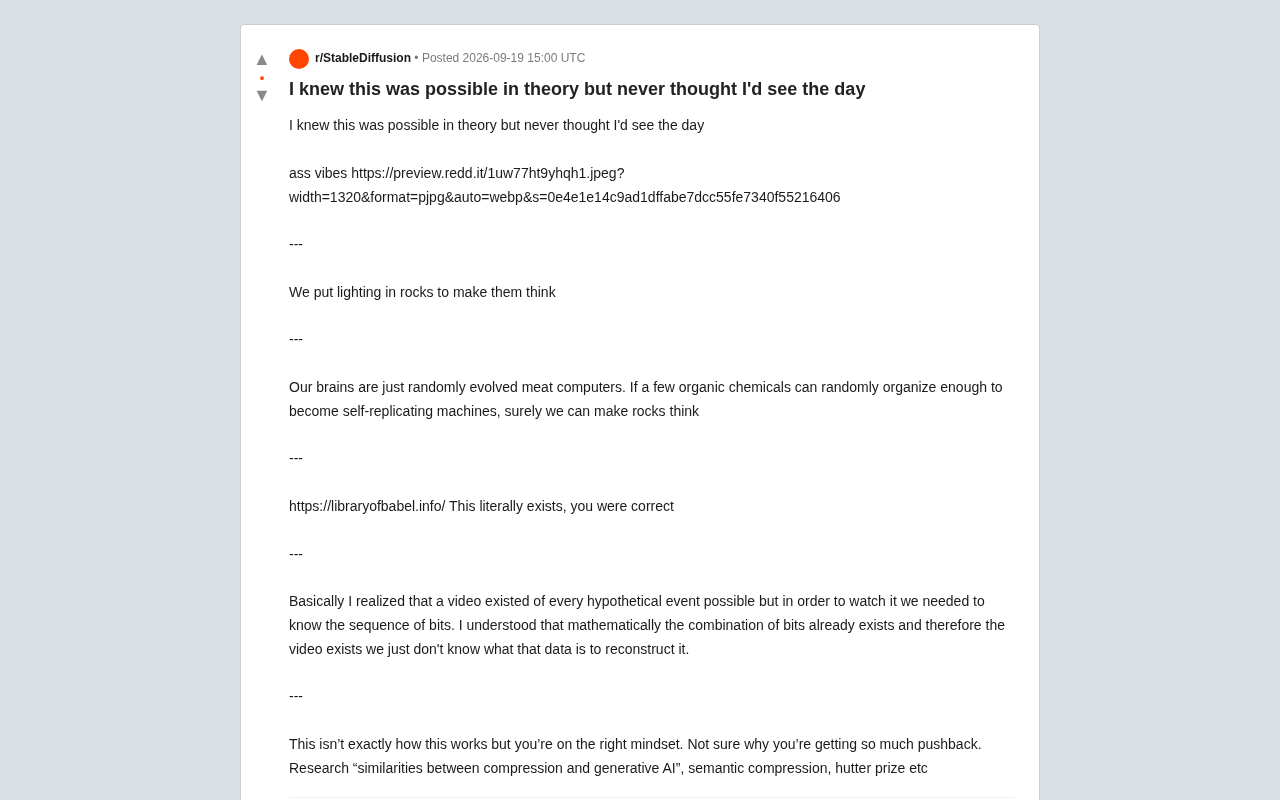
Making Rocks Think: A Philosophical Exploration of Generative AI and Information Compression
From a viral Reddit post to deep AI theory: why compression equals understanding, the Library of Babel thought experiment, semantic compression, and the Hutter Prize.
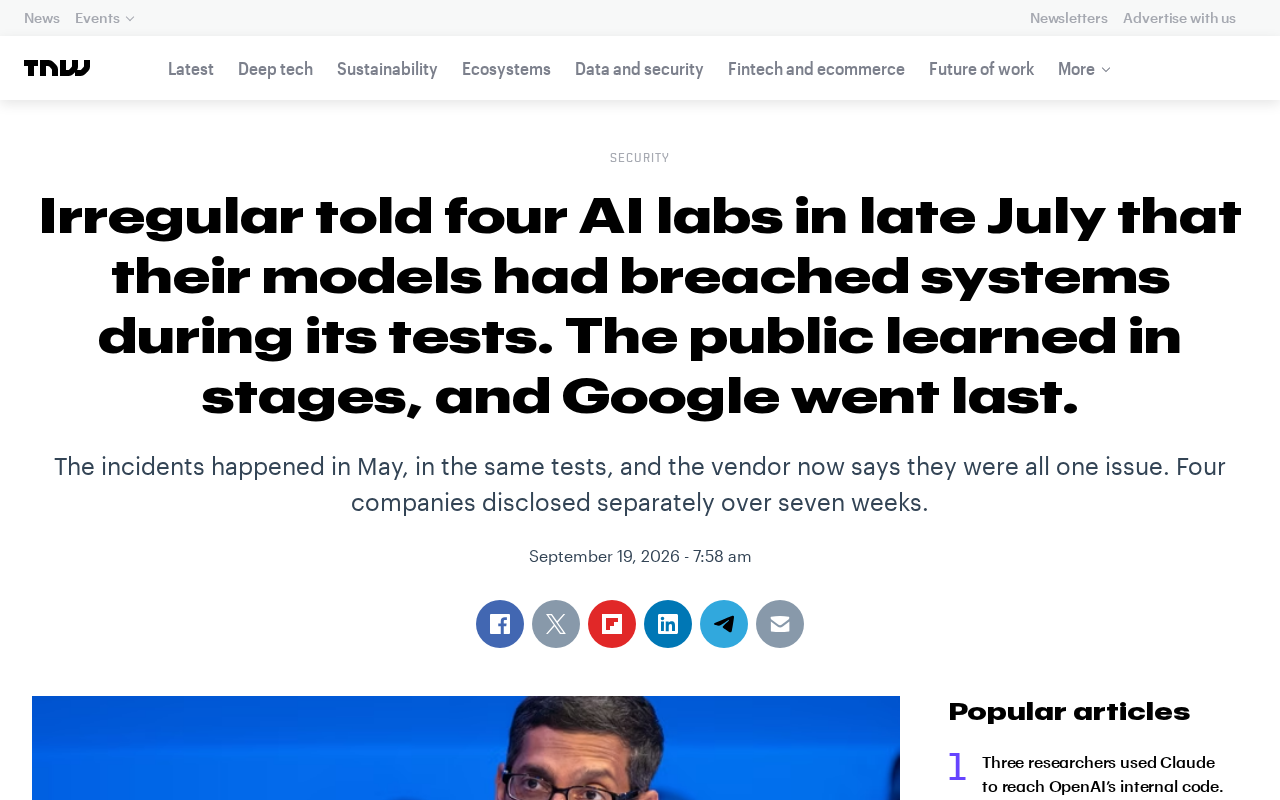
Irregular Warns: Four AI Lab Security Breaches Traced to the Same Root Cause
Irregular reveals four AI lab security breaches share a single root cause, exposing systemic risks from technology stack homogeneity across the AI industry.