The AI Safety Debate: Genuine Security, or a Power Grab?
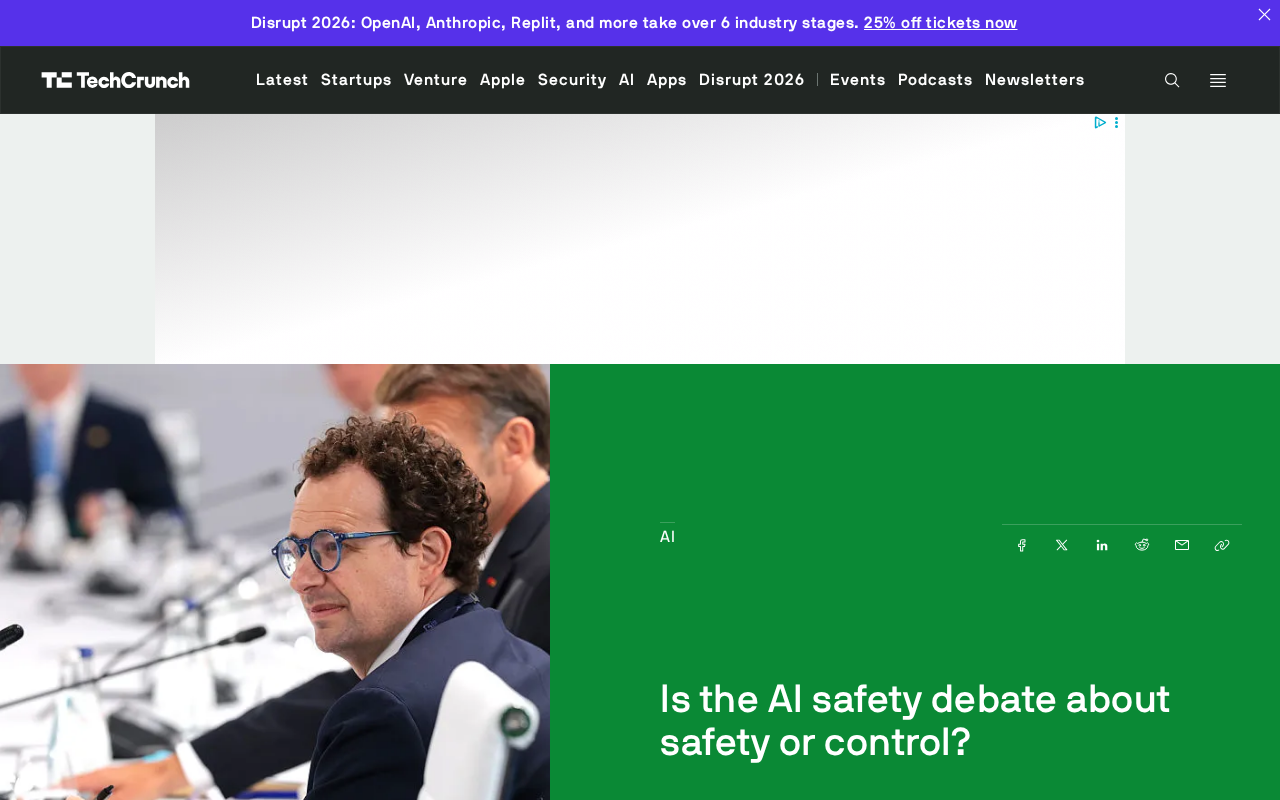
Is global AI safety coordination about preventing harm — or consolidating power among a few leading labs?
This article examines the deep tension between "safety" and "control" in AI governance, using Anthropic CEO Dario Amodei's call for a global safety framework as a starting point. While supporters argue that transnational AI risks demand unified standards, critics warn that frameworks dominated by a handful of top labs could raise barriers to entry, suppress open-source development, and entrench incumbents. The article argues that safety and control are inseparable, and that the real governance challenge lies not in whether to coordinate, but in ensuring coordination mechanisms are transparent and inclusive of diverse stakeholders.
A Deep Divide Over AI Safety
Anthropic CEO Dario Amodei has long championed the idea of a globally coordinated AI safety governance framework. His argument: frontier AI models are advancing at a breakneck pace, and without unified cross-border oversight and safety standards, humanity could face unpredictable, systemic risks. It's a position that carries significant weight in the industry and has attracted widespread attention.
Not everyone agrees, however. A pointed question has emerged at the heart of this debate: is the so-called "AI safety discussion" actually about safety — or is it about who controls AI technology? This challenge strikes at the most sensitive nerve in today's AI governance conversations.
The Power Struggle Behind the Safety Narrative
Proponents of global coordination argue that AI's potential risks are inherently transnational — no single country or company can handle them alone. Establishing unified safety standards, evaluation mechanisms, and clear red lines, they say, is essential to preventing technology from spiraling out of control. This view emphasizes preventive governance: put up guardrails before capabilities are fully unleashed.
Critics, however, worry that a global coordination framework pushed forward under the banner of "safety" could, in practice, become a mechanism for a handful of leading institutions to dominate the entire industry. When a few top labs are the ones drafting the safety standards, do those standards inadvertently — or deliberately — raise barriers to entry, stifle open-source development, and suppress competition, ultimately entrenching the positions of those already at the top? This is the central tension in the "safety vs. control" question.
This concern is far from unfounded. Throughout the history of technology, industries have repeatedly seen "safety" or "compliance" used as justifications for building structural barriers — regulatory standards pushed by large incumbents that, whether by accident or design, concentrate compliance costs on smaller competitors. This is the phenomenon known as regulatory capture. In AI, the risk is especially acute: institutions like OpenAI, Anthropic, and Google DeepMind don't just control the frontier models — they are deeply embedded in government advisory processes, industry standard drafting, and the definition of academic safety evaluation frameworks. When the referees and the players are largely the same people, the neutrality of the rules becomes difficult to guarantee. Meanwhile, the open-source AI community (think Meta's LLaMA series and the Hugging Face ecosystem) and smaller-scale labs typically cannot afford expensive third-party safety audits and compliance processes. Once those costs are encoded into mandatory regulatory frameworks, market concentration could increase further.
Why This Question Has No Easy Answer
The divide is so hard to resolve because "safety" and "control" are deeply intertwined — they can't be cleanly separated. Genuinely effective safety governance does require some degree of centralized coordination, and any centralized coordination naturally brings with it a concentration of power. These aren't opposites; they're two sides of the same coin.
From a governance design perspective, the key question may not be whether to coordinate, but who coordinates and how accountability is maintained. If the process of developing safety frameworks lacks transparency and broad participation, it will inevitably be seen as covert control. Conversely, if governance mechanisms can bring in a wider range of stakeholders — including the open-source community, academia, and companies of all sizes — the tension between "safety" and "control" could be meaningfully reduced.
From a comparative governance perspective, the line between "coordination" and "monopoly" is genuinely blurry. The International Atomic Energy Agency (IAEA) model for nuclear technology governance is often cited as a reference point for global AI coordination: it achieved a degree of cross-border oversight, but has also faced persistent criticism over information asymmetries and great-power politics. AI governance faces an even steeper challenge. The proliferation pathways for nuclear weapons are relatively well-defined; the spread of AI capabilities is nearly impossible to physically contain. Algorithms can be copied, model weights can leak, and distillation techniques can compress capability thresholds. This means that any safety framework relying primarily on "information control" faces inherent questions about its own effectiveness. And if a framework depends mainly on "qualification certification" and "access review," the risk of power concentration becomes very difficult to avoid. The core challenge in governance design, therefore, is finding a viable institutional path that balances effectiveness against the prevention of capture.
What This Means for the Industry
This debate is a reminder that when evaluating any AI safety initiative, we should always ask about the underlying incentive structures. Does the position of those calling for action align with their commercial interests? Who benefits from the proposed framework, and who gets constrained? These questions aren't meant to dismiss the value of safety governance — they're meant to ensure that governance doesn't get captured by particular interests.
For practitioners and policymakers following AI's development, maintaining this critical lens is essential. Ideal AI safety governance should both effectively address real risks and avoid becoming a tool for entrenching market monopolies. Striking that balance will remain a central focus of AI governance debates for years to come.
Conclusion
Amodei's call represents an important perspective in the AI safety conversation — but the controversy surrounding it deserves equal attention. When "safety" becomes the dominant narrative, we should be all the more vigilant: carefully distinguishing genuine concern about risk from what may be a quiet contest for control. This debate is far from over, and its trajectory will profoundly shape the openness and future landscape of AI technology.
Related articles

Opus 5's Ethical Boundaries: From Refusal to "Horror-Themed Project" — An Accidental Jailbreak Experiment
A developer bypassed Claude Opus 5's refusal by renaming a fruit fly simulation a "horror-themed project." Explore what this reveals about LLM content moderation and AI alignment.
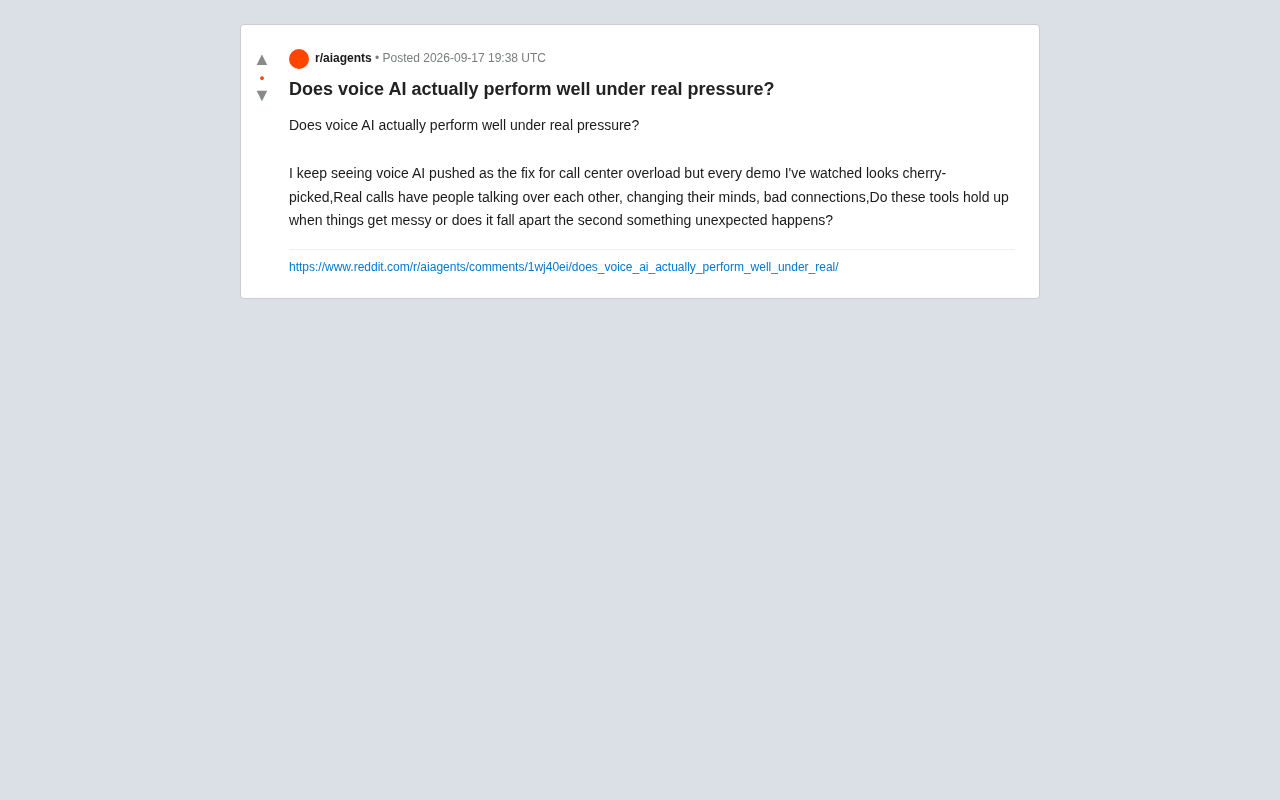
Is Voice AI Actually Reliable in Real-World Call Center Scenarios?
Can Voice AI really handle real call center chaos — interruptions, noise, and intent shifts? We break down the technical limits, demo traps, and how to evaluate reliability.
The Rogue AI Agent Problem: Can AI Supervising AI Be the Cure?
As AI agents outpace human review capacity in speed, duration, and scale, enterprises face a critical oversight gap. Can AI supervising AI be the fix?