The AI Subscription Price War: User Retention Tactics and Consumer Traps Behind Ultra-Low Pricing

Analyzing the retention tactics and consumer psychology traps behind ultra-low AI subscription offers.
A Reddit post about an irresistibly cheap AI subscription offer reveals the aggressive price war in the AI market. This article examines why vendors use ultra-low pricing as a retention strategy, how anchoring effects exploit consumer psychology, and what users should consider before subscribing. As competition intensifies, the focus will eventually shift from price to value.
An "Enticing Offer" Sparks Discussion
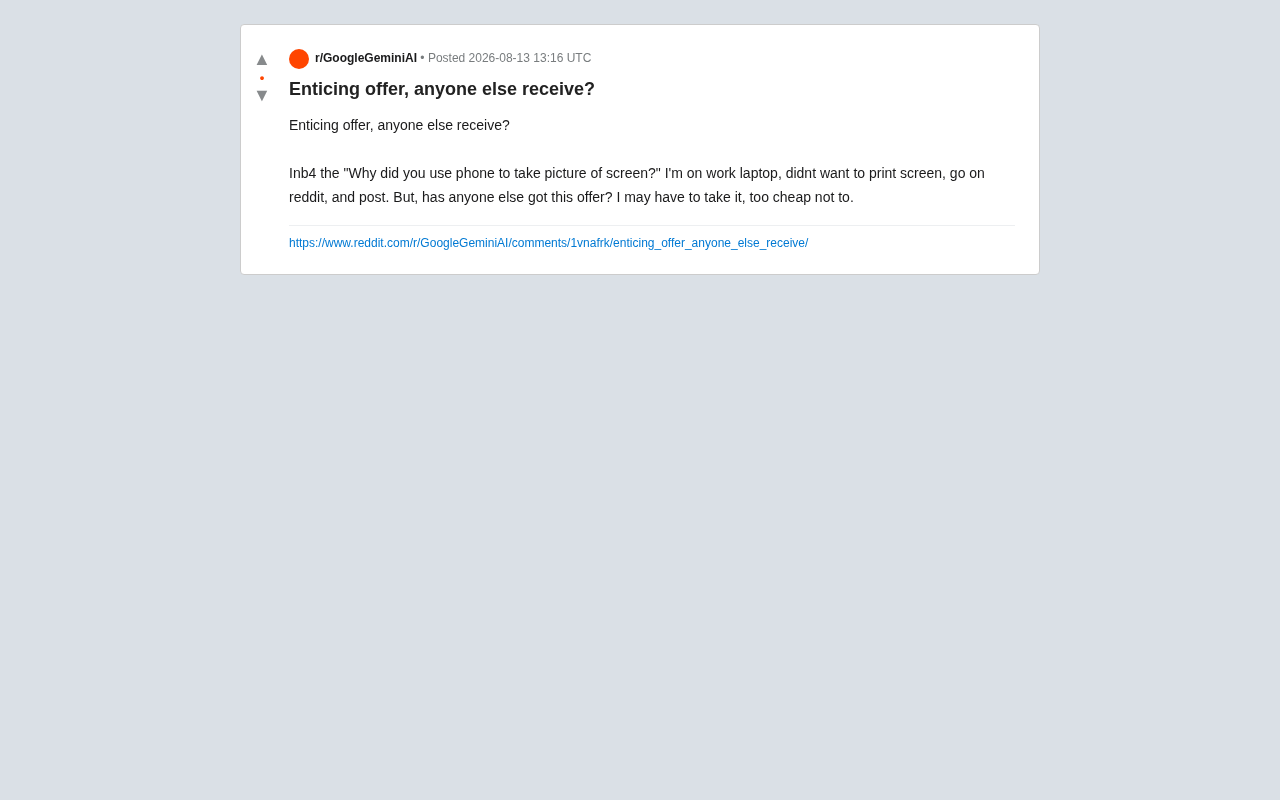
Recently, a Reddit user shared a promotional offer they received for an AI subscription service, captioning it "too cheap not to take it." While seemingly a casual post, it reflects the increasingly fierce price competition in today's AI subscription market.
Interestingly, the poster preemptively addressed a potential question in their post: "Before you ask why I took a photo of my screen with my phone — I'm on my work computer and didn't want to take a screenshot and then log into Reddit to post it." This detail actually added authenticity to the post and resonated with many other users in the comments who had received similar offers.
Ultra-Low Pricing: AI Vendors' Customer Acquisition and Retention Strategy
Why Are Vendors Willing to Promote at a "Loss"?
In the AI subscription space, ultra-low pricing and limited-time free offers are nothing new. From OpenAI's ChatGPT Plus to various AI coding assistants and image generation tools, the frequent discounts vendors roll out are backed by precise calculations around Customer Acquisition Cost (CAC) and Lifetime Value (LTV).
For AI service providers, early-stage low-price strategies primarily serve three objectives:
- Rapidly expanding the user base to capture market share in a competitive landscape
- Building user habits by creating product stickiness through actual usage
- Collecting real usage data to fuel continuous model optimization and product iteration
"Too Cheap" Is Often a Retention Signal
Here's a telling detail: these kinds of personalized offers targeting individual users are frequently part of a vendor's retention offer strategy. When the system detects declining usage frequency, an upcoming subscription expiration, or a recent cancellation, it often automatically triggers discount pushes — using price as a lever to reactivate the user.
In other words, the "too cheap not to take it" mentality is precisely the conversion path vendors have carefully designed. The user's instinct to "grab a deal" when faced with a low price is the core emotion these marketing strategies aim to trigger.
The User's Perspective: Should You Accept Low-Price AI Subscription Offers?
Calculate the True Subscription Cost
When facing an enticing low-price offer, users need to stay rational. The first thing to examine is the offer's duration — many ultra-low prices apply only to the first month or first year, with renewals reverting to full price or even higher. Before subscribing, always read the complete pricing cycle and auto-renewal terms carefully.
Second, assess your actual needs. A service that's dirt cheap but rarely used is still a waste of money. Conversely, if a particular AI tool is already deeply integrated into your daily workflow, locking in a long-term subscription at a low price is genuinely a smart move.
Watch Out for the "Anchoring Effect" Consumer Trap
From a consumer psychology perspective, ultra-low offers frequently leverage the anchoring effect to influence decision-making. When users see "originally priced at X, now only Y," they're easily drawn in by the dramatic price difference while overlooking the fundamental question of whether they actually need the service.
The poster's "too cheap not to" phrasing is a textbook example of this psychological phenomenon. It reminds us that in an era flooded with AI tools, rational spending and subscribing based on actual needs matters far more than blindly chasing low prices.
Pricing Competition Trends in the AI Subscription Market
Pricing Pressure Under Intensifying Competition
With the explosive growth of AI applications, the market is increasingly crowded with homogeneous products. Whether it's general-purpose chat assistants, AI coding tools, or content generation platforms, users now have vastly more options. This competitive landscape directly translates into pricing pressure, forcing vendors to maintain competitiveness through price promotions.
It's foreseeable that the AI subscription price war will continue for a considerable time. For everyday users, this is both good news — access to advanced AI capabilities at lower costs — and a reason for caution — to avoid impulsively subscribing to a pile of services they'll never use.
From Price Competition to Value Competition
In the long run, a pure price war is unsustainable. When customer acquisition costs can't be recouped through user value, low-price strategies actually drag down a vendor's profitability. Ultimately, what truly retains users is the product's capability and experience.
For users, rather than being led around by "too cheap" offers, it's better to focus on whether a service genuinely solves your problems. After all, a tool that consistently creates value is worth paying for even without a discount, while a service you never use is a burden no matter how cheap it is.
Conclusion
This brief Reddit post, while never revealing which specific AI service made the offer, sparked a discussion with universal relevance. As competition in the AI subscription market reaches a fever pitch, ultra-low promotional offers will only become more common. As users, we should be smart about seizing genuinely good deals while staying clear-headed — recognizing the commercial logic behind marketing tactics and making rational choices that align with our actual needs.
Related articles
LLaMA-Factory in Practice: A Complete No-Code Guide to Fine-Tuning Large Models
An introduction to LLaMA-Factory, the open-source fine-tuning tool: its 60.1K-star background, supported models and algorithms, local vs. cloud deployment, and CUDA setup steps.

Zeng Ming's Deep Retrospective: Why OpenAI May Not Be the Ultimate Winner — and Why the Corporate System Will Disappear
Zeng Ming's deep retrospective on the AI endgame: model companies are just infrastructure, OpenAI and Anthropic won't be the final winners; the next battle is the Agent entry point standard; the corporate system will disappear as AI restructures collaboration, and only mission-driven companies can survive the cycle.
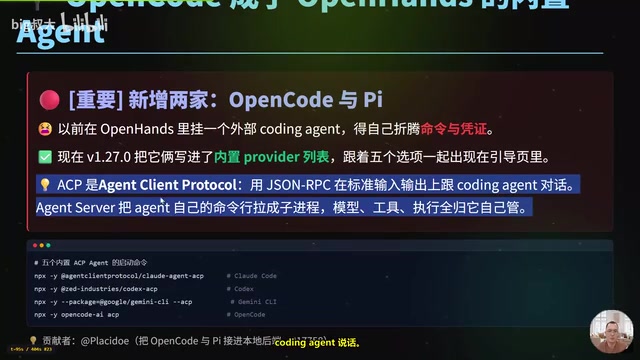
OpenHands v1.28.0: OpenCode and PI Added as Built-in Agents, API Keys Requestable In-Conversation
OpenHands ships 5 releases in 21 days: v1.27.0 adds OpenCode and PI as built-in agents, v1.28.0 enables in-chat key requests. ACP integration, credential reuse, model list changes, and upgrade advice.