The AI Trust Crisis: Why Does Greater Capability Lead to Less Public Trust?
AI's growing power is fueling distrust, and the companies building it are trusted even less than the technology itself.
The article examines a core paradox in today's AI industry: rapidly advancing capabilities have not produced corresponding public trust — quite the opposite. The trust crisis has a dual structure: technical skepticism rooted in hallucinations and black-box decision-making, and deeper distrust of AI companies driven by data sourcing disputes, questionable commercial motives, and a persistent gap between promises and delivery. The piece argues that the concentration of power without adequate external accountability is the structural root cause, and concludes with three paths forward — transparency, verifiable accountability, and genuine checks on power.
A Neglected Paradox: The More Powerful AI Becomes, the Less It's Trusted
Artificial intelligence is iterating at a breathtaking pace — from multimodal breakthroughs in large language models to AI agents gradually infiltrating everyday workflows, the ceiling on technical capability keeps rising. Yet a thought-provoking paradox is emerging: the more powerful AI becomes, the less the public trusts it. And even less trusted than AI itself are the companies that build it.
A discussion on Hacker News cut straight to the heart of this issue: "AI has failed to earn people's trust — and its makers are trusted even less." That seemingly simple observation reflects a deep trust deficit now confronting the entire AI industry.
The Dual Structure of the AI Trust Crisis
Doubting the Technology Itself: Hallucinations and Black Boxes
Public distrust of AI is not unfounded. The "hallucination" problem in generative AI remains fundamentally unsolved — models produce incorrect information with remarkable confidence, and this tendency to "make things up with a straight face" severely undermines users' ability to judge the reliability of outputs.
More troubling still, the decision-making processes of AI systems are often a "black box." When a model delivers a diagnostic suggestion, a credit assessment, or a hiring recommendation, users have little way of understanding why it reached that conclusion. The lack of explainability means that when things go wrong, both accountability and paths to correction become frustratingly unclear.
A deeper look: "Hallucination" stems from how large language models are built: rather than querying a factual database, models predict the next most statistically likely token. This means that when training data is sparse, a question falls outside the model's knowledge boundary, or a prompt is ambiguous, the model still generates grammatically fluent, confidently toned responses — rather than admitting uncertainty. The "black box" problem maps onto a long-standing unsolved challenge in the field of Explainable AI (XAI). Mainstream Transformer architectures contain tens to hundreds of billions of parameters, and their internal attention mechanisms and feature representations are extremely difficult for human intuition to grasp. While methods like SHAP values and LIME have emerged from the research community, these tools still fall short of providing the complete explanatory chains needed to support high-stakes decisions.
Deeper Suspicions of the AI Makers
If skepticism toward the technology has a rational basis, distrust of AI companies is more complex and emotionally charged. It stems from several directions:
- Disputes over data sourcing: Vast amounts of web data were scraped to train models without explicit authorization, raising a tangle of unresolved legal and ethical questions around copyright and privacy.
- Questioning commercial motives: When companies simultaneously proclaim "AI for the benefit of humanity" while aggressively pursuing commercialization and sky-high valuations, it's hard for the public not to question their true intentions.
- The gap between promises and reality: From "AGI is just around the corner" to "AI will replace vast swaths of jobs," the sweeping narratives put forward by industry leaders frequently outpace what their products can actually deliver. Repeated overpromising burns through credibility.
Why "The Makers" Are Trusted Even Less Than "The Technology"
This is the thread most worth pulling on. Technology is a neutral tool; makers are actors with explicit interests at stake.
When the public evaluates AI companies, they are essentially evaluating a set of organizations that wield enormous technological power while facing insufficient external checks. When a handful of companies control the most advanced models, the largest compute resources, and the richest datasets, that concentration of power is unsettling in itself.
Historical precedent also plays a role. Over the past two decades, social media platforms and big tech companies have built up a track record of data abuse, algorithmic manipulation, and privacy violations — leaving the public naturally wary of promises made by tech giants. AI simply amplifies that pre-existing distrust, because AI is more capable and the potential for harm is correspondingly greater.
A deeper look: This distrust has a structural source as well. The AI industry today is characterized by what might be called "visible capability, hidden governance." The model training processes, safety evaluation standards, and internal governance mechanisms of leading institutions like OpenAI, Google DeepMind, and Anthropic are almost entirely opaque to the outside world. By contrast, industries that wield comparable societal influence — nuclear power, finance, pharmaceuticals — have undergone decades of regulatory development and now operate within relatively mature systems of external oversight. AI's development speed has far outpaced society's ability to build norms and legal frameworks in response. Faced with a power actor whose capabilities are expanding rapidly but whose constraints remain unreliable, the public's failure to trust is a rational response, not a prejudice.
The Real Costs of the AI Trust Deficit
Trust is not an abstract moral topic — it has direct consequences for AI adoption.
At the enterprise level: hesitation and the scaling bottleneck
Many organizations are willing to experiment with AI but stop at the pilot stage, unable to commit to full-scale deployment due to concerns about data security, output reliability, and compliance risk. The trust deficit is becoming one of the biggest obstacles to AI's commercial adoption.
At the societal level: the risk of over-regulation
When the public broadly distrusts AI and its makers, policymakers face enormous pressure to introduce strict restrictions. While some regulation is clearly necessary, overly blunt rules risk stifling innovation before the industry has had a chance to mature.
Three Possible Paths to Rebuilding AI Trust
Transparency Is the Foundation of Trust
From disclosing training data to honestly communicating a model's capabilities and limitations, transparency is the first step toward rebuilding trust. Rather than marketing "limitless capability," it's far more valuable to clearly tell users what a system can do, what it cannot do, and where it is likely to go wrong.
Verifiable Accountability Mechanisms
Trust cannot rest on self-declared commitments alone. Third-party audits, independent evaluations, and traceable chains of accountability are what turn "responsible AI" from a slogan into a verifiable practice.
A deeper look: Verifiable accountability faces significant technical and institutional obstacles in practice. On the technical side, conducting a meaningful third-party audit of a large model requires access to training data, model weights, and internal evaluation reports — precisely the assets companies regard as core competitive property. On the institutional side, no unified global standard for AI auditing exists yet. The EU AI Act is the most systematic attempt so far, mandating compliance assessments for high-risk AI systems, though its implementing rules are still being refined. The financial industry's "stress test" mechanisms and pre-market clinical trial reviews for pharmaceuticals offer workable models for institutionalizing external verification. How the AI industry can adapt and develop equivalent mechanisms is a central question in the trust-rebuilding agenda.
Ceding Some Control to Create Checks and Balances
Real trust is typically built on the foundation of balanced power. Open-sourcing models, supporting external research, and accepting reasonable regulation may look like moves that are "bad for business" — but in the long run, they are among the most important investments a company can make in earning social trust.
Conclusion: Earning Trust Matters More Than Winning Benchmarks
The AI trust crisis is not, at its core, a technical problem. It is a social problem about power, responsibility, and integrity. Technology can keep advancing — but if the people who build it cannot earn the public's trust, even the most formidable capabilities will struggle to translate into value that society genuinely embraces.
For the industry as a whole, perhaps it's time to reconsider: earning trust may be harder than winning benchmarks — and far more important.
Related articles
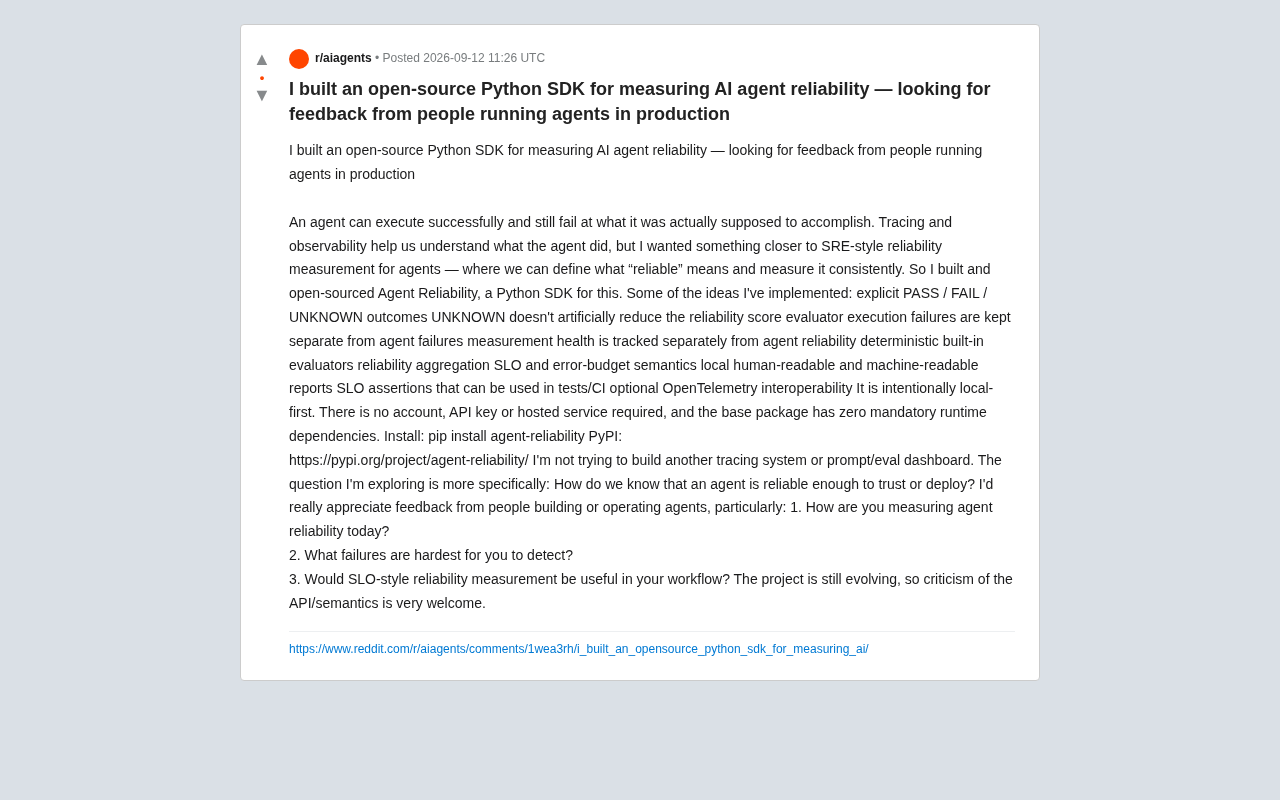
Open-Source Python SDK: Measuring AI Agent Reliability with SRE Principles
Agent Reliability is an open-source Python SDK that applies SRE's SLO and error budget concepts to AI Agent evaluation, with PASS/FAIL/UNKNOWN states, CI assertions, and zero forced dependencies.
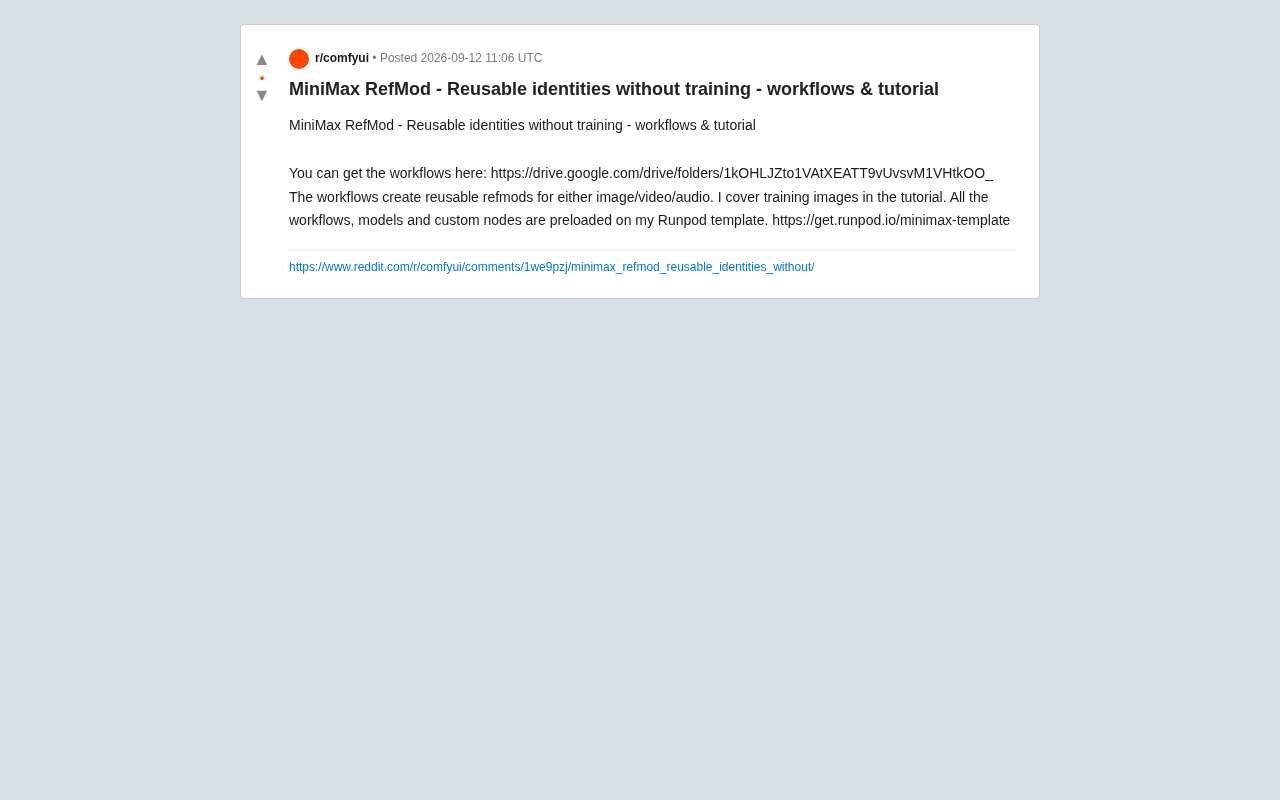
MiniMax RefMod: A Complete Guide to Training-Free Reusable Identity Workflows
MiniMax RefMod offers training-free reusable identity workflows for image, video, and audio generation. Includes Runpod template and tutorial for quick setup.

Invalid Source Material Notice
The source material provided lacks substantive information and is unrelated to AI/tech topics, making it impossible to produce a complete professional article.