The AI Video Agent Era: A Full Walkthrough of Creating a Professional Brand Film in Two Hours

LiblibTV's AI Agent lets non-professionals produce a professional brand film in under two hours.
LiblibTV's new Agent feature represents a leap from single-tool AI video generation to a fully orchestrated creative pipeline. Starting from a one-sentence idea, the Agent interviews the user, generates storyboards from reference images, iterates on feedback, adds Seed Audio music, and delivers a finished film via CapCut — all in under two hours, no filmmaking experience required.
A Paradigm Shift in AI Video Creation
For a long time, AI video tools were stuck at the rudimentary stage of "enter a prompt, generate a clip" — users had to endlessly tweak settings and manually stitch together fragments, often ending up with disjointed results. With the introduction of AI Agent technology, that reality is being completely rewritten.
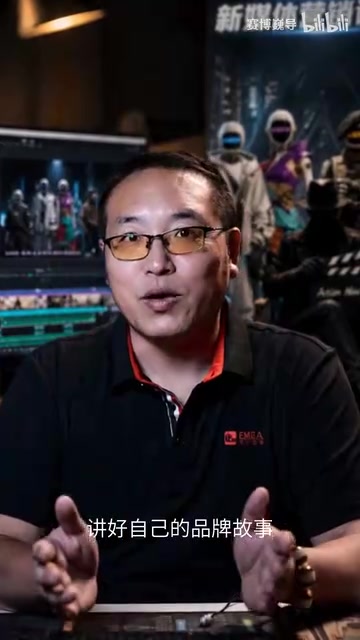
According to a hands-on demo shared by a Bilibili creator, LiblibTV's recently launched Agent feature allowed a non-professional user to produce a near-professional-grade brand film in under two hours, starting from nothing more than a single-sentence idea. This marks AI video creation's official transition from the "tool era" to the "Agent era."
What sets an AI Agent apart is that it's no longer a passive tool executing commands — it's an active creative partner that guides, plans, and iterates. Think of it as a director's assistant who actually understands the production process, walking you through every step from concept to finished film.
The Technical Foundation of AI Agents: AI Agents represent one of the most significant paradigm shifts in modern artificial intelligence. Unlike the passive "question-and-answer" model of traditional large language models, AI Agents possess four core capabilities: goal decomposition, tool invocation, memory management, and autonomous iteration. Under the hood, they typically rely on frameworks like ReAct (Reasoning + Acting) or AutoGPT-style architectures, which break down a vague high-level objective into multiple executable subtasks and dynamically adjust strategy during execution. In the context of video creation, this means an Agent doesn't just understand the instruction "make a brand film" — it can autonomously plan a complete workflow spanning interview → script → storyboard → generation → iteration → music → editing, calling on different specialized models at each stage.
The Full Workflow: From a Single Sentence to a Finished Film
This hands-on test offered a complete look at how an AI Agent approaches video creation — and every stage is worth examining closely.
Requirements Interview: Ask First, Then Act
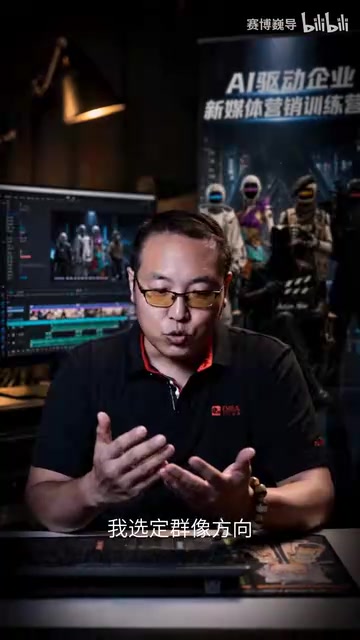
The entire process begins with an "interview." Like a seasoned director, the Agent starts by asking who the client is (in this case, the "SJTU Antai Alumni Association"), then probes for the story's core (a narrative about professionals hitting career plateaus, returning to campus for further education, and joining the alumni network after graduation).
Rather than immediately generating footage, the Agent first presents several narrative frameworks for the user to choose from. The tester ultimately selected a "ensemble cast" direction, after which the Agent began building out characters, sketching scenes, and defining props. This "plan first, execute second" approach is precisely what distinguishes an AI Agent from a conventional one-click generation tool.
Reference Image Upload and Storyboard Generation
To ground the film in reality, the tester uploaded actual photos of the "Antai Building" as reference images. The Agent then automatically generated a complete storyboard based on these visuals.
The Role of Storyboards in Professional Filmmaking: A storyboard is the critical bridge between script and camera in professional film production — typically hand-drawn by a dedicated storyboard artist or created with specialized software, with annotations for shot framing, camera movement, character positioning, and timing. In traditional production, storyboarding a five-minute short film can take several days and requires a solid foundation in visual storytelling. An AI Agent's ability to auto-generate storyboards essentially encodes professional visual narrative knowledge into the model: it reads the spatial relationships in reference photos, then combines that understanding with narrative logic to plan shots automatically. This breakthrough signals that AI has evolved from "generating single frames" to the far more sophisticated level of "understanding narrative pacing and visual language."
This stage is particularly significant — it demonstrates that AI can not only create from scratch, but also customize output around real-world materials, dramatically improving the practical usability of brand films.
Even more notable is the iteration capability. When certain shots don't land, users can give direct feedback — just like a client briefing an agency — and the Agent will independently revise the prompts and regenerate. The entire process faithfully mirrors professional film production workflows, with script, storyboard, and footage all refined through multiple rounds.
Music and Final Cut: A Complete Multi-Tool Pipeline
Once the video segments were complete, the creative work wasn't over. The tester called on ByteDance's latest Seed Audio model to generate a duet MV soundtrack — the vocal texture and production quality were genuinely impressive.
The Technical Background of Seed Audio: ByteDance's Seed Audio is a proprietary multimodal audio generation foundation model, and one of the most representative entries in the current wave of audio AI "foundation models." Unlike earlier music generation tools based on GANs (Generative Adversarial Networks), Seed Audio is built on diffusion model architecture and large-scale audio pretraining, enabling it to generate complete compositions with realistic instrument textures, expressive vocals, and coherent musical structure. It supports multi-part arrangements and multi-style customization, achieving near-commercial-grade results in timbre authenticity and emotional expression. The rise of audio foundation models like this means that the final missing piece of AI video production — emotionally resonant music — has now entered the realm of automation, making a truly end-to-end AI creative pipeline possible.
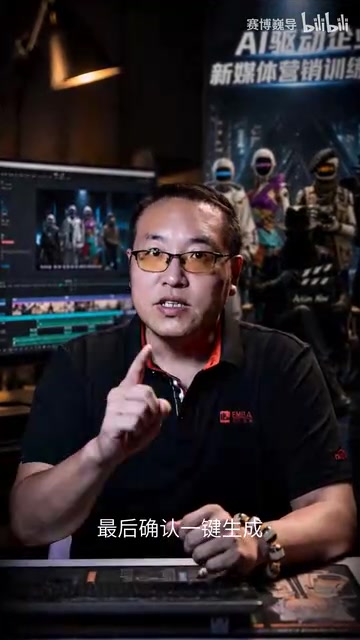
Finally, the footage and music were assembled in CapCut (剪映), and a complete short film took shape. The entire workflow connected a video Agent (LiblibTV), audio generation (Seed Audio), and an editing tool (CapCut) — a textbook example of modern AI video production: no longer dependent on a single tool, but on the coordinated collaboration of multiple specialized models.
The Industry Trend Toward Multi-Model Workflows: A new production paradigm is emerging in AI video creation: an "orchestration-layer Agent + specialized domain models" architecture. Similar to the microservices architecture of the cloud computing era, different AI models each specialize in specific tasks — video generation (Sora, Runway, LiblibTV, etc.), audio synthesis (Seed Audio, Udio, Suno), editing (CapCut AI, Premiere AI) — while an upper-layer Agent handles task scheduling, context management, and result integration. The advantage of this architecture is that each specialized model can be independently updated and improved, while the overall workflow's capability ceiling rises continuously as individual modules advance. From the user's perspective, the experience feels like "one AI that knows how to create" — but underneath lies a sophisticated multi-model coordination system.
One detail worth highlighting: this entire pipeline took under two hours, and the creator is not a professional filmmaker.
The Barrier Has Broken: Who Stands to Benefit
The deepest insight from this experiment is the comprehensive collapse of the barrier to entry for video creation.
In the past, producing a professional-grade short film required an entire team — screenwriter, storyboard artist, cinematographer, composer, editor — with high costs and long turnaround times. AI Agents encapsulate all of these specialized roles within a conversational interface, letting ordinary people step into the "director" role and drive the creative process through feedback and choices.
The Economics of Creative Democratization: In economics, the "democratization" effect refers to capabilities that were once exclusive to a small class of professionals or large institutions becoming accessible to the general public through technological change. The printing press democratized publishing; the smartphone democratized photography; AI Agents are now democratizing video production — a field long protected by high barriers to entry. Industry data suggests that a traditional 30-second brand film typically costs anywhere from 50,000 to 500,000 RMB and takes anywhere from days to weeks to produce. AI workflows compress that cost to the hundreds-of-RMB range and the timeline to a matter of hours. This isn't just an efficiency gain — it's a restructuring of market dynamics. Long-tail brands and individual creators will, for the first time, have the ability to compete on equal footing with large enterprises in content marketing, and the supply side of the content creation market is poised for exponential expansion.
For businesses, this means every brand — regardless of size — now has the capacity to use AI-generated film to tell its story compellingly. Alumni associations, small and medium enterprises, individual creators: all are direct beneficiaries of this technological wave.

A Sober Assessment: Opportunity and Limits in the Agent Era
Of course, measured perspective matters here. AI-generated content still has noticeable gaps compared to top-tier industrial production in areas like character consistency, complex camera choreography, and emotional nuance — calling it "Pixar-level" is more poetic aspiration than literal benchmark.
But the direction is clear: the competitive focus in AI video is shifting from "the quality of individual generated clips" to "end-to-end creative workflow integration." Whoever can string together interview, planning, generation, iteration, and music composition into one smooth Agent pipeline will be the one who truly redefines the creative barrier.
From that perspective, calling this the "AI Video Agent Era" is no exaggeration — it represents a clear evolutionary trajectory. AI is moving from "what it can do" to "how it can help you do it well." For content creators and brands alike, right now is the ideal moment to get familiar with and integrate into this new way of working.
Key Takeaways
Related articles

Disaster and Glory of the Apollo Program: The History We Must Revisit Before Returning to the Moon
From the fatal Apollo 1 fire to Apollo 8's daring lunar orbit to Apollo 11's successful landing—revisiting the disasters, fears, and compromises of the Apollo program and their lessons for today's return to the Moon.
Netflix Trust Exercise Turns Into Firing Trap: Where Are the Boundaries of Corporate Trust?
A Netflix employee was fired after sharing private info in a trust exercise. We analyze the risks of corporate trust exercises and how employees can protect themselves.

AMD CDNA5 Architecture Deep Dive: Technical Evolution and the AI Computing Competition Landscape
Deep analysis of AMD's CDNA5 architecture covering Chiplet packaging upgrades, HBM memory evolution, and low-precision compute optimization, examining how AMD challenges NVIDIA's AI chip dominance.