The Bakhmut Trap: Sunk Cost Fallacy in War

The Battle of Bakhmut reveals how political symbolism and sunk costs distort strategic judgment, leading to holding on when it is no longer reasonable.
Based on military analysts' retrospective on the Russia-Ukraine war, this article unpacks how "Bakhmut Syndrome" formed and its costs. Bakhmut was initially used by Russia as a fixing fight to pin down Ukrainian forces and commit Wagner expendables, gradually evolving into a grinding attritional fight. Analysts argue the fall of Bakhmut was not critical to broader strategy, as it took Russia years to advance to Chasiv Yar. Yet political symbolism and expectations of Western support made it hard for Ukraine to abandon, and the "fortress" label further constrained retreat. More critically, the battle pinned down experienced units that could have trained and led the 2023 summer offensive, leaving recruits to operate Western equipment in difficult breakthroughs. Bakhmut Syndrome is essentially continuing to defend population centers when it is no longer reasonable, reflecting the long-term distortion of strategic judgment by the sunk cost fallacy.
War-time decision-making is often held hostage by political symbolism and sunk costs, and the Battle of Bakhmut is a mirror reflecting this. Based on military analysts' retrospective on the Russia-Ukraine war, this article unpacks how "Bakhmut Syndrome" formed, why it became so hard to disengage from, and the long-term costs it imposed on strategic judgment.
Why Bakhmut Became a "Fixing Point"
According to analysis by a YouTube military analysis channel, Bakhmut was used by Russian forces as a "fixing fight" at a critical stage of the war. The backdrop was two notable offensive successes by Ukraine in the autumn: Russian forces nearly collapsed in the Kharkiv direction, and while progress was slower in the Kherson direction, it forced Russian troops to withdraw from the west bank of the Dnipro. These two victories briefly created an expectation that "the war might be shorter, and Ukraine might achieve a military victory." Russia then sought to pin down Ukrainian forces with Bakhmut and committed large numbers of Wagner forces—which analysts described as "expendables" in this battle.

As the battle evolved into a grinding fight, morale began to erode gradually. Analysts noted that such battles detach from the tactical level and are imbued with political meaning, becoming "bellwether events" in the contest of will and systems between the two sides.
A "fixing fight" is a military term referring to a situation where one side, through offensive action or feint, forces the enemy to pin forces in a certain area so they cannot be redeployed to other fronts. Its purpose is not simply to seize territory, but to restrict the enemy's freedom of maneuver and create conditions for actions elsewhere. In Bakhmut, Russia sought to pin down Ukraine's elite forces there so they could not reinforce other critical directions. The counterpart to a "fixing fight" is an "attritional fight," which focuses on wearing down the enemy's manpower rather than gaining space. Russia committed the Wagner Group—a paramilitary force composed largely of prisoners and mercenaries—which, because of its high substitutability, was seen by analysts as "expendable," creating an asymmetric attrition structure.
How Political Symbolism Overrode Tactical Rationality
Analysts stated bluntly that the fall of Bakhmut itself is "not that important." The evidence: it took Russian forces a full year to advance from Bakhmut to the next, higher-elevation town of Chasiv Yar, and another year to capture large portions of Chasiv Yar. In terms of map distance, this advance was not far. Therefore, it is fair to say that the fall of Bakhmut was not critical to the broader war strategy.

The problem is that once a battle is "freighted" with political significance, decision-makers find it hard to bear the cost of losing it. For Ukraine, Bakhmut mattered because it relied heavily on external Western support. After the autumn offensive successes, Ukraine needed to sustain the perception that "the war is heading in a favorable direction" to support continued Western provision of equipment, capabilities, and training. Analysts mentioned that war is full of the sunk cost fallacy and this kind of thinking pathology—fearing that a loss would shift Western public sentiment and the views of political decision-makers, a "Bakhmut fortress"-style propaganda campaign emerged.
The sunk cost fallacy is originally a concept from behavioral economics, referring to decision-makers continuing to invest because they have already invested substantial resources, even when continued investment is no longer rational. In war, this fallacy often intertwines with political symbolism: once a city is imbued with the meaning of "fortress" or "symbol of resistance," retreat is seen as political failure rather than tactical adjustment. In the Bakhmut case, Ukraine reinforced the "fortress" narrative to sustain Western support, making it difficult for decision-makers to bear the political cost of losing it, even when it was no longer militarily worthwhile. This symbolic binding detached tactical decisions from battlefield reality, turning them into "bellwether events" in a contest of wills, thereby distorting strategic judgment.
The Double-Edged Sword of the "Fortress" Label
Analysts are cautious about any city being declared a "fortress," especially small and medium-sized cities. Once a "fortress" label is attached, defenders find it hard to retreat or withdraw in a timely manner. According to what they learned from Ukrainian units, soldiers also worry about the "fortress" designation, because it means they will face an exceptionally difficult and bitter fight.

The result was that Bakhmut evolved into a prolonged attritional fight. Ukraine was able to draw the fight out, but analysts are not sure this was necessarily to Ukraine's benefit. First, a large number of forces were pinned in that direction; second, debate continues over whether Bakhmut consumed experienced units merely to hold one more town for a while longer.
The Cost of Mismatching Experience and Equipment
Another key question raised by analysts: Bakhmut pinned down experienced units that could have been used for training and could have led the 2023 summer offensive, resulting in inexperienced recruits later operating Western equipment to execute extremely difficult breakthrough operations. On the Russian side, expendable Wagner forces (many of them prisoners) were used to fight, creating an asymmetric attrition structure.

This leads to the bottom-line definition of "Bakhmut Syndrome": choosing to defend the city when it is no longer reasonable to do so. Analysts emphasized that such situations are difficult to handle, because evacuating population centers is itself extremely hard; population centers tend to fix battles, and defense is often anchored on cities. Once a battle becomes a contest over populated areas, retreat becomes very difficult: Russia will commit large forces to try to seize them and destroy the city in the process, while Ukraine will also defend bitterly in an attempt to exhaust the Russian offensive.
The "mismatch between experience and equipment" refers to trained units being consumed in non-critical directions, leaving subsequent key offensives to be carried out by inexperienced recruits operating advanced Western equipment. In the 2023 summer offensive, Ukrainian forces faced the extremely difficult task of breaking through multiple layers of Russian defenses, requiring skilled combined-arms coordination, but many recruits were committed to battle after only short training and could hardly bring equipment effectiveness into play. Analysts noted that preserving experienced units for the key offensive might have improved the odds of a breakthrough. The cost of this mismatch highlights how fixing fights erode long-term strategic capacity: short-term pinning may buy time and symbolism, but sacrifices the core human capital of future offensives.
Implications for Strategic Judgment
The core lesson of the Bakhmut case is not about the gain or loss of a particular town, but about how political symbolism and sunk costs distort strategic judgment. When a battle is given meaning beyond its tactical value, decision-makers easily choose to double down when they should withdraw, trading experienced units for time and symbolism while potentially sacrificing capabilities that could have been used for key offensives. Analysts acknowledge that related questions will continue to be debated, but the syndrome of "continuing to defend when it is no longer reasonable" deserves vigilance from anyone studying war and organizational decision-making.
One-line Summary
The Battle of Bakhmut reveals how political symbolism and sunk costs distort strategic judgment, leading to holding on when it is no longer reasonable.
Paragraph Summary
Based on military analysts' retrospective on the Russia-Ukraine war, this article unpacks the formation and costs of "Bakhmut Syndrome." Bakhmut was initially used by Russian forces as a fixing fight to pin down Ukrainian forces and commit Wagner expendable forces, and the battle gradually evolved into a grinding attritional fight. Analysts believe the fall of Bakhmut was not critical to broader strategy, as it took Russian forces years to advance to Chasiv Yar. However, political symbolism and expectations of Western support made it hard for Ukraine to abandon, and the "fortress" label further constrained defenders' retreat. More critically, the battle pinned down experienced units that could have been used for training and leading the 2023 summer offensive, leaving recruits to operate Western equipment in high-difficulty breakthroughs. The essence of Bakhmut Syndrome is continuing to defend population centers when it is no longer reasonable, reflecting the long-term distortion of strategic judgment by the sunk cost fallacy.
Related articles
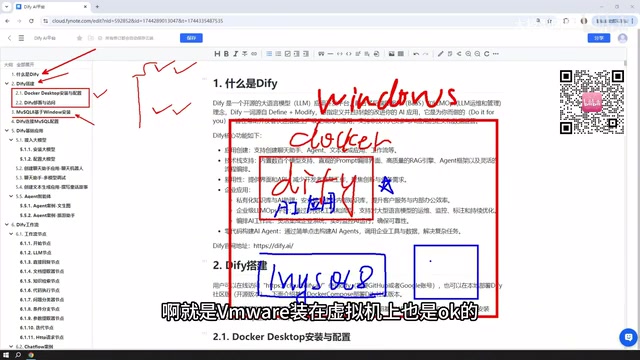
Dify Workflow in Practice: A Guide to Local Deployment and Private Knowledge Base Agents
Based on a Bilibili Dify course: Windows Docker local deployment, MySQL connection setup, five app types and workflow node cases, external LLM integration choices, and the complete path to publishing apps as sites or APIs.
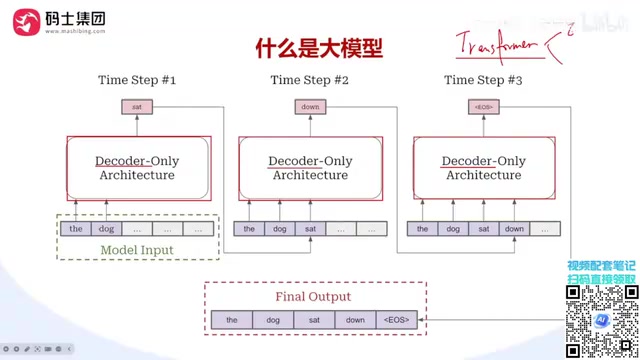
A Complete Guide to Distributed LLM Training: DP/TP/PP/SP Explained
Starting from the single-GPU memory bottleneck, this guide systematically explains DP data parallelism, TP tensor parallelism, PP pipeline parallelism, and SP sequence parallelism in distributed LLM training, covering their splitting dimensions, communication costs, and hybrid parallelism selection logic.

DeepSeek Harness Step-by-Step Guide: From Installation and Setup to Plugin Practice
DeepSeek Harness step-by-step guide: Node.js setup, client installation, and three plugin installation methods to get you started fast with this open-source AI Agent framework.