The Battle of Bakhmut: How Political Symbols Hijacked Military Rationality

The Battle of Bakhmut shows how political symbolism overrode military rationality, leading to attrition and loss of vital forces.
Based on military analysts' review on the Lex Fridman podcast, this article examines why Bakhmut became a "meat grinder." It highlights Wagner's expendable prisoner assault units backed by Russian artillery and airborne flank protection, and how the city's political symbolism led Ukraine to overcommit experienced troops. Analysts argue the fall of Bakhmut had no decisive strategic significance, as political logic overwhelmed military reason.
Bakhmut, a mid-sized Ukrainian city largely unknown to the outside world before the war, became synonymous with a brutal siege during the Russia-Ukraine war. Military analysts dissected this battle in depth on the Lex Fridman podcast, revealing a core contradiction: when a battle is imbued with political symbolism, rational military judgment is often set aside.
Why Bakhmut Became a Meat Grinder
Geographically, Bakhmut sits in a low-lying area surrounded by high ground to the east and west, putting defenders at a natural disadvantage. Russian forces first seized the eastern high ground, then gradually advanced west through the city's eastern districts. Meanwhile, a more critical battle unfolded on the city's outskirts—Russian forces attempted to cut Ukrainian supply lines and reinforcement routes.
According to the analysts, Russian troops bypassed the city's north side and approached the main road extending from Chasiv Yar, while the fall of Soledar to the north further weakened the Ukrainian left flank. This dual pressure forced Ukrainian forces to simultaneously fight street-to-street inside the city and counter-encirclement operations.
The combat mixed traditional and modern elements: tanks fired directly at buildings along streets, BMP-2 infantry fighting vehicles opened fire with 30mm autocannons, and infantry engaged in close-quarters fighting between buildings. Drones had begun to appear, with light bomber drones in use, but FPV drones were still in an experimental phase at the time.
Wagner's Role and the "Expendable" Logic
The Wagner Group played a unique role in this battle. Prigozhin received authorization from the Russian government to recruit prisoners from jails, forming assault detachments composed primarily of convicts. These poorly trained prisoners were thrown into attacks in waves to wear down Ukrainian defenses; when Ukrainian forces were exhausted and low on ammunition, Wagner would commit more experienced units.
The analysts emphasized that Prigozhin liked to claim credit for the victories, but the actual fighting was not solely Wagner's doing. Russian forces provided extensive artillery support and enjoyed significant firepower superiority, while Russian airborne troops secured the flanks, allowing Wagner to focus on urban combat. This division of labor explains why the city was systematically destroyed—artillery fire leveled almost everything.
The Wagner Group is a Russian private military company, its name derived from the callsign "Wagner" of founder Dmitry Utkin. The organization emerged around 2014 in eastern Ukraine and subsequently operated in Syria, Libya, the Central African Republic, Mali, and elsewhere, with its activities often deeply tied to Russian geopolitical interests. During the Russia-Ukraine war, Wagner drew widespread attention for mass recruitment of prisoners, a model that allowed it to obtain large numbers of expendable troops at low political cost. Founder Yevgeny Prigozhin was close to Russian President Putin, but Wagner was not part of the regular military establishment; its command chain, logistics, and legal accountability long remained in a gray zone. After Prigozhin's brief mutiny in 2023, Wagner's deployment and organizational structure underwent major changes. Understanding Wagner's private military company nature helps explain why it could take on high-casualty missions in Bakhmut and why credit for its battlefield achievements often sparked controversy.
"Bakhmut Syndrome": How Politics Overwhelmed Military Logic
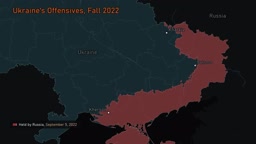
The key turning point in the battle was the swelling of its political significance. In autumn 2022, Ukrainian forces made significant gains in Kharkiv and Kherson, raising Western expectations of a Ukrainian victory. According to the analysts, Russian forces then sought to turn Bakhmut into a "fixed point," using Wagner as an expendable force to pin down Ukrainian troops.
Ukraine faced a dilemma: Bakhmut itself was not a strategic location, but losing it could shake the confidence of Western supporters. Thus a propaganda campaign declaring it the "Bakhmut Fortress" was launched, and decision-makers chose to hold. The analysts offered sharp criticism—once a city is declared a "fortress," defenders find it difficult to withdraw in time, and the battle inevitably becomes a brutal war of attrition.
Looking at subsequent developments, it took Russian forces an entire year to advance from Bakhmut to Chasiv Yar, which in turn proves that the fall of Bakhmut did not have decisive strategic significance. The analysts stated bluntly: "Losing Bakhmut wasn't that critical—the evidence is irrefutable."
The Battle of Stalingrad (August 1942 – February 1943) was one of the turning points of the Eastern Front in World War II. From a purely military-geographic perspective, Stalingrad was not an irreplaceable transportation hub, but Hitler placed its political symbolism above military rationality, insisting on holding it and forbidding retreat, ultimately leading to the encirclement and destruction of the German Sixth Army. The Soviet side likewise named the city "Stalingrad" and issued the order "not one step back," turning the battle into a war of attrition fought house by house. This historical case is often cited by military analysts to illustrate how battlefield decisions deviate from cost-benefit calculations when political leaders define a city as an "unrenounceable symbol." Although Bakhmut is far smaller in scale and historical significance than Stalingrad, the two share a similar logic of "symbol binding decision-making": defenders find it hard to withdraw at the right moment, while attackers exploit the psychological necessity to hold and continuously wear down the opponent's manpower.
The Primacy of Political Decisions and Historical Analogies
A recurring judgment on the podcast was that military strategy is subordinate to political decisions. Political leaders determine what constitutes a key objective; even if analysts consider a battle unimportant, once the political level defines it as a symbol that must be held, it becomes an important battle. This mirrors the logic of Stalingrad—the city's intrinsic value gives way to symbolic meaning.

This "sunk cost fallacy" is common in war. Ukraine committed a large number of experienced troops to Bakhmut, troops that could have been used to train on Western equipment and lead subsequent counteroffensives. The analysts noted that this forced subsequent attacks to rely on inexperienced recruits for difficult breakthrough missions.
Lessons from Bakhmut for the Future
Another analyst added that over-attachment to symbolic locations is a dilemma any military can face. He noted similar debates have arisen in other directions, and that military leadership finds it very difficult to decide to withdraw from one's own territory—it is not just a military judgment but an emotional and political burden.

Signals for judging when to retreat include: when defenders can no longer inflict attrition at a favorable exchange ratio, when supply lines are cut leading to accelerated losses of personnel and equipment, and when defenders are forced to counterattack to maintain their positions. These signals all appeared in Bakhmut, but political logic overwhelmed military logic.
The core lesson of this battle may be: the moment a city is declared a "fortress," it ceases to be just a city and becomes a political symbol. And the price of symbols is often borne by soldiers on the front lines.
The "sunk cost fallacy" originated as a concept in economics and behavioral decision theory, referring to people continuing to invest because of resources already committed (money, time, effort), even when rational analysis shows further investment is not worthwhile. In military decision-making, this fallacy often manifests as: commanders unwilling to abandon positions because of heavy casualties already suffered, resulting in even greater casualties; or political leaders refusing to retreat because they have publicly committed to holding a location, leaving troops encircled. In the Bakhmut case, Ukraine continued committing experienced units in the later stages of the battle, partly because earlier investments had created political and public commitments—withdrawal would be interpreted as defeat. The key to recognizing the sunk cost fallacy is shifting the basis for decisions from "how much has already been paid" to "the marginal benefit versus marginal cost of continued investment." Military analysts suggest that establishing independent assessment mechanisms and pre-setting withdrawal criteria can reduce the interference of political and emotional factors in battlefield decisions.
One-line Summary
The Battle of Bakhmut reveals how political symbolism overwhelmed military rationality, leading to a war of attrition and the loss of vital forces.
Paragraph Summary
Based on military analysts' review on the Lex Fridman podcast, this article analyzes why the Battle of Bakhmut became a "meat grinder." It notes that Bakhmut's low-lying terrain surrounded by high ground put Ukrainian defenders at a disadvantage; the Wagner Group formed expendable assault detachments from prisoners, backed by Russian artillery superiority and airborne flank protection, systematically destroying the city. The key was the swelling of political significance: fearing the loss of Western support, Ukraine launched a "Bakhmut Fortress" propaganda campaign and over-committed to holding it, tying down large numbers of experienced troops and leaving subsequent counteroffensives short of core personnel. Analysts argue that it took Russian forces a year to advance from Bakhmut to Chasiv Yar, proving the city's fall had no decisive strategic significance—political symbolism overwhelmed military rationality, mirroring the logic of Stalingrad. The article concludes by discussing signals for judging retreat timing and the warning of the sunk cost fallacy.
Related articles

Anthropic Races Toward IPO as Google's Gemini Releases a Flurry of Updates
A roundup of Google Gemini's latest updates and Anthropic's progress: Gemini launches a decision API, a DNA vision model, and the mid-tier model Hydrogen; Anthropic releases Claude Meetings and advances its IPO, with analysis of benchmarks and revenue trends.

Google Gemini 4 Hydrogen Hands-On: Fast and Cheap, But It Won't Check Its Own Work
Google Gemini 4 Hydrogen hands-on: six apps scored 24.9/60, ranking near the bottom, but six tasks took only $6 and 31 minutes. A deep dive into its behavior patterns—no thinking, no screenshot checks, tests written to pass—and its correct use as an agent worker rather than a verifier.

Gemini 4 Hydrogen Architecture Breakdown: Carbon-Derived Reasoning and the Truth Behind Million-Token Output
Breaking down the Gemini 4 Hydrogen architecture: why it's directly adapted from Carbon rather than a shrunk-down Argon, what the million-token output limit means, how it beats the flagship Argon on benchmarks, the extra-high cost-effectiveness trap, hallucination trade-offs, and how to implement multi-layer model orchestration.