The Boundaries of Multi-Agent Handoff: What to Give, What to Hide?

The key to multi-agent handoff is designing bounded work slices, not passing all context.
The article explores the handoff problem in multi-agent workflows: too much context drowns the agent, too little makes it guess. It argues that handoff is about defining a bounded work slice rather than passing state, analyzes the symptoms of slices that are too wide and too narrow, and offers role-specific guidance—Coder handoffs depend on change coupling, Reviewer handoffs must include the spec—and recommends named-dependency requests with bounded excerpts when slices are too narrow.
In multi-agent workflows, the most delicate part is often not how strong any single agent is, but how they "pass work" between each other. A developer's question on Reddit hits the pain point directly: give too much context at handoff, and the next agent drowns in irrelevant history—or even acts on outdated facts as if they were current; give too little, and it can only guess, or ask for help at the cost of reopening the entire history.
This isn't something you can solve by gut feeling. Behind it lies the trade-off of context engineering: which information is the minimal sufficient set for completing the task, and which is noise or even poison.
The Essence of Handoff: Defining an Executable Work Slice
Understanding handoff as "passing state" is a common misconception. More accurately: handoff is defining a bounded work slice—one that contains all the information needed to complete the current atomic task, while deliberately excluding content that would interfere with judgment.
The original questioner describes this tension clearly: with too much history, the agent may "act on a stale fact sitting in the history"; with too little, it asks for help—and the way it asks is often to reopen the entire history you wanted to constrain. This observation points to a key conclusion: context is not better when there's more of it, but when it's more relevant. The performance bottleneck of multi-agent systems often lies not in model capability, but in the design of the handoff interface.

Two Kinds of Failure: Too Wide and Too Narrow
The questioner probes an interesting angle: what failure taught you the slice was too narrow, and what failure taught you it was too wide? This brings handoff design from theory back to experience.
Typical symptoms of too narrow a slice: the agent repeatedly asks questions, requests additional files, or makes seemingly reasonable but actually wrong inferences based on incomplete information. Symptoms of too wide a slice are more subtle: the agent starts referencing modules unrelated to the current task, carrying over old decisions, or drifting outside the scope of this change during review. The former is explicit failure; the latter is implicit—because it looks "thorough," yet actually pollutes judgment.
Context Engineering refers to the process of actively designing, filtering, and organizing input context for language models or agent systems, as distinct from guiding the model solely through prompt wording. Its core assumption is that the model's reasoning quality depends heavily on the density and relevance of information in the input; irrelevant or outdated content crowds out attention and induces erroneous inferences. In multi-agent systems, context engineering manifests concretely as deciding which history, files, tool outputs, and instructions each agent can see at each moment. It emphasizes the "minimal sufficient set" principle—using exactly enough information to complete the task, rather than as much as possible. This also explains why handoff interface design becomes a performance bottleneck: no matter how capable the model, if its context is polluted by noise, its judgment will still be off.
Bounded Work Slice borrows the idea of "bounded context" from software engineering, referring to drawing clear information boundaries for an atomic task: within the slice are all the facts, constraints, and interface definitions needed to complete the task; outside the slice, irrelevant history and side-branch decisions are deliberately excluded. Its value lies in preventing two kinds of failure at once—"drowning" from information overload and "guessing" from missing information. In practice, slice boundaries are usually determined jointly by task type, change coupling, and role requirements. For example, the Coder's slice centers on the target file and direct dependencies, while the Reviewer's slice must include the intent description (spec) and evidence (diff, logs). Slices are not static: when an agent discovers an information gap, there needs to be a structured channel to request an expansion of the boundary.
For the Coder: Is an Atomic Spec Plus the Target File Enough?
The specific question raised in the original is very concrete: for an agent that writes code, is an atomic spec plus the target file enough, or are surrounding files needed?
It depends on the coupling of the change. If the task is a pure function-level modification—clear inputs and outputs, no dependence on external state—then an atomic spec plus the target file is basically sufficient. Once interface calls, shared data structures, or cross-module conventions are involved, surrounding files become necessary context; otherwise the agent will invent a nonexistent API or misunderstand a type.
A practical approach is to layer dependencies into "must-have" and "reference": must-have dependencies are handed off along with the rest, while reference dependencies are given only as signatures or summaries. This avoids information overload while keeping the agent from guessing on critical interfaces.
Atomic Spec refers to a precise description of a single, indivisible task, usually including input/output conventions, boundary conditions, error handling, and acceptance criteria, without mixing in broader design discussions or historical decisions. Its role is to make clear to the executor "what to do this time, and what counts as done," thereby preventing it from inventing requirements on its own due to vague goals. In multi-agent handoff, the atomic spec is the core anchor of the slice: it constrains the Coder from making out-of-scope changes and also provides the Reviewer with the intent basis for judging right from wrong. The quality of an atomic spec depends on whether it is verifiable—if the acceptance criteria cannot be expressed as tests or explicit checks, the spec degenerates into a vague description, and both sides of the handoff can only guess.
For the Reviewer: Diff Plus Test Logs, or Does It Need the Spec?
The original raises a more tension-filled question about the reviewer: is the diff plus test logs enough, or is the spec needed to judge whether the change is correct?
The answer is the latter. The diff tells the reviewer "what changed," and the test logs tell it "what was tested," but only the spec can tell it "what it should be." Without the spec, the reviewer can only check style and local logic, cannot judge whether this change truly solves the problem, and may even let through a submission that is "all tests green but pointing in the wrong direction."
The handoff design principle here is: the reviewer needs intent plus evidence, not evidence alone. The spec provides intent, the diff and logs provide evidence—none of the three can be omitted.

When the Slice Is Too Narrow: Request a Named Dependency, or Fall Back to More History?
The two options given in the original are worth unpacking: have the agent request a named dependency and return a bounded excerpt, or fall back to giving more history and accept the cost.
The former is the more elegant solution. It turns "I need more information" into a structured, bounded request: the agent must state what it wants (a named dependency), and the system returns only the relevant excerpt. This avoids reopening the entire history and forces the agent to articulate its information gaps.
The latter is the fallback, at the cost of context bloat and potential historical contamination. The trade-off between the two: if the named-dependency mechanism covers most cases, it should be preferred; only when the request itself is hard to structure should you fall back to a wider history.
The original questioner admits this "is still a case-by-case judgment," with no universal rule. That honesty matters—handoff design today is more of a craft than a formula.
Named Dependency is a structured help-seeking mechanism: when an agent finds the current slice insufficient, instead of pulling the entire history again, it explicitly states the specific object it lacks—a file, an interface definition, a decision record—and the system returns a bounded excerpt accordingly. It transforms the vague "I need more context" into an auditable, rate-limitable request, protecting the context budget while forcing the agent to locate its own information gaps. Its limitation is that the dependency must be nameable; if the agent doesn't even know what it's missing, a named request is hard to initiate, and only then is a fallback to wider history needed. A well-designed named-dependency mechanism usually comes with a whitelist and an excerpt length cap, to prevent de facto full loading.
One Actionable Judgment Rule
Although there is no universal formula, an empirical rule can be distilled from the original discussion: Handoff content = the minimal sufficient set for completing the current task + an explicit statement of intent + a bounded help-seeking channel.
The minimal sufficient set keeps the agent from drowning; the statement of intent lets reviewer-type roles judge right from wrong; the bounded help-seeking channel provides an escape hatch when the slice really is too narrow, without letting the entire history flood back in. Only with all three working together can you find that narrow path between "drowning" and "starving."
The maturity of multi-agent collaboration ultimately shows in these details of the handoff interface. Models will keep getting stronger, but the trade-offs of context boundaries still need humans to design.
One-line Summary
The key to multi-agent handoff is designing bounded work slices, not passing all context.
Paragraph Summary
The article explores the handoff problem in multi-agent workflows, pointing out that the core tension is that too much context drowns the agent while too little makes it guess. The author proposes that the essence of handoff is defining a bounded work slice rather than passing state, and analyzes the two failure symptoms of slices that are too wide and too narrow. For the Coder, handoff content depends on the coupling of the change, and dependencies can be layered into must-have and reference; for the Reviewer, the spec must be provided, because the diff and test logs only prove what changed, not whether it was changed correctly. When the slice is too narrow, prefer having the agent request a named dependency and return a bounded excerpt, with falling back to more history only as a last resort. Finally, a rule is distilled: the minimal sufficient set plus an explicit statement of intent, plus a bounded help-seeking channel.
Related articles
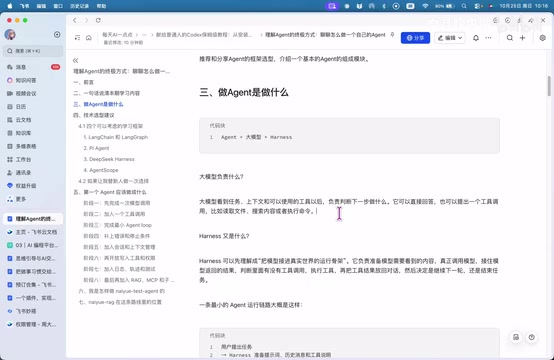
Build an Agent Yourself: The Best Path to Understanding AI Agents
Want to truly understand AI Agents? This article shows how to build a minimal Agent from scratch, breaks down the LLM/Harness division of labor, recommends learning frameworks like PiAgent and DeepSeek Harness, and outlines eight progressive stages plus the relationship between RAG and Agents.
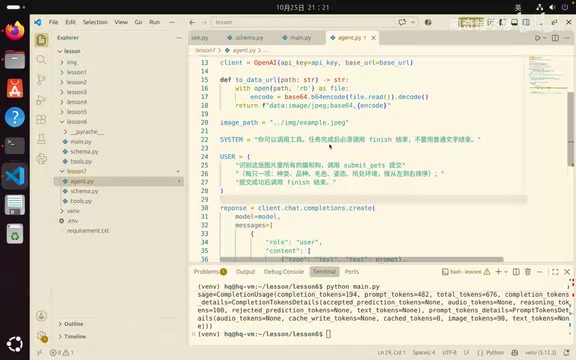
Building a Minimal Agent from Scratch: A Hands-On Guide to Writing AI Loop Invocation Code
Follow a Bilibili tutorial to build a minimal AI Agent from scratch: define tool schemas and a finish signal, design system/user prompts, implement a loop with a max step limit, parse tool call results, and fix the bug where the loop does not exit after finish.

Kimi K3.1 Pro Hands-On: Can an Open-Source Model Challenge Opus 5.5?
Kimi K3.1 Pro tested against Opus 5.5 and DeepSeek V4.1 Flash: strong benchmarks, but MOBA game dev exposes weaknesses. Speed near Opus, cost near DeepSeek—the open-source value pick.