The CAPSARII Project: How Ultra-Low-Power Wearable Sensors Enable Battlefield Health Monitoring

CAPSARII proposes a battlefield wearable monitoring platform integrating smart textiles, RISC-V edge AI, and federated analytics, with benchmarks and a roadmap.
The CAPSARII project builds an Internet of Battlefield Things wearable platform for military scenarios, with a four-layer architecture spanning smart textile sensing, body/squad area networks, RISC-V edge AI, and cloud-based federated analytics. Benchmarking on public wearable datasets showed XGBoost at 0.901±0.023 accuracy (F1 0.920±0.019) and a feature-based Transformer at 0.963±0.025 AUC, guiding edge deployment and compression strategies. The project uses pruning, quantization, and distillation to meet energy budgets, and identifies three gaps: validation standards, low-latency BAN/SAN communications, and post-quantum security on constrained endpoints.
Military personnel health monitoring is moving from the lab to the battlefield. The CAPSARII project proposes a networked wearable platform that integrates smart textile sensing, body/squad area networks, RISC-V edge AI, and cloud-based federated analytics, aiming to achieve real-time physiological monitoring and data-driven decision-making in harsh environments. The project's latest research not only presents benchmark results for stress classification but also systematically lays out a complete technology roadmap from hardware-software co-design to post-quantum encryption.
Architecture Design: From Smart Textiles to the Internet of Battlefield Things
At the core of CAPSARII is an Internet of Battlefield Things (IoBT) framework designed for military scenarios. The sensing layer uses smart textile materials, weaving sensing functionality directly into clothing to avoid the risk of traditional patch-style sensors detaching or shifting during intense movement. Data is aggregated through body/squad area networks (BAN/SAN), maintaining low-latency communication under mobility and interference conditions.
The key choice at the compute layer is deploying edge AI on secure RISC-V microcontrollers. This decision balances power constraints with security isolation requirements: RISC-V's open instruction set allows custom extensions for encryption and inference tasks while avoiding the supply chain risks of closed-source architectures. The cloud and federated analytics layer handles cross-mission learning and comparative studies, enabling data from different units and different missions to continuously optimize models without sharing raw data.
The project uses two representative use cases to drive requirements definition and validation: pilot fatigue monitoring, and warfighter state assessment in harsh environments. The interface design covers HUD displays and haptic feedback to ensure critical alerts can still be delivered when visual or auditory channels are constrained.
Body/Squad Area Networks (BAN/SAN): A Body Area Network (BAN) refers to a low-power wireless network surrounding a single human body, composed of wearable or implantable sensors, with typical communication ranges within a few meters, responsible for collecting and aggregating physiological signals. A Squad Area Network (SAN) interconnects the body area networks of multiple soldiers to form a larger-scale network covering a squad (typically 8–12 people), used for sharing situational data and collaborative decision-making. Both are often based on low-power standards such as IEEE 802.15.6 and must cope with body shadowing, link fluctuations caused by movement, and dynamic multi-node topology changes. In military scenarios, BAN/SAN must also meet anti-jamming, low probability of intercept, and low-latency requirements, making their routing and scheduling design far more complex than consumer-grade wearable networks.
Federated Analytics: Federated learning/federated analytics is a distributed machine learning paradigm in which raw data remains on local devices or local nodes, and only model parameters or statistics are uploaded to a central location for aggregation. For military applications, this means data from different units and different missions can jointly optimize a global model without leaving their respective control domains, reducing both the risk of sensitive physiological data leakage and dependence on high-bandwidth backhaul links. The costs are communication overhead, convergence stability of model aggregation, and robustness against malicious participants—issues that are especially pronounced on resource-constrained edge nodes.
Stress Classification Benchmarks: The Trade-off Between Tree Ensembles and Transformers
As a first step toward embedded models, the research team benchmarked stress classification tasks on public wearable datasets, and the results revealed a trade-off with direct implications for edge deployment.
Tree ensemble baselines achieved leading accuracy and F1 scores: XGBoost reached an accuracy of 0.901±0.023 and an F1 score of 0.920±0.019. A feature-based Transformer, meanwhile, performed best on AUC, reaching 0.963±0.025. This difference is not simply a matter of one model being better than the other—tree ensembles have controllable computation and low memory footprint once feature engineering is complete, making them better suited to resource-constrained microcontrollers; the Transformer's high AUC indicates that temporal modeling capability has potential for capturing changes in stress states, but it requires more aggressive compression to be deployable.
These results directly influenced CAPSARII's feature engineering and compression strategy choices: the team needed to determine which features must be retained and which model structures can maintain clinically acceptable accuracy after pruning and quantization.
Tree Ensemble Methods (XGBoost, etc.): Tree ensembles improve predictive capability by combining multiple decision trees. XGBoost uses a gradient boosting framework, training new trees one by one to correct the residuals of preceding models, and controls overfitting through regularization. Its advantages are that it is highly compatible with tabular feature engineering outputs, inference requires only comparisons and additions along tree paths, and both memory footprint and computation are easy to estimate, making it suitable for deployment on microcontrollers. Its limitation is that it is inherently poor at modeling raw time-series signals, and performance depends heavily on the quality of handcrafted features.
Feature-Based Transformers: Transformers use self-attention mechanisms to capture dependencies between any positions in a sequence, making them easier to parallelize and stronger at long-range modeling than recurrent networks. "Feature-based Transformer" in this context means first extracting physiological time-series signals into feature sequences (rather than feeding raw waveforms directly) before passing them to a Transformer encoder. Its AUC advantage shows that attention mechanisms can better distinguish changes in stress states, but self-attention computation and parameter scale impose a significant burden on embedded devices, making deployment possible only with pruning, quantization, or distillation compression.
Hardware-Software Co-Design: A Combined Approach of Compression and Processing-in-Memory
Building on the benchmark results, CAPSARII employs hardware/software co-design to meet strict energy and memory budgets. Model compression techniques include pruning, quantization, and distillation, combined with accuracy tuning to reduce computational load while maintaining inference quality.
The longer-term direction is Processing-in-Memory (PIM) accelerators. For continuously running health monitoring scenarios, the movement of data between storage and compute units is itself a major source of energy consumption, and processing-in-memory promises to eliminate this bottleneck at the architectural level. The project positions it as an exploratory direction for future efficiency gains rather than a current deployment solution.
Processing-in-Memory (PIM): In traditional von Neumann architectures, data must be repeatedly moved between storage units and compute units, and this "memory wall" accounts for a considerable proportion of energy consumption under continuously running health monitoring workloads. Processing-in-memory embeds some computational logic inside or adjacent to memory arrays, enabling operations such as multiply-accumulate to be completed where the data resides, thereby reducing data movement overhead and improving energy efficiency. For wearable and edge devices, its appeal lies in simultaneously alleviating energy and latency bottlenecks; however, maturity, programming models, precision, and reliability remain the main obstacles to moving from exploration to deployment, which is why CAPSARII positions it as a future direction rather than a current solution.
Gap Analysis: Standards, Communications, and Post-Quantum Security
The project's structured gap analysis identifies three unresolved challenges that determine whether laboratory baselines can be translated into mission-ready systems.
Validation standards for physiological signal quality and textile durability are still lacking. There is currently no unified specification for quantifying how sensing performance degrades under repeated washing, friction, and sweat exposure.
The low latency and scalability of BAN/SAN communications under mobility and interference conditions need further validation. The number of nodes in a squad area network changes with personnel grouping, and topology is highly dynamic, making traditional static routing schemes difficult to apply directly.
The most challenging issue is the security layer. Deploying lightweight and post-quantum hybrid encryption on resource-constrained endpoints while ensuring robust device identity and side-channel attack resistance involves multiple constraints across cryptography, hardware design, and power budgets. There is a real tension between the urgency of post-quantum migration and the computational ceiling of embedded devices.
Post-Quantum Cryptography (PQC): Post-quantum cryptography refers to cryptographic algorithms capable of resisting attacks from quantum computers, primarily based on mathematical hard problems such as lattices, codes, and multivariate systems. NIST officially published its first batch of standards in 2024 (such as ML-KEM and ML-DSA). The urgency stems from the "harvest now, decrypt later" threat: attackers may intercept encrypted data now and decrypt it once quantum computing matures, so long-term sensitive physiological and operational data needs to migrate in advance. However, PQC algorithms have larger key and signature sizes and heavier computation, and deploying them on resource-constrained microcontrollers requires forming hybrid schemes with lightweight symmetric encryption, plus additional protection against side-channel attacks—inferring keys through physical leakage such as power consumption and timing. This tension between the computational ceiling and the migration deadline is precisely the core challenge facing CAPSARII's security layer.
From Lab to Battlefield: A Pragmatic Roadmap
The value of CAPSARII lies in integrating these disparate technical elements into a coherent secure IoBT technology stack and clarifying the roadmap from benchmarking to mission deployment. It does not claim a single-point breakthrough but instead acknowledges that sensor durability, network reliability, and cryptographic deployment must advance in tandem—a shortfall in any one link will limit the overall system's operational usability.
For developers focused on wearable health monitoring and edge AI, the project's key insight is this: model selection must be decided jointly with hardware constraints, security cannot be treated as an after-the-fact patch, and the absence of validation standards may become a deployment barrier sooner than algorithm accuracy.
One-line Summary
CAPSARII proposes a battlefield wearable monitoring platform integrating smart textiles, RISC-V edge AI, and federated analytics, along with benchmarks and a roadmap.
Paragraph Summary
The CAPSARII project builds an Internet of Battlefield Things wearable platform for military scenarios, comprising a four-layer architecture of smart textile sensing, body/squad area networks, RISC-V edge AI, and cloud-based federated analytics, driven by use cases including pilot fatigue monitoring and warfighter state assessment in harsh environments. The research completed stress classification benchmarks on public wearable datasets: XGBoost achieved accuracy of 0.901±0.023 and F1 of 0.920±0.019, while a feature-based Transformer achieved the highest AUC of 0.963±0.025—a trade-off that directly guided feature engineering and compression strategies for edge deployment. The project employs pruning, quantization, distillation, and accuracy tuning to meet energy and memory budgets, and lists processing-in-memory as a long-term exploratory direction. The structured gap analysis identifies three unresolved challenges: the lack of validation standards for textile durability and signal quality, low-latency BAN/SAN communications under mobility and interference, and post-quantum hybrid encryption with side-channel protection on constrained endpoints.
Related articles
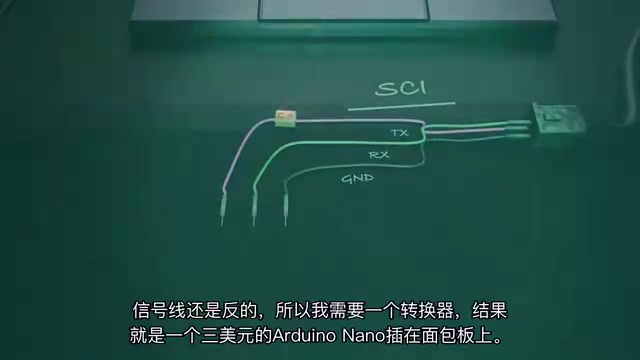
No OBD2? How Claude Reverse-Engineered a '94 Jeep
A 1994 Jeep failed emissions. With Claude and Codex, the owner bypassed the missing OBD2 port using a $3 chip to read ECU data, control the fuel pump, and write Flash code—passing inspection. Full wiring and AI reverse engineering details.

Claude Meets a 32-Year-Old Jeep: An AI Reverse-Engineering Journey from Reading Codes to Controlling the Car
A 1994 Jeep Cherokee failed California's smog test due to high NOx. Using Claude Code to reverse-engineer the SCI protocol and a $3 Arduino to read the ECU, plus Codex injecting code into EEPROM, it passed.

GTA 6: How Rockstar Is Building Its Most Detailed — and Most Romantic — Open World
GTA 6 is billed by Rockstar as its most detailed and most romantic entry yet, starring a pair of thieves who fall in love while stealing a car. This analysis explores what that premise could mean for open-world narrative and gameplay design — and the risks Rockstar is taking.