The Cognitive Misconceptions of AI Therapy: Why Algorithms Cannot Replace Genuine Healing
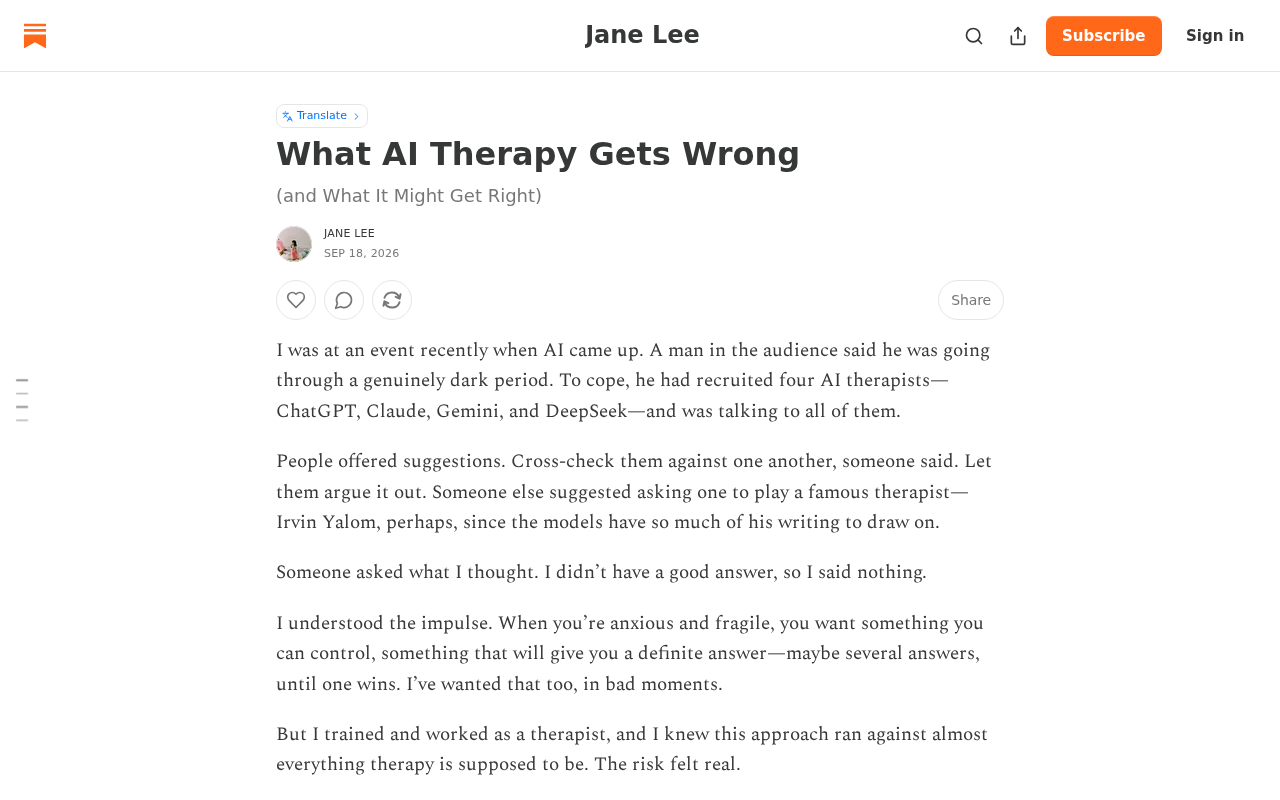
AI can mimic the form of therapy but cannot replicate the real human relationship and clinical accountability that genuine healing depends on.
As large language models proliferate, AI mental health tools attract users with their low cost and constant availability — but this convenience masks a fundamental misunderstanding of what therapy actually is. Research consistently shows that the "therapeutic alliance" — the genuine trust and emotional bond between therapist and client — is one of the strongest predictors of treatment outcomes, far beyond the content of any conversation. AI's empathy is merely statistical language prediction, offering the form of comfort without the substance of real connection. Beyond this, AI therapy poses serious risks: it lacks crisis intervention capacity, may foster unhealthy dependency, and raises significant data privacy concerns. A more appropriate role for AI is as a supplementary tool for mood tracking, psychoeducation, or transitional support — not as a replacement for a professional therapist. True healing still requires genuine human presence.
Why AI Therapy Has Become So Appealing
As large language models have become widespread, more and more people are turning to AI chatbots to vent their troubles and ease anxiety. Always online, non-judgmental, and nearly free — these qualities make AI mental health support seem like a perfect solution. For those who can't afford traditional therapy or feel too anxious to seek face-to-face counseling, AI offers a low-barrier entry point.
Yet behind this convenience lies a fundamental misunderstanding of what therapy actually is. A Hacker News discussion titled What Using AI Therapy Gets Wrong highlights how, when we treat AI as a therapist, we often overlook the core elements of psychological healing that simply cannot be replicated by an algorithm.
Therapy Is About Far More Than Conversation
Many people assume that therapy is simply about voicing your problems and receiving some advice. If that were all there was to it, a well-trained language model might genuinely be up to the task — it can generate structured, coherent responses and is often more patient than many human listeners.
But real psychotherapy is far more complex than that. The therapeutic relationship itself is part of the healing. The trust, empathy, and genuine human connection built between a therapist and a client form the very foundation upon which change becomes possible. This relationship — known as the "therapeutic alliance" — is widely recognized in research as one of the most critical factors in treatment outcomes. No matter how skillfully an AI simulates empathy, it is not truly "present," nor can it bear the responsibility and vulnerability that come with a real relationship.
The Difference Between Simulated and Genuine Empathy
An AI can say, "I understand how you feel" — but it doesn't. It is predicting the most statistically appropriate next sentence based on vast amounts of text. When a person reaches out for comfort in a vulnerable moment, this kind of probability-driven "empathy" is fundamentally different from the care offered by another real human being. One provides the form of consolation; the other provides the substance of connection.
The concept of the "therapeutic alliance" was formally introduced by psychologist Edward Bordin in 1979 and encompasses three core dimensions: agreement between therapist and client on the goals of therapy, alignment on the specific tasks involved, and the emotional bond between them. Decades of meta-analytic research show that the quality of the therapeutic alliance is one of the strongest predictors of treatment outcomes — with an effect size that surpasses the differences between specific therapeutic modalities (such as cognitive behavioral therapy, psychodynamic therapy, etc.). This means it is not what is said that determines outcomes, but who is saying it to whom. The corrective relational experience within therapy — being genuinely understood and accepted by a real other person, without judgment — is itself the mechanism that reshapes personality patterns, not merely a container for delivering technique.
The Hidden Risks of AI Therapy
Using AI as a therapeutic tool also comes with several problems that cannot be overlooked. First, there is the absence of safety boundaries. When a client expresses serious self-harm intent or is in crisis, a human therapist has both the professional responsibility and the capability to intervene. AI lacks this kind of judgment and accountability, and may produce inappropriate or even dangerous responses.
Second, there is the risk of fostering unhealthy dependency. AI's perpetual availability and compliance may cause users to avoid the necessary human interactions of real life, ultimately deepening loneliness and social withdrawal. One of therapy's core goals is to help people re-engage with real-world relationships — not to offer a permanent refuge from them.
Finally, privacy and data security are serious concerns. Entrusting the most intimate details of your psychological state to a commercial AI product raises important questions about how that sensitive data is stored, used, or potentially monetized — questions that currently lack transparency and regulatory safeguards.
In clinical practice, crisis intervention follows strict professional protocols, including Safety Planning and mandatory reporting obligations. When a client expresses suicidal intent, a human therapist must not only assess the level of risk, but also coordinate real-world resources — involving family members, psychiatric referrals, or emergency hospitalization. Most mainstream commercial AI chat products lack such mechanisms entirely, and their underlying design logic prioritizes maintaining conversational flow. This means they may respond to crisis signals with reassurance rather than intervention. In 2023, the American Psychological Association (APA) and multiple digital mental health research institutions issued warnings noting that clinically unvalidated AI mental health tools carry systemic safety vulnerabilities in crisis scenarios, calling on the industry to establish mandatory baseline safety standards.
What Role AI Can Reasonably Play
Criticism doesn't mean dismissing AI's value entirely. As a supplementary tool, AI still has a place in mental health: it can help users with daily mood tracking, provide psychoeducational information, guide simple mindfulness exercises, or offer transitional support while someone waits for professional care.
The key is proper positioning. Treating AI as a "mental wellness assistant" rather than a "psychotherapist" — and clearly understanding its limitations — allows people to benefit from its convenience without being misled. Real therapy requires human participation. This is not a matter of technology not yet being mature enough; it is a matter of what healing fundamentally is. When AI claims to "replace therapy," what it misunderstands is precisely the most human, most un-algorithmizable part of the process.
Conclusion
The rise of AI therapy reflects a genuine social need: access to quality mental health care is far from sufficient. But as we turn to technology to fill this gap, we must be clear-eyed about what it can and cannot do. Viewing AI as a bridge toward professional help — rather than the destination itself — is perhaps the more responsible approach.
Note: This article is based on materials drawn from a Hacker News community discussion. The original thread received limited engagement, and the perspectives discussed still await more thorough research and clinical validation.
Related articles
Robinhood Executive to Speak at TechCrunch Disrupt 2026 on Winning the Modern Financial Consumer
Robinhood VP of Product Marketing Abhishek Fatehpuria will speak at TechCrunch Disrupt 2026 on winning the modern financial consumer. Early-bird saves up to $200 before Sept 25.

Using ChatGPT to Batch-Generate Editable Academic Slides: A Practical Efficiency Tool for Researchers
A complete workflow for batch-generating editable academic PPTs with ChatGPT: upload a PDF and template, use a structured prompt to render slides as images, then convert to editable format — all in under 30 minutes.

GPT-6 Full Power Guide: Unlocking Ultra Thinking Intensity via GPT-work
Step-by-step guide to using GPT-6 at full power: Apple ID registration, Plus/Pro subscription, and unlocking GPT-6 Ultra max thinking intensity via GPT-work client.