The Core Architecture Decision in AI Agents: Where Should You Draw the Line Between Deterministic Orchestration and LLM Reasoning?
Where to draw the line between deterministic orchestration and LLM reasoning in AI Agent architecture.
Developers building AI Agent systems face a core architectural challenge: which decisions should be handled by deterministic orchestration, and which by LLM reasoning? The article proposes splitting request handling into a deterministic path (for known state spaces and structured flows) and a semantic path (for ambiguity and fuzzy reasoning). Over-relying on either extreme has costs — too much LLM involvement hurts predictability, while over-engineering the control layer recreates a brittle rules engine. A key pitfall: the control layer's complexity can exceed the cost of model uncertainty, signaling it's time to delegate more to the model.
A Recurring Architecture Question
Every developer building AI Agent systems eventually hits the same wall: should each decision in the system be handled by deterministic orchestration logic, or by a large language model's reasoning capabilities? This isn't a technology selection problem — it's a fundamental architectural decision that defines the balance between predictability and flexibility across the entire Agent system.
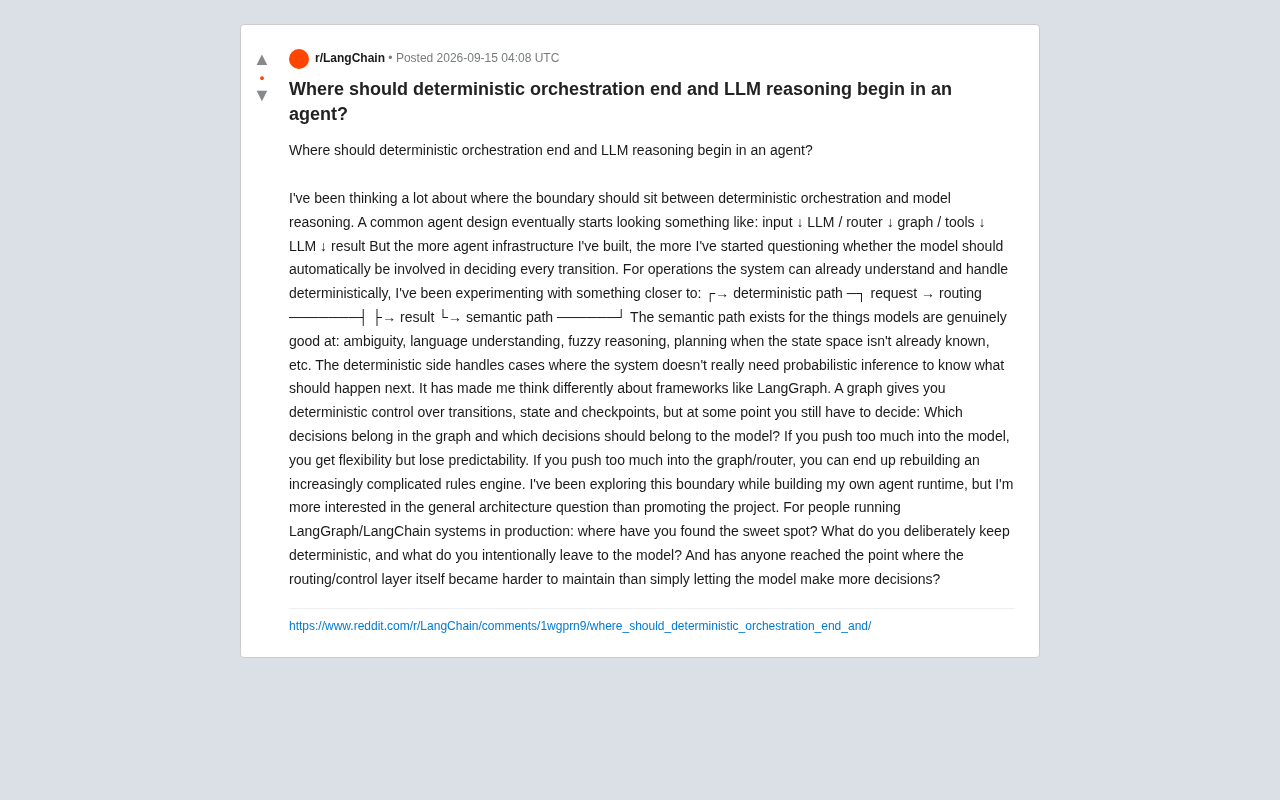
A developer who shared their experience on Reddit put this question front and center. After spending a long time building Agent infrastructure, they noticed that a typical Agent design tends to evolve into this linear structure:
Input
  ↓
LLM / Router
  ↓
Graph / Tools
  ↓
LLM
  ↓
Result
The implicit assumption here is that the model should participate in every state transition decision. But as system complexity grew, this developer began questioning that assumption — do you really need to invoke probabilistic reasoning every time for operations the system could handle deterministically?
From Linear Pipelines to Forked Paths
In response to this question, the developer proposed an alternative architectural approach: splitting request handling into two parallel paths:
              ┌→ Deterministic Path ─┐
Request → Router ──┤                  ├→ Result
              └→ Semantic Path ──────┘
The core of this design is separation of concerns. The semantic path is reserved for scenarios where models truly excel: handling ambiguity, understanding natural language, fuzzy reasoning, and planning when the state space isn't yet clear. The deterministic path takes over when the system already knows exactly what to do next — no probabilistic reasoning required.
The value of this fork lies in its rejection of the default assumption that "the model must be involved at every step." In many Agent scenarios, once the intent of an input is recognized, the subsequent process is completely deterministic — like querying data in a known format or executing a standardized API call. Having an LLM "decide" these already-certain transitions wastes compute and adds latency, while introducing unnecessary nondeterminism.
What LangGraph Reveals — and What It Leaves Unanswered
This line of thinking also prompted the author to take a fresh look at frameworks like LangGraph. The strength of a graph structure is that it provides deterministic control over state transitions, state management, and checkpoints — exactly the kind of predictability production environments demand.
But no framework can answer the fundamental question for you: which decisions belong to the graph, and which belong to the model?
This creates a genuine dilemma:
- Over-relying on the model: The system gains enormous flexibility and can handle all kinds of unexpected inputs — but at the cost of predictability. The same input may produce different execution paths, making debugging and testing far more difficult.
- Over-relying on the graph/router: System behavior becomes highly controllable, but you may unknowingly be rebuilding an increasingly bloated rules engine. Every edge case requires another rule, and maintenance costs eventually spiral out of control.
In other words, pushing decision-making authority to either extreme creates blowback. The real engineering challenge is finding the sweet spot.
The Control Layer Itself Can Become a New Burden
One of the sharpest questions raised in this discussion: has anyone reached a point where the routing/control layer itself became harder to maintain than simply letting the model make more decisions?
This is an easy trap to fall into. In pursuit of predictability, developers keep pushing more logic into the deterministic layer — and the complexity of that control layer grows exponentially. When the number of rules, branches, and state transition conditions you need to maintain reaches a certain threshold, the cognitive overhead can exceed the cost of uncertainty that comes from trusting the model's judgment.
This is a reminder: determinism is not a free lunch. It shifts uncertainty from runtime to development time — you pay upfront with more design work and code in exchange for runtime stability. When that trade-off stops making sense, it's time to let the model carry more of the load.
A Decision Framework for Production Practitioners
While this discussion doesn't produce a definitive answer (architectural problems never have silver bullets), it distills several judgment criteria that every Agent developer should ask themselves:
- Is the state space known? If all possible next steps can be enumerated, lean toward deterministic handling. If the state space is open-ended and requires real-time planning, hand it to the model.
- Is the input structured? For ambiguous, natural-language, or intent-disambiguation scenarios, the model is the better choice.
- How valuable is predictability? For high-stakes operations involving financial transactions or access control, the auditability that determinism provides is critical.
- Has the control layer's maintenance cost gotten out of hand? If your rules engine has become harder to maintain than model-based reasoning, that's a signal to delegate more decisions to the model.
A truly mature Agent architecture usually isn't an either/or choice. Like the forked-path design the author proposed, it lets both paradigms play to their strengths — determinism handles what it can handle with certainty, and the model handles the ambiguous territory that only it can navigate. That boundary isn't drawn once and forgotten; it's a dynamic equilibrium that shifts continuously as the system evolves.
Related articles
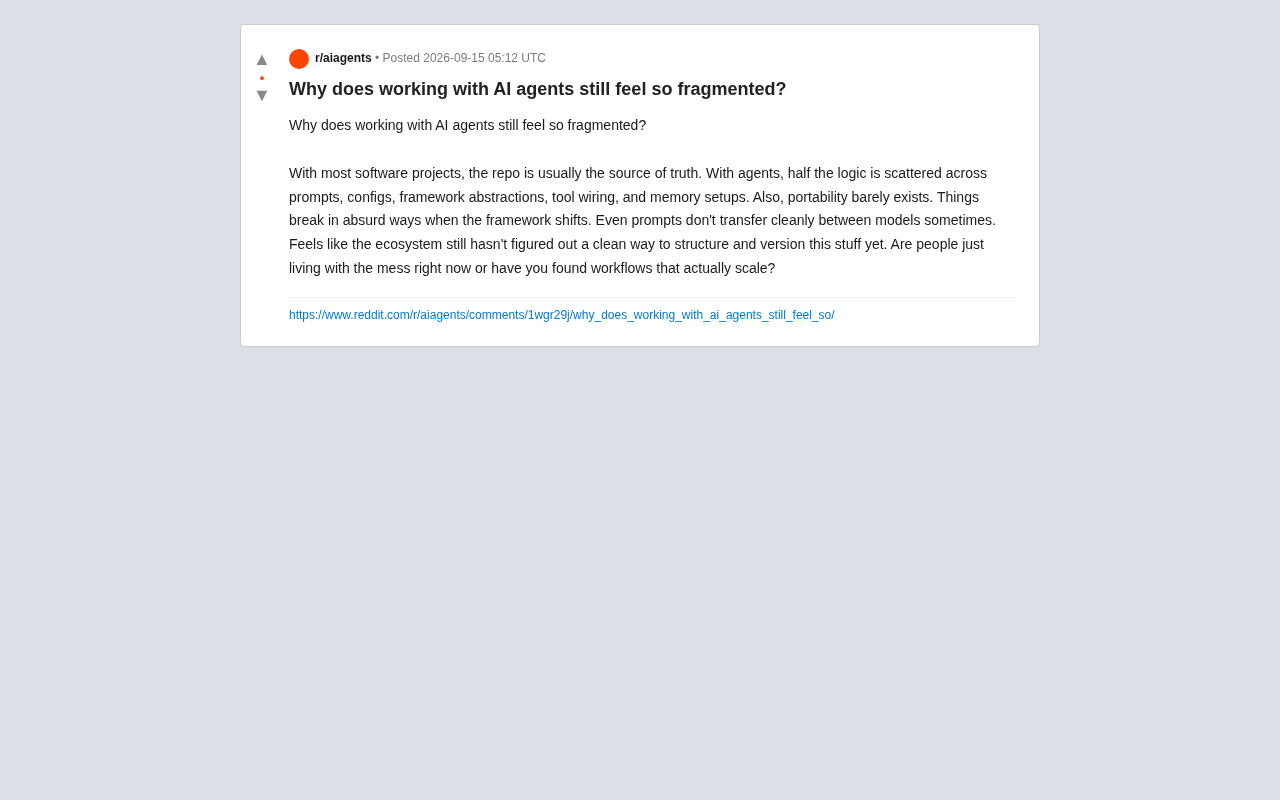
Why Is AI Agent Development So Fragmented? The Real Causes and How to Work Around Them
Why does AI Agent development feel so fragmented? Logic scattered across prompts, configs, and frameworks makes portability nearly impossible. Here's why — and how to cope.
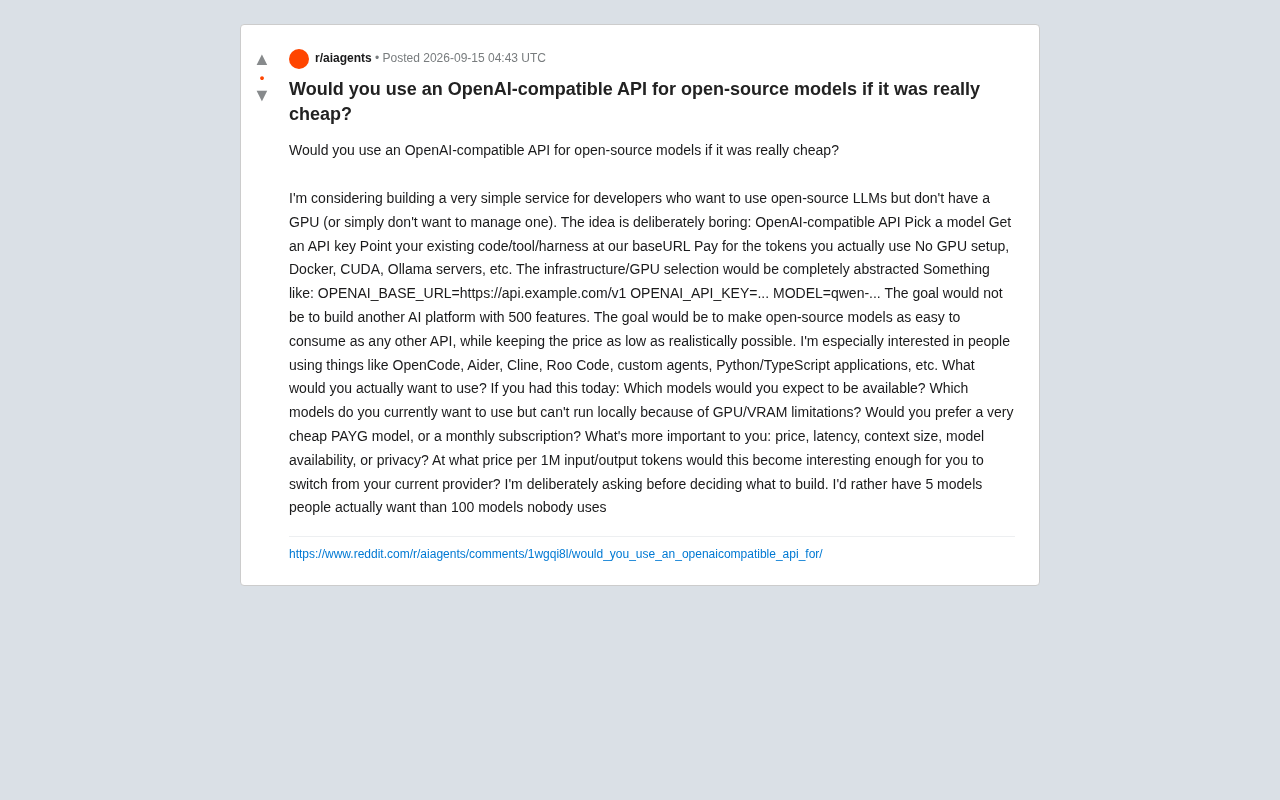
Cheap OpenAI-Compatible APIs: The Opportunity and Pain Points of Cloud-Hosted Open-Source LLMs
A developer explores building a cheap, OpenAI-compatible API for open-source LLMs like Qwen and Llama — no GPU required. Analysis of pain points, pricing models, and market challenges.
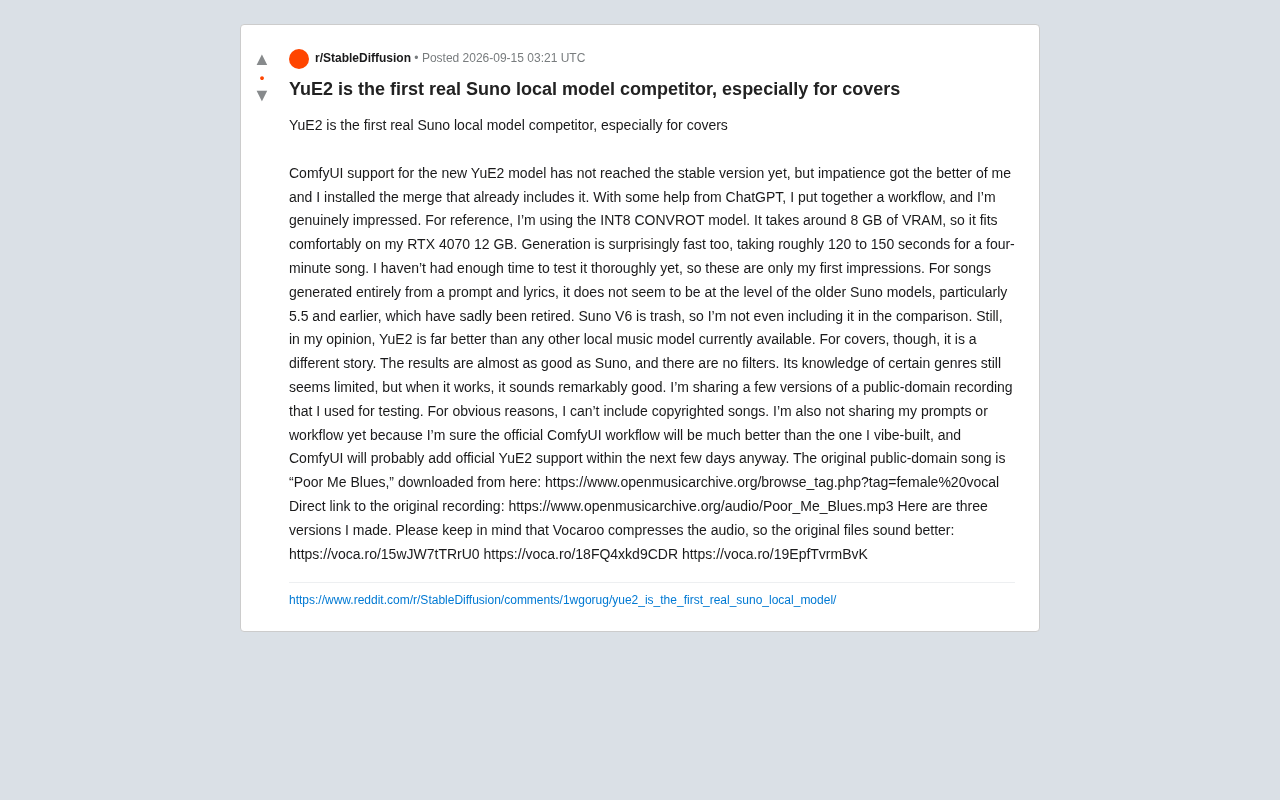
YuE2 Local Music Model Review: The Open-Source Suno Rival That Actually Delivers on Covers
YuE2 is the first local AI music model to seriously rival Suno — runs on 8GB VRAM, delivers near-Suno cover quality, and has no content filters. Based on real Reddit user testing.