The Creatine Truth: Fitness Miracle or Cognitive Myth?
Creatine builds muscle only with exercise; brain benefits have preliminary evidence but are exaggerated by marketing.
This article systematically reviews the scientific evidence on creatine, from muscle to brain. At the muscle level, creatine extends energy supply for high-intensity exercise by boosting phosphocreatine reserves, and combined with resistance training can add about 2.4 pounds of lean body mass—though some is water; without exercise it is nearly ineffective. At the brain level, creatine's entry into the brain is confirmed, but effects on cognition, mood, and neurodegenerative disease remain preliminary. Insensitive cognitive tests, preliminary Alzheimer's research overinterpreted as "reversal," and a lack of evidence for high-dose benefits all suggest marketing claims far outstrip scientific fact. The conclusion: creatine is not a scam, nor a panacea—treat it with caution.
Creatine, a supplement that has circulated in fitness circles for decades, has recently been pushed toward a broader audience under the guise of a "cognitive enhancer," "mood stabilizer," and even "antidepressant." From gyms to offices, from athletes to ordinary desk workers, creatine sales figures keep climbing. But hundreds of studies, substantial industry sponsorship, and a flood of hard-to-verify claims on social media make it difficult for ordinary consumers to tell: which are scientific facts, and which are marketing talk?
This article, based on a systematic review of existing research, checks creatine's core claims one by one, from muscle to brain.
Starting with Muscle: What Creatine Actually Does
All cells rely on a molecule called adenosine triphosphate (ATP) for energy. You can think of ATP as a battery, and muscle contraction is the process of draining it. During high-intensity exercise, this battery runs out within seconds. The body synthesizes creatine on its own, and muscles store a reserve of "backup power" that is continuously depleted during training, with creatine responsible for replenishing it.
The problem is that the body only synthesizes about 1 to 2 grams of creatine per day. If you supplement with the recommended 3 to 5 grams daily, the extra creatine fills up the muscle's storage tank—but the amount muscles can hold is limited.

The key point is that this extra energy reserve does not directly make you bigger. Its real value lies in letting you complete one or two more reps at the gym, or extend a sprint from 30 seconds to 40 seconds. As researchers put it, "This doesn't come directly from creatine—creatine helps you train harder, and then you get stronger."
Muscle-Building Effect: Yes, But With Conditions
An analysis covering 35 studies showed that people who took creatine during resistance training gained about 2.4 pounds more lean body mass than those who did not. But some of that may be water—creatine draws water into cells, causing a gain of a few pounds, and for sensitive individuals, as much as four or five pounds.
The more critical limiting condition is this: creatine is only effective when combined with regular high-intensity exercise. In the same body of research, people who took creatine but did not exercise gained only 0.07 pounds of lean mass, which was not statistically significant. In other words, creatine won't make you strong while lying around, and it certainly won't make you "instantly huge." Those astonishing before-and-after photos are almost certainly fake, or the people in them were using something else.
Adenosine Triphosphate (ATP) and the Phosphocreatine System
ATP is the energy currency cells can use directly. The high-energy phosphate bonds in its molecular structure release energy upon hydrolysis, driving muscle contraction, nerve conduction, and other life activities. The ATP reserve in muscle is extremely limited, sustaining maximal-intensity contraction for only a few seconds. At this point, phosphocreatine (the storage form of creatine in muscle), catalyzed by creatine kinase, transfers a high-energy phosphate group to ADP, rapidly regenerating ATP and thereby sustaining short-term high-intensity energy supply. This system is called the phosphagen system and is the primary energy source for explosive movements such as sprinting and weightlifting. The core mechanism of creatine supplementation is precisely to increase the muscle's phosphocreatine reserve, extending the energy supply duration of the phosphagen system, so that you can complete one or two more reps or extend sprint time during training.
The Brain: Evidence Exists, But Is Far From Mature
Claims about creatine's potential effects on memory, mood, and cognition are everywhere online: preventing cognitive decline, stabilizing mood, fighting depression, significantly improving energy and memory, offsetting the effects of sleep deprivation. Over the past year, searches for "creatine and the brain" have grown by more than 118%.
The current academic consensus is that creatine does indeed enter the brain—this is well established. The real question is what it does once it gets there.
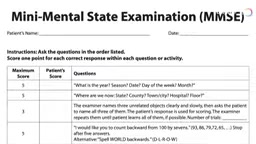
Measuring cognitive function is itself difficult. Differences between individuals are small, and existing tools are not designed to capture these subtle effects. Take a 2026 study as an example: researchers used nearly a dozen brain tests and questionnaires to measure cognition in middle-aged adults, one of which was the MMSE—typically used to screen for dementia, not to measure thinking ability in healthy adults. After 12 weeks, the supplement group answered on average just one more question correctly. The paper presented this as a 3% improvement, but in essence it was one more correct answer on an insensitive test. The researchers themselves called all results "exploratory."
When asked whether the advertising promise that creatine makes you sharper overstates what is known, the researcher's answer was direct: "Yes, we're not there yet."
Alzheimer's Disease: A Pilot Study Overinterpreted
There has also been much discussion around creatine for treating Alzheimer's disease. One study recruited 20 Alzheimer's patients who took 20 grams of creatine monohydrate daily for eight weeks, and observed improvements in memory and executive function. The researchers called the results "genuinely exciting" but emphasized that this was a preliminary study without a control group—"We have supportive evidence, but currently lack definitive evidence."
However, that did not stop the data from being exaggerated. Claims appeared online that "20 grams of creatine daily reverses memory loss in Alzheimer's patients." The researchers responded clearly: "That's not true. We saw some cognitive improvement after eight weeks, but that doesn't mean we reversed Alzheimer's disease."
On the other side, many health influencers use these studies as evidence to argue that higher doses are needed to obtain brain benefits. The researchers warned about this: "These data are very preliminary at this point, and I am very cautious about high-dose creatine. We don't yet have evidence to say it's beneficial."
MMSE (Mini-Mental State Examination)
The MMSE is a widely used clinical cognitive screening tool with a total of 30 points, covering orientation, memory, attention, language, and visuospatial ability. It was designed to quickly identify dementia or severe cognitive impairment, not to detect subtle cognitive differences among healthy adults. The scale has a pronounced ceiling effect—healthy people typically score near the maximum—and is therefore insensitive to mild or subtle cognitive changes. In creatine research, using the MMSE as the primary outcome measure means that even if the intervention produced a small cognitive improvement, it would be difficult to capture reliably. This is also why the researchers' presentation of "one more correct answer" as a "3% improvement" requires cautious interpretation: the test instrument itself is not suited to measuring cognitive enhancement in healthy populations.
Pilot Study and Control Groups
A pilot study is a small-sample, exploratory study conducted before a formal large-scale trial, with the main purpose of assessing the safety, feasibility, and dose range of an intervention, as well as preliminary observation of effects, to inform the design of subsequent research. Its key limitations are a small sample size and usually the absence of a control group or randomization, making it impossible to rule out placebo effects, natural disease fluctuation, and selection bias. In a progressive disease like Alzheimer's, the lack of a control group means it is impossible to determine whether the observed cognitive improvement is due to the intervention or to natural disease fluctuation or practice effects. For this reason, the results of a pilot study can only be regarded as "hypothesis-generating," not "hypothesis-testing." The researchers' statement that there is "supportive evidence but a lack of definitive evidence" is precisely an accurate description of this methodological tier. Interpreting a preliminary study directly as "reversing" a disease is a serious misreading of the level of evidence.
Conclusion: Distinguishing the Certain from the Unknown
Drawing on the existing evidence, the following judgments can be made:
Certain: 3 to 5 grams of creatine per day, combined with high-intensity exercise, can help you train harder, which in turn leads to gains in strength and lean body mass, possibly accompanied by a small amount of water weight gain. Without exercise it is ineffective, and creatine alone cannot give you sculpted muscles.
Uncertain: Creatine supplements do reach the brain, but their effects on cognition, memory, depression, sleep deprivation, and Alzheimer's disease are currently supported only by small-sample studies suggesting "possible value." These clues are exciting, but a reliable conclusion is still a long way off.
Creatine is not a scam, but it is far from a panacea. Between marketing talk and preliminary research, maintaining a cautious attitude is the most rational way to approach this kind of supplement.
One-line Summary
Creatine builds muscle only with exercise; brain benefits have preliminary evidence but are exaggerated by marketing.
Paragraph Summary
This article systematically reviews the scientific evidence on creatine, from muscle to brain. At the muscle level, creatine extends the energy supply for high-intensity exercise by boosting phosphocreatine reserves, and combined with resistance training it can add about 2.4 pounds of lean body mass—though some of that is water; without exercise it is nearly ineffective. At the brain level, creatine's ability to enter the brain is confirmed, but its effects on cognition, mood, and neurodegenerative disease remain preliminary. Insensitive cognitive testing tools, preliminary Alzheimer's research overinterpreted as "reversal," and a lack of evidence for benefits from high doses all suggest that marketing claims far outstrip scientific fact. The conclusion: creatine is not a scam, nor a panacea—it should be treated with caution.
Related articles

Gemini 4 Hydrogen Hands-On: Google's Fastest and Cheapest AI Model
Hands-on with Gemini 4 Hydrogen: the fastest, cheapest model in the Gemini 4 family. We break down the Carbon/Argon/Hydrogen split, API pricing traps, free-tier limits, and the cost trade-offs of four thinking levels—with a real bug-debugging demo.

Gemini 4 Hydrogen vs Sonnet Comparison Test: Uses Only 1% of Weekly Quota, Performance on Par
Hands-on test: Gemini 4 Hydrogen vs Sonnet on the same CRUD task—Hydrogen used only 1% weekly quota with comparable performance and better UI details, while Anthropic's model used 7%. Developer says daily tasks don't require expensive models.
Gemini 4 Neon Released: Beats Opus 5.5 on Multiple Benchmarks, Google Returns to the Top Tier
Google DeepMind releases Gemini 4 Neon: 61 on the Artificial Analysis intelligence index (3rd) and 1st on the coding index, beating Opus 5.5 on multiple benchmarks. $3/$15 per million tokens; available in the Gemini API and AI Studio.