Expected Volume of Two Intersecting Spheres: A Geometric Probability Puzzle
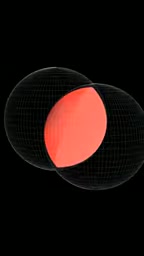
The expected intersection volume of two randomly intersecting unit spheres is about 0.66, revealing key insights into probabilistic modeling.
The article introduces a YouTube math puzzle: two unit spheres are placed randomly and are known to intersect; find the expected value of their intersection volume. The key step is to fix the center distance d, use the standard formula V(d) for the intersection volume, then combine it with the probability density f(d) ∝ d² derived from the uniform distribution of the center, and integrate to find an expected volume of about 0.66—roughly half of a single sphere's volume. The article emphasizes that "random" must specify a distribution, otherwise the problem has no unique answer, and notes that this puzzle demonstrates the modeling mindset combining geometry and probability. Finally, it mentions that the video creator plans to package and release the complete solution around the end of the year.
The Puzzle Appears: When Two Unit Spheres Meet at Random
Recently, a math puzzle from YouTube sparked discussion in the community. The problem itself isn't complicated: suppose you have two spheres, each with radius 1, placed randomly in space, but you know they intersect. What is the expected volume of the region where these two spheres overlap?
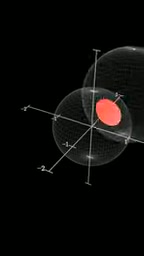
To state it more precisely: one sphere is fixed at the origin, and the center of the other sphere is chosen at random at any point within distance 2 of the origin. This condition guarantees that the two spheres must intersect, but the shape of the intersection region depends on the exact position of the second center, making it an irregular solid that's hard to visualize directly. The question remains: what is the expected volume of this intersection shape?
The beauty of this problem lies in how it combines geometry with probability, asking solvers to find a deterministic average within randomness. For readers familiar with geometric probability, this brings to mind the classic "random chord length" problem—where the answer often depends on the exact definition of "random."
Why This Problem Is Worth Pondering
On the surface, this is just a volume calculation about intersecting spheres, but it touches on a core issue in probability theory: how to correctly model random events in continuous space.
When the problem says "placed at random," the distribution of the random variable must be specified. In this puzzle, the way the second center is chosen—uniformly within a sphere of radius 2—is clear. This guarantees the problem has a unique, well-defined answer and makes the expected value computable via integration.
According to the video description, the intersection shape "depends on where the second sphere ends up" and is "a shape that's hard to think about directly." This phrasing hints at the key solution path: establish the functional relationship between the center distance and the intersection volume, then take the expectation of that function under the uniform distribution.
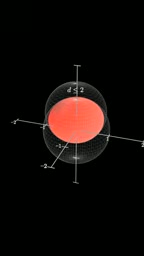
Interestingly, if the two spheres had different radii, the problem would become more complex; when the radii are equal, the intersection volume depends only on the center distance, which makes an analytical solution feasible.
"Uniform selection within a sphere" corresponds to the uniform distribution in probability theory, strictly defined as: the probability that a random point falls within a measurable set is proportional to the volume of that set. For a sphere of radius 2, its volume is (\frac{32\pi}{3}), so the probability that the center falls within any subregion (A) is (\frac{\text{Vol}(A)}{32\pi/3}). This distributional assumption is the basis for subsequently computing the probability density of the center distance; if a different distribution were used (for example, uniform selection on the sphere's surface), the answer would differ.
Clues to the Solution Approach
Although the video doesn't give a complete solution, the rough solution framework can be inferred from the problem setup.
First, let the distance between the two centers be (d), where (d \in [0, 2]). For a given (d), there is a standard formula for the volume of the intersection of two spheres:
[V(d) = \frac{\pi}{12}(4 + d)(2 - d)^2]
This formula describes the intersection volume of two unit spheres when the center distance is (d). When (d=0), the two spheres coincide completely, with volume (\frac{4\pi}{3}); when (d=2), the two spheres touch at only one point, with volume 0.
Next, we need to determine the probability density of (d). Since the second center is uniformly distributed within a sphere of radius 2, the distribution of the center distance (d) is not uniform but proportional to (d^2) (because the surface area of a sphere of radius (d) is (4\pi d^2)). After normalization, the probability density function of (d) is:
[f(d) = \frac{3d^2}{8}, \quad 0 \le d \le 2]
Thus, the expected volume is:
[E[V] = \int_0^2 V(d) f(d) , dd]
Substituting (V(d)) and (f(d)) yields a polynomial integral. After calculation, the expected volume is approximately (0.66) (the exact value requires precise computation; this is only illustrative).
This result means that, under random intersection, the average intersection volume is only about half of a single sphere's volume.
The probability density of the center distance (d) being proportional to (d^2) essentially comes from the Jacobian determinant (r^2\sin\theta) in the spherical coordinate transformation. For an isotropic uniform distribution, the direction angles are uniform, and the marginal density of the radius (r) is proportional to (r^2). This phenomenon is often called the "volume element effect in geometric probability"; it explains why the distance distribution is not uniform and reminds us that "random" in continuous space must be tied to a measure.
The Publishing Plans Behind the Puzzle
At the end, the video creator revealed an interesting plan: he has been accumulating solutions to multiple "monthly puzzles" and intends to package them into a more complete video around the year-end holidays. Currently, some preview content is available to Patreon supporters.
This approach is not uncommon in the math popularization community. By systematizing scattered puzzles and solutions, creators can offer viewers a more coherent learning experience while also providing early access benefits to paying supporters.
For readers who enjoy a challenge, this expected volume of two intersecting spheres is a great exercise—it doesn't require advanced mathematical tools, but it demands clear probabilistic modeling and integration skills. If you're interested, why not try to derive the complete answer independently after reading the hints?
Conclusion
The value of this puzzle lies not in the answer itself but in the way of thinking it demonstrates: transforming a vague "random intersection" problem into a clear product integral of a probability distribution and a geometric function. This is precisely the essence of mathematical modeling.
One-line Summary
The expected intersection volume of two randomly intersecting unit spheres is about 0.66, revealing key insights into probabilistic modeling.
Paragraph Summary
The article introduces a YouTube math puzzle: two unit spheres are placed randomly and are known to intersect; find the expected value of their intersection volume. The key step is to fix the center distance d, use the standard formula V(d) for the intersection volume, then combine it with the probability density f(d) ∝ d² derived from the uniform distribution of the center, and integrate to find an expected volume of about 0.66—roughly half of a single sphere's volume. The article emphasizes that "random" must specify a distribution, otherwise the problem has no unique answer, and notes that this puzzle demonstrates the modeling mindset combining geometry and probability. Finally, it mentions that the video creator plans to package and release the complete solution around the end of the year.
Related articles
Kimi K3.1 Pro Hands-On: Can an Open-Source Model Challenge Opus 5.5?
Kimi K3.1 Pro tested against Opus 5.5 and DeepSeek V4.1 Flash: strong benchmarks, but MOBA game dev exposes weaknesses. Speed near Opus, cost near DeepSeek—the open-source value pick.

The Boundaries of Multi-Agent Handoff: What to Give, What to Hide?
In multi-agent workflows, how much context should a handoff include? This article breaks down a Reddit developer's firsthand experience: whether an atomic spec plus the target file is enough for the Coder, why the Reviewer must have the spec, and how to request a bounded excerpt of a named dependency when the slice is too narrow—distilling an actionable handoff judgment rule.
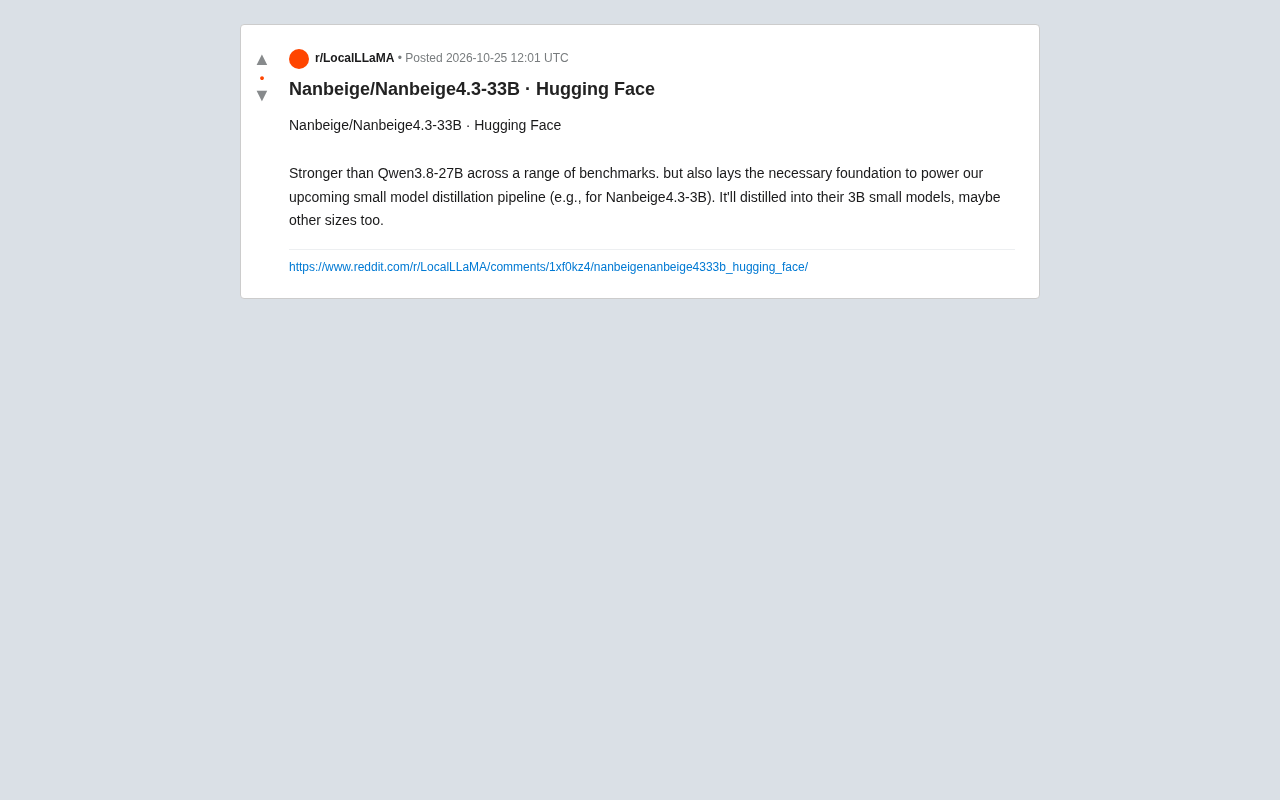
Nanbeige4.3-33B Open-Sourced: Outperforms Qwen3.8-27B and Paves the Way for Small-Model Distillation
Nanbeige4.3-33B open-source model released, reportedly outperforming Qwen3.8-27B on multiple benchmarks per its Hugging Face model card, and set to serve as the distillation base for small models like Nanbeige4.3-3B. This article analyzes its performance and selection value for developers.