The ETF That Excludes Musk: How Values-Based Investing Is Reshaping Capital Flows

Two new ETFs exclude Musk's companies, pioneering values-based investing that targets a specific entrepreneur.
Two newly launched ETFs explicitly exclude Musk-related companies like Tesla and SpaceX, setting an unprecedented investing precedent. This article explores the values-based logic behind them, the portfolio construction challenges, the psychology of the 'founder premium,' and the accelerating personalization of capital markets.
A Brand-New Investment Logic: Deliberately Excluding One Person
The U.S. capital markets have recently seen a rather talked-about financial product—two newly launched exchange-traded funds (ETFs) that explicitly exclude companies associated with Elon Musk. Whether it's SpaceX or Tesla, any enterprise founded, controlled, or led by Musk will not appear in the investment portfolios of these two funds.
An ETF (Exchange-Traded Fund) is a fund product publicly bought and sold on a securities exchange, typically tracking an index, industry sector, or specific asset portfolio. Unlike traditional mutual funds, ETFs can be traded throughout the day, generally carry lower fees, and offer high transparency—which is why over the past two decades they have rapidly become one of the most mainstream passive investment vehicles worldwide.
The core mechanism of ETFs lies in "in-kind creation/redemption"—authorized participants (typically large market makers such as Goldman Sachs and Morgan Stanley) can directly exchange a basket of stocks assembled according to the ETF's holding proportions for an equivalent value of ETF shares (creation), or convert ETF shares back into the corresponding stock portfolio (redemption). This arbitrage mechanism keeps the ETF's secondary-market price consistently close to its net asset value (NAV), with the spread usually not exceeding 0.05%, fundamentally solving the chronic problem of long-term discounts and premiums that plagued closed-end funds. This mechanism also brings a unique tax-efficiency advantage: when ordinary mutual funds face redemption pressure, fund managers must sell holdings to raise cash, triggering capital gains taxes borne collectively by all holders; ETFs, by contrast, complete the exchange with in-kind stocks, so the fund itself need not sell securities, allowing embedded low-cost assets to be quietly transferred and greatly reducing the frequency of taxable events—which is why ETFs often outperform comparable mutual funds on an after-tax return basis. As of 2024, global ETF assets under management have surpassed $12 trillion, with a compound annual growth rate exceeding 20% since 2004, reflecting the product form's dual appeal to both retail and institutional investors.
Among these, an Exclusionary ETF constructs its portfolio by applying negative screening mechanisms to specific targets. Its history can be traced back to the ethical investing movement of the 1970s—when religious groups first refused to invest in tobacco and gambling enterprises. Entering the 21st century, as ESG concepts spread, negative screening has become a standardized tool of responsible investing. Currently, over 600 ETFs worldwide explicitly employ exclusion strategies, first applied at scale in faith-based funds (such as Islamic-compliant funds excluding interest-bearing enterprises) and in the socially responsible investing space (excluding tobacco, weapons manufacturers, etc.).
This is a rather rare operation in the history of ETF development. Traditional thematic or exclusionary ETFs typically screen around industries (such as fossil energy, tobacco, defense), regions, or certain corporate behaviors (such as failing ESG standards); whereas a product whose core logic is "excluding one specific entrepreneur" is almost unprecedented. It marks a further refinement of investors' value judgments—from "what to invest in" toward "whom not to invest in."
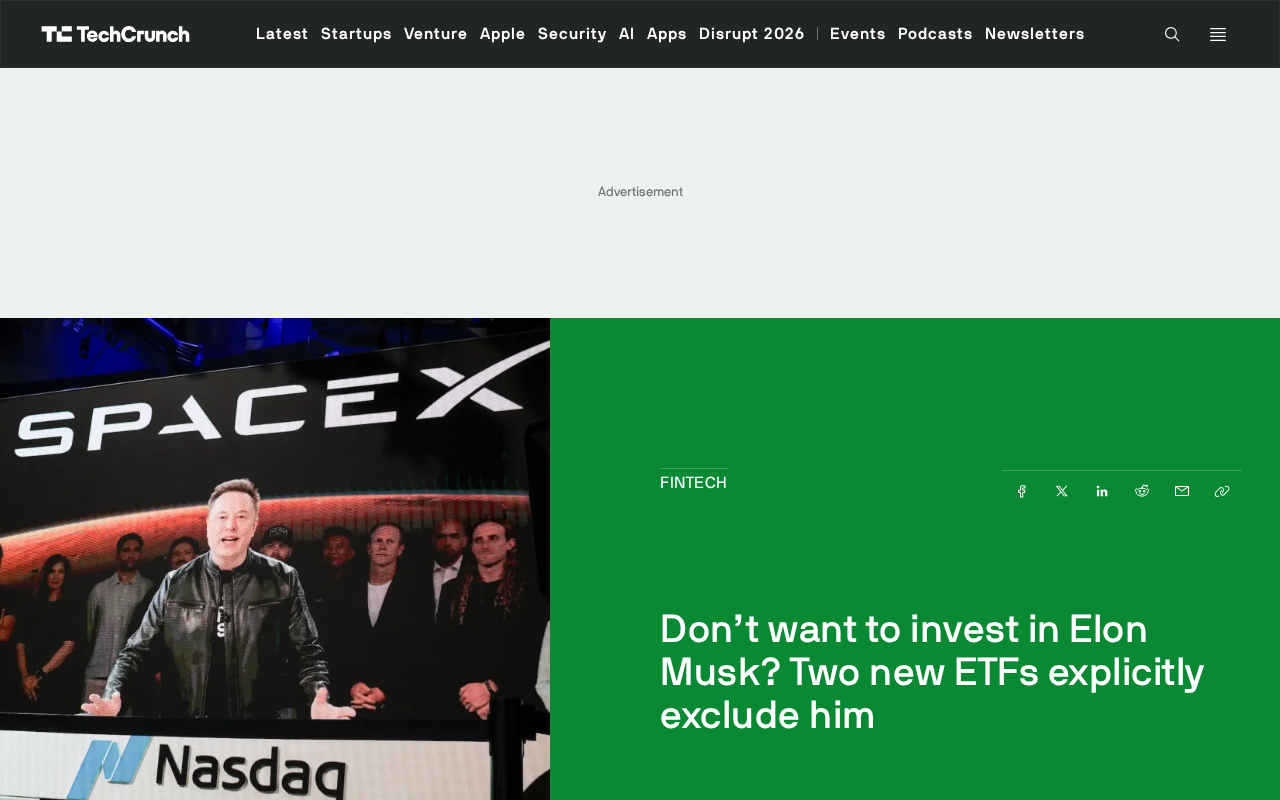
Why Musk?
From Business Icon to Focus of Controversy
Musk is undoubtedly one of the most influential entrepreneurs in the world today. Tesla reshaped the electric vehicle industry, and SpaceX transformed the commercial spaceflight landscape. However, in recent years his public image has grown increasingly polarized—a series of controversial decisions after acquiring Twitter (now the X platform), high-profile political statements on social media, and personal remarks that frequently spark public backlash have all created a clear sense of distance for some investors and consumers.
Academics refer to the premium effect that a founder's personal reputation has on a company's market value as the "Founder Premium." This concept was first systematically articulated by Stanford researcher Noam Wasserman in his 2012 book The Founder's Dilemmas, and was later widely applied in corporate governance and enterprise valuation research. Behavioral finance scholars further break it down into two dimensions: the "Competence Halo" and the "Moral Halo"—the former stemming from the founder being attributed by the market as the primary driver of the company's success, the latter from investors' emotional identification with the founder's personal traits. Cross-disciplinary research in behavioral finance and corporate governance shows that a high-profile founder's personal reputation can contribute a valuation premium of 5% to 15% to a company; but when the reputation is damaged, the market reaction is often nonlinear—when both halo dimensions are damaged simultaneously, emotion-driven selloffs amplify the decline beyond what fundamentals can explain, through a compounding effect.
Behind this asymmetric pattern lies the psychological mechanism revealed by "Affective Accounting" theory: once investors form an emotional attachment to a company's leader, cognitive dissonance tends to prompt them to repair the imbalance in their mental account through excessive selling. The so-called "Mental Accounting" is a concept proposed by behavioral economist Richard Thaler, referring to people's tendency to categorize and manage funds according to subjective standards, assigning them different psychological weights, which leads decisions to deviate from purely rational calculation. In the investment context, when a founder's image collapses, investors often cannot fully separate their "aversion to the person" from their "financial judgment of the company," leading to irrational selloff decisions beyond what fundamentals can explain.
The social media era has further amplified this mechanism—platforms like Twitter cause the speed and reach of founders' remarks to grow exponentially, allowing the "Moral Aversion Discount" to be priced in within hours rather than weeks. A 2023 Harvard Business School study confirms this: when a high-profile founder becomes embroiled in personal controversy, the company's stock exhibits an average abnormal negative return of -8.3% over the 30 trading days following the event, and this effect is amplified by roughly 1.7 times in companies with heavy social-media engagement. The Musk case is especially typical: during his 2022 announcement to acquire Twitter, Tesla's stock fell more than 65% cumulatively, far exceeding the Nasdaq index's decline over the same period, fully demonstrating the asymmetric impact of a leader's personal behavior on corporate market value.
For this segment of the population, investing in Musk's companies is no longer merely a financial decision—it also involves questions of personal-values identification. These two Musk-excluding ETFs are, in essence, responding to this emotional demand—providing a compromise solution for investors who identify with concepts such as electric vehicles, clean energy, and technological innovation, yet are unwilling to bind their money to Musk himself.
The Personalization Extension of Values-Based Investing
ESG investing (Environmental, Social, Governance investing) originated in the early 2000s with the UN-initiated "Principles for Responsible Investment" (PRI), which aimed to incorporate non-financial factors into the investment analysis framework. Over the past decade, global ESG assets have surged from hundreds of billions of dollars to over $35 trillion (per KPMG's 2022 estimate), becoming a significant force in the asset management industry. The "G" (governance) dimension of the ESG framework already covers scrutiny of executive behavior and board structure, but traditional ESG ratings typically use the enterprise as the unit of assessment rather than targeting specific individuals.
Traditional ESG rating agencies (such as MSCI ESG Ratings and Sustainalytics) adopt industry-relative scoring methods, which are essentially structured assessments of a company's systemic risk. MSCI's ESG rating system divides company scores into seven tiers from AAA to CCC, weighting assessments across 37 key issues, with the governance dimension covering sub-indicators such as company ownership structure, board composition, compensation incentive mechanisms, and accounting transparency. Notably, a 2022 study by MIT's Sloan School of Management found that the correlation among different ESG rating agencies' scores for the same company was only 0.54, far below the roughly 0.92 correlation among credit rating agencies, revealing the high subjectivity and methodological divergence of ESG assessment—this inconsistency stems in part from differing definitions among agencies regarding the tension between "Founder Control" and minority shareholder protection. Another core limitation of this system is that the assessment cycle is usually measured in years, and the data update frequency struggles to keep pace with the eruption tempo of a founder's personal public-opinion events. This creates a fundamental methodological dilemma: when an executive's controversial behavior has not yet translated into quantifiable corporate governance indicators (such as board independence scores or shareholder rights protection ratings), the ESG system often reacts with a lag. Exclusionary ETFs targeting specific founders are, in a sense, the market's "self-service" compensation for the ESG rating lag, bypassing rating disagreements to directly use market-perceived reputational risk as a screening criterion—but they also face criticism for being overly subjective. Critics argue that such products blur the boundary between investment tools and political expression, potentially prompting regulators to re-examine standards for product naming and disclosure.
It is worth noting that the ETF rule (Rule 6c-11) introduced by the U.S. Securities and Exchange Commission (SEC) in 2019 is a key regulatory backdrop enabling such innovative products to be quickly brought to market. Before this, actively managed ETFs were subject to the exemption application requirements of the Investment Company Act of 1940, with each product needing to individually apply to the SEC for an exemptive order—an approval process lasting several years. Rule 6c-11 simplified the approval process into routine registration procedures by establishing a unified, standardized exemption framework, and allowed certain products to adopt "non-transparent" or "semi-transparent" structures—funds need not disclose full holdings daily but only periodically publish a Proxy Portfolio, thereby protecting active management strategies from being front-run by hedge funds through arbitrage. After this rule took effect, the number of actively managed ETFs grew by more than 300% within three years, directly paving the regulatory road for such distinctly themed innovative products to be brought to market quickly.
These two ETFs can be seen as an extreme, personalized extension of the ESG concept—no longer focusing solely on a company's overall governance performance, but zeroing in precisely on the specific founder and leader. Exclusionary ETFs targeting specific founders make governance risk assessment precise and personalized, and have also sparked new industry discussion about the boundaries of the ESG evaluation system. This is a boundary breakthrough in the responsible investing space worth watching.
What Does Excluding Musk Mean?
The Practical Challenges of Portfolio Construction
Actually "going around Musk" in a portfolio is no small operational challenge. Since Tesla was included in the S&P 500 in 2020, it has at times ranked among the index's top ten by weight, with this single stock sometimes accounting for over 5% in tech-themed ETFs. Tracking Error is the core metric measuring the degree of deviation between a fund's actual returns and the returns of its benchmark index—the larger the standard deviation, the lower the fund's synchronization with the market. Removing Tesla not only creates a direct weighting gap, but also introduces active management costs due to the need to find replacement holdings, fundamentally altering the product's risk-return profile.
This also explains why such products more closely resemble "actively managed ETFs"—unlike traditional ETFs that passively track an index, actively managed ETFs rely on the fund manager's subjective judgment for stock selection, with annual management fee rates typically between 0.5% and 1.5%, significantly higher than the 0.03% to 0.2% range of passive ETFs. Investors who identify with their philosophy must also bear higher holding costs.
Furthermore, although SpaceX is a private company that ordinary ETFs cannot directly hold anyway, its industry-chain influence in spaceflight and satellite internet (Starlink) is enormous. Ground-equipment suppliers for the satellite internet business, rocket component manufacturers, and communications satellite operators that have signed launch contracts with SpaceX all constitute indirect exposure to Musk's business empire.
To fully avoid the related risks, fund managers must conduct multi-layer supply-chain penetration reviews (Nth-Party Risk Analysis) on their holding companies. This analytical framework has mature precedent in the ESG investing space, first applied at scale in controversial weapons screening (such as Convention on Cluster Munitions compliance). MSCI's controversial business identification framework divides a company's revenue sources into "direct involvement" and "indirect involvement," setting a 5% or 10% revenue proportion as the Materiality Threshold for inclusion on the exclusion list. However, assessing indirect exposure to private companies like SpaceX is more complex—since SpaceX need not publicly disclose financial data, analysts must rely on government procurement contract announcements, satellite launch records, and the segment financial disclosures of client companies to reverse-engineer inferences, significantly increasing data acquisition costs and uncertainty. Neither the complexity nor the operational costs should be underestimated.
From the technical level of portfolio construction, after removing high-weight constituent stocks, fund managers typically face a choice between two rebalancing strategies: the first is "Pro-Rata Rebalancing," which distributes the removed stock's weight proportionally across the remaining holdings—simple but potentially aggravating concentration risk; the second is "Thematic Substitution," which seeks stocks that can substitute for the removed target in business logic, such as replacing Tesla's exposure in the EV sector with BYD or Rivian. The latter approach, while more consistent with the product's philosophy, involves a higher degree of subjective judgment and is harder to explain to regulators and investors in terms of objective standards for the substitution logic.
Weighing Return Potential Against Value Convictions
Here's a detail: removing high-growth (and thus high-volatility) targets like Tesla may have a substantial impact on the fund's long-term returns. This hands the choice directly back to investors: are you willing to bear the potential difference in returns for your value stance?
The emergence of such products does not use the promise of higher returns as a selling point; what it sells is a kind of "peace of mind in investing." For investors who identify with its philosophy, this psychological value may be more important than a few percentage points of return. Behavioral economics calls this behavior—actively accepting financial costs to uphold self-value identification—"Identity Consumption": people are willing to pay a premium to "become a certain kind of person," whether that "identity" is expressed in consumer brand choices or portfolio composition.
A Deeper Trend: The "Personalization" of Capital Markets Investing
The launch of these two ETFs reflects an accelerating trend in the capital markets—investment decisions are becoming increasingly "personalized" and "emotional."
On one hand, we see chase-type investing built around personal aura, such as "Musk concept stocks"; on the other hand, we now also see exclusionary ETF products that explicitly "take the opposite side." An entrepreneur's personal words and actions, political stances, and even social media activity are becoming real variables influencing capital flows.
From a more macro capital-market-structure perspective, this trend is closely related to the "Retail Investor Surge." This phenomenon peaked in 2020–2021, marked by the GameStop short squeeze as a landmark event. According to Federal Reserve data, the proportion of U.S. households directly holding stocks rose from about 15% in 2019 to about 21% in 2022, and retail investors' share of average daily U.S. stock market trading volume climbed from about 10% in the early 2010s to about 25% at the 2021 peak. Robinhood's zero-commission model, the popularization of fractional shares, and social-media-driven investment communities (Reddit's r/WallStreetBets has over 15 million members) together form the technological and social foundation of this structural shift. Academic research summarizes the investment behavior characteristics of this group as "Attention-Driven Trading"—retail investors, compared with institutional investors, are more susceptible to emotional drivers such as a founder's personal charisma (Charisma Premium) and reputational events, with non-financial factors carrying markedly higher weight in their trading decisions. This means that as retail ownership continues to rise, the positive or negative sentiment premiums surrounding specific individuals will play an increasingly important role in the market, and the market demand for "personalized" investment products will expand accordingly.
This poses a new challenge for corporate leaders: when a founder's personal brand is deeply bound to the company, fluctuations in their image will translate directly into divergence of attitudes in the capital markets. Musk is the most extreme case of this phenomenon, but he will by no means be the last.
Conclusion: The Era of Expressing Positions With Capital Has Arrived
Whether these two Musk-excluding ETFs can accumulate sufficient scale in the market remains to be tested by time. But their symbolic significance is already clear: in today's world of high information transparency and increasingly prominent values, investors are no longer satisfied with merely chasing returns—they also hope to convey their positions through the flow of their capital.
Whether you are a supporter or a critic of Musk, this phenomenon is worth ongoing attention—it may foreshadow that more financial products designed around specific entrepreneurs and specific value propositions will emerge in the future. Investing is becoming an increasingly personalized way of taking a stance.
Key Takeaways
Related articles

Ditch the Vector Database: Building a Memory Layer for LangChain Agents with BM25
CogniCore replaces vector databases with BM25 retrieval for LangChain agent memory, outperforming embeddings in small-context benchmarks with zero external dependencies.
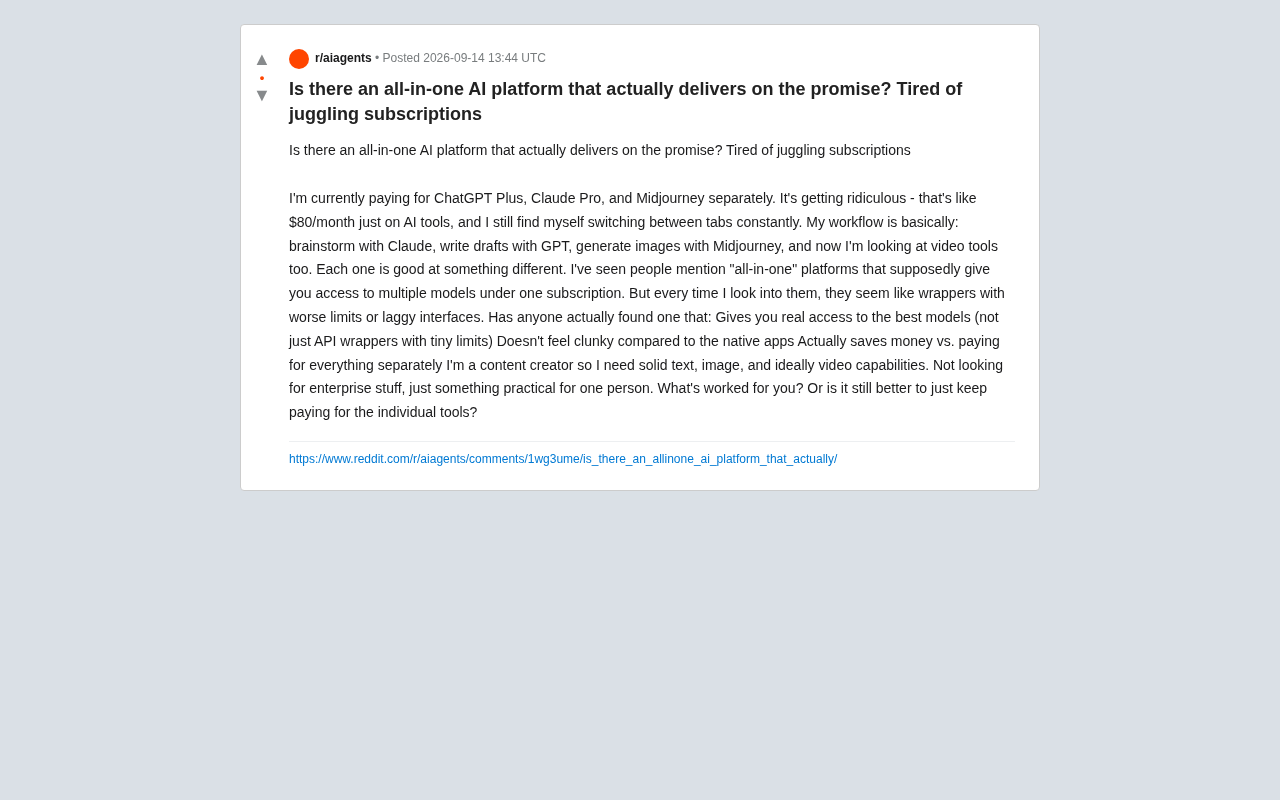
Are All-in-One AI Platforms Actually Worth It? A Practical Guide to Escaping Subscription Overload
Tired of paying for ChatGPT, Claude, and Midjourney separately? We break down whether all-in-one AI platforms are actually worth it — and what a smarter subscription stack looks like.
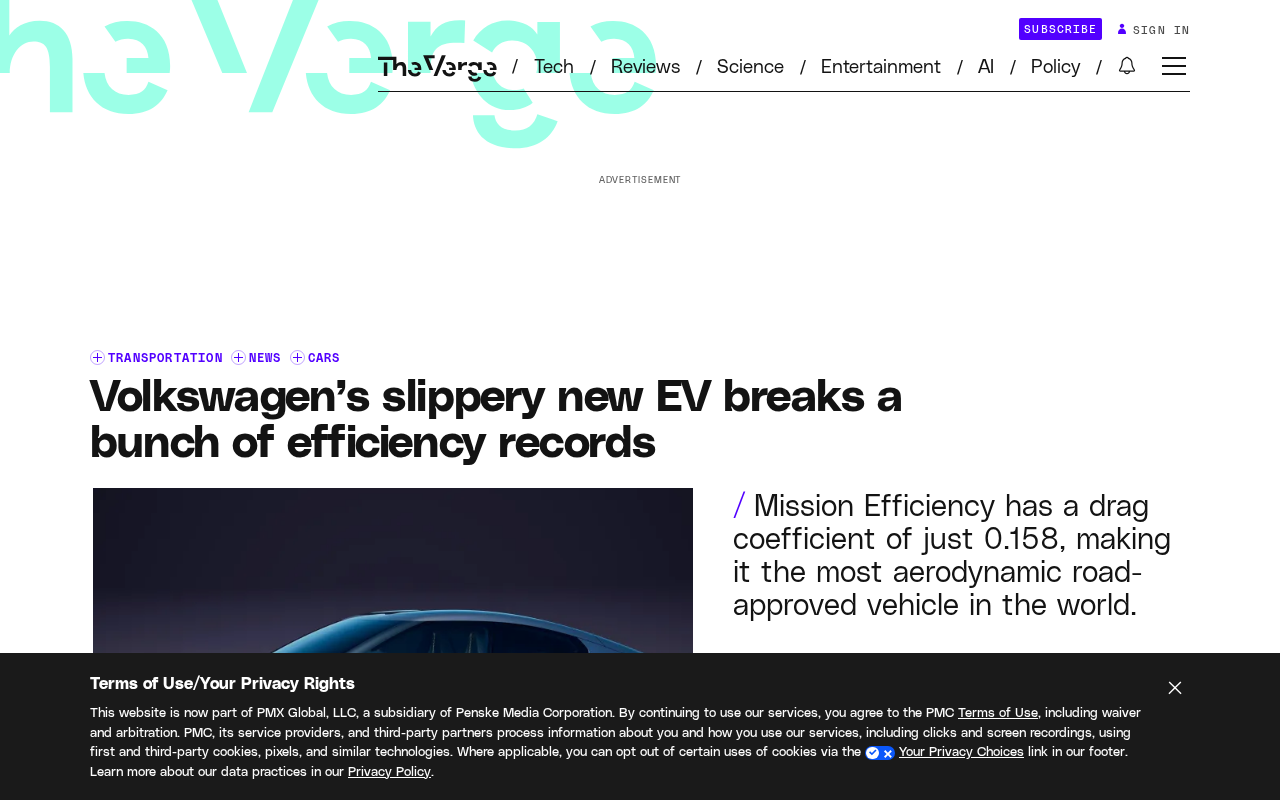
Volkswagen Mission Efficiency: The World's Lowest-Drag EV Breaks Multiple Efficiency Records
Volkswagen's Mission Efficiency prototype claims the world's lowest drag coefficient, built on MEB+ platform with ID. Polo and ID. Cross components. Here's what it means for EV efficiency.