The Founder's Dual Perspective: Aim for the Stars While Sweeping the Streets

Founders should hold both a grand vision and solid execution—in parallel, not in sequence.
Based on a short YouTube video, the article discusses how founders can balance a grand vision with basic execution. The video advises founders to aim for the 'stars' from day one but immediately calls for returning to the most plain questions: What are the first, second, and third things to do? The core insight rejects the linear path of 'think it through first, then act,' advocating being in two places at once—carrying a picture of ten years from now in your head while handling the calls that must be made this afternoon. The article notes that many startup failures stem not from a vision that's too small, but from getting the first three basic actions wrong; in an era when AI lowers the build barrier, founders willing to do trivial work like data cleaning and user interviews are even scarcer.
In Silicon Valley's startup culture, we are often pulled between two very different narratives: the grand vision of "changing the world" on one side, and the pragmatic execution of "lean startup" on the other. A recent short video from YouTube has reignited this old debate, but from a clever angle—it doesn't pick a side, instead proposing a mindset of "being in two places at once."
The Vision Must Be Big, but Your Feet Must Stay on the Ground
At the start of the video, the speaker gives a straightforward piece of advice: every founder needs a vision from day one. That vision should be as ambitious as possible—aim for the stars. He uses a classic metaphor: "If you don't aim for the stars, you'll never get to the moon." It sounds like standard motivational fare, but the turn that follows is the real point.

After encouraging listeners to "go far," he immediately asks them to take a deep breath and "go back to basics." He poses a string of the most plain questions: What's the first thing you need to do? The second? The third? This sharp pivot from grand narrative to a concrete to-do list is exactly the rhythm many founders tend to overlook.
Two States in Parallel, Not in Sequence
The real insight of this content lies in rejecting the linear path of "think it through first, then act" or "act first, then think." The speaker believes the secret of life and entrepreneurship is to be in two places at once.
On one hand, you must dare to go far. On the other, you must admit you're just getting started, so you'd better roll up your sleeves, grab a broom, and start sweeping. This "broom mindset" is nothing to be ashamed of—it's the norm in early-stage startups. You need to knock on doors, meet people, and do whatever dirty, hard work is required at the beginning.
There is no "but" here—it's not a trade-off of "on one hand… on the other hand…" but "both." According to the video, this dual perspective is itself a founder's core capability. You carry a picture of ten years from now in your head while making the calls that must be finished by 3 p.m. today.
Going Back to Basics Means Accepting the "Unsexy"
The title "Go back to basics" sounds like a slogan, but in a startup context it's actually a contrarian reminder. Today's startup media and VC circles tend to reward projects with grand narratives and novel concepts, while "basic actions" are often taken for granted.

The "first, second, third" listed in the video seems simple, but it points directly at a reality: many startups fail not because their vision isn't big enough, but because they got the first three basic actions wrong. Who are your first batch of users? Which five people will you meet next week? What's the most urgent small task on your plate? These questions don't need a fundraising deck, but they do need you to answer them yourself.
This content comes from a single YouTube source with no cross-verification from other sources, so it reads more as an experiential sharing of views than a data-driven conclusion. However, it resonates with the lean startup methodology's idea of "vision and experimentation in parallel."
Lean Startup was systematically proposed by Eric Ries in his 2011 book of the same name. Its core is the "build-measure-learn" feedback loop: rapidly validate hypotheses with a minimum viable product (MVP), and decide whether to persevere or pivot based on real user data. It doesn't oppose vision; rather, it advocates approaching the vision through low-cost experiments to avoid over-investing resources in the wrong direction. The "vision and experimentation in parallel" mentioned in the article is a plain-language expression of this methodology; understanding MVP and the validation loop helps readers grasp the logic behind "basic actions"—they are essentially means of obtaining learning signals, not ends in themselves.
Implications for Founders in the AI Era
If you place this advice in today's AI startup environment, its applicability only becomes stronger. AI tools have dramatically lowered the barrier to building products, and visions are inflating faster than ever. But the more this is true, the easier it is to fall into the trap of "aiming only for the stars and never cleaning the room."
What remains truly scarce are founders willing to handle the basic work—data cleaning, user interviews, customer service replies—while holding a grand vision. The video doesn't provide any specific operational framework, but its mental model is clear enough: keep the moon in your heart and a broom in your hand. These two things should happen simultaneously from day one.
AI lowering the build barrier refers to how large language models and generative tools drastically reduce the marginal cost of prototyping, content production, and coding, enabling a solo founder or small team to launch a working product in days. This has two consequences: first, "being able to build it" is no longer a moat, and the competitive focus shifts to distribution, retention, and validating real demand; second, the cost of trial and error for visions decreases, but the complexity of basic work (data quality, user interviews, customer service response) does not decline proportionally. Therefore, the "broom mindset" emphasized in the article remains scarce in the AI era—tools replace the physical labor of execution, not the cognitive labor of judging which ground to sweep and for whom.
One-line Summary
Founders should hold both a grand vision and solid execution—in parallel, not in sequence.
Paragraph Summary
Based on a short YouTube video, the article discusses how founders can balance a grand vision with basic execution. The video advises founders to aim for the "stars" from day one but immediately calls for returning to the most plain questions: What are the first, second, and third things to do? The core insight rejects the linear path of "think it through first, then act," advocating being in two places at once—carrying a picture of ten years from now in your head while handling the calls that must be made this afternoon. The article notes that many startup failures stem not from a vision that's too small, but from getting the first three basic actions wrong; in an era when AI lowers the build barrier, founders willing to do琐碎 work like data cleaning and user interviews are even scarcer.
Related articles

CBR-II Robot V3 Update: Smoother Gait and a One-Leg Stand Attempt
CBR-II robot V3 update achieves smoother gait control and attempts one-leg standing. This article analyzes its technical improvements, balance control challenges, and open-source community innovation value, offering reference for bipedal robot enthusiasts.
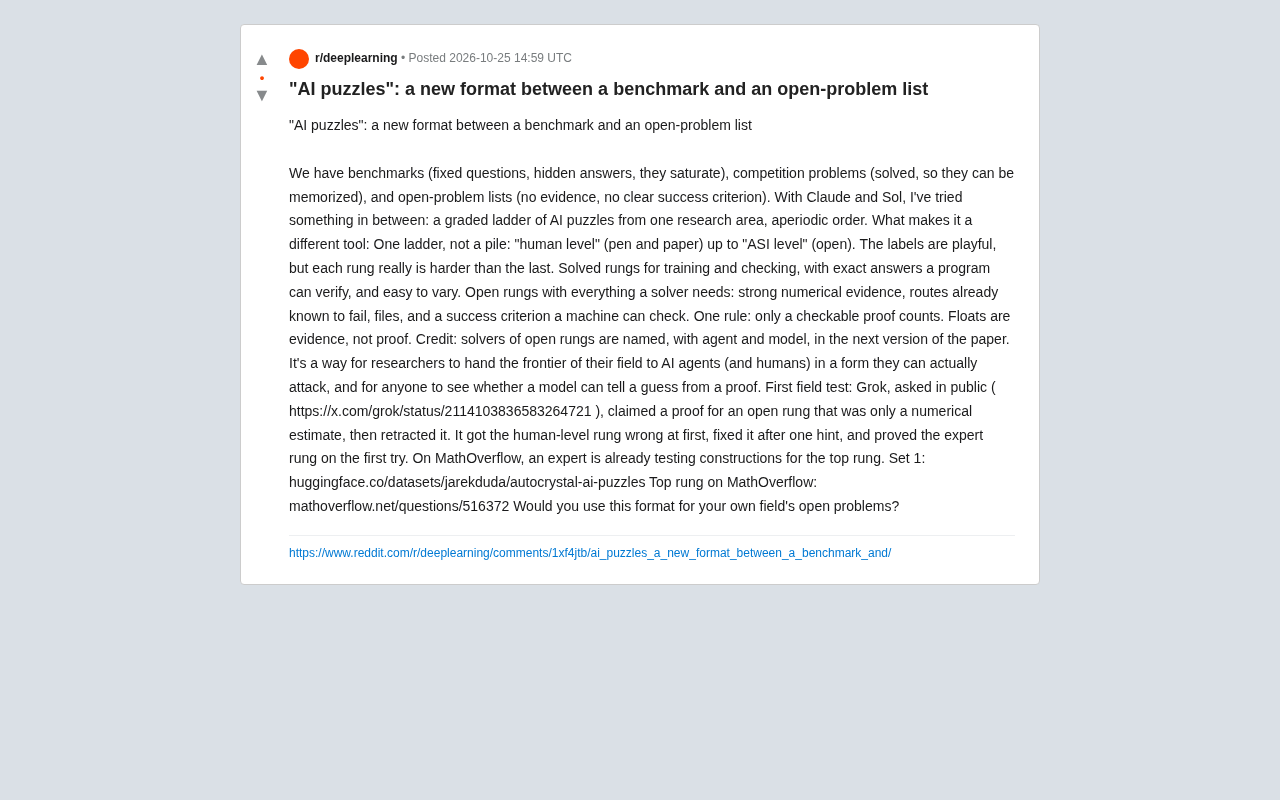
AI Puzzles: A New Paradigm Between Benchmarks and Open Problems
AI puzzles are a new evaluation format between benchmarks and open problems, piloted in aperiodic order, using tiered ladders and machine-verifiable proof standards to test whether AI can distinguish guessing from proving. In Grok's first live test, it misreported numerical estimates as proofs.

Listening on 11175 kHz: US Nuclear Forces' Emergency Action Messages Are Publicly Audible
The missileer.watch project reveals that US nuclear forces' Emergency Action Messages (EAM) are publicly audible on 11175 kHz shortwave. This article analyzes EAM communication mechanisms, shortwave redundancy design logic, whether public audibility constitutes a security vulnerability, and discusses the technical barriers and ethical boundaries of the listening community.