The Four Pillars of Vibe Coding: A Complete Methodology from AI Code Generation to Project Delivery

A four-module framework turning AI code generation into reliable, real-world project delivery.
Vibe Coding goes beyond AI tools by defining four essential capability modules for delivering real projects: cognitive restructuring (validating results over reading code), open source customization (understanding before modifying), Spec-Driven Development (constraining AI with structured docs), and project-level rule constraints (Human-in-the-Loop checkpoints). Together, they form a systematic methodology for AI-powered software delivery.
From Collecting Tools to Delivering Projects: The Cognitive Gap
Over the past year, nearly every programmer trying to ride the AI wave has gone through the same cycle: watching countless tutorials, trying out dozens of tools, and building scores of demos. Yet when it comes time to deliver a project that can actually go live and hold up in production, none of it seems to stick.
According to one content creator's analysis, the root cause isn't a shortage of tools — it's the learning approach itself. You think you're learning AI programming, but you're really just collecting tool buttons. Fragmented tutorials teach you how to use 100 tools but never teach you how to deliver real projects with a cohesive methodology.
Vibe Coding emerged precisely against this backdrop. It's not yet another new tool — it's been defined as "the new paradigm that will put food on programmers' tables for the next five years." The concept was first coined by OpenAI co-founder Andrej Karpathy in early 2025. He described a development style where developers fully immerse themselves in the "vibe," describing requirements in natural language and letting AI generate the code. Karpathy himself even said he "barely looks at the code" when building projects this way. The idea quickly sparked heated debate in the developer community — supporters see it as the direction of software development democratization, while critics worry about code quality and security risks. This framework builds on that foundation by further emphasizing the complete chain from cognitive restructuring to engineering-grade implementation, covering the four capability leaps required to deliver a real project.
Module 1: Paradigm Cognitive Restructuring — From "Reading Code" to "Validating Results"
The most fundamental dividing line between Vibe Coding and traditional software engineering lies in the shift in how work is accepted and validated.
In traditional development, programmers are accustomed to reading code line by line, reviewing logic, and tracing every variable's flow. This Code Review practice has a history spanning decades, dating back to IBM's "code inspections" in the 1970s, and has been extensively proven by research to effectively reduce defect rates. Under this paradigm, the engineer's understanding of every line of code is considered the cornerstone of quality assurance. But when AI generates a large block of code in one go, reading it line by line is both inefficient and contrary to the very purpose of AI-assisted programming.
The correct approach is to validate results rather than audit the process: after AI writes the code, what you need to check is whether the UI and functionality are correct and whether everything runs. If it runs and the functionality checks out, it passes. This is the core mindset of Vibe Coding. This paradigm shift is essentially aligned with the "black-box testing" philosophy in software testing — focusing on whether inputs and outputs meet expectations rather than the specific path of internal implementation. This doesn't mean completely abandoning code comprehension; rather, it shifts the center of gravity of validation from process to results, ensuring delivery quality through automated testing, UI verification, and functional regression.
Here's a telling detail: "88% of programmers stumble at this very first step" — because abandoning line-by-line code reading is a counterintuitive cognitive shift for well-trained engineers. Whether you can make this transition determines whether you can truly enter the high-efficiency mode of AI programming.
Module 2: Open Source Ecosystem Customization — The Right Way to Go 10x Faster
The second capability module focuses on secondary development (customization) of open source ecosystems. The core argument is straightforward: building something production-ready from scratch is simply not realistic. GitHub hosts a vast number of mature open source projects, and modifying them is over ten times faster than writing from scratch.

Secondary development of open source software is extremely common in enterprise practice. According to GitHub's 2024 annual report, over 97% of commercial software projects depend on open source components. The core challenge of customization lies in understanding the architectural design intent of an unfamiliar codebase — known in software engineering as "Program Comprehension," which has long been recognized as one of developers' most time-consuming activities. Research shows that developers spend approximately 60% of their time reading and understanding existing code rather than writing new code. The emergence of AI large language models offers a breakthrough for this bottleneck: leveraging their powerful code comprehension and summarization capabilities, developers can quickly obtain a project's overall architectural map, module dependency relationships, and core business logic, dramatically compressing the time cost of the comprehension phase.
But the mindset for customization is the complete opposite of building from scratch. When building from scratch, you can understand as you write; when customizing, you're facing a fully formed, structurally complex codebase. The key principle is:
Have AI thoroughly understand the entire project before it changes a single line of code.
If you skip the "comprehension phase" and let AI modify directly, it's very likely to break the entire architecture while lacking global awareness. This is particularly fatal in practice — AI doesn't inherently understand a project's design intent; you need to guide it to build a complete understanding of the project structure first.
Module 3: SDD (Spec-Driven Development) — Say Goodbye to Hand-Written Prompts
As project scale grows, the approach of hand-writing prompts quickly falls apart.

A typical scenario: you only want to modify one function, but AI "helpfully" modifies three other related functions along with it. When you check the commit on GitHub — "well, five functions have all been changed." This is the cascading modification problem caused by unconstrained prompts and AI's free rein.
The solution is SDD (Spec-Driven Development). Document-driven development is not an entirely new invention of the AI era — it has deep roots in software engineering. As early as the 1990s, Formal Methods advocated using rigorous mathematical specifications to define software behavior; more recent practices include the OpenAPI/Swagger specification in the API domain — using a YAML or JSON document to define interface contracts that drive code generation and testing. In the AI programming context, however, SDD takes on a transformative significance: it's no longer merely a collaboration contract for teams but becomes an "electronic fence" constraining AI's behavioral boundaries. When AI lacks clear behavioral specs, it tends to make "most reasonable guesses" based on statistical patterns in its training data — this is the technical root cause of the cascading modification problem.
The core idea is to use structured documentation to constrain AI's behavioral boundaries, rather than relying on ad-hoc natural language instructions. Three frameworks are recommended, selected by scenario:
- Open Spec: Lightweight and beginner-friendly, suitable for getting started quickly
- Specate: A complete scaffolding solution
- Superpowers: Focused on behavioral constraints
The essence of document-driven development is making explicit and structured "what you want AI to do and not do," thereby maintaining control even as projects scale up.
Module 4: Rule Constraints and Project Constitution — Making AI Work by the Rules
The final module is the implementation safeguard for the entire system — establishing a "constitution" for your project.

The specific practice involves placing a Markdown rules document in the project root directory. Different tools use different filenames:
- In Claude Code, it's
CLAUDE.md - In Cursor, it's
.cursorrules
These project rule files are essentially an extension of "Infrastructure as Code" thinking into the AI collaboration domain. These files use human-readable formats like Markdown to define AI's operational boundaries, code style requirements, areas forbidden from modification, and critical nodes where it must pause and wait for confirmation.
This rules document defines the boundaries AI must respect within the project and sets up "checkpoints" at critical nodes. This way, "even if AI wants to run ahead, it has to stop and wait for your approval" — at important decision or modification points, AI must pause and wait for human confirmation before proceeding.
This Human-in-the-Loop (HITL) constraint mechanism is a core principle in AI safety and reliability, already widely applied in high-risk scenarios like autonomous driving and medical AI. In software engineering, it ensures AI won't make irreversible modifications to production environments or core business logic without human oversight, thereby striking a balance between efficiency and safety. This is the entry ticket to stable project delivery — it transforms AI from an uncontrolled code generator into an engineering partner that collaborates within clearly defined rules.
Summary: The Four-Step Leap to Systematic AI Programming
Once you've completed these four modules, you've made the leap from "being able to write code with AI" to "being able to deliver projects with AI."
Stringing these four capabilities together, the logic is crystal clear:
- Cognitive Restructuring — Transform your validation approach, from reading code to validating results
- Open Source Customization — Leverage existing projects; understand first, then modify
- Document-Driven Development — Use SDD to constrain AI behavior and handle project scaling
- Rule Constraints — Establish a project constitution for stable Human-in-the-Loop delivery
Fragmented tutorials teach you 100 tools, while a systematic methodology teaches you one reusable playbook. For developers who want to truly convert AI programming skills into delivery capability, this complete perspective — from cognition to engineering — holds far more long-term value than chasing the latest tools.
Related articles

WAIC Industry Insights: AI Deployment Now Demands ROI — How Enterprises Can Pick the Right First Task
2026 WAIC signals AI competition has shifted to production systems. This article breaks down compute, Agent, and embodied AI deployment paths with an ROI framework for enterprises.

Rejecting AI as a Differentiator: The Engineering Rationale Behind the Anti-AI Movement
When AI becomes a marketing label, some choose to publicly declare they never use it. This article analyzes the engineering rationale, privacy concerns, and reliability considerations behind the anti-AI stance.
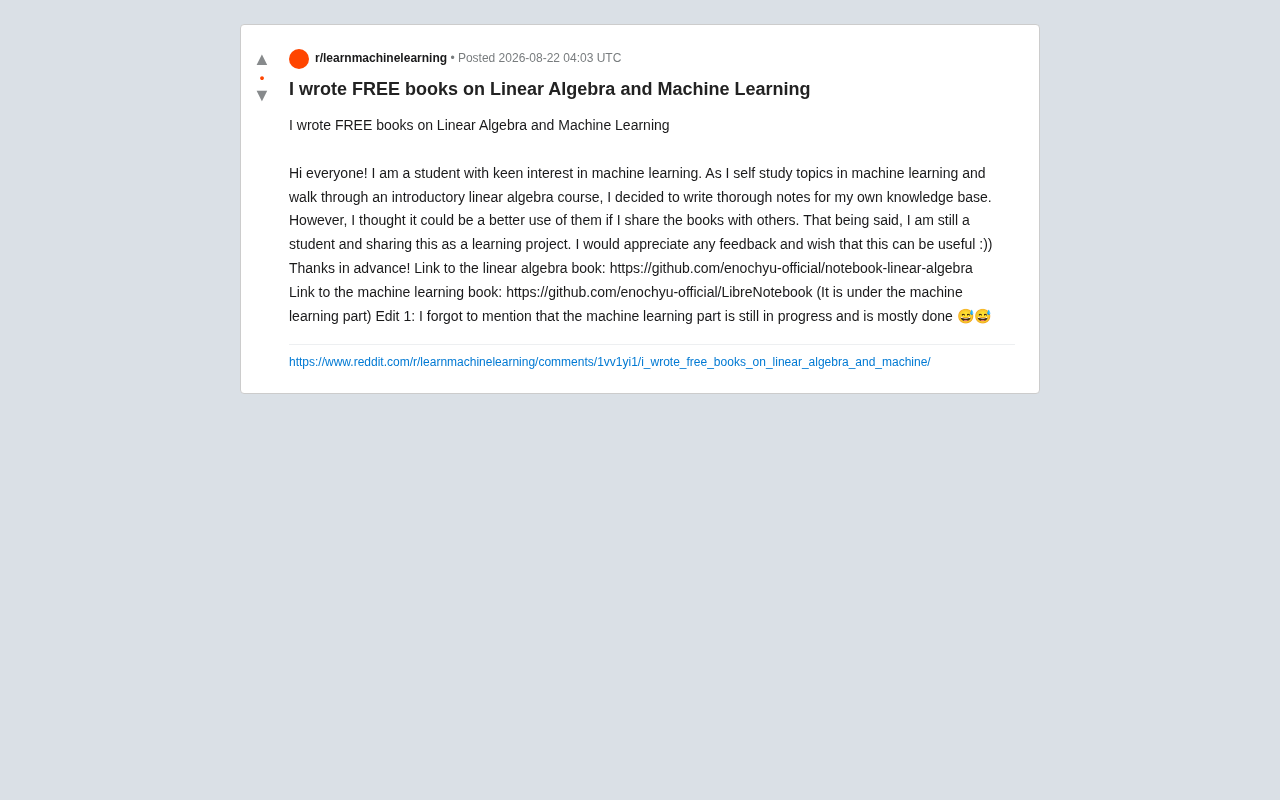
Free Open-Source Linear Algebra & Machine Learning Textbooks: Self-Study Notes from a Student's Perspective
A student compiled self-study notes into two free open-source textbooks on linear algebra and machine learning, hosted on GitHub for community collaboration.