The Gender Shift of American Names: The Two-Way Evolution of Boys' and Girls' Names
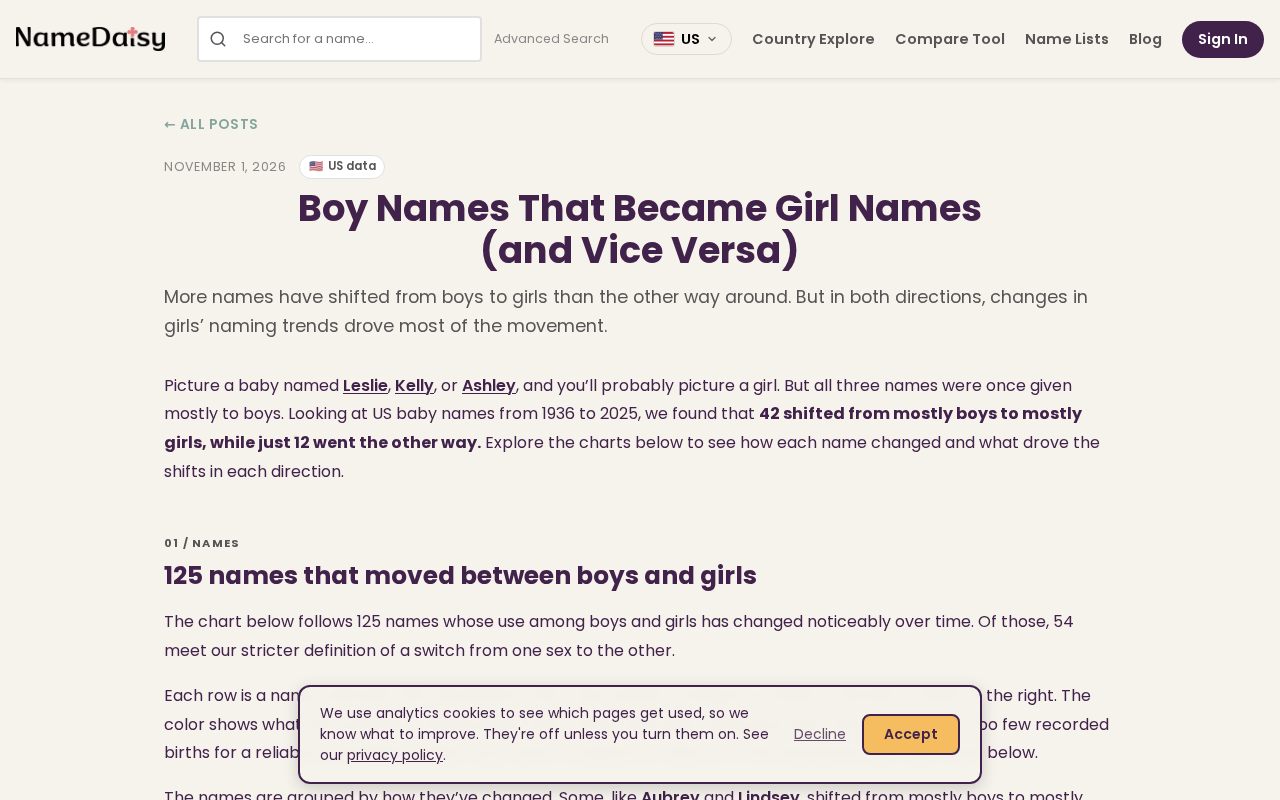
Gender labels of names are not fixed; they gradually shift with culture and social perception.
The article uses a Hacker News discussion as a starting point to outline the phenomenon of gender shifts in American names. Classic cases include Ashley and Madison shifting from male to female names, Leslie shifting in the opposite direction, and Taylor and Jordan remaining neutral. Driving factors involve pop culture exposure, self-reinforcing cycles of social avoidance, phonetic and spelling rules, and label renegotiation brought by cross-cultural immigration. On the data level, the US Social Security Administration baby names database can quantify a name's gender tendency index; shift trajectories often follow an S-shaped curve, with some names eventually stabilizing in a neutral state. Socially, this phenomenon is seen both as a progressive signal of loosening gender labels and as a potential source of misunderstanding and bias due to gender ambiguity, with personal narratives extending the topic to identity and social interaction.
On Hacker News, a discussion thread titled "US boy names that became girl names and vice versa" sparked 44 points of interest and 19 comments. The topic seems lighthearted, yet it touches on the intersection of linguistic evolution, social psychology, and data science. The gender labels of names are not set in stone; they flow over time, pop culture, and collective perception. This article breaks down this gender-shifting phenomenon from historical cases, driving factors, and a data perspective.
Classic Cases of Name Gender Shifts
From examples often mentioned in public discussions, some names now considered typical girls' names were once exclusively for boys. For instance, "Ashley" was primarily used as a male name before the mid-20th century and gradually became feminized; "Leslie" experienced the opposite direction, shifting from a female name to unisex or even leaning male. Similarly, "Sidney" and "Shirley" have also swung between genders. Hacker News commenters pointed out that such shifts often do not happen overnight but occur over decades of gradual change, eventually showing a clear statistical gender skew.
Another common example is "Madison." Originally a surname and male name, it was heavily used for girls under the influence of the movie Splash and is now one of the representative American girls' names. Similarly, "Aubrey" shifted from a male to a female name, while "Taylor" and "Jordan" remain relatively balanced between genders. These examples show that the gender attributes of names are not fixed but are the result of social convention.
"Gender marking" refers to the degree to which a name is associated with a particular gender in linguistic habits. It is not an inherent property of a name but a statistical tendency shaped by frequency of use, phonetic associations, and cultural archetypes. The stronger the gender marking of a name, the more parents tend to use it only for children of one gender; when the marking weakens, the name enters a neutral zone and may further migrate toward the other gender. Linguists often use "gender marking strength" to explain why some names remain neutral for a long time (such as Taylor and Jordan) while others flip quickly—the former never reach a critical threshold, while the latter are heavily used by a single gender during a certain period, triggering a social avoidance mechanism.
Factors Driving Name Gender Shifts
Behind gender shifts in names, there are usually several intertwined factors. First is the power of popular culture. Movies, books, and celebrity influence can quickly change the gender impression of a name. In the Hacker News discussion, it was mentioned that media exposure often accelerates gender migration of names. Second is the inertia of social trends: when a name begins to be heavily used by one gender, parents of the other gender may gradually avoid it, creating a self-reinforcing cycle.
Linguists and onomastic researchers also point out that the "gender marking" of a name is related to pronunciation and spelling. For example, names ending in "-a" are often considered feminine in Latin languages, while some names ending in consonants in English lean more masculine. But such rules are not absolute, and gender shifts in names often break phonetic intuition.
In addition, immigration and cultural fusion can also bring changes in gender perception of names. Different cultures may define the same name differently by gender, and when these names enter American society, their gender labels may be renegotiated. Hacker News commenters mentioned that some names have undergone gender flips in cross-cultural contexts.
A Data Perspective: How to Track Name Gender Shifts
The US Social Security Administration (SSA) baby names database is an important resource for studying this phenomenon. The database records the gender distribution of each name each year, and researchers can identify trajectories of gender shifts by analyzing changes in the proportion of use between boys and girls. In the Hacker News discussion, some commenters suggested using SSA data to quantify a name's "gender tendency index" and observe its fluctuations over time.
From a data perspective, gender shifts in names often follow an S-shaped curve: initially a name is overwhelmingly dominant in one gender, then use by the other gender gradually increases, and it may eventually flip completely. This pattern has been verified across multiple names. However, some names stabilize in a neutral state and do not shift further.
The US Social Security Administration (SSA) baby names database collects names and genders of babies born in the United States each year since 1880, provided the name appears at least 5 times that year. The data is publicly available in the form of "name-year-gender-count," and researchers can calculate the ratio of male to female users of a name in a given year and define a "gender tendency index" (e.g., percentage female). The database's limitations are that it only covers birth records, does not include name changes by immigrants or adults, and small-sample names have large statistical fluctuations. Nevertheless, it remains the publicly available name-gender data source with the longest time span and finest granularity, often used for quantitative analysis in linguistics, sociology, and data journalism.
Social Significance and Controversy
Gender shifts in names are not only a linguistic phenomenon but also reflect changes in societal perceptions of gender roles. Some commenters believe that gender fluidity in names is a sign of progress in gender equality, indicating that society's adherence to gender labels is loosening. Others point out that such shifts can also cause confusion, as gender ambiguity in names may lead to misunderstandings or bias.
In the Hacker News discussion, some users shared awkward experiences caused by the gender reversal of their names, and others discussed how parents weigh uniqueness and gender expectations when naming. These personal narratives take the topic beyond data and touch on identity and social interaction.
Conclusion
The gender shift of names is a dynamic and multi-factor social phenomenon. Through historical cases, cultural analysis, and data tracking, we can understand this process more clearly. Although the discussion on Hacker News was brief, it gathered observations and insights from different backgrounds, reminding us that names are not only identifiers but also carriers of social concepts. For those studying linguistic evolution, gender sociology, or data science, the topic of name gender shifts provides rich analytical material.
Related articles

System Exchange Spawns an Offbeat Journey to the West: Why This Comedy Series Works
A Bilibili comedy short series reimagines Journey to the West with a system-exchange premise, as the protagonist challenges Sun Wukong, Erlang Shen, and other classics.
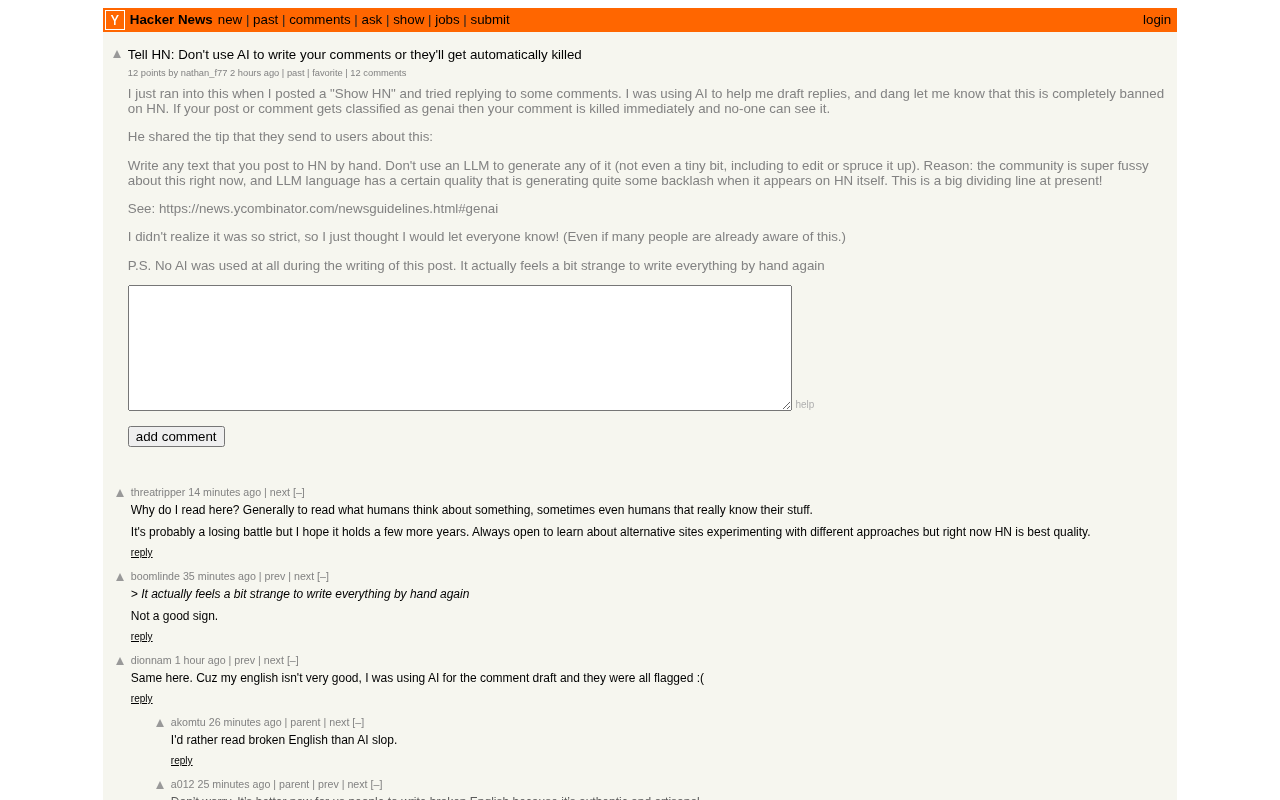
HN Warning: Don't Use AI to Write Comments, or They'll Be Auto-Deleted
Hacker News warns that AI-written comments will be automatically deleted. This article analyzes HN's automated enforcement mechanism, the community's attitude toward AI-generated content, and what it means for creators using AI tools responsibly.

AI Product Manager Systematic Course for Beginners: Three Modules Explained with Pitfall Avoidance Guide
Breakdown of Bilibili's 100-episode AI product manager course: Foundation builds large model and Prompt cognition, Advanced tackles Agent workflows and RAG knowledge bases, Practice completes projects like personal knowledge bases and intelligent customer service. Includes learning roadmap and pitfall avoidance tips.